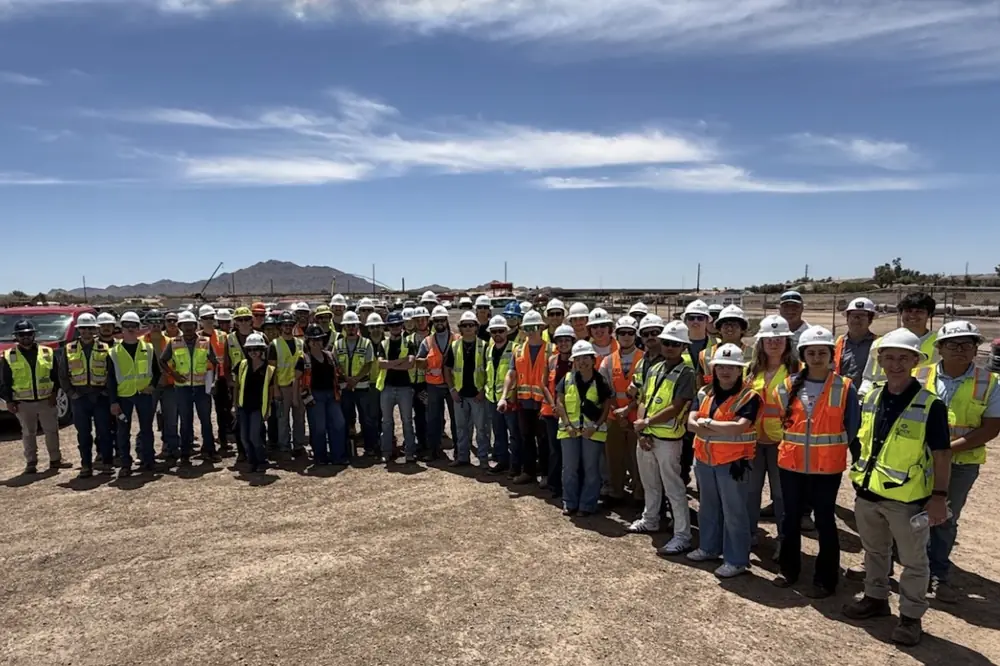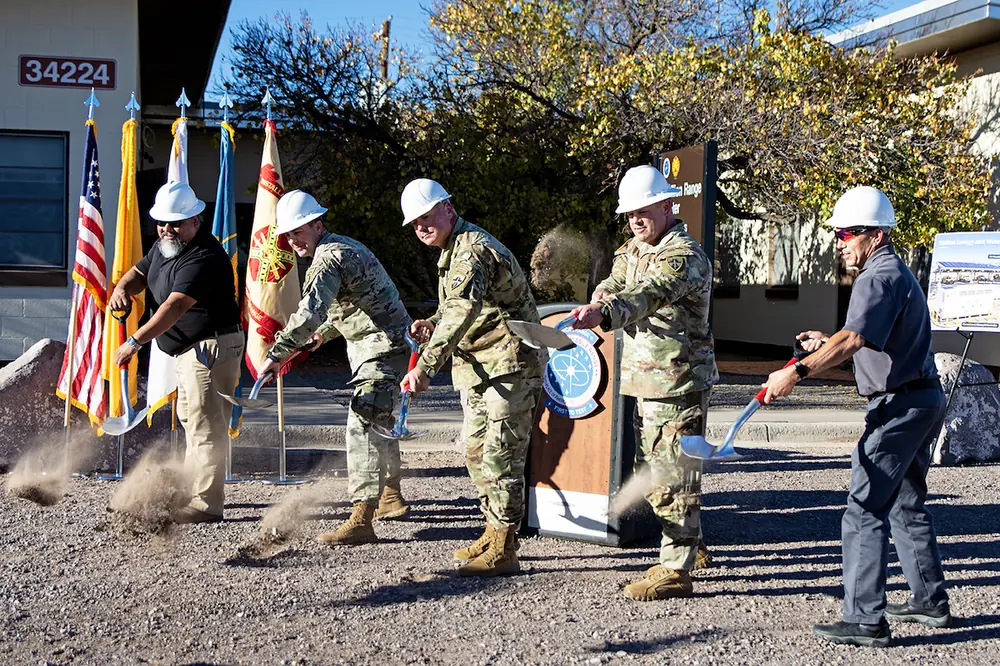
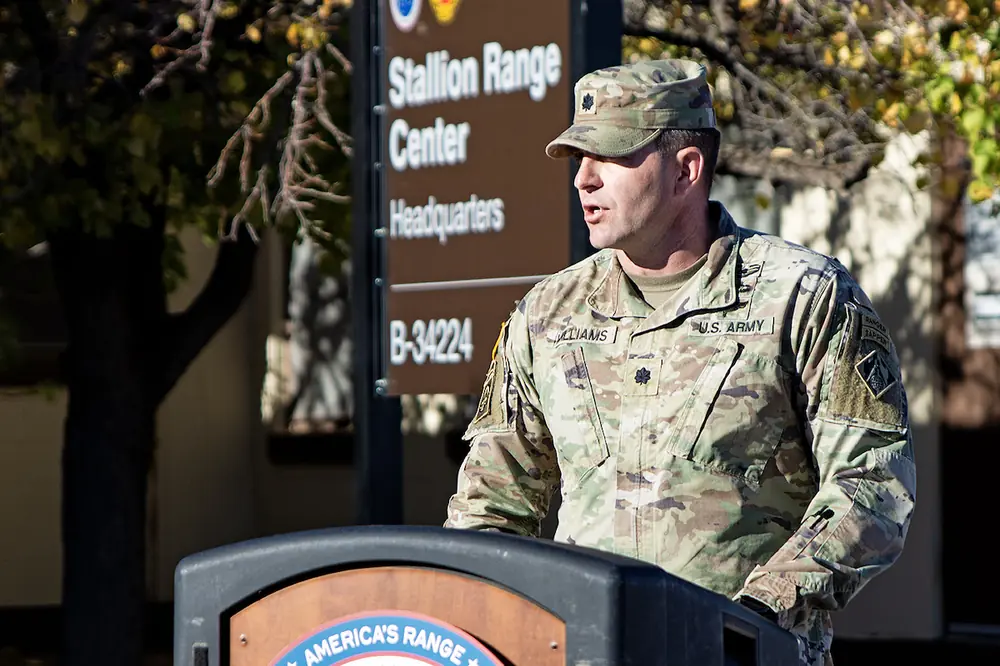

WHITE SANDS MISSILE RANGE, NM — Representatives from the U.S. Army Corps of Engineers (USACE) Albuquerque District joined White Sands Missile Range (WSMR) leadership and contractor representatives to break ground on the Stallion Range Power Generation and Microgrid project.
The project will be located on the missile range’s Stallion Base Camp on the northern part of the range.
“Today we mark the groundbreaking of the Stallion Range Power Generation and Microgrid project,” Lieutenant Colonel Brian Williams, Commander of USACE-Albuquerque District, said at the event. “This $27 million military construction project is part of the Energy Resilience and Conservation Investment Program and was awarded this August in direct execution of the Army Directive on U.S. Army Installation Energy and Water Resilience Policy.”
The microgrid includes a 600-kilowatt solar photovoltaic array, as well as propane generators and a 500-kilowatt battery energy storage system. When completed, it will provide four facilities at the Stallion Base Camp with 14 days of energy and potable water during extended power outages.
“This investment ensures that critical test data is collected, test schedules remain intact, and operational readiness is maintained,” said Colonel Michael Lueckeman, White Sands Missile Range Garrison Commander.

| Your local Gomaco dealer |
|---|
| Gomaco -Contact For a Dealer Near You |
The USACE project delivery team utilized a “team of teams” approach with the Louisville District serving as the contracting authority, the USACE Huntsville Center providing technical design support, and the Albuquerque District leading construction oversight and field administration.
According to Williams, the Albuquerque District, WSMR garrison team, and construction contractor partners are working to ensure seamless execution and deliver the project within 17 months.
The Albuquerque District has previously partnered with WSMR on similar projects, completing a $10.6 million design-bid-build project for the installation of a microgrid system for four potable water wells on the range in 2025.
A microgrid is a self-sufficient energy system that serves a specific geographic area. It can be attached to a centralized national grid, but it is able to function independently.