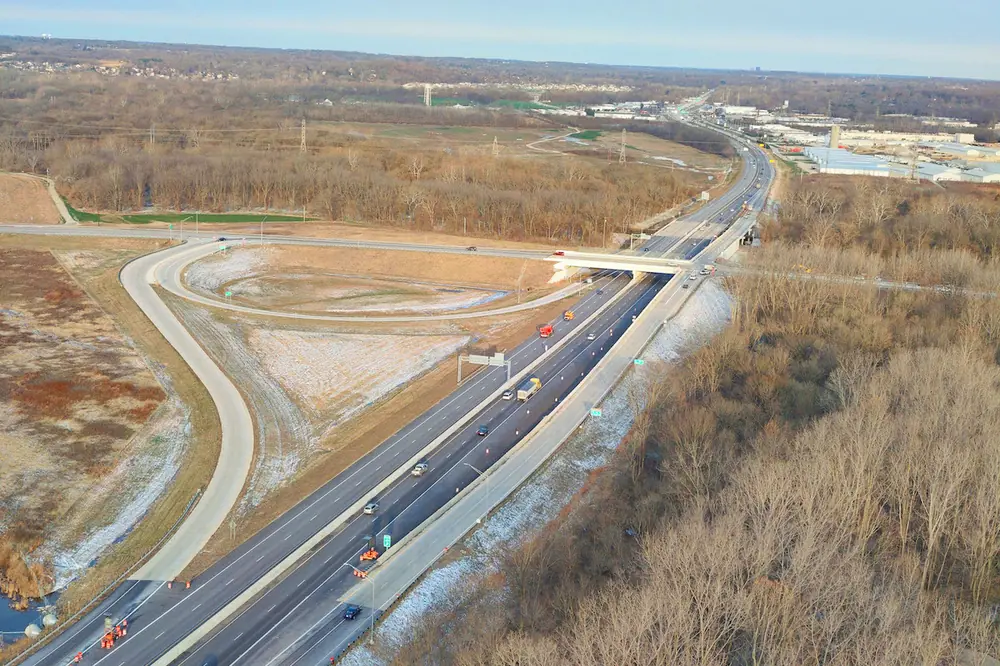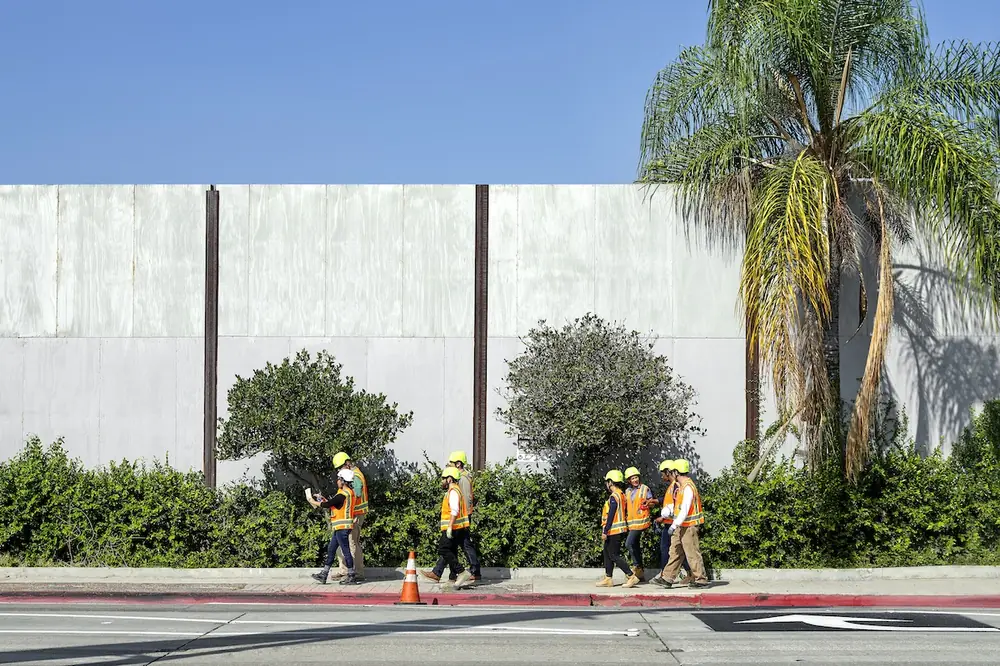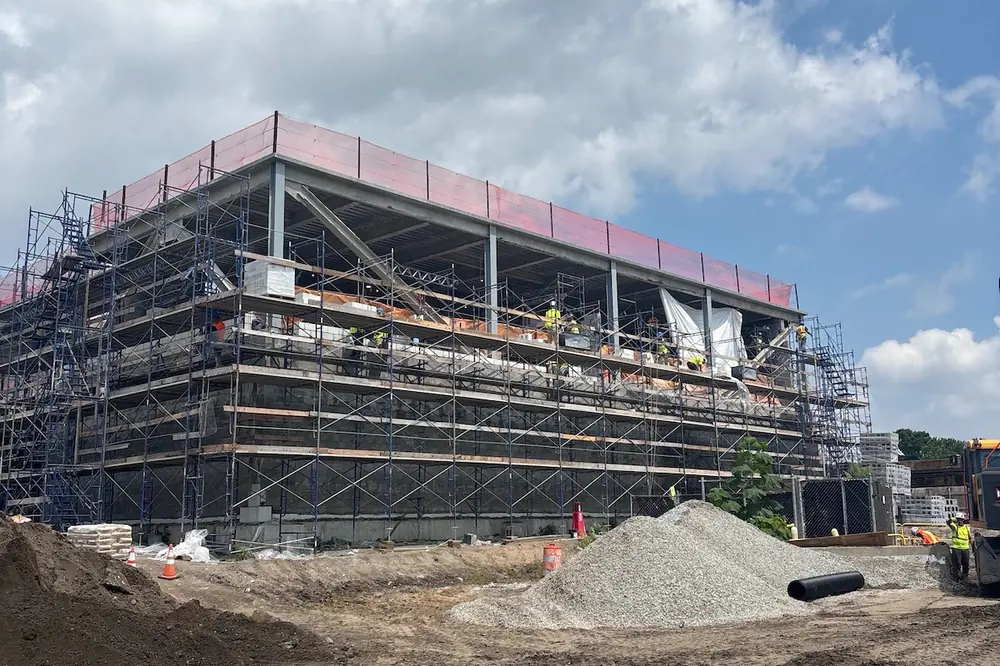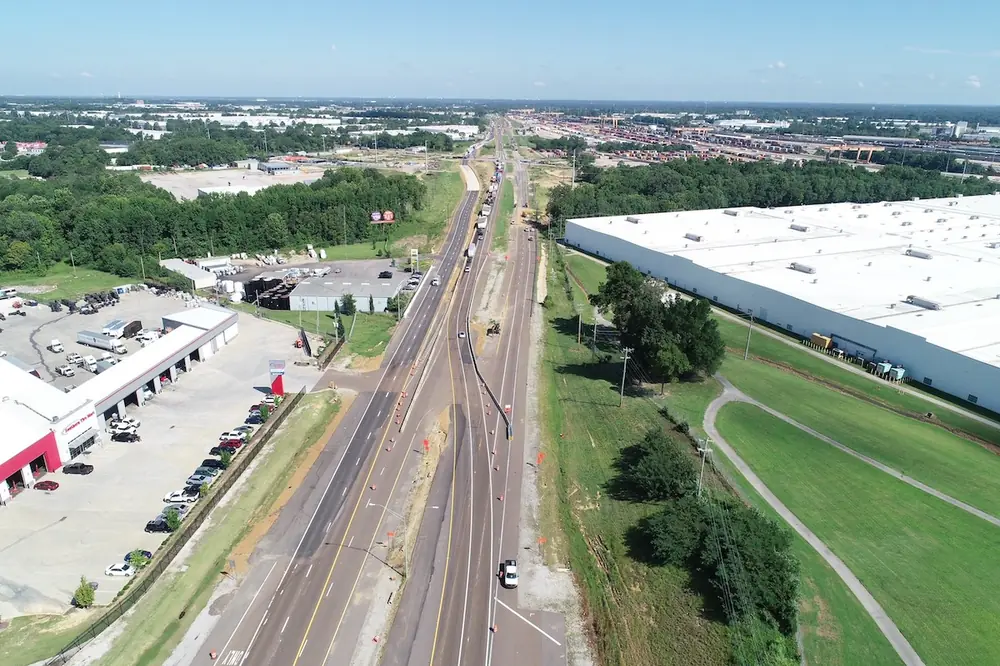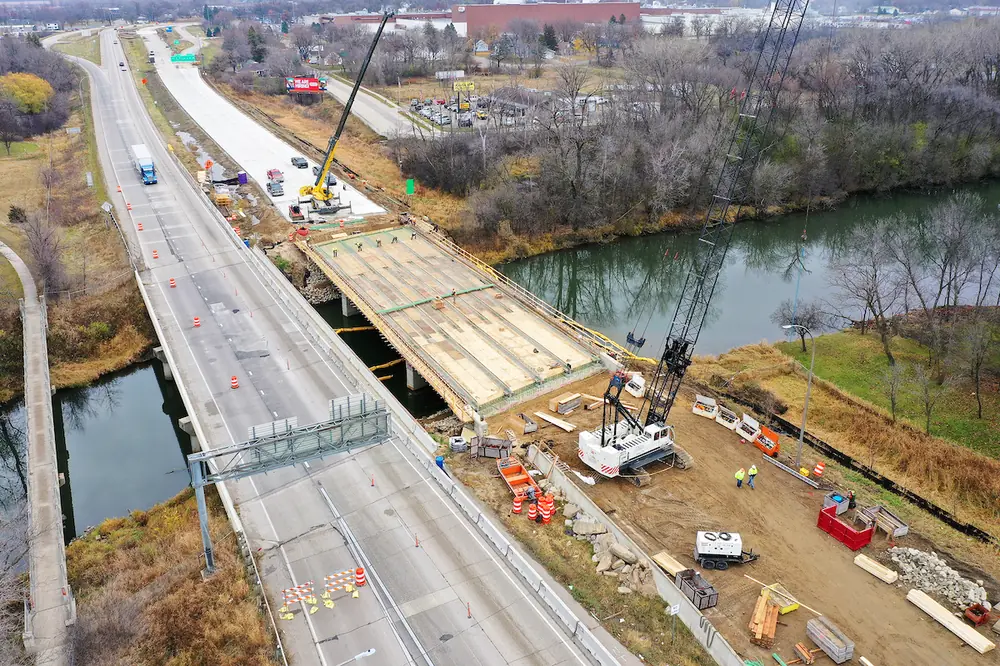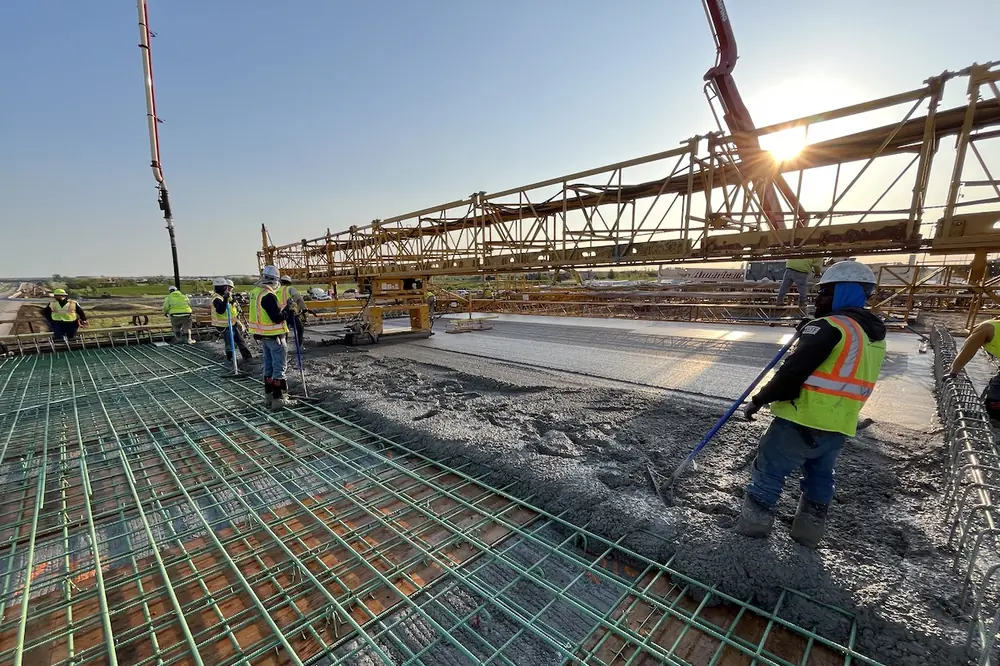
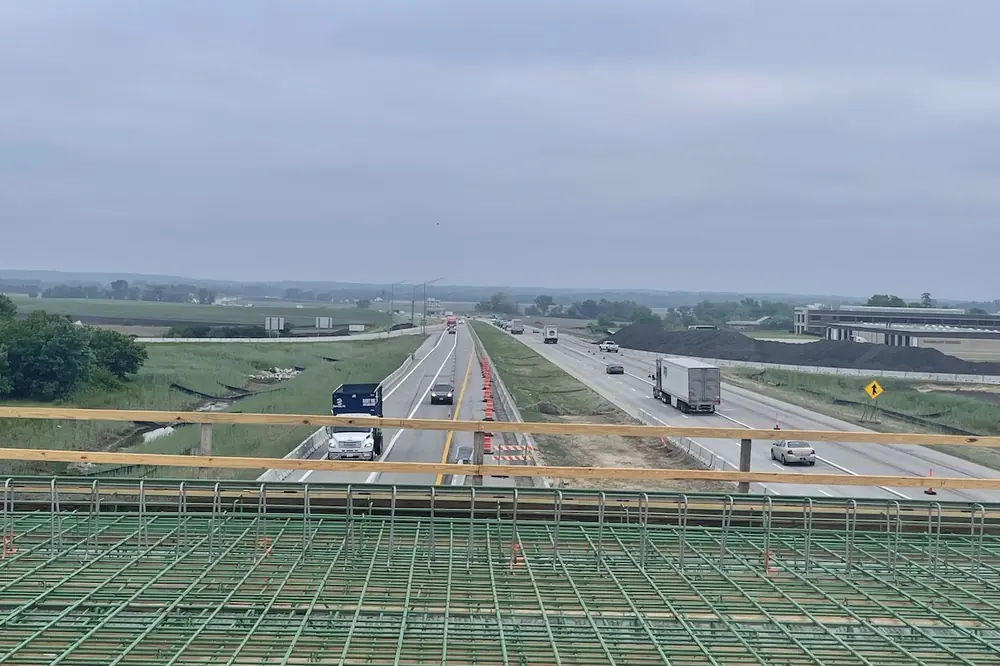
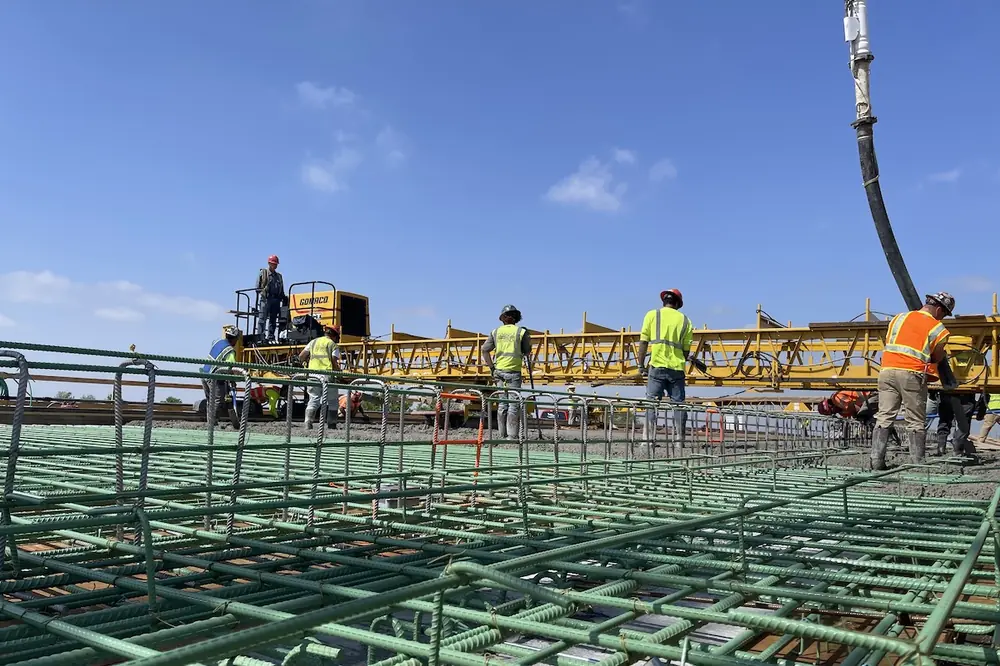

Interstate 380 is one of eastern Iowa’s most important transportation corridors, connecting Cedar Rapids and Iowa City while carrying thousands of commuters, commercial vehicles, and regional travelers daily.
However, since it was originally constructed more than 50 years ago, sections of the interstate are no longer keeping pace with increased traffic volumes and modern safety expectations.
To address those challenges, the Iowa Department of Transportation (Iowa DOT) launched a $98 million corridor reconstruction effort designed to add capacity, improve safety, and extend the roadway’s service life.
“The hope is this added capacity will reduce accidents and improve travel experience,” said John Lamping, Resident Construction Engineer with Iowa DOT.
Funded through a combination of state transportation dollars and more than $57 million in federal infrastructure funding, the project is divided into north and south segments, both currently under construction. The north segment contractor is a joint venture between Elkader, Iowa-based C.J. Moyna & Sons and Progressive Structures. The south segment is being handled by Iowa City-based Streb Construction.

| Your local Deere & Co dealer |
|---|
| West Side Tractor Sales Co |
“Both contractors have experience in heavy highway construction and the ability to take their plan to construct their projects and put it into practice in a way that delivers results,” Lamping said.
With the goal to keep I-380 operational throughout construction, Iowa DOT divided the corridor into manageable segments.
“These are logical breakpoints for traffic, funding, and construction,” Lamping said. “Each segment only involves closures that impact a single interchange. Additionally, these are expensive projects, and we needed logical break points to fund each of them in our five-year program.”
Segmenting the work allowed Iowa DOT to maintain traffic flow while securing funding through its capital improvement planning process.

| Your local Wirtgen America dealer |
|---|
| Brandeis Machinery |
The main goals of the project are to expand capacity and modernize interchange operations. Rather than focusing on aesthetic enhancements, Iowa DOT prioritized operational improvements.
“We are adding an additional lane for safety, capacity, emergencies, and traffic operations,” Lamping said. “There are not specific design features, such as iconic bridge structures or aesthetic streetlights. We are focused on safety and operational standards for interstate highways.”
With that in mind, each interchange along the corridor underwent detailed review to tailor improvements to local conditions. The improvements vary by location.
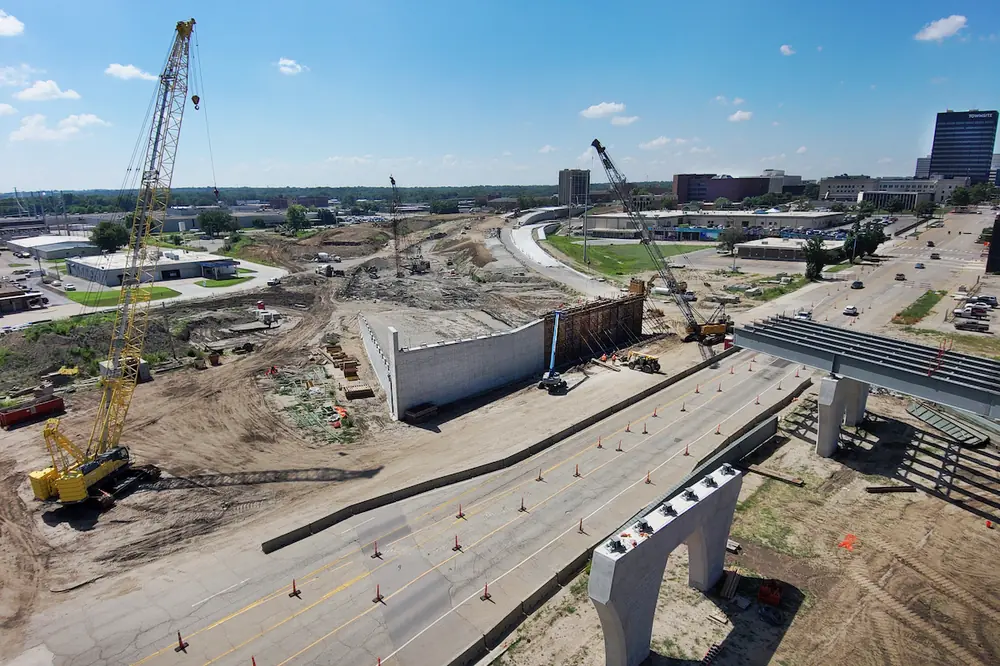
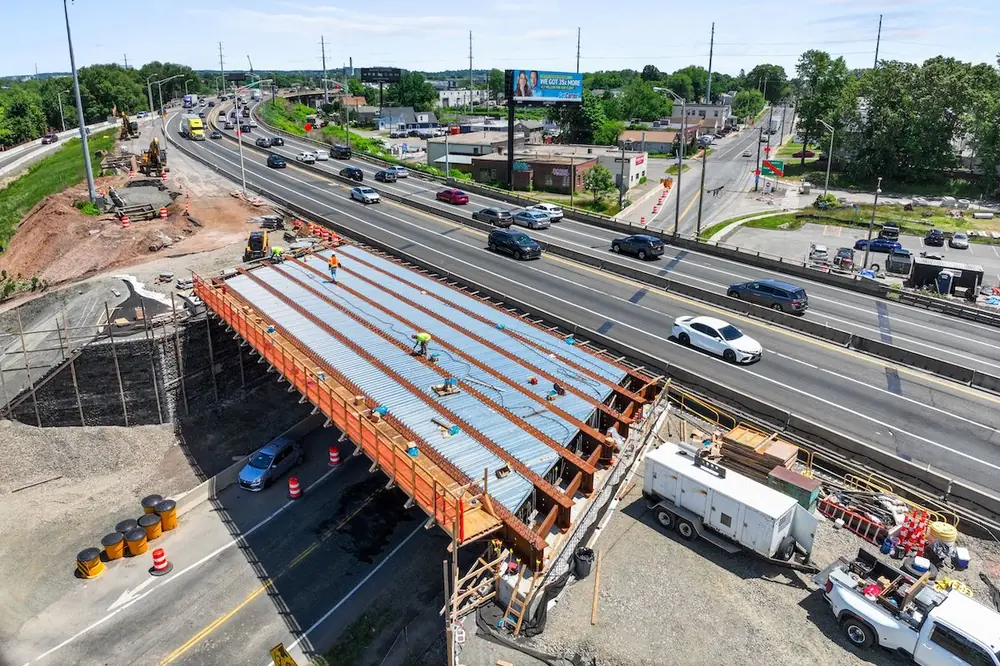
“Penn Street in North Liberty will have an improved diamond interchange with a new widened bridge carrying Penn over 380. Wright Brothers Boulevard will be a diverging diamond style interchange in order to manage the high volume of traffic using this road,” Lamping said. “And 120th is being designed as a ‘dogbone’ roundabout, which will improve safety but also allow local access and better traffic flow.”

| Your local Leica Geosystems Inc dealer |
|---|
| Laser Specialist inc |
The diverging diamond at Wright Brothers Boulevard is expected to significantly reduce conflict points.
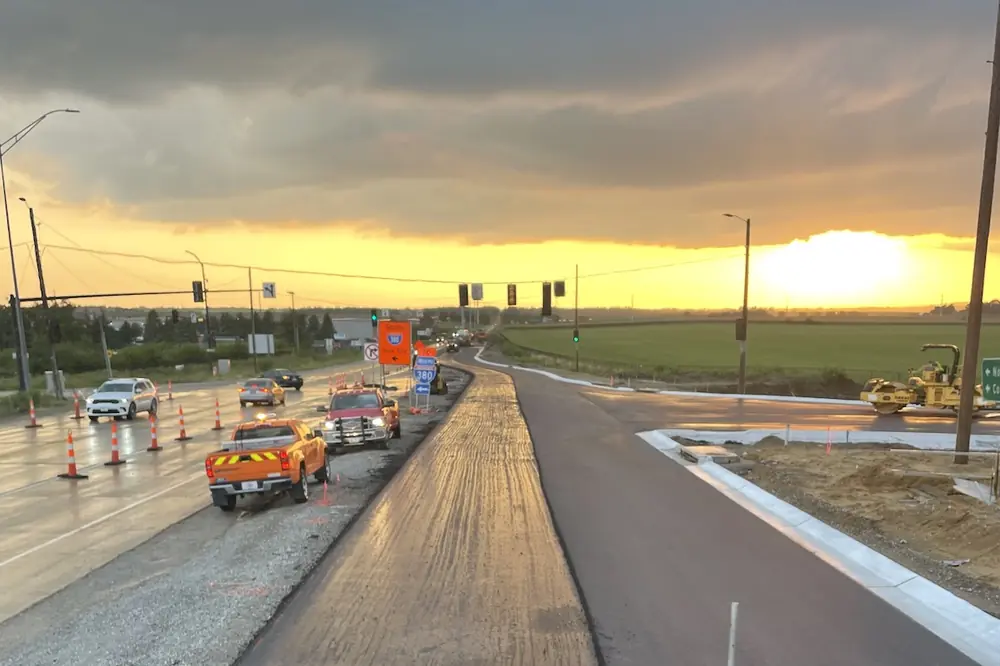
Reconstructing an active interstate without reducing capacity presented some significant staging challenges.
“The Iowa DOT is using full depth shoulders with reinforcement to allow for traffic during construction to keep the roadway at the same volume during construction,” Lamping said, noting reinforced shoulders allow crews to shift traffic while maintaining lane counts.
Temporary detour pavements also play a role. For instance, ramp connections allow for staging and pull-off areas to get vehicles out of the travel lanes when traffic is in a chute configuration.

| Your local Trimble Construction Division dealer |
|---|
| SITECH Midway |
| SITECH Indiana |
| SITECH Ohio |
| SITECH Mid-America |
| SITECH Mid-South |
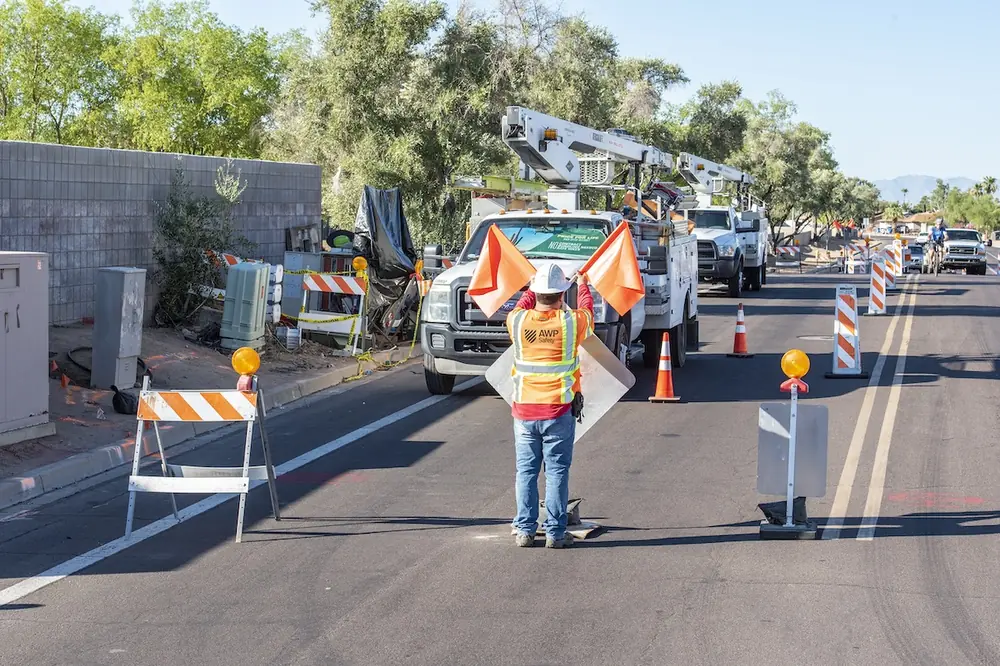
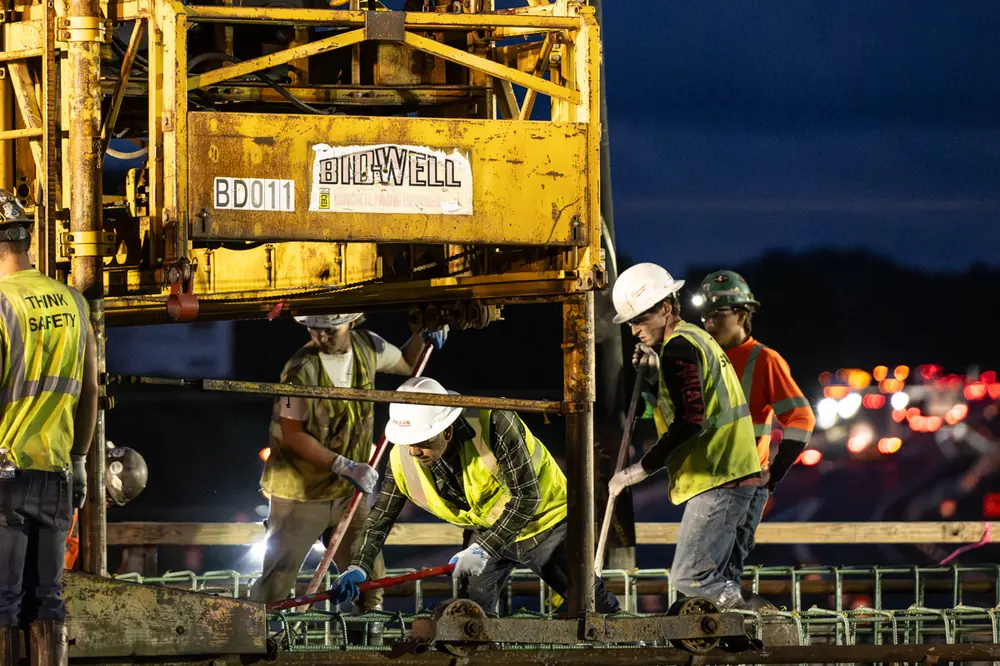
To protect peak travel periods, most lane closures are restricted to off-peak hours and nighttime hours in order to not reduce roadway capacity during the busier periods.
Real-time monitoring supports work zone safety as well.
“The DOT is monitoring speed differentials between traffic, accident data, etc.,” Lamping said. “We have sensors deployed on the project to sense backups with traffic when present and display on PDMS boards that there is slower traffic ahead.”
Even when the work is completed, safety performance will continue to be tracked.

| Your local Bobcat dealer |
|---|
| O'Leary's Contractors Equipment & Supply |
“Our Traffic Operations Center monitors real-time traffic using cameras all along the route, as well as other data platforms that track traveling speeds and congestion,” Lamping said. “More long term, we have a statewide database of all crashes called the Iowa Crash Analysis Tool that provides geographic location, crash type, and a lot of additional data for pattern tracking.”
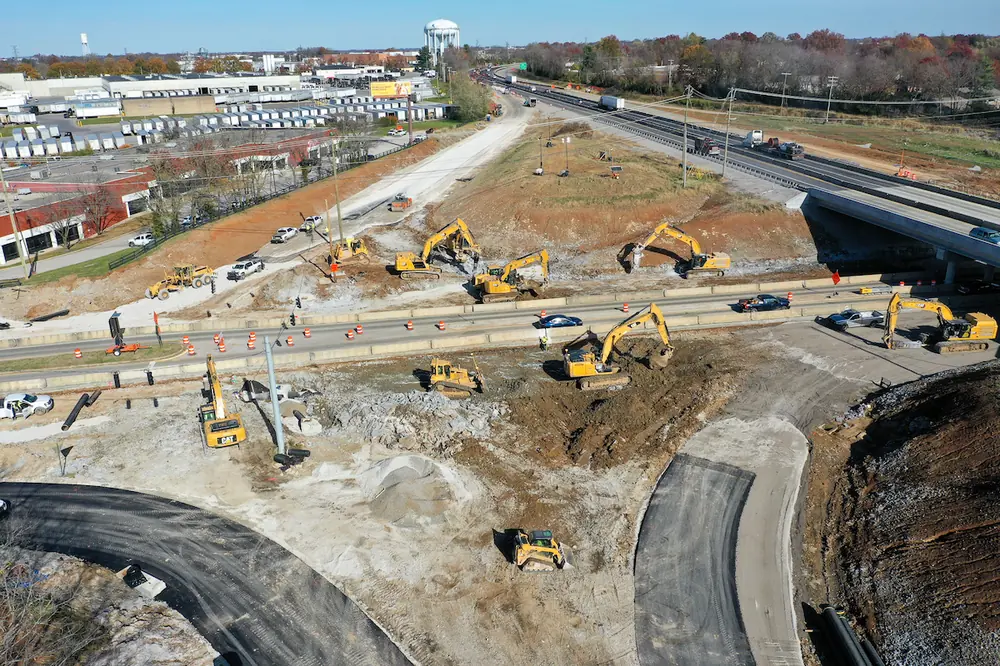
The north segment of the project, which began in the fall of 2024, is being delivered by a joint venture between C.J. Moyna & Sons and Progressive Structures.
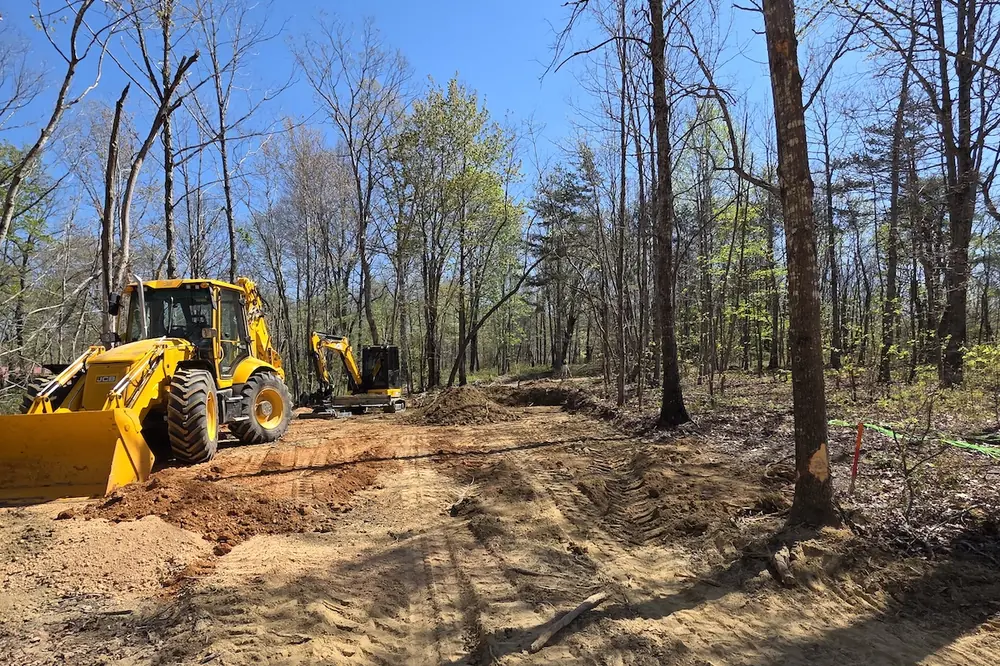
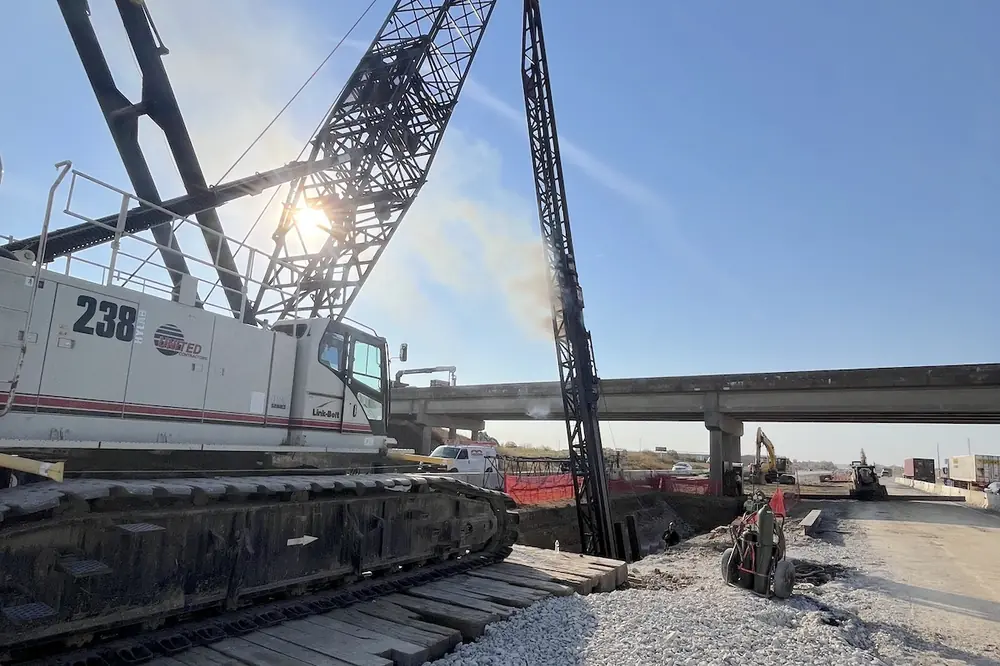
“C.J. Moyna is the lead partner, handling the mass earthwork, pavement removal, recycled pavement, and subbase work as well as the PM [project management] and administrative duties for the contract,” said Adam Kos, Project Manager for C.J. Moyna & Sons. “Progressive Structures is a multifaceted partner completing the roadway pipe work, precast box culvert work, and MSE wall construction.”
Because the contract includes both mainline and interchange work, the team has flexibility in staging.

| Your local Case Construction Equipment Inc dealer |
|---|
| Birkey's Construction Equipment |
“Our contract controls both the mainline reconstruction and Wright Brothers project,” Kos said. “We have been able to find efficiencies in combining stages or creating hybrid stages to maximize the work completed in each stage, while minimizing the impact to the traveling public.”
Since the project began, high traffic volumes remain the biggest hurdle, with traffic control coordination presenting the most significant logistical challenge.
“Staged construction requires constant field adjustments,” Kos said. “Verifying the integrity of the designs between stages is a challenge, as what looks good on paper might not always fit in the field with highly staged work sequences.”
To stay proactive, the team conducts dedicated traffic meetings to ensure it is following the Iowa DOT standard specifications, field inspection, and material certification process that have long been in place.

| Your local Case Construction Equipment Inc dealer |
|---|
| Burris Equipment |
“For this project, we have a standalone meeting on Monday mornings focused singularly on upcoming traffic impacts,” Kos said. “We walk through the upcoming three-week schedule and notify TMC of upcoming traffic impacts, such as nighttime lane closures or ramp closures.”
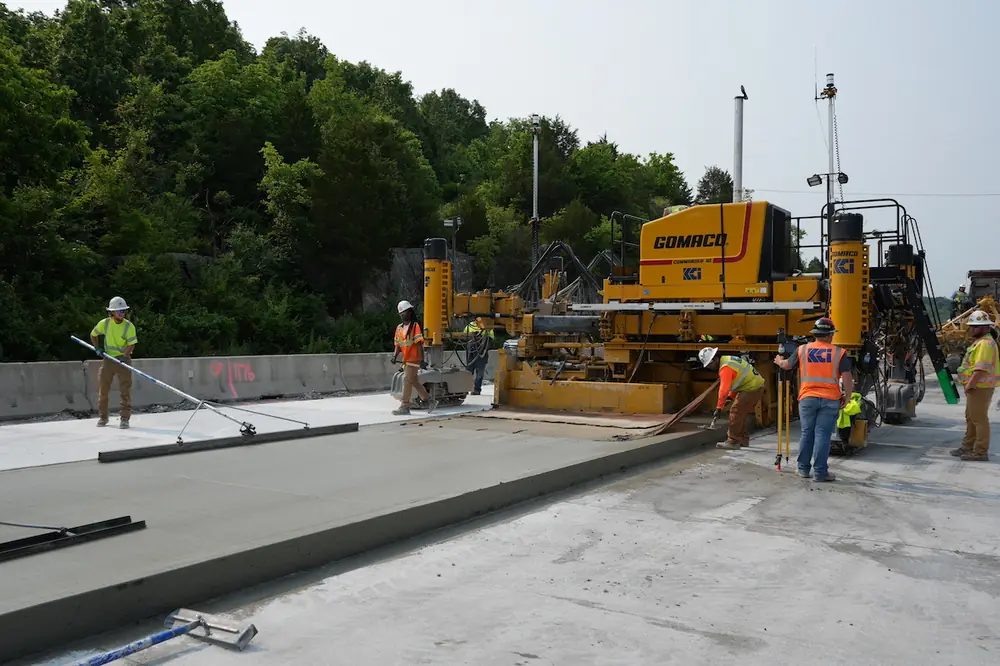
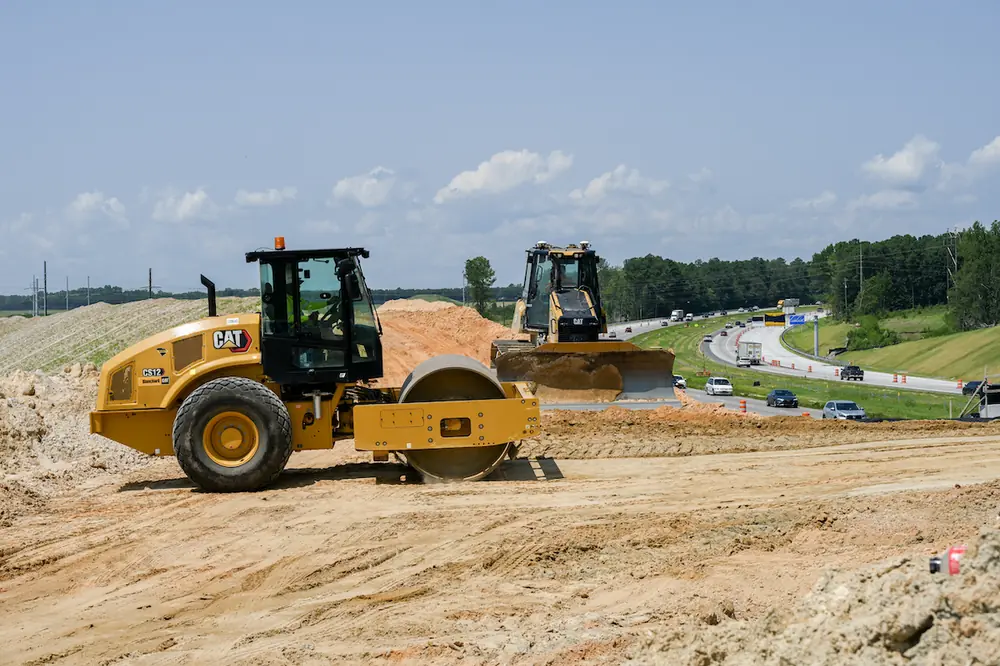
On the south segment, which began in January of 2024, Streb Construction is performing full-depth pavement removal and reconstruction.
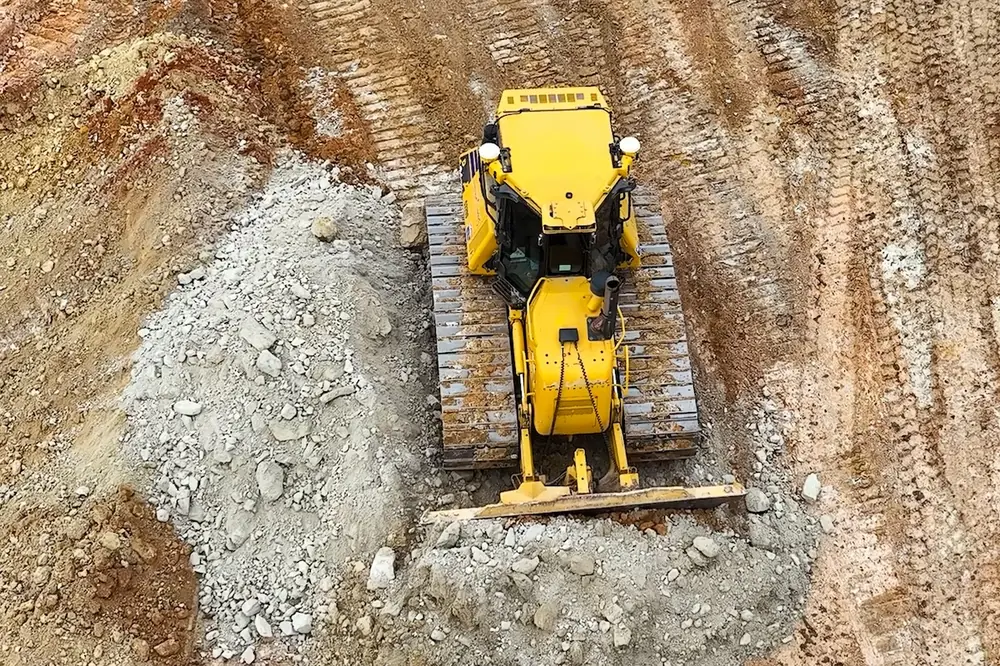
“We got to remove the existing pavement and then we have to crush it, blend it, and then we have to re-grade,” said Mario Franco, Project Manager for Streb Construction. “Then we pour it back all together and put the safety devices on there, like cable guards and cable rails. Hopefully we can have three lanes by the fall, then open and have a wider highway.”
Just as it does for the north part of the project, traffic control remains the dominant safety concern for the south as well.

| Your local Takeuchi Mfg Ltd dealer |
|---|
| Brandeis Machinery |
“The challenge is that it’s really hard to get people to slow down in a work zone,” Franco said. “That’s really the safety factor here. Temporary barrier rail in head-to-head configurations presents additional risk. It’s just very dangerous.”
Subsurface conditions have required targeted remediation before reconstruction could proceed.
“There was just a couple of soft spots where we had to take out some clay soils that [were] really bad, and we put some better soils to make it more compacted and more firm,” Franco said.
Although the I-380 project remains mostly within the existing corridor footprint, environmental factors were considered.

| Your local LeeBoy dealer |
|---|
| Brandeis Machinery |
“We are staying on the current alignment as much as possible and trying to limit additional right of way acquisition,” Lamping said. “This helps to avoid nearby environmental areas of concern, like the Iowa River.”
Additionally, by limiting right of way expansion, Iowa DOT minimized impacts to sensitive environmental areas while keeping the project focused on operational improvements.
Beyond addressing localized soil issues, the south segment also incorporates material recycling as part of its pavement strategy.
“We are going to try to recycle the SHMA that’s there and blend it in with the PCC,” Franco said. “The rebuilt pavement structure includes a 6-inch recycled blended subbase of PCC and HMA materials, topped with 6 inches of quarried aggregate before final paving.”

| Your local Wirtgen America dealer |
|---|
| Brandeis Machinery |
The project is now in year two and headed toward a completion goal of spring 2027 for both the north and south segments.
When complete, the reconstructed I-380 corridor will provide added capacity, safer interchange configurations, improved emergency access, recycled material efficiencies, and modern operational monitoring.
“This ensures that one of eastern Iowa’s most vital transportation links continues serving the region for decades to come,” Lamping said.
- Owner: Iowa Department of Transportation
- Prime Contractor: C.J. Moyna & Sons, Elkader, Iowa; Progressive Structures, Luxemburg, Iowa
- Designers: Iowa Department of Transportation; HR Green, Cedar Rapids, Iowa; Snyder & Associates, Ankeny, Iowa; Bolton & Menk, Mankato, Minnesota; Stanley Consultants, Muscatine, Iowa; Olsson, Lincoln, Nebraska
- Subcontractors: Streb Construction Co., Cedar Falls Construction Co., L.L. Pelling Co., Northeast Iowa Subdrain, Dave Gryp Construction, Dormark Construction, D&N Fence Co., Stevens Erosion Control, HRS, Advanced Traffic Control, Surface Prep Technologies, Neumiller Electric, Iowa Bridge & Culvert, Boulder Contracting, United Contractors, Minturn, Manatts, Culvers Lawn & Landscape, The Driller, E&F Paving, Iron Works, Terracon, Pieces Breaking Service, Diamond Surface
- Owner: Iowa Department of Transportation
- Prime Contractor: Streb Construction, Iowa City, Iowa
- Designers: Iowa Department of Transportation; Burns & McDonnell, Kansas City, Missouri; HR Green, Cedar Rapids, Iowa
- Subcontractors: Cellular Concrete, Boulder Contracting, Dave Gryp Construction, Dormark Construction, Inroads, Iowa Trenchless, Lindner Painting, Manatts, L.L. Pelling Co., McClure Engineering, Rathje Construction, Stevens Erosion Control, K&W Electric, Peterson Contractors, E&F Paving, Advanced Traffic Control, Henriksen Contracting, Terracon, Mid-Iowa Environmental, Neumiller Electric, Iron Works, Hawkeye Weld & Repair, Cedar Falls Construction, Taves Contracting, Diamond Services