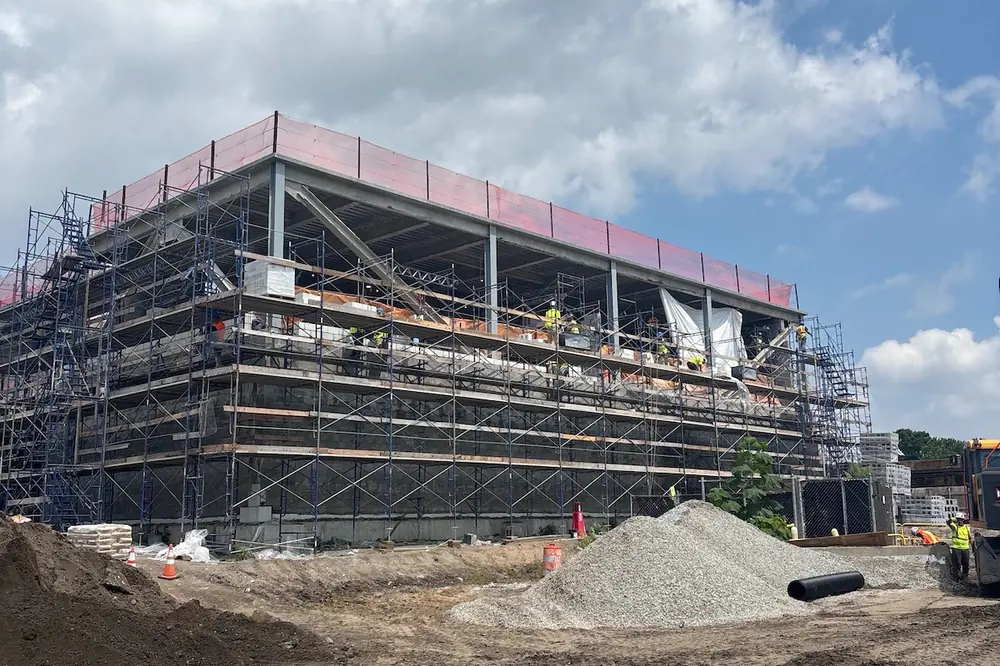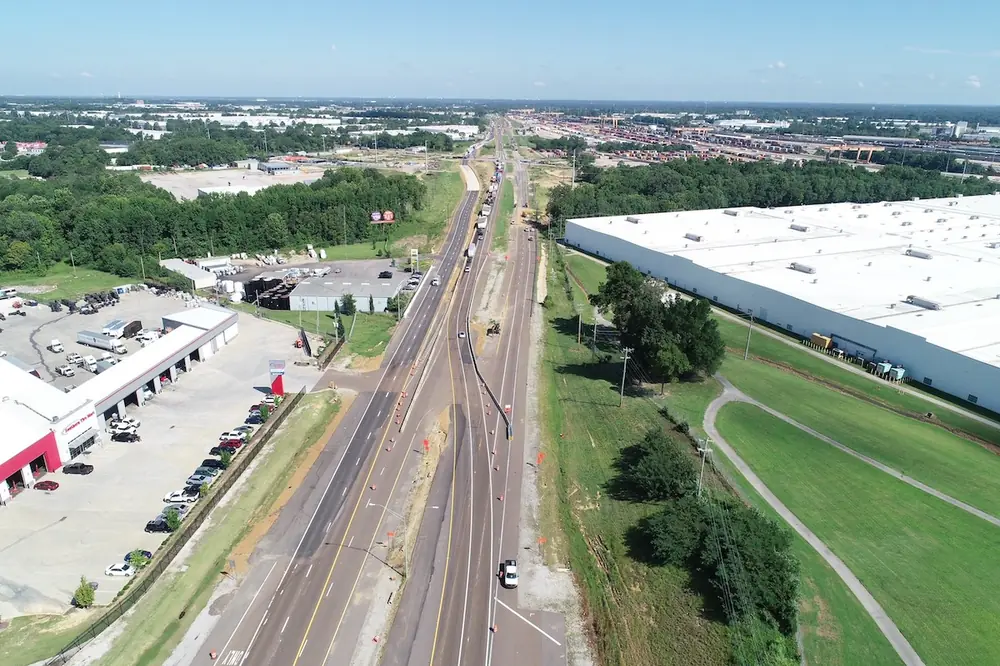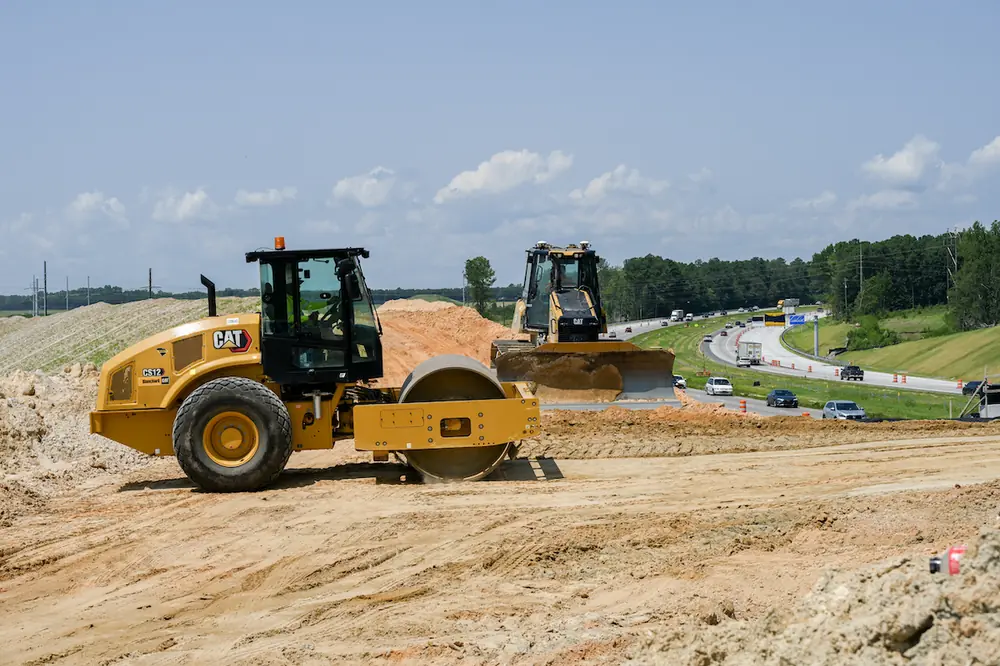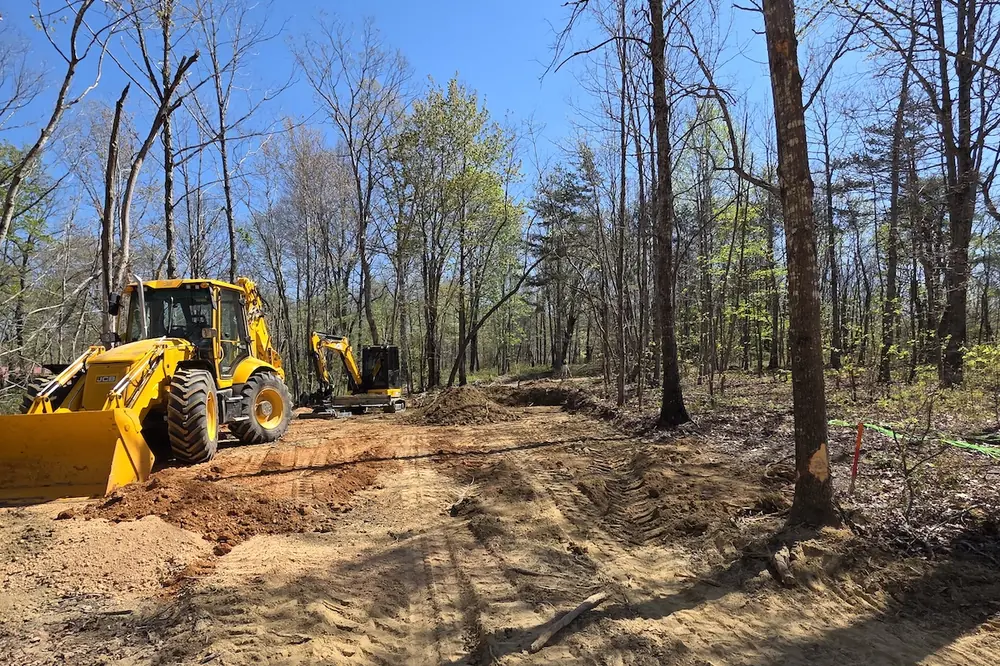
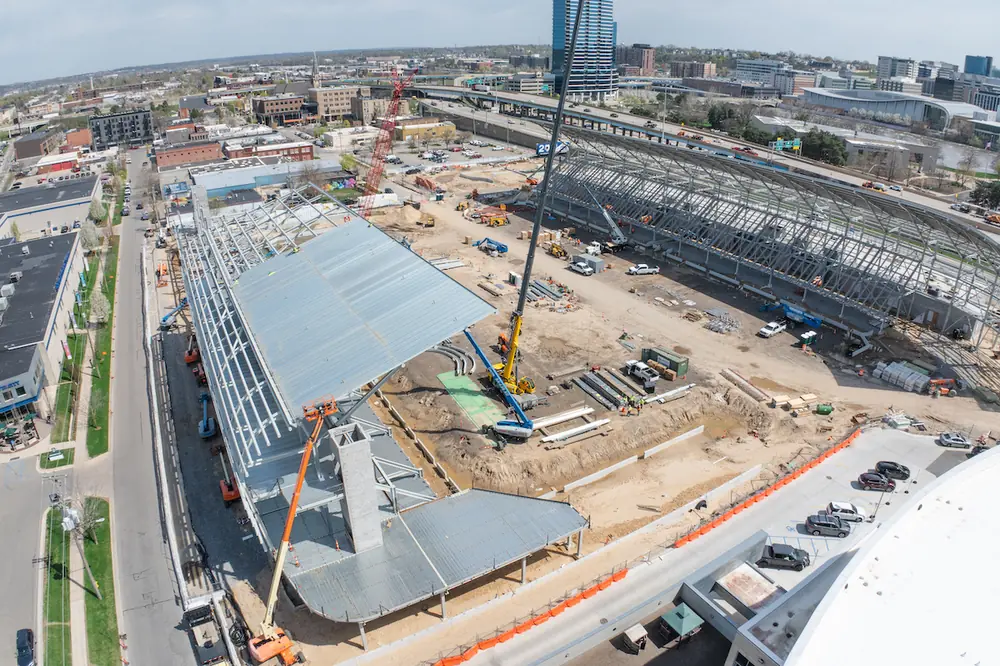
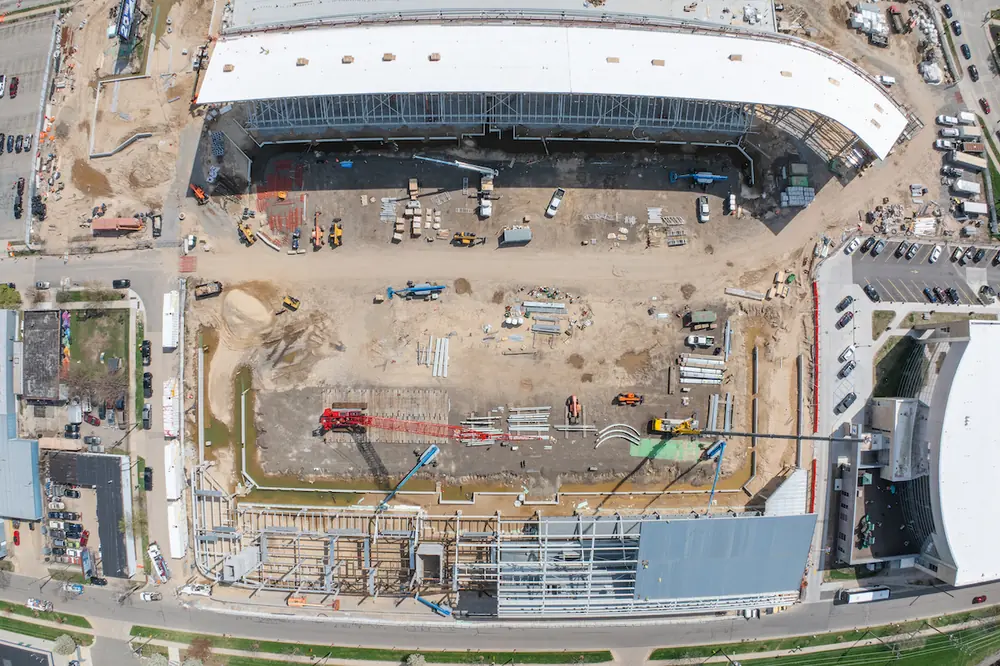
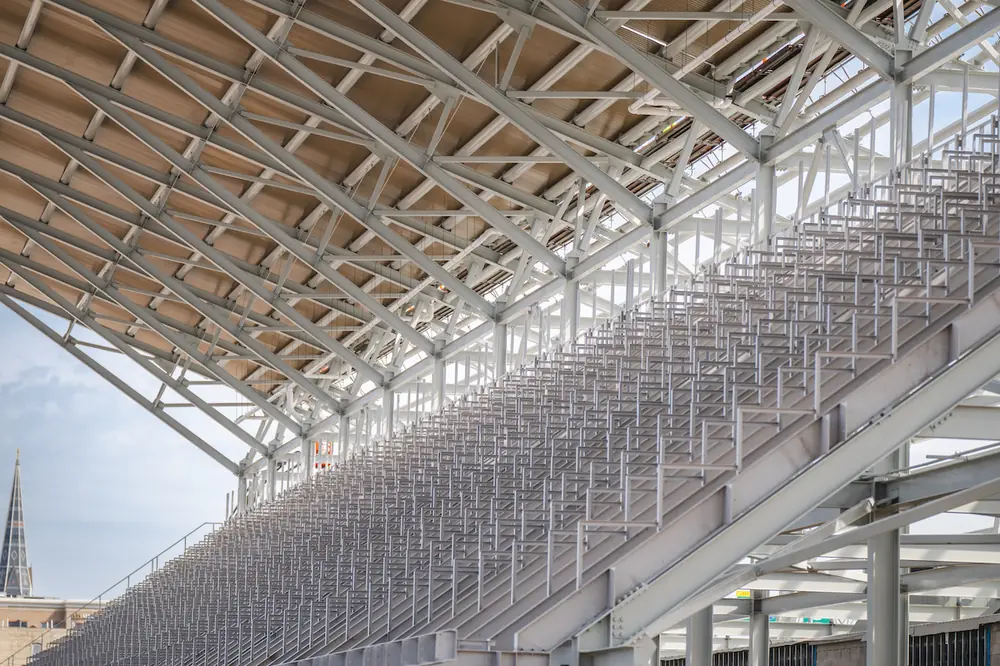
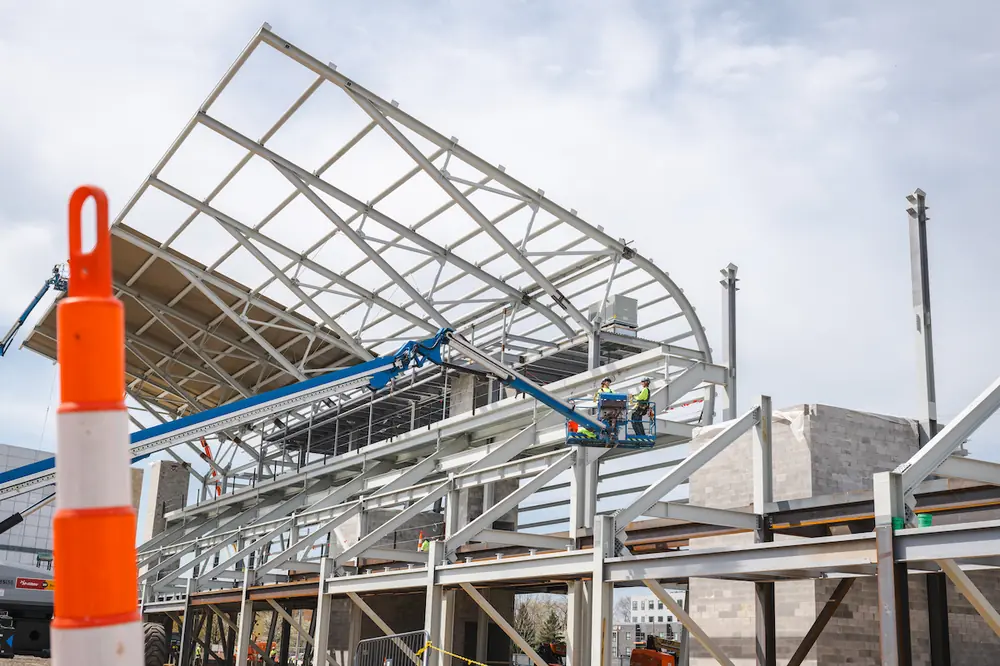
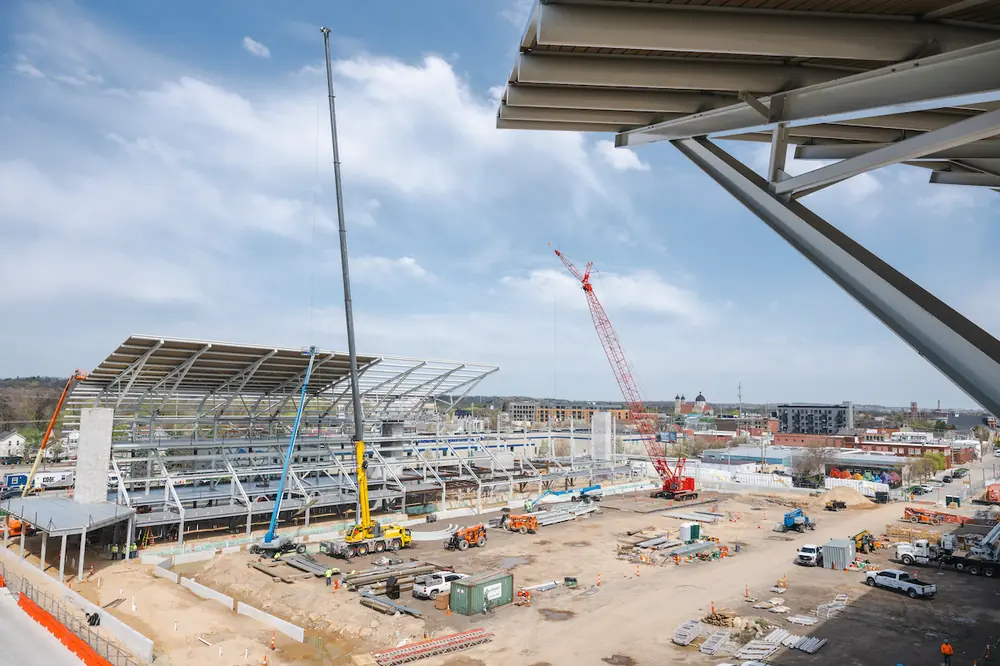


Work on the new, $175 million Amway Soccer Stadium in Grand Rapids, Michigan — a joint venture between Rockford and AECOM Hunt — is continuing on schedule. The 8,500-seat stadium is set to open in spring 2027.
Developed and led by Grand Action 2.0, a Grand Rapids-based nonprofit economic development organization, the 134,500-square-foot venue will provide a multi-purpose facility designed to host soccer, American football, lacrosse, rugby, and other professional and amateur sporting and community events.
The stadium will serve as the home base of Athletic Club Grand Rapids (AC Grand Rapids), a new professional men’s soccer team scheduled to begin play in the MLS NEXT Pro league next year.
Projected to attract more than 160,000 visitors per season and net more than $408 million in new economic impact, the 8.2-acre stadium complex is slated to become a growth catalyst for the west side and entire downtown district.
The stadium is being built via a mix of public and private funds through a partnership between the city of Grand Rapids, Grand Action 2.0, and the Grand Rapids-Kent County Convention/Arena Authority, which will serve as the official owner and operator of the stadium.

| Your local Leica Geosystems Inc dealer |
|---|
| Laser Specialist inc |
Situated just west of Grand Rapids’ downtown city center, the stadium is adjacent to the YMCA of Greater Grand Rapids — on a site that includes land formerly used by the YMCA as a surface parking lot.
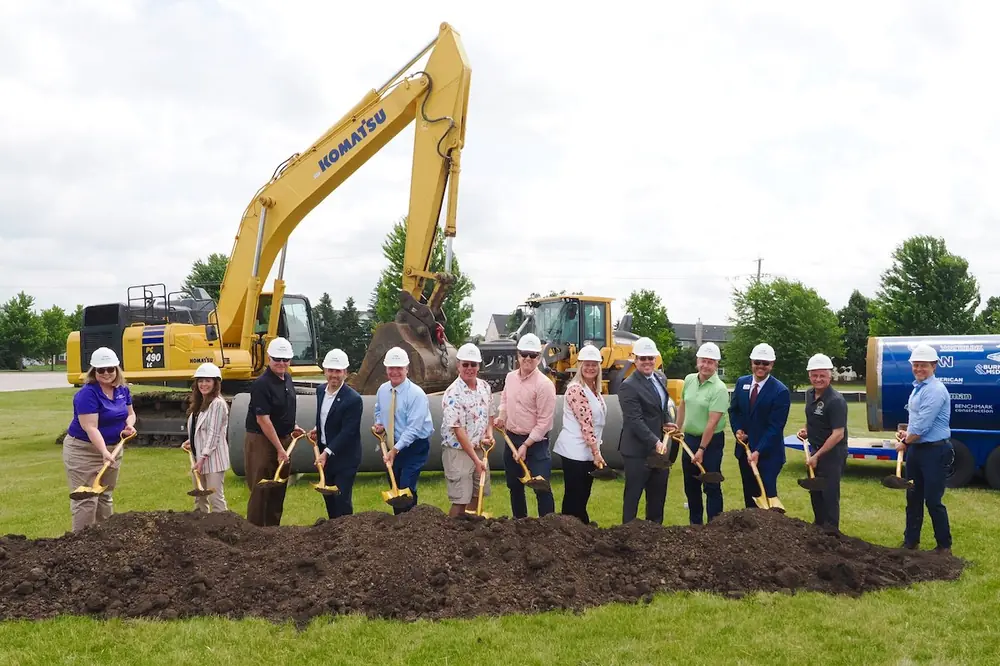
Crews broke ground on the project in April 2025. Initial efforts throughout that spring focused on site preparation, including removing and rebuilding the YMCA’s visitor parking lot, relocating underground utilities, and installing new utilities for the project.
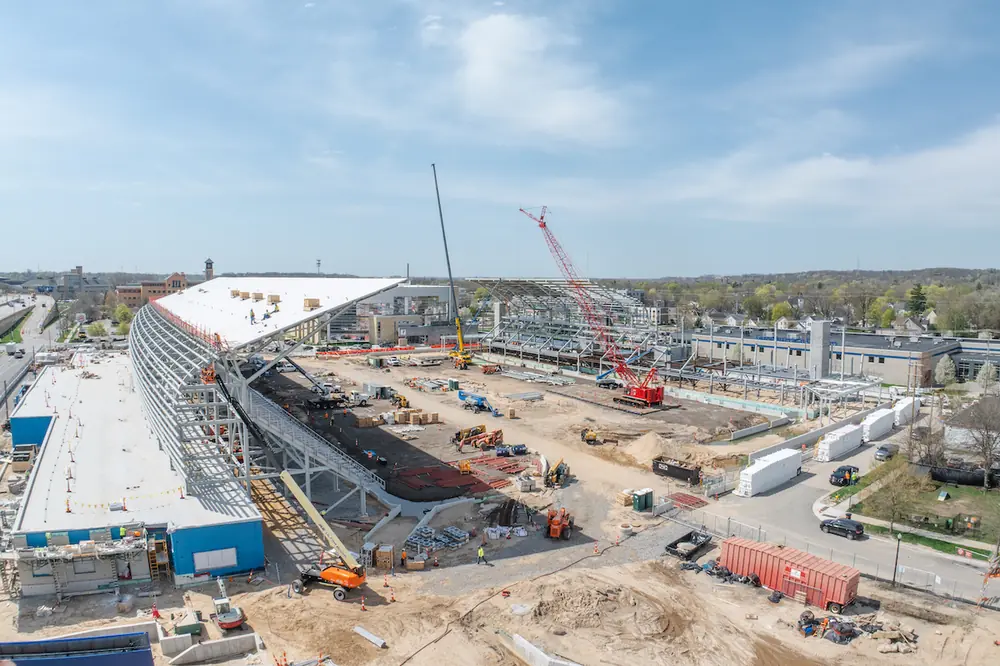
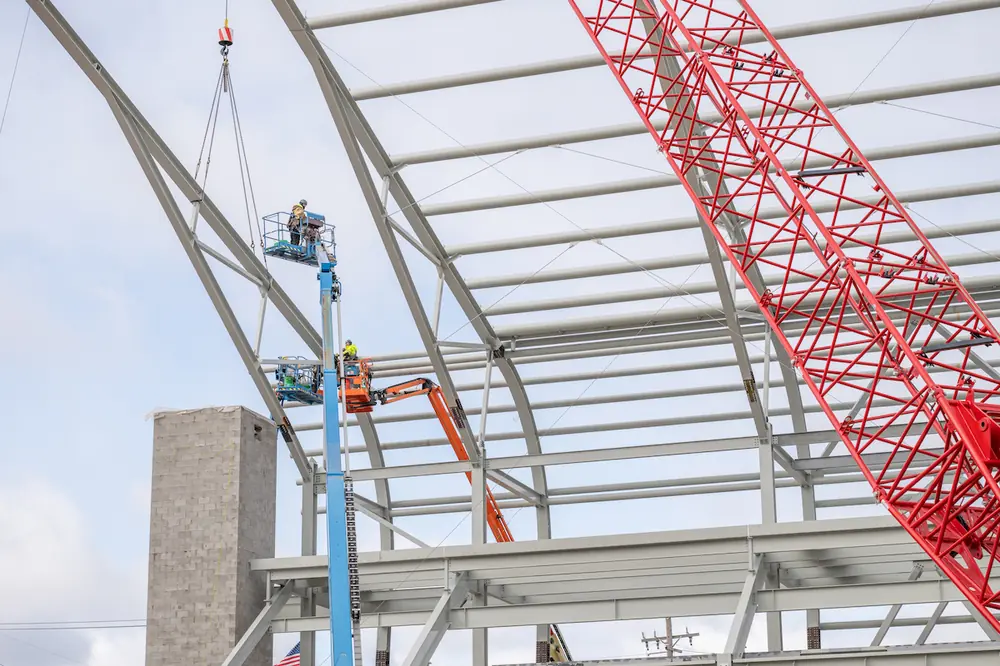
Erection of the stadium’s structural steel system began in September 2025. By January 2026, workers had completed the installation of 1 million pounds of steel, roughly one-third of the projected 3.5 million pounds it will take to complete the project.
As of April 2026, all structural steel, exterior masonry, and 90 percent of the interior masonry had been completed on the stadium’s eastern side — including half of the stadium’s cantilevered canopy covering the majority of the stadium’s 8,500 seats.

| Your local Wirtgen America dealer |
|---|
| Brandeis Machinery |
“The roof is done on the east building, and the canopy on the east side is complete,” said George Colvin, Rockford’s Senior Superintendent on the project.
In May 2026, the team started roof work on the west side of the building and installed bleachers.
Construction teams are on track to enclose the western portion of the stadium by mid-June and will begin excavating the pitch, or soccer playing field, in July — a process that will see the removal of roughly 50,000 tons of earth.
Work on the project has gone smoothly, overall, thanks in large part to AECOM Hunt’s and Rockford’s combined expertise.

| Your local New Holland dealer |
|---|
| Burris Equipment |
Indianapolis, Indiana-based AECOM Hunt has previously managed over 125 stadium projects across the U.S., including venues such as Lucas Oil Stadium in Indianapolis; Mercedes-Benz Stadium in Atlanta, Georgia; and SoFi Stadium in Inglewood, California. Meanwhile, Grand Rapids-based Rockford brings more than three decades of experience working on many of the city’s most notable builds, including Studio Park Tower, the Grand Rapids Art Museum, Amway Grand Plaza Hotel, and the JW Marriott downtown.
“[With this project], you have the expertise of a company known for specializing in big stadiums ... as well as a company that has had a long relationship with Grand Rapids and the local contractors here,” Colvin said. “Together, we were able to come up with a good [construction] program that allowed us to stay ahead of a lot of things.”
“We’ve been able to work together to create a carefully timed critical path sequence — dates and milestones that we have to hit on time to keep the project moving on schedule — to make sure that we’re ready for opening day,” agreed Chad Hobson, AECOM Hunt’s Vice President. “A lot of work went into the planning and scheduling process.”
Once complete, the stadium will include a range of amenities such as 16 field-level suites; a club level with concessions and dining spaces; tiered general seating; and an outdoor courtyard that will facilitate fan community building and connect the stadium to surrounding area businesses.

| Your local Takeuchi Mfg Ltd dealer |
|---|
| Brandeis Machinery |
In all, its construction will comprise 10 miles of piping for HVAC and plumbing, over 175 miles of electrical or low-voltage wire and cabling, roughly 7,800 cubic yards of concrete, and some 28,000 linear feet of ribbon banding on the stadium canopy — in addition to the aforementioned 3.5 million pounds of steel.
Along with the YMCA, the stadium also sits near portions of the Grand Valley State University campus and Bridge Street, a bustling corridor of downtown restaurants, shops, and bars.
Rockford and AECOM Hunt have worked proactively and collaboratively to reduce the construction impact on surrounding businesses as the stadium takes shape.
“We have tried to make sure we are being good neighbors and partners,” Colvin said. “We held community meetings, we listened [to the challenges the construction was presenting], and we made adjustments and compromises wherever we could.”

| Your local Komatsu America Corp dealer |
|---|
| Brandeis Machinery |
For example, crews shifted their construction hours and repositioned perimeter fencing to provide easier public access to businesses on the north side of the construction zone during their normal business hours. In another instance, teams set aside a specific parking zone for a horse-drawn carriage business whose operations centered near the construction, so that it did not lose clients or revenue during the build.
“Rockford’s headquarters is just two blocks from the stadium, so it’s been important for us to share information and be as transparent as possible with everyone,” said Jeff Taggart, Rockford’s Vice President for Health and Well-Being. “These are our neighbors, too.”
As the stadium’s most defining feature, its cantilevered canopy roof serves a dual purpose: it will protect seated fans from the elements while preserving their clear sightlines of the playing field.
“There are no columns coming down inside the stadium’s seating area. It’s all cantilevered over,” Hobson said. “Many of the architectural and engineering design choices focused on maximizing the fan experience.”

| Your local Bobcat dealer |
|---|
| O'Leary's Contractors Equipment & Supply |
Staying on schedule — particularly in terms of installing the stadium’s steel column framework for the canopy roof — included working through Michigan’s brutal winter months.
“We have a lot of local trade partners who have a lot of pride in getting this project done on time as well,” Taggart said. “They pushed through the elements and continued working throughout the winter.”
Structural steel beams were fabricated off site — including at one fabricator in Grand Rapids — and then delivered to the construction zone as needed. During installation, crews lifted the beams into place using a variety of large crawler cranes, including a Manitowoc MLC 150, a Grove TMS 9000-2, and a Grove GMK 4080L, which featured a 157-foot, 169-foot, and 197-foot boom, respectively.
“[Working on just 8 acres] limits you in the accessibility and options you have for lay down space. And so, you're looking at just-in-time deliveries,” Hobson said.

| Your local Case Construction Equipment Inc dealer |
|---|
| Birkey's Construction Equipment |
Now that the stadium is starting to take shape, members of the Rockford and AECOM Hunt leadership feel a special sense of pride, they said, knowing they are helping create a flagship project for the city of Grand Rapids.
“This is a major project for Grand Rapids that will forever stand on its own,” Colvin said. “To be able to say I was a part of the very first professional soccer stadium in the city is very rewarding. All eyes are on it, and it gives us an immense sense of pride to be able to say we delivered a project of this quality that the whole city can enjoy.”
“It’s a once-in-a-lifetime project for us,” Taggart agreed. “Driving downtown and seeing that canopy rise in the skyline as you’re looking west is a very cool feeling.”
- Owner: Grand Rapids-Kent County Convention/Arena Authority
- Developer: Grand Action 2.0, Grand Rapids, Michigan
- Construction Manager: Rockford, Grand Rapids, Michigan; AECOM Hunt, Indianapolis, Indiana
- Architect/Engineer of Record: Progressive Companies, Grand Rapids, Michigan