
Since early colonial times, the navigational channel of the Hampton River has been an important corridor for commercial fishermen and recreational boaters. The health benefits associated with those Atlantic Ocean breezes also attracted tourists as far back as the late 1800s. By the early 1900s, the Hampton Harbor area had evolved into a popular summer destination.
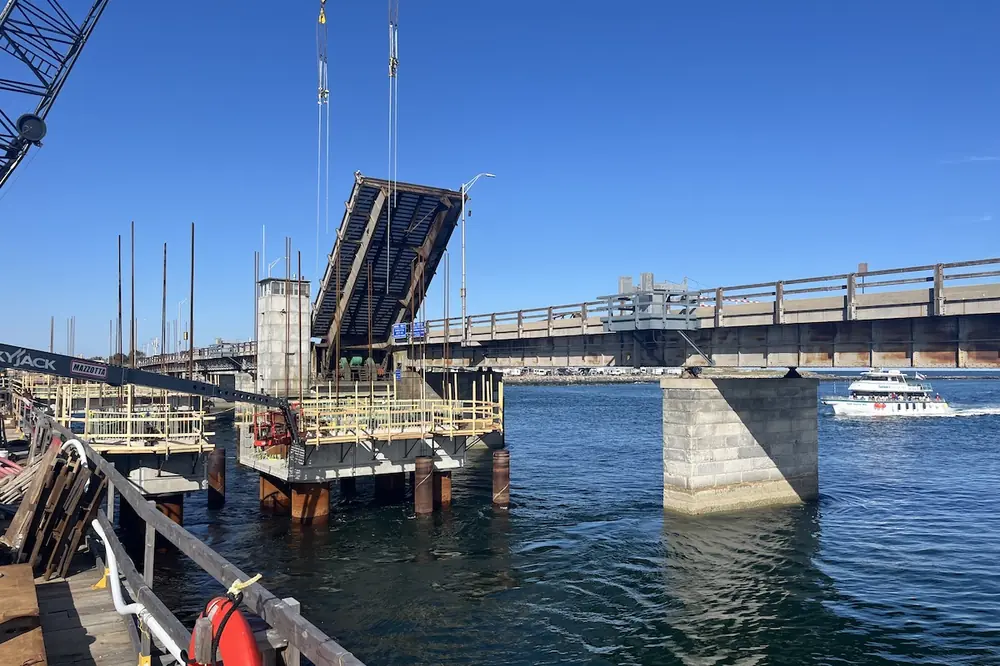
Spanning the Hampton River just a half mile inland from the Atlantic Ocean, in 1901 the Mile-Long Wooden Bridge — also known as the bridge to Hampton Beach — connected the two sides of the waterway for horses, automobiles, and pedestrians. That bridge was then replaced by the Neil R. Underwood Memorial drawbridge, originally opened in 1949.
Its bascule design made sense for the lower traffic volumes decades ago, but over the years, it became increasingly insufficient for the peak summer season surge of beachgoers. The congestion caused delays for ambulances, police, and the fire department during emergencies. Marine traffic was also frequently delayed waiting for bridge openings, and for the narrow 40-foot channel to be navigable.
“The waterway is a working channel for lobster fishermen and commercial fishing vessels,” said Denis Switzer, Contract Administrator, New Hampshire Department of Transportation (NHDOT). “The summertime tourism brings even more boaters through this central gateway to the inland harbor areas and the Atlantic coast.”
The bridge landed on New Hampshire's "red list" of deficient bridges back in 1999 due to the outdated design, the inability to handle modern traffic volumes, and the years of exposure to the harsh coastal environment leading to its structural deterioration.

| Your local Leica Geosystems Inc dealer |
|---|
| Laser Specialist inc |
More than a year after breaking ground, the marine bridge project replacing New Hampshire’s highest-priority bridge is well underway in Hampton Harbor.
The replacement project, built to the west of the existing bridge, will be a fixed, steel superstructure approximately 1,300 feet long, with a vertical clearance of an additional 48 feet. Four feet of potential sea level rise have also been accounted for in the design of the new bridge.
It is a design both businesses and residents desired, potentially making the corridor more attractive for redevelopment and investment.
“Currently, the bascule span has to be operated each time a fishing vessel goes through,” Switzer said. “It was time to replace it. The new bridge is going to be elevated to a much greater height so that it will no longer be a lift span, and boats are going to be able to travel underneath it at will.”

| Your local Wirtgen America dealer |
|---|
| Brandeis Machinery |
According to NHDOT, the bridge carries up to 18,000 vehicles per day during the peak season, roughly double the amount during the rest of the year. With the increased dependency on the Route 1A corridor, heavy congestion due to the traffic demand both on and off the water drove the project design.
Switzer said that implementing the new bridge design will alleviate the need for operators, while also lowering power requirements. Bascule bridges are also notorious for requiring costly maintenance due to their complex mechanisms.
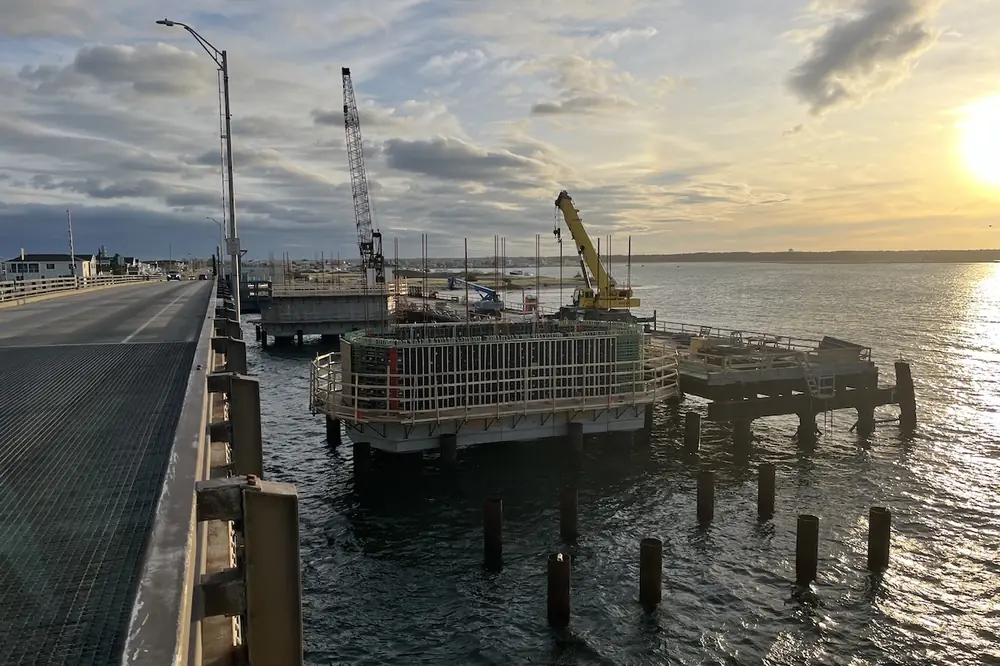
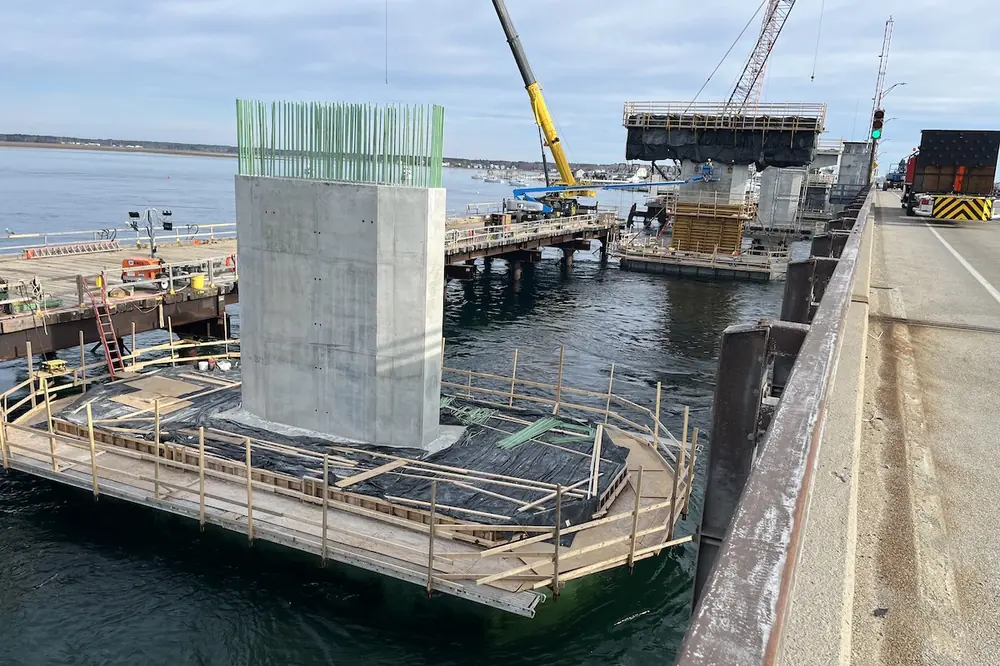
The bridge piers have been reduced from 10 to six in the two abutments. Temporary cofferdams will be used during the construction of the pier footings. The navigable channel will be widened beneath the bridge from 40 feet to 150 feet once the new bridge is in service.
Once opened, the new bridge will offer two 11-foot travel lanes, two 6-foot sidewalks, and two 8-foot shoulders, improving traffic flow and accommodating emergency vehicles more efficiently.

| Your local New Holland dealer |
|---|
| Burris Equipment |
The $107 million replacement project contract was awarded by New Hampshire’s Executive Council to Massachusetts-based contractor SPS New England Inc. (SPS). HDR Inc., the project’s design consultant, developed the bridge design taking into consideration the complex coastal and geotechnical conditions.
According to NHDOT, the project is funded with 100 percent federal dollars, supported in part by the recent federal infrastructure investments, as well as the anticipated utilization of turnpike toll credits for the state’s 20 percent match.
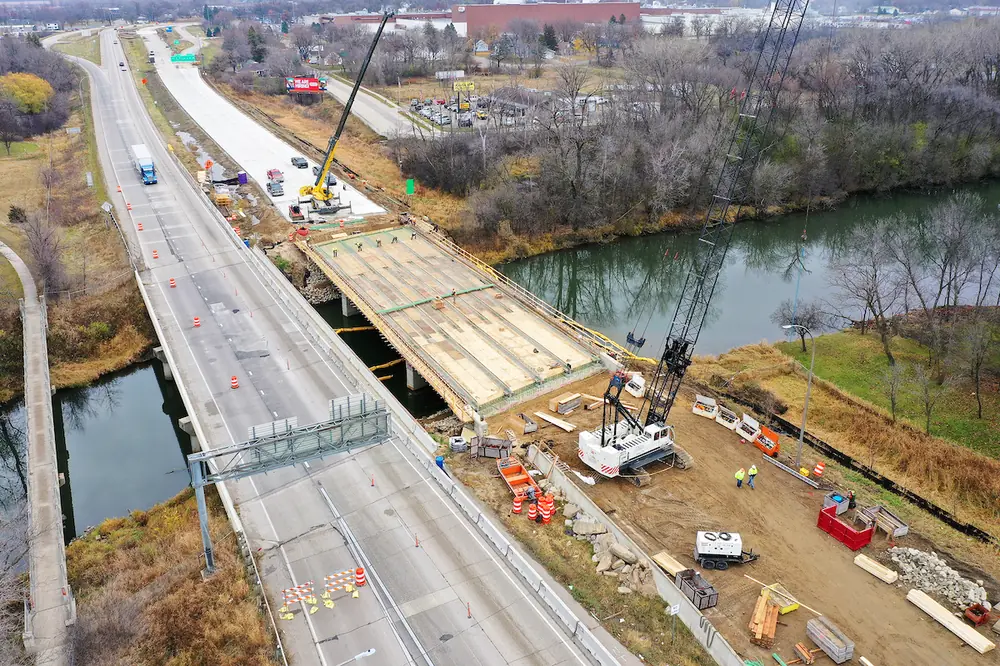
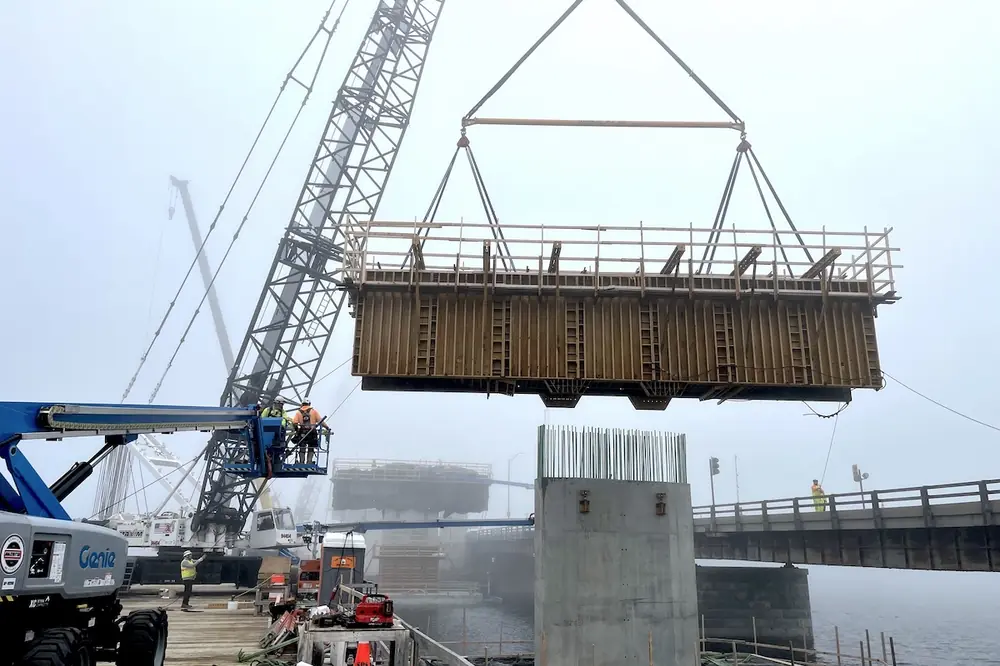
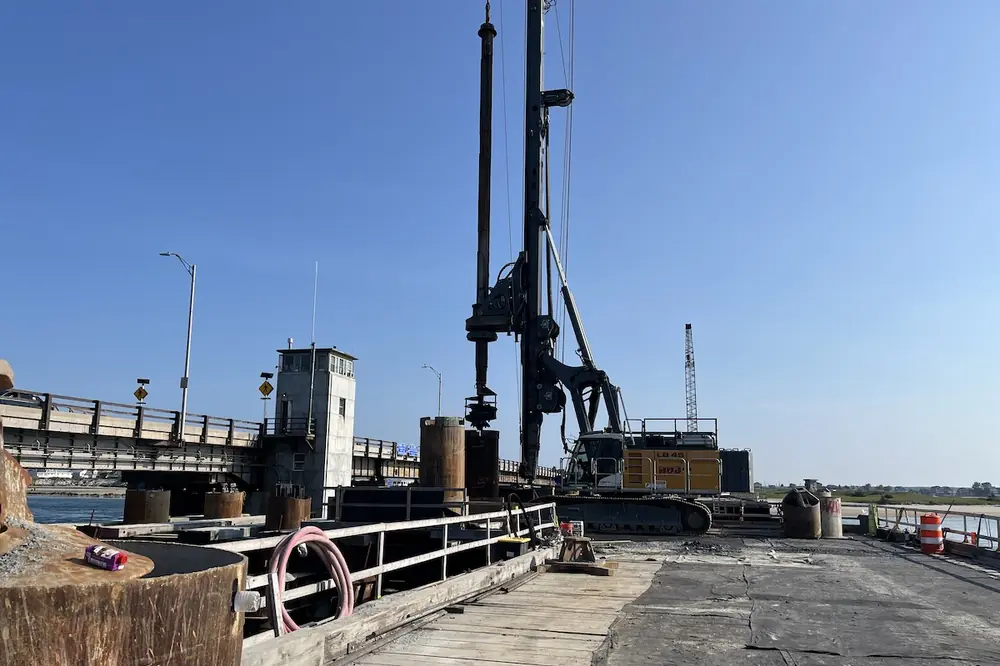
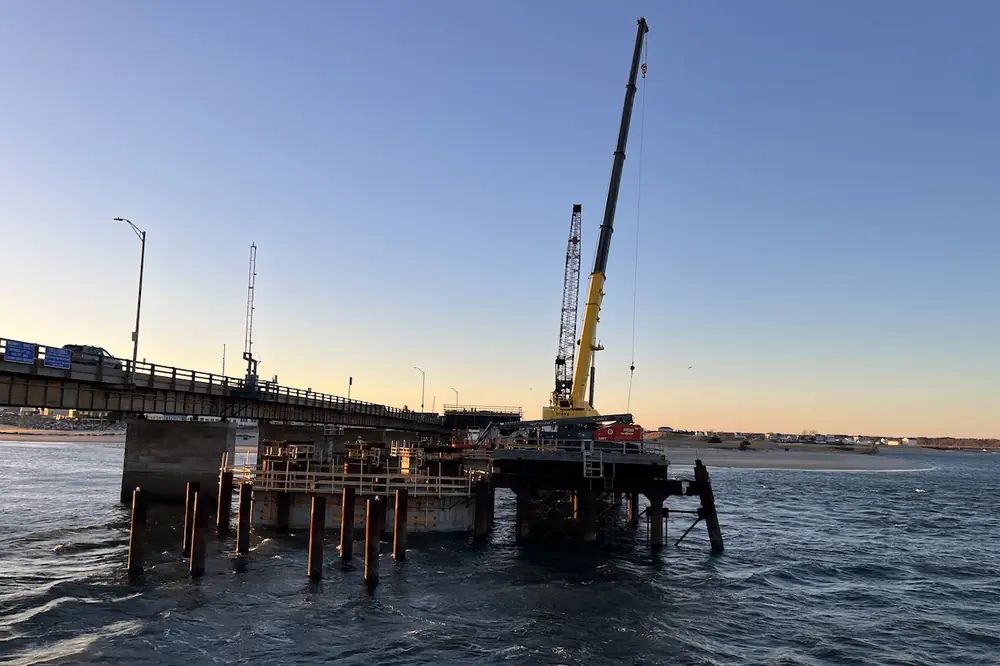
Over the past eight months, construction crews have worked in phases on the substructure, drilling shaft foundations and construction footings, as well as building pier columns and pier caps.
“It's right on the coast. The winters are cold, and the climate is harsh. The wind is always blowing,” Switzer said. “We didn't get a ton of snow, but it's cold and windy. That's been a bit of a challenge.”

| Your local Takeuchi Mfg Ltd dealer |
|---|
| Brandeis Machinery |
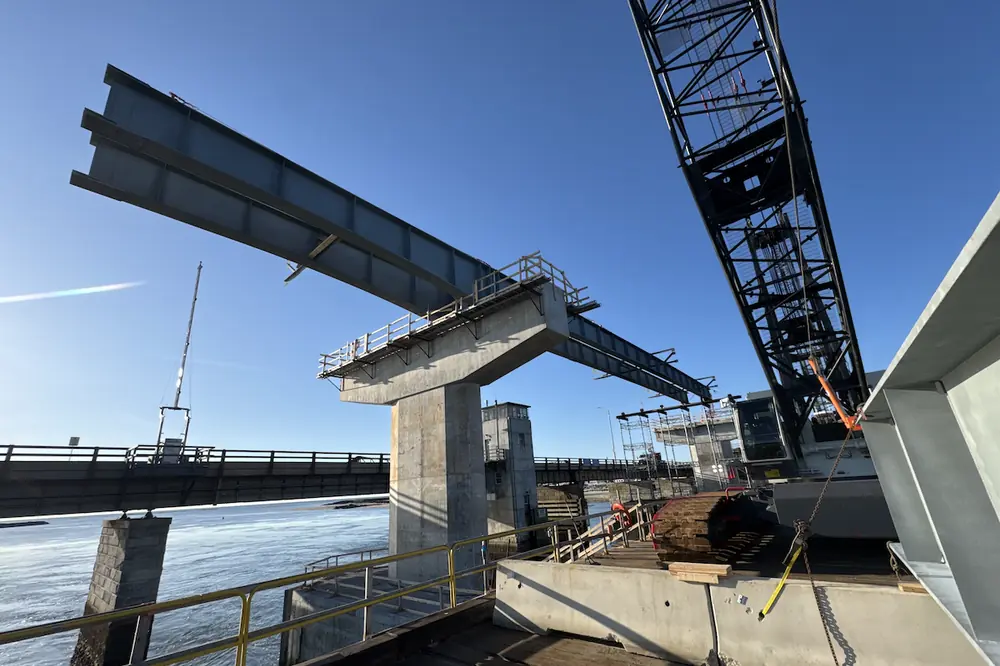
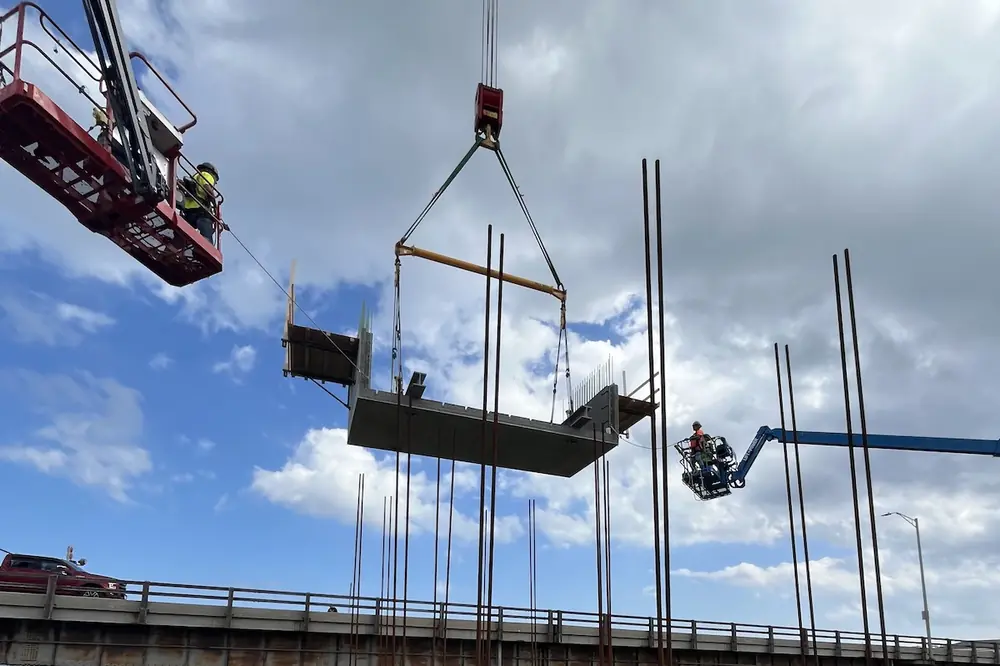
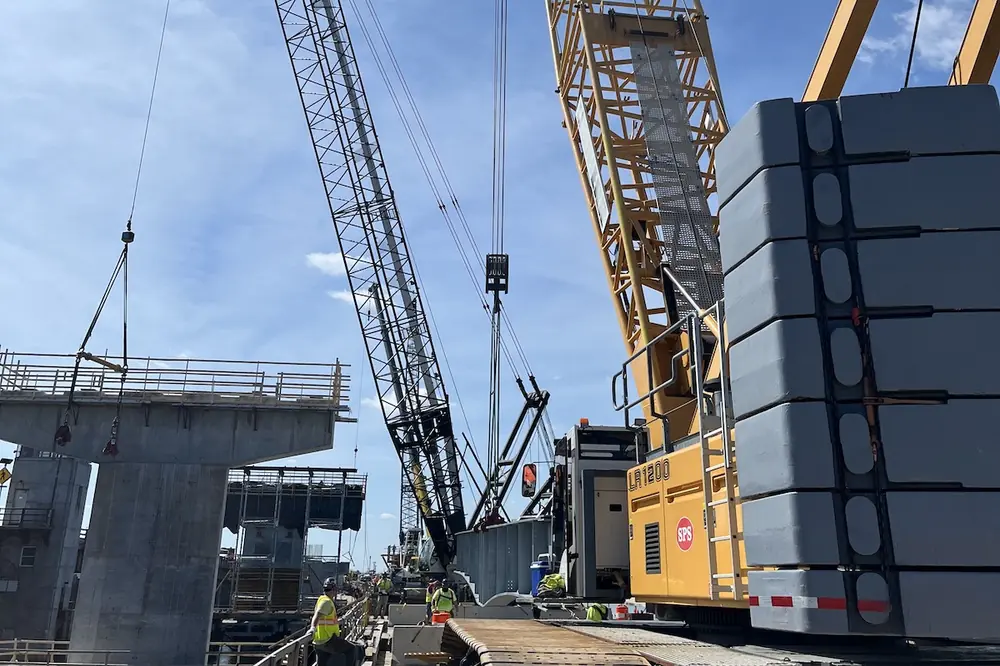
In April 2026, the team began putting on the girders, setting the structural steel across the Hampton River channel.
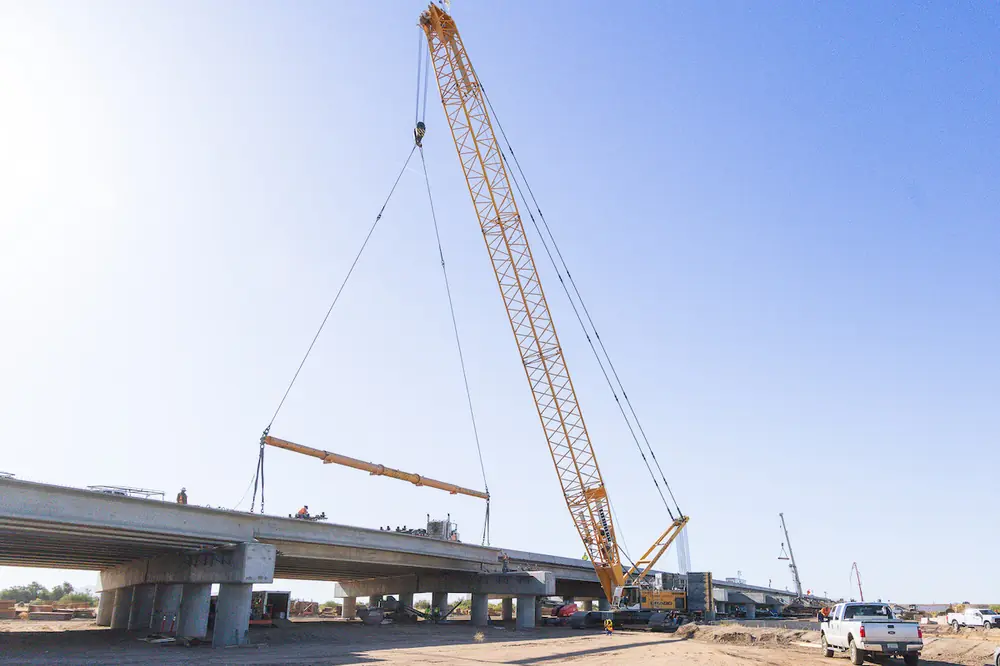
“That involves lifting the steel up into place and setting on top of the bridge shoes, which are on top of the pier caps,” Switzer said. “We're using some pretty big 250- to 300-ton cranes.”
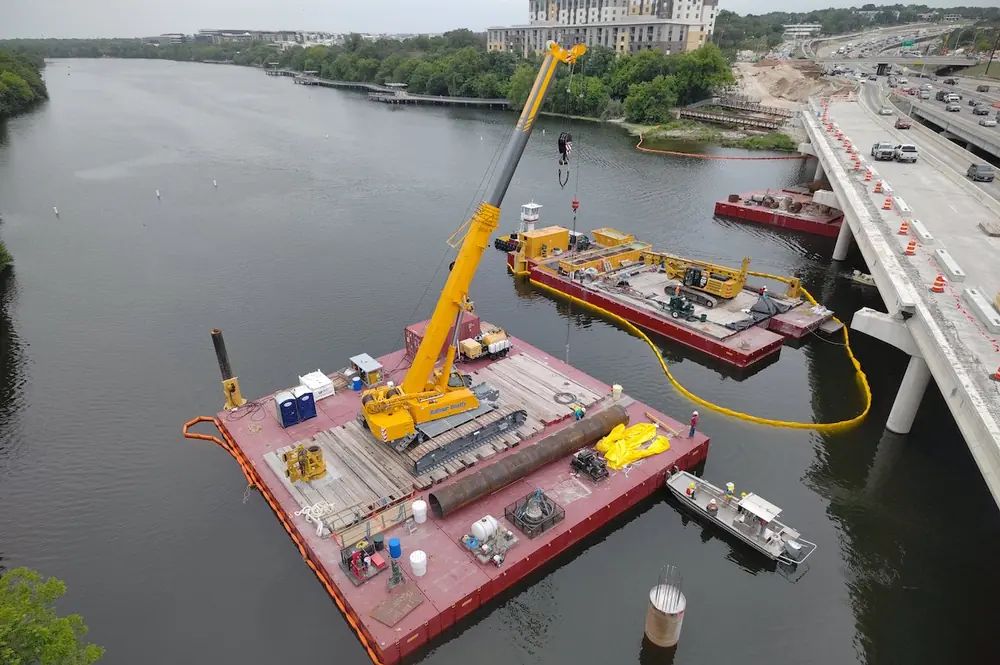
The team built a work trestle platform on the west side of the new bridge, serving as a temporary access roadway. The team is accessing it from the north and the south trestles, allowing them to drive out to do concrete work and deliver the structural steel.
“The cranes can move about freely,” Switzer said. “The tide affected some of our footing work, and we just had to work around the tides and be cognitive of that.”

| Your local Komatsu America Corp dealer |
|---|
| Brandeis Machinery |
Installing the drilled shafts deeply into the bedrock to support the bridge has been a challenge for the crew due to variable subsurface conditions.
“Anytime you drill into the ground, you never know what you're going to get,” Switzer said. “You can do all the geotechnical exploration that you want to do and can do, but there are just going to be some challenges you're surprised by. As you drill, bedrock elevations change a little bit from one hole to the next, and obstructions might or might not occur.”
Each pier footing is supported by multiple pier shafts, a design primarily driven by the varied bedrock below.
“The bedrock was kind of all over,” Switzer said. “As you go out into the channel, the bedrock goes deeper until you get in the channel, and it comes back up on the other side.”

| Your local Bobcat dealer |
|---|
| O'Leary's Contractors Equipment & Supply |
“Sometimes little caveats in design can make it easy or make it more difficult, and you just have to pay attention to those little things,” he added. “Hindsight is 20-20.”
As of this writing, the crew is working on setting the structural steel and tensioning the bolts, as well as installing utilities on the bridge. They are also forming and reinforcing the bridge deck, readying it for concrete placement.
The team has been innovatively metallizing the structural steel, a process that involves spraying a zinc-based material to prevent corrosion.
“It eliminates paint, lasts longer, and protects the splices and joints of a bridge better in the long run,” Switzer said.

| Your local Case Construction Equipment Inc dealer |
|---|
| Birkey's Construction Equipment |
The zinc acts as a sacrificial layer, corroding in place of the steel. This method is growing in popularity in coastal environments where salt exposure causes deterioration.
“Many bridges fail because of their joints and splices because they were built before salt was introduced to them on the roads,” Switzer said. “With this technology, you're able to protect the splices before you put them together so should salt get in there, it will not deteriorate the metal nearly as quickly as would a painted bridge.”
The structural steel, the utilities, and pouring the bridge deck are planned as parallel projects that are underway this summer.
The removal of the old bridge will begin after the new bridge opens. Removing a structure that has been in place since the 1940s, and especially one over water, requires a skillful hand.

| Your local Wirtgen America dealer |
|---|
| Brandeis Machinery |
“I think it’s like when you eat an elephant, you eat it one bite at a time and small bites. Same type of thing with removing a bridge,” Switzer said. “They're fragile. You want to take smaller pieces and go about it slowly, gingerly, rather than just trying to take big chunks and rip it out as quickly as possible.”
The new structure is taking shape. The replacement marks more than just an upgrade; it marks the next chapter shaped by time and restructured to meet today’s needs.
“SPS has been a good company to work with,” Switzer said. “HDR has been a great design consultant for us. They've been super great to work with.”
Traffic is expected to shift to the new bridge in mid-October 2026.

| Your local Wirtgen America dealer |
|---|
| Brandeis Machinery |
- Owner: New Hampshire Department of Transportation
- General Contractor: SPS of New England, Salisbury, Massachusetts
- Engineer of Record: HDR, Omaha, Nebraska