
Sound Transit — the public transit authority serving Seattle, Washington, and its surrounding areas — is nearing completion of the East Link extension. When it is complete, the 2 Line will run 34 miles, providing east-west connections between the Washington cities of Seattle, Mercer Island, Bellevue, and Redmond, and continuing north to Lynnwood. The critical line has been in the works for years.
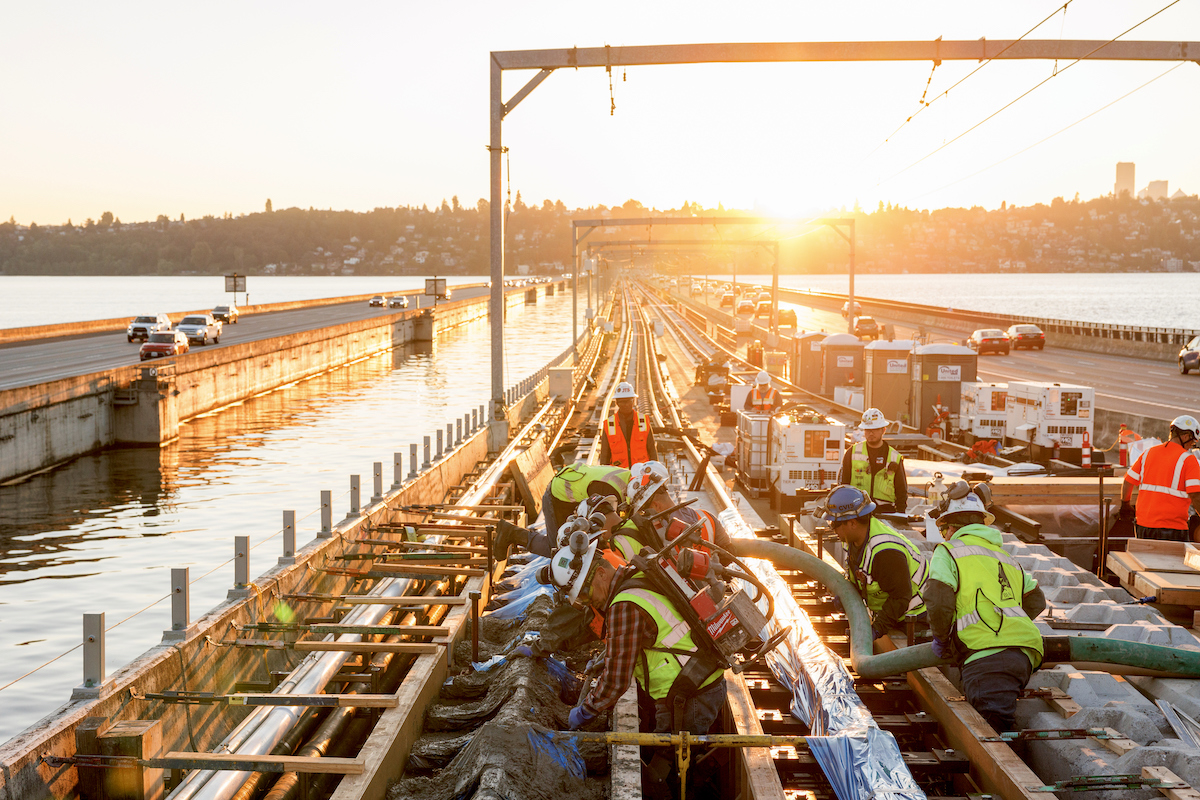
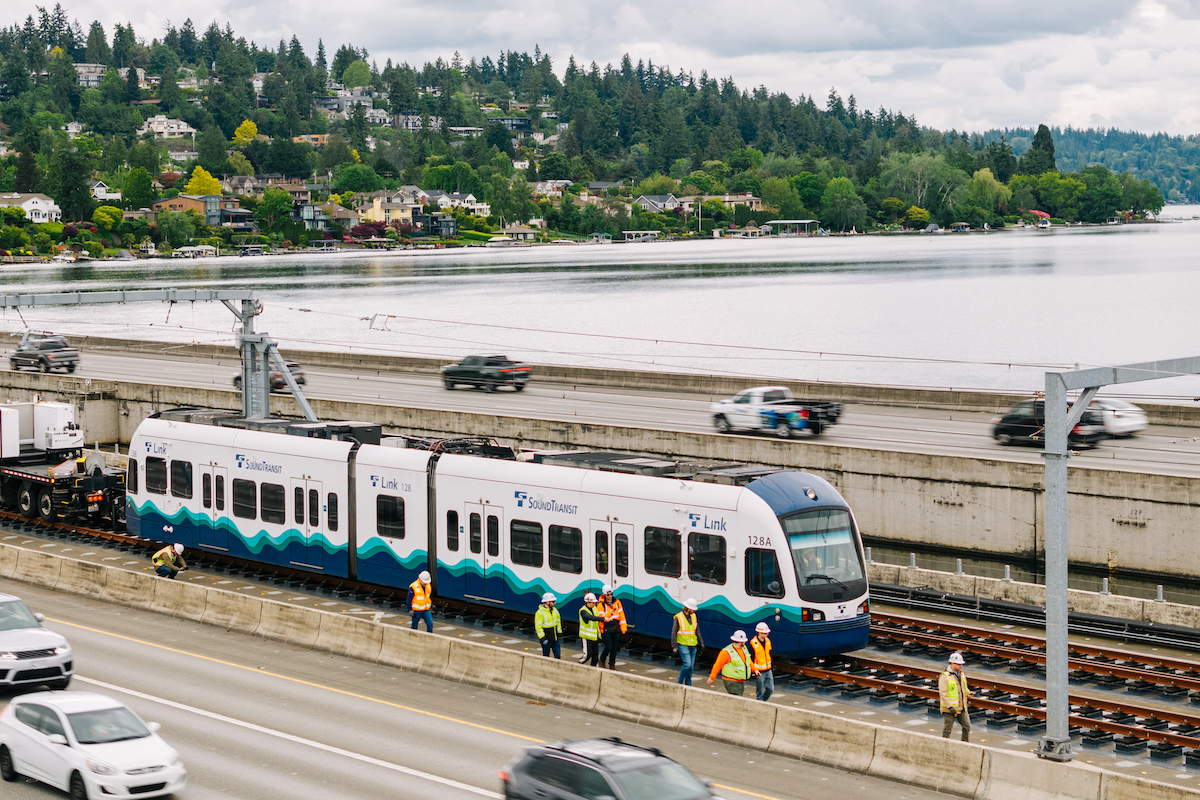
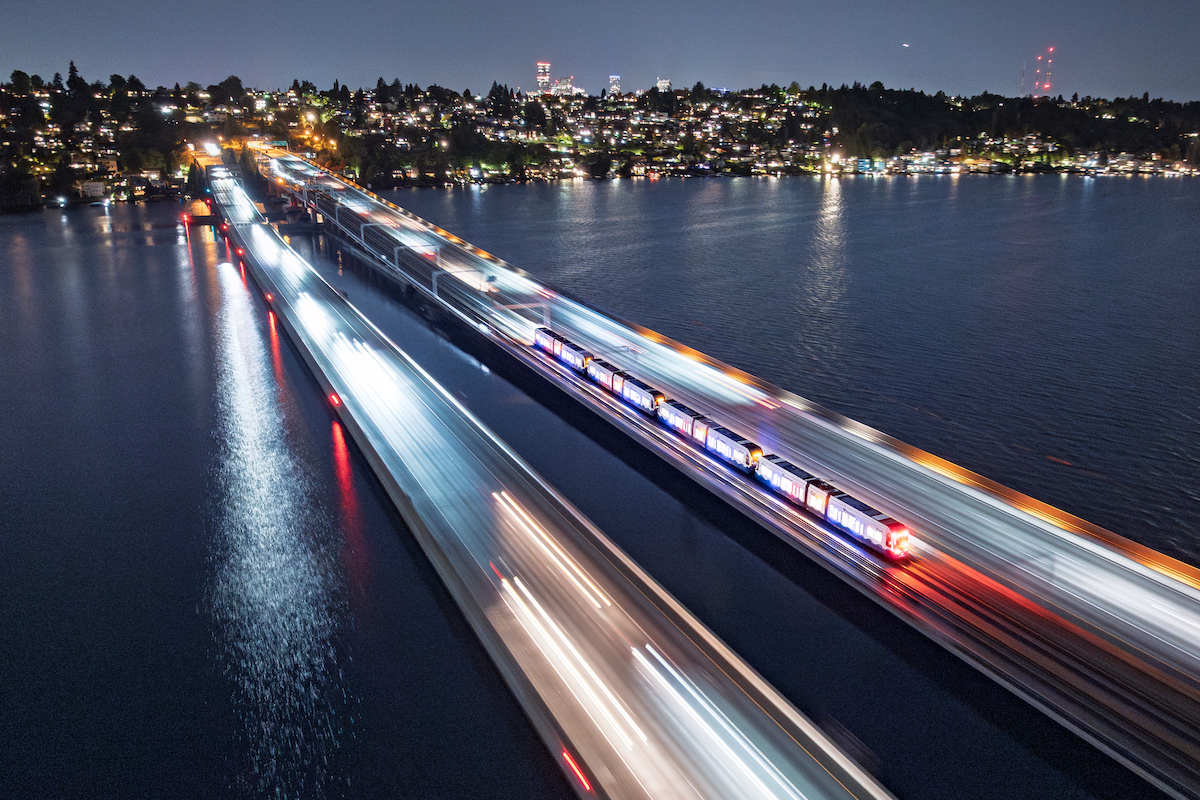
Among the project’s most significant challenges is crossing Lake Washington on a floating bridge. This project marks the first time in the world that light rail has been added to a floating bridge, requiring innovation and creativity during the design and construction phases.
According to the How Stuff Works website, there are only 20 or so floating bridges in the world. The website explains that the bridges “connect heavily populated areas where there is a very wide and very deep body of water, along with extremely soft lake- or ocean-bottom soil, factors that prohibit conventional bridge piers.”
Floating bridges are often more economical than conventional bridges when spanning waters deeper than 100 feet and wider than half a mile. However, areas with very strong winds or waves tend to make floating bridges impossible.
Of the roughly 20 floating bridges in the world, three span Lake Washington and connect Seattle to its eastern suburbs. Lake Washington averages 108 feet deep but plunges to 214 feet in some areas.

| Your local Trimble Construction Division dealer |
|---|
| SITECH Mid-South |
| SITECH Tri-Rivers |
"The lake is impractically deep for building or constructing traditional fixed piers on either piles or shafts, spread footings, or any sort of typical foundation," said Matthew Barber, Design Lead during construction for WSP in the U.S. "The lake is also too wide to span with something like a suspension bridge between where it's shallow enough to put a fixed pier in place."
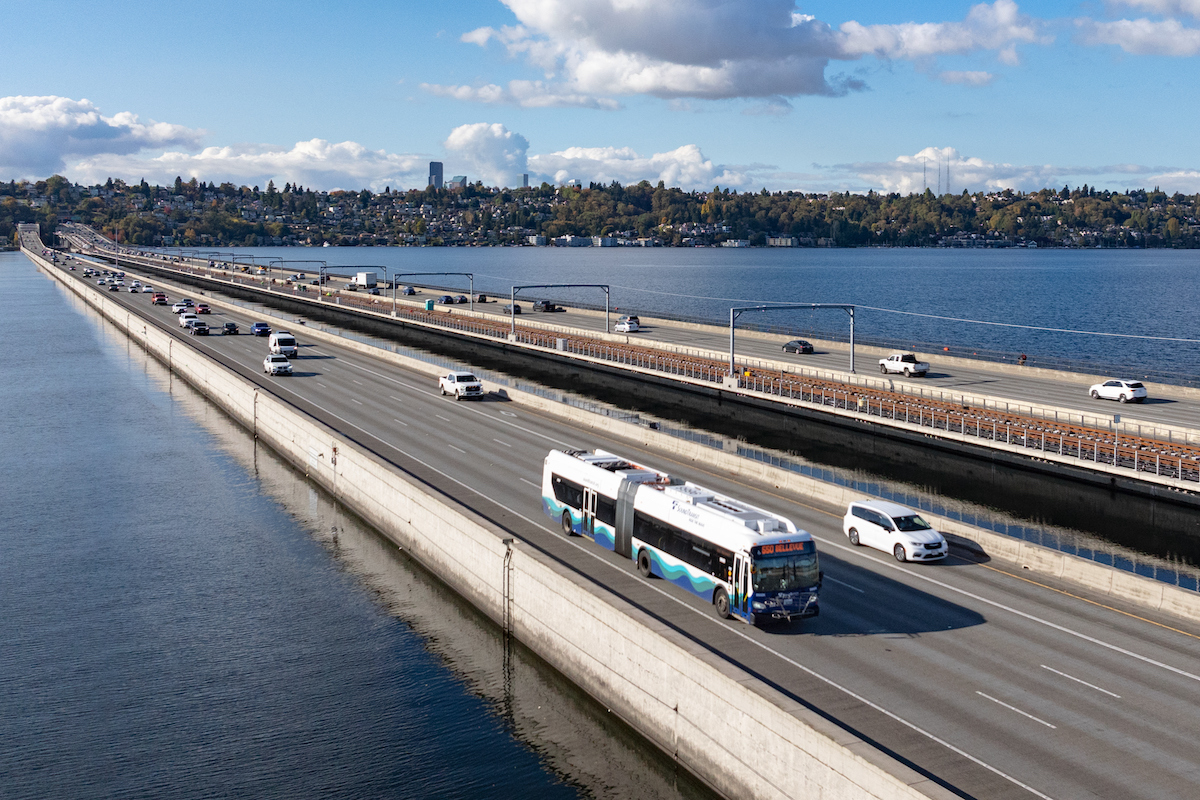
Two of the bridges run parallel and are part of I-90. The third bridge is a few miles north and is part of SR 520. The I-90 Homer M. Hadley Memorial Bridge, which carries westbound traffic, is the bridge that will host Sound Transit's light rail line.
The bridge, which opened to traffic in 1989, is just over a mile long. The three-lane bridge originally carried reversible high-occupancy vehicle (HOV) lanes. Those lanes have been converted to carry light rail transit.
"There was always a consideration that there would be some form of high-capacity transit through the area, either a bus rapid transit or a dedicated HOV lane or a mix, so the change to add a light rail system to the bridge has not created backups," Sound Transit Executive Director Michael Morgan said.

| Your local Gomaco dealer |
|---|
| Ring Power Corporation |
Sound Transit projects that Link system ridership will be 3.55 million to 4.65 million average monthly boardings by Q4 2026.
"I think the upside that people are going to get when we have the light rail running, and the capacity that we can add to the bridge with the light rail running, is going to be significant," Morgan said. "We expect to eliminate a lot of car traffic and are excited about the impact that light rail on the bridge will have on circulation and transportation in the region."
Another reason to undertake this complicated project is to connect economic regions.
"This is the last piece in our current puzzle to connect people in Bellevue and Redmond to Seattle and the greater Puget Sound region, the airport, and football and baseball games," Morgan said. "Right now, we've got two discrete systems, and this last link over the bridge connects those two systems and makes it a fully integrated network."

| Your local Bobcat dealer |
|---|
| Pinnacle Central Co Inc |
The floating bridge component is a part of the 14.5-mile East Link Extension, which will complete the Link 2 Line.
The design team began with the dual goals of adding the infrastructure necessary to carry light rail in a way that minimized the impact on the existing bridge's performance and, if possible, improve it.
Even though the floating bridge — which is just a few feet above the lake — is anchored to the lakebed, it moves around because of the wind, waves, and lake level.
"It can deflect by feet over the course of a season," Barber said. "As it heats up and cools off, it also expands and contracts thermally, and those have big impacts."

| Your local Topcon Positioning Systems Inc dealer |
|---|
| Linder Industrial Machinery |
The observed movement by users of the bridge is difficult or impossible to perceive. However, rail is different.
"Because the rail geometry must be maintained very tightly everywhere, you can't accommodate movement between rails," Barber said. "The rails have to maintain gauge, that is, to stay in the right position relative to one another to be able to safely run trains."
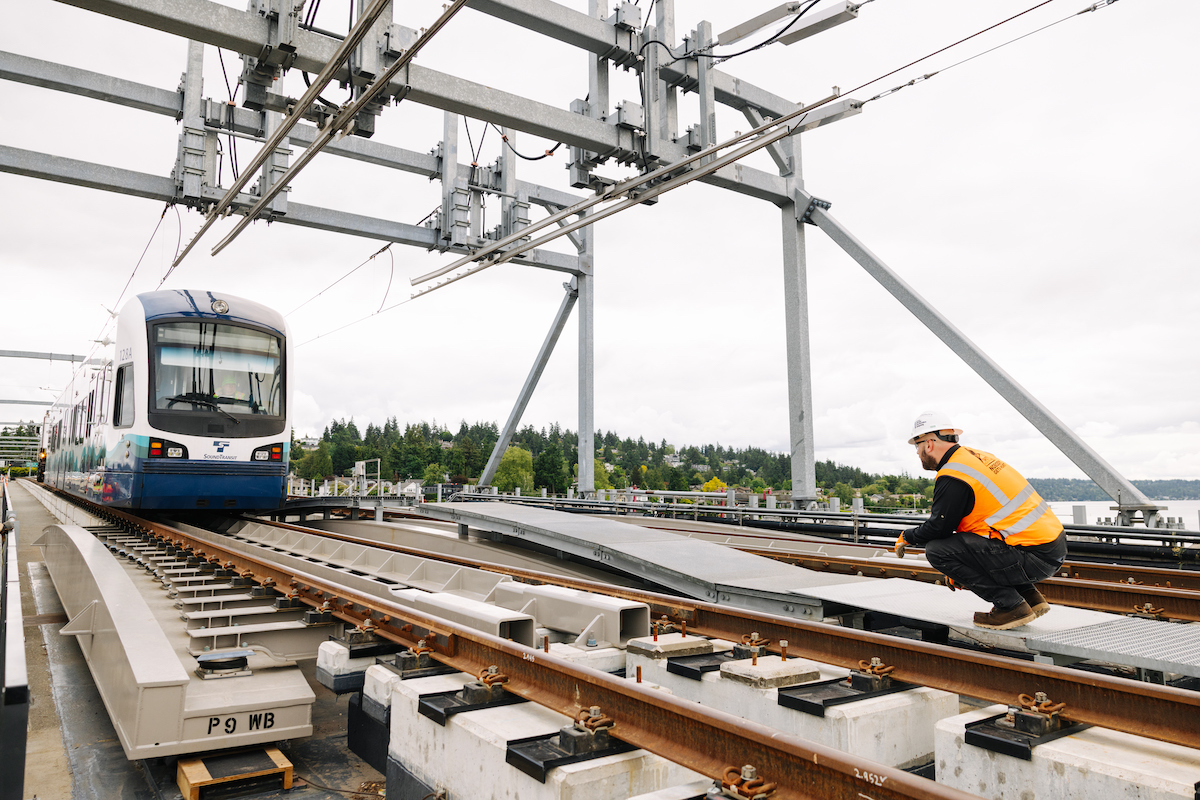
Therefore, designing trackwork to span over the bridge’s expansion joints proved to be a big challenge. The team developed full-scale prototypes and tested them in Pueblo, Colorado. Note that each of the two alignments crosses four significant bridge expansion joints.
The team of specialists came up with a design for the trackwork over expansion joints (they refer to them as track bridges) that can maintain the distance between adjacent rails and smooth out, over a 44-foot length, any geometric changes the floating bridge experiences relative to its adjacent fixed approach spans.

| Your local Komatsu America Corp dealer |
|---|
| Linder Industrial Machinery |
"The track bridges were invented for this project," Barber said. "They've never been done before anywhere."
The team expects that post-tensioning added to the floating bridge as part of the project will improve its durability and benefit both highway and light rail users.
The team took multiple steps to reduce the weight of the tracks, power system, and other changes to the original bridge. These include:
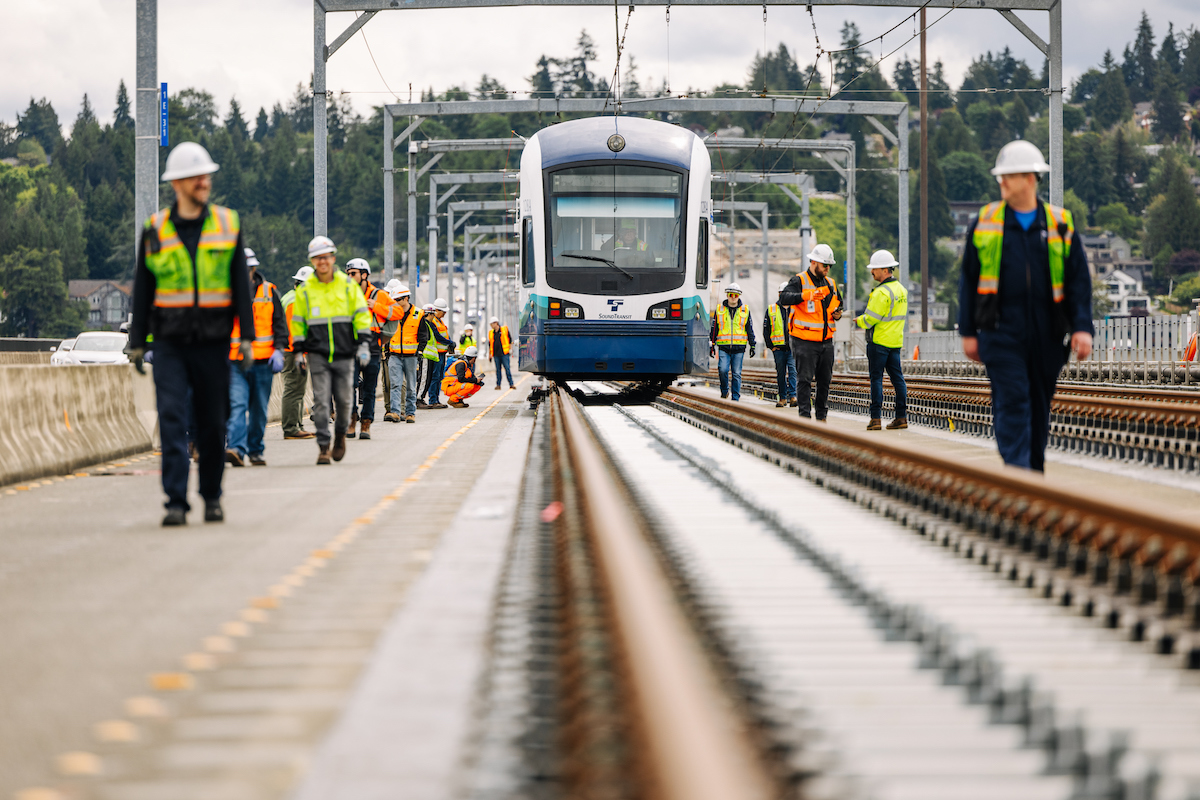
- Using lightweight materials, including the running rail and emergency guard rail, which is lighter than what is typically used.
- Retrofitting aspects of the bridge to remove weight from the bridge. One example is the barrier along the bridge's edge. The team removed the heavy concrete barrier and replaced it with a cable rail.

| Your local Wirtgen America dealer |
|---|
| Dobbs Equipment (DXC) |
"We always kept in mind that the bridge is essentially a really long boat," Barber said. "There's ballast within the pontoons, and the ballast can be shifted around to help trim the position of the pontoons on the lake, which we kept in mind during design, and the contractor had to manage."
A third major challenge the team faced was the electricity required to power the light rail. While there is a current through the overhead catenary system, there is also a return current through the rails themselves.
"An unintended introduction of electrical current to a structure can form an anode within the structure that can lead to corrosion of steel elements, so it was very important to control where the electrical current could and could not go," Barber said. "Our design has multiple interconnected components to prevent electrical current from getting into the floating bridge structure itself."
The state owns the bridge, so Sound Transit, as a tenant, was very careful that retrofits associated with light rail would not negatively affect the bridge. The design team addressed this concern several ways.

| Your local Iowa Mold Tooling Co Inc dealer |
|---|
| Nichols Fleet Equipment |
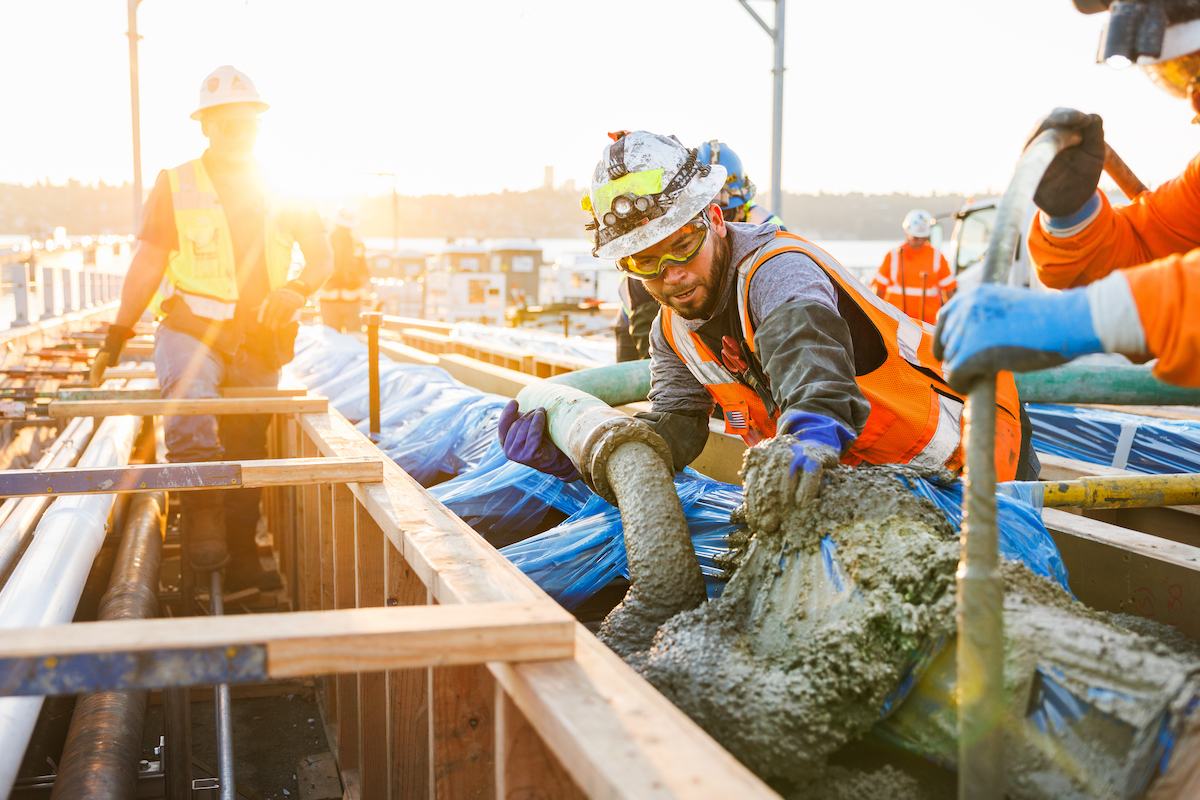
"The team glued [with a high-strength epoxy] the lightweight concrete plinths to the deck of the bridge as opposed to setting them into concrete or the bridge itself," Morgan said. “No anchor bolts are going directly into the bridge.”
The general contractor for this project is the joint venture of Kiewit-Hoffman. One of the significant challenges the contractors have had on the project is related to weight management.
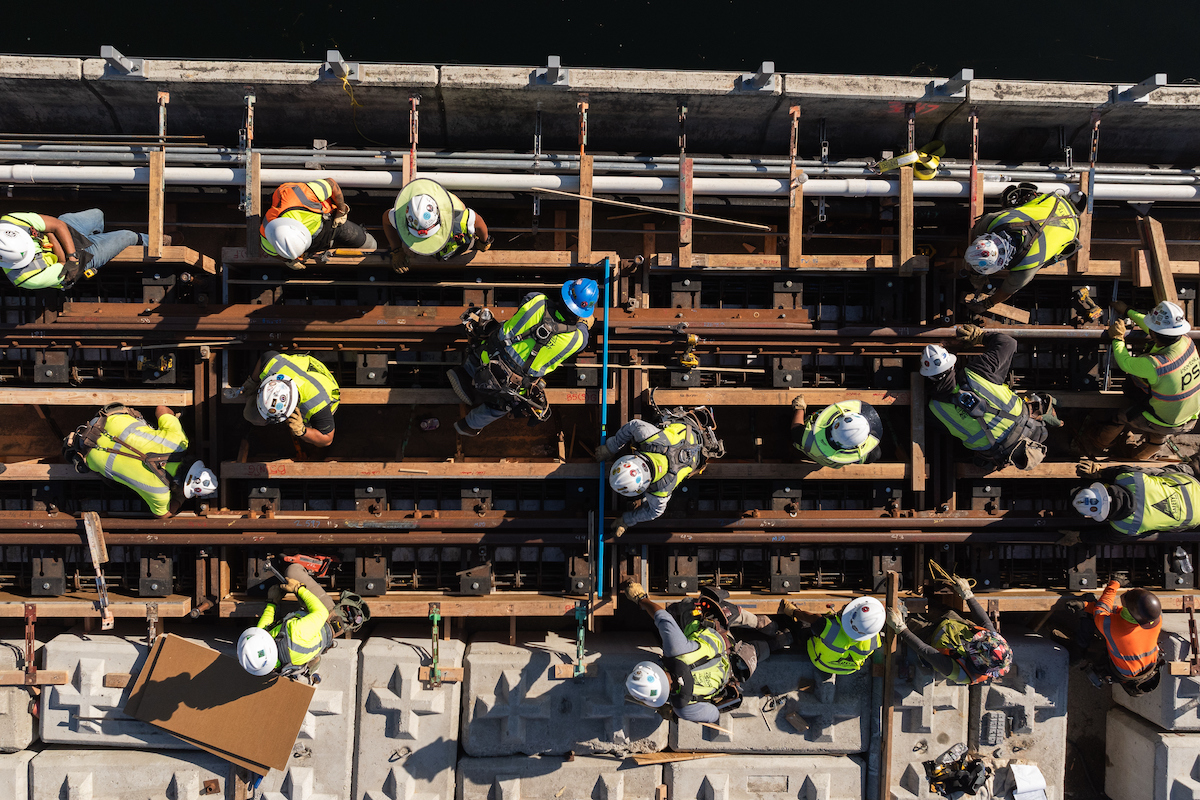
"They transported the gear, which included large steel beams and struts, into the pontoons, piece-by-piece through hatches that are only about the size of a kitchen tabletop," Barber said.
"It was really an amazing feat of construction engineering to post tension within the pontoons while highway traffic was happening above, undisturbed," he added.

| Your local Bomag Americas dealer |
|---|
| Linder Industrial Machinery |
Traffic was only interrupted for one night. It was the first night the team was tensioning the post-tensioning tendons. The project team did this out of an abundance of caution, and things went so well that they were able to continue the process under live traffic.
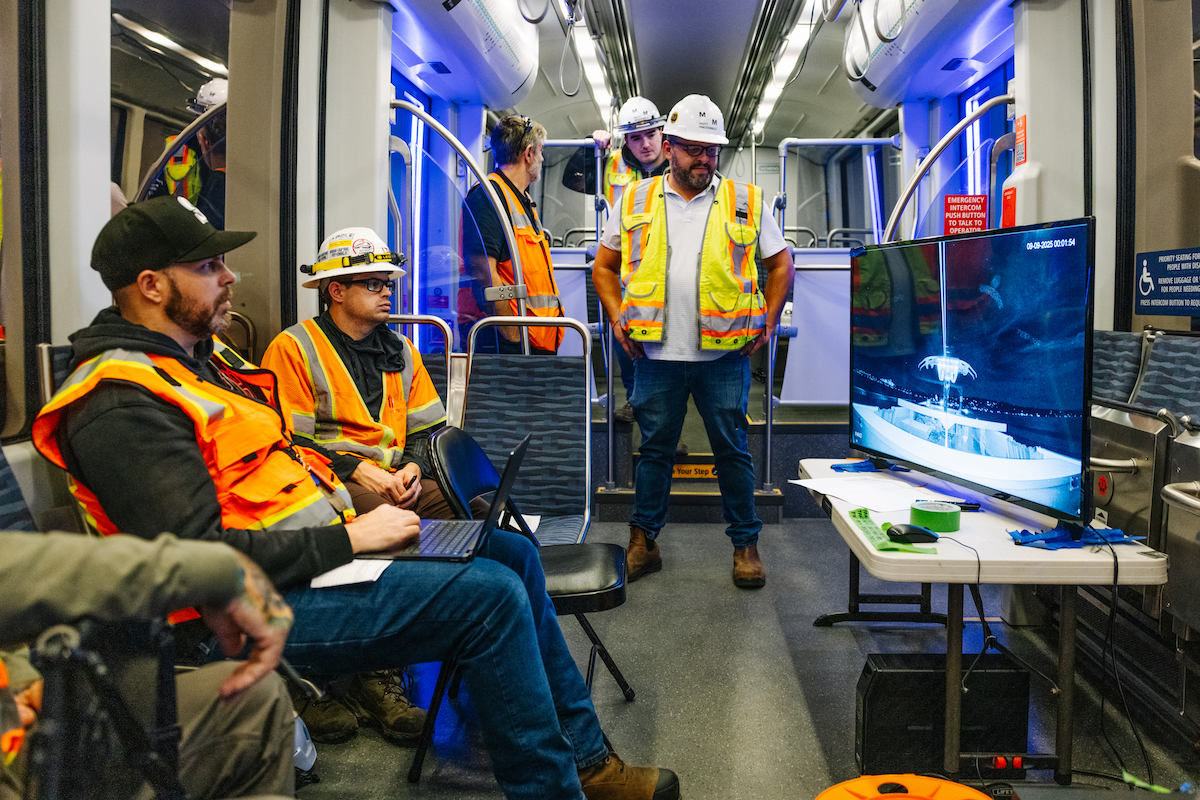
The push for the final design of the project began in 2012, while construction began in 2017. Sound Transit anticipates going live in early 2026. Currently, they are finalizing systems integration testing. The next steps are operational training and simulated service.
The original budget for the entire program was $3.7 billion. Morgan anticipates the final number will be up to 2 percent higher than the original budget.
Multiple sources are providing funding for the project, including Sound Transit, grant revenue, bond proceeds, a TIFIA loan, and the City of Bellevue.

| Your local Wirtgen America dealer |
|---|
| Beard Equipment Co - AL |
| Tractor & Equipment |
The East Link extension is expected to positively impact people's lives, and Morgan said that locals are excited.
"Everyone you talk to in the region talks with excitement about when the system's going to open," Morgan said. “Light rail is popular in the area, as Link carries an average of more than 150,000 people a day. Every time we add a new segment, the ridership goes up."
Barber credits the project team for achieving the feat of becoming the first in the world to add light rail to a floating bridge.
"It's brilliant people who came together to solve previously unimagined problems in ways that will produce a reliable, safe, smooth, comfortable system," he said.
| Your local Trimble Construction Division dealer |
|---|
| SITECH Mid-South |
| SITECH Tri-Rivers |
- Owner: Sound Transit, Seattle, Washington
- General Contractor: Kiewit, Omaha, Nebraska; Hoffman Construction, Lake Oswego, Oregon (joint venture)
- Designer, Final Design: WSP, Montreal, Canada
- Systems Contractor: Mass Electric Construction, Irving, Texas