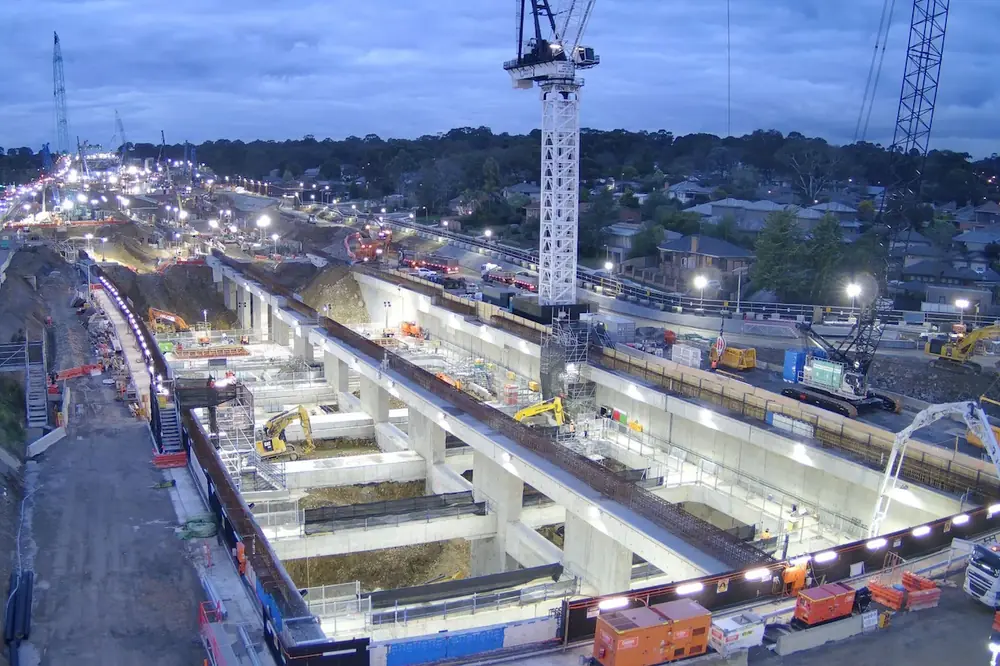
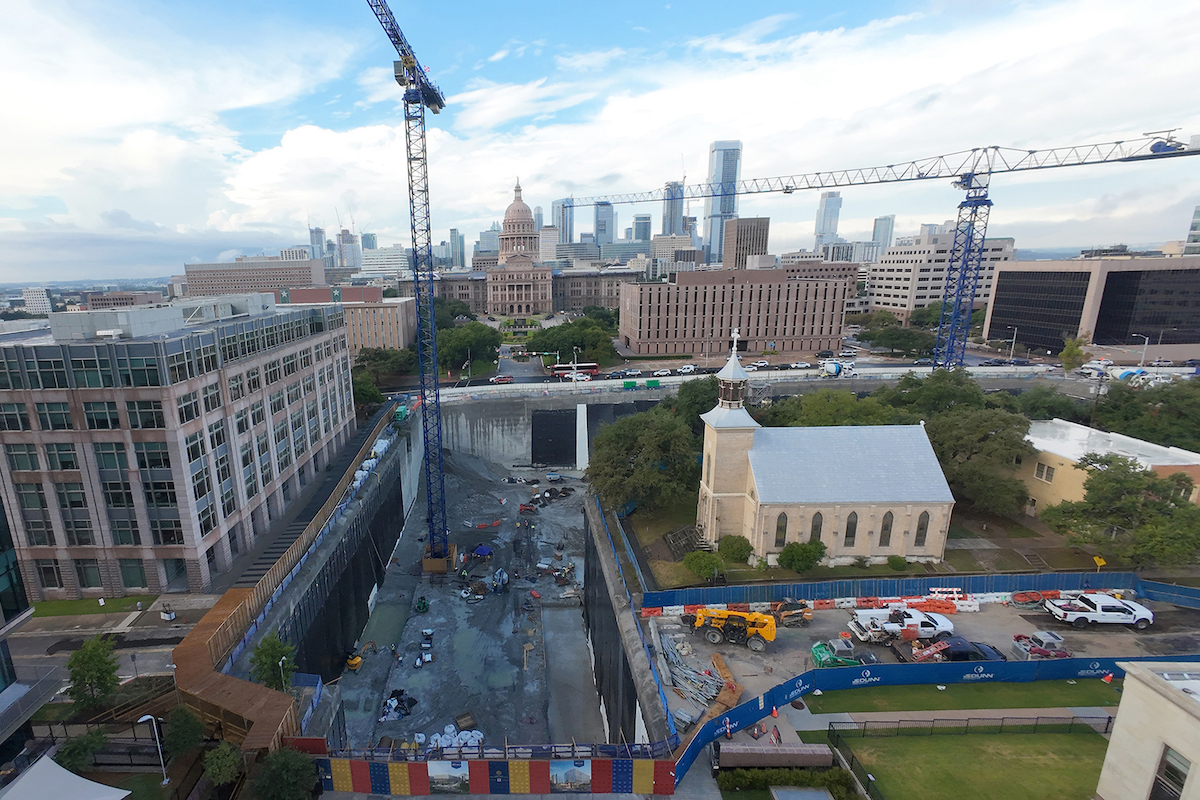
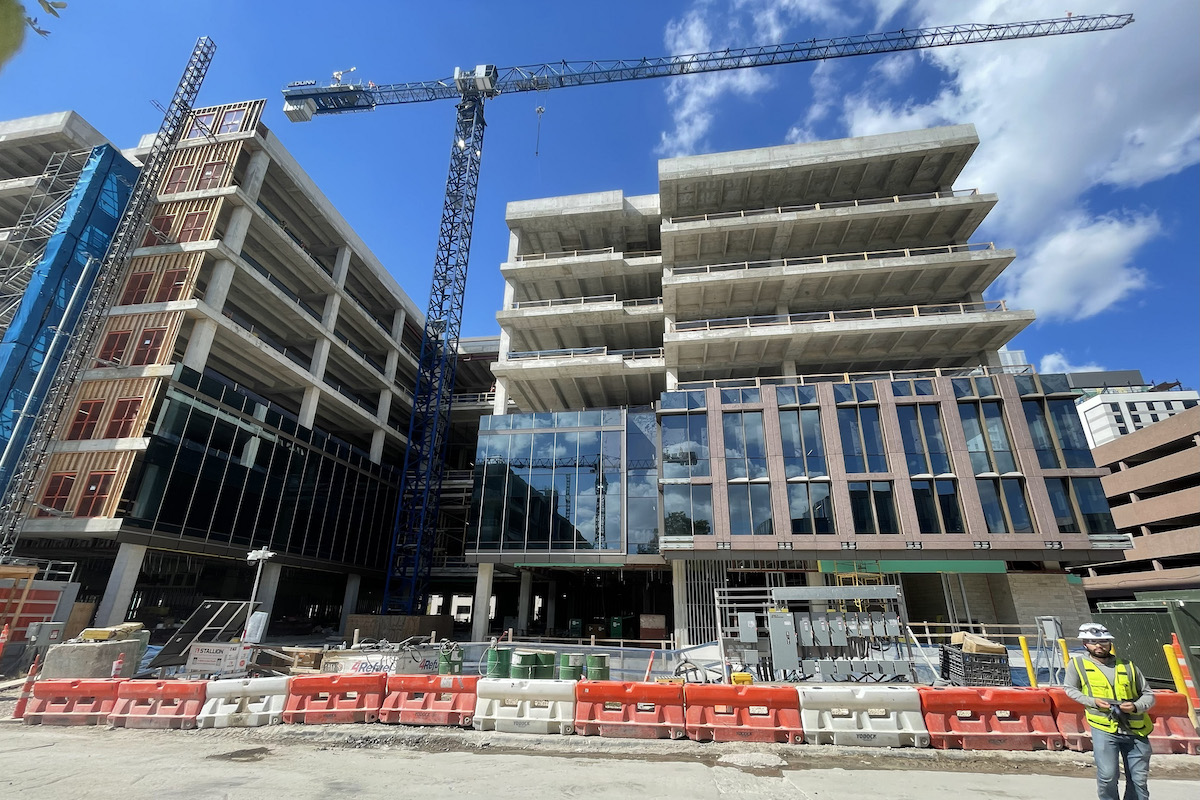
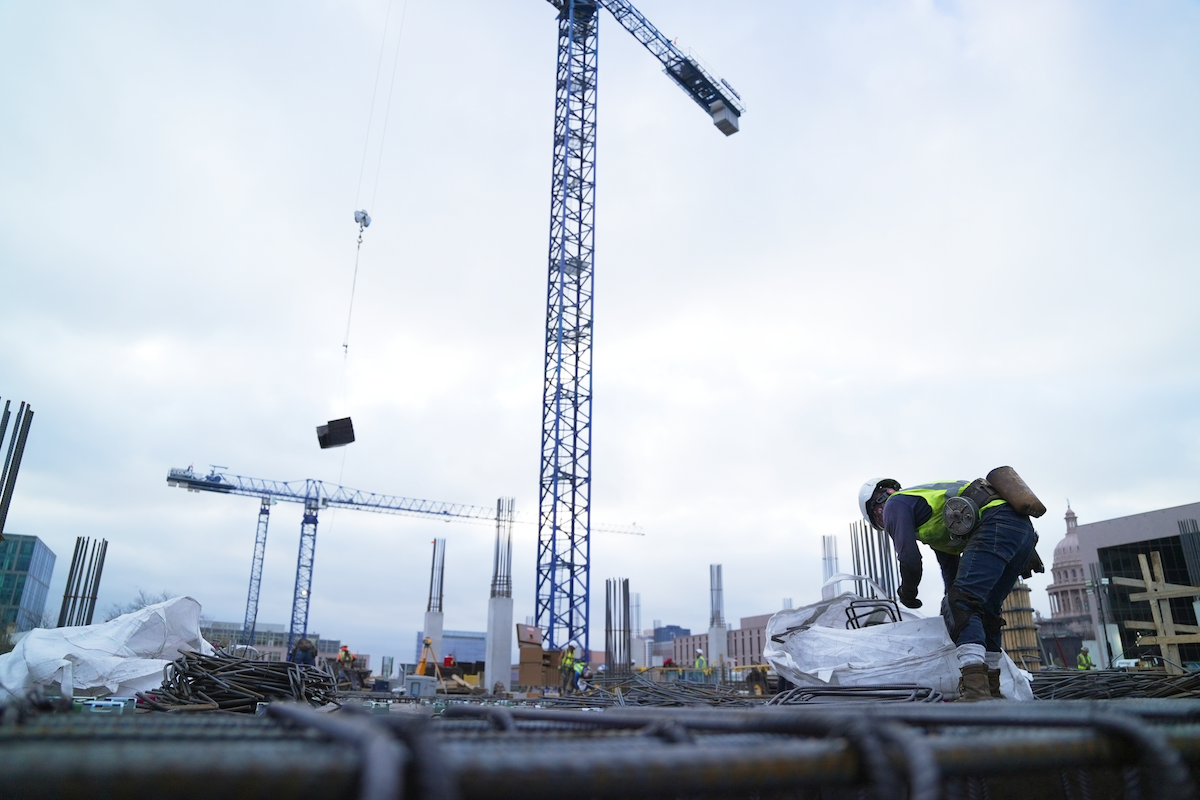
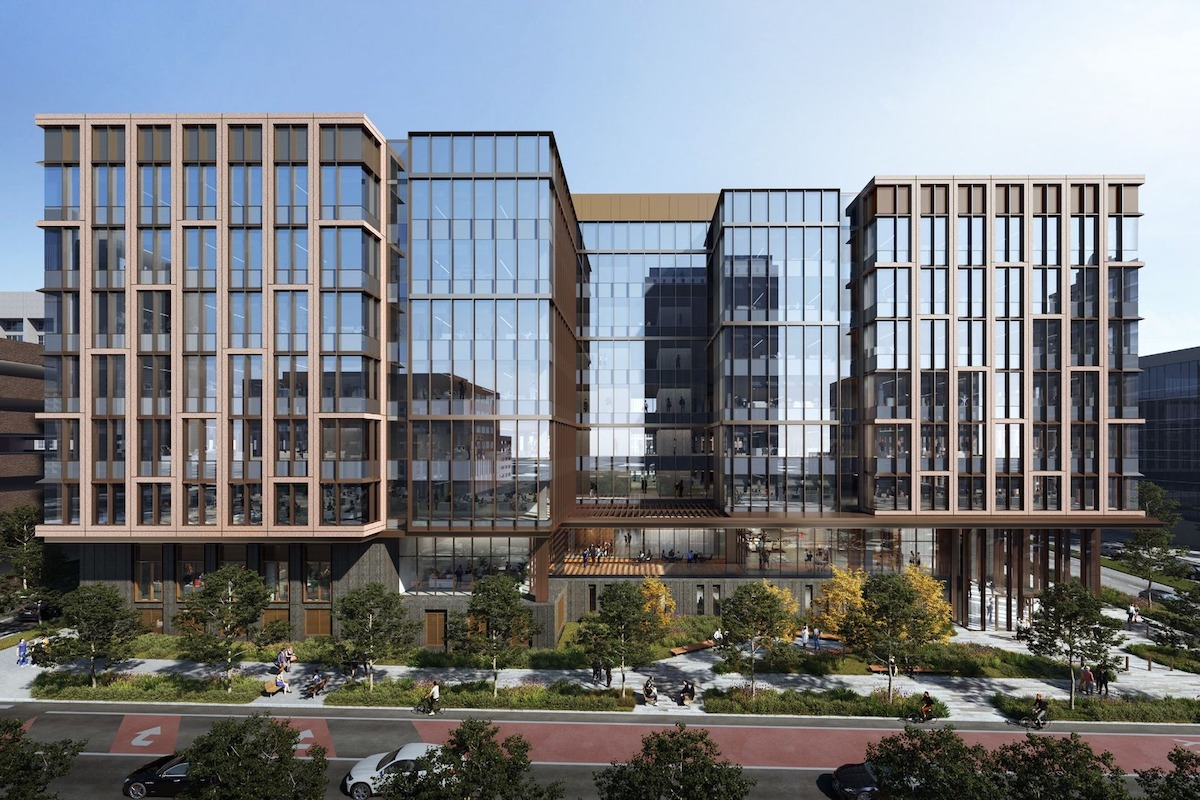
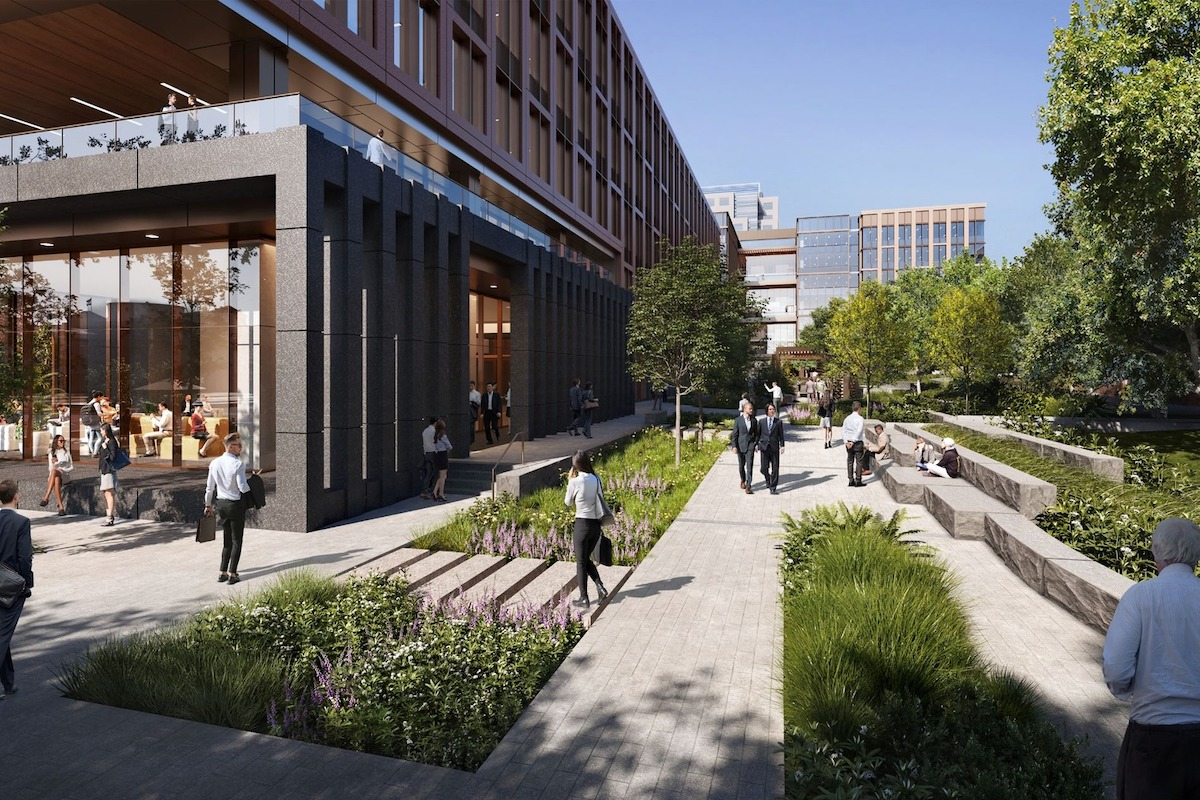
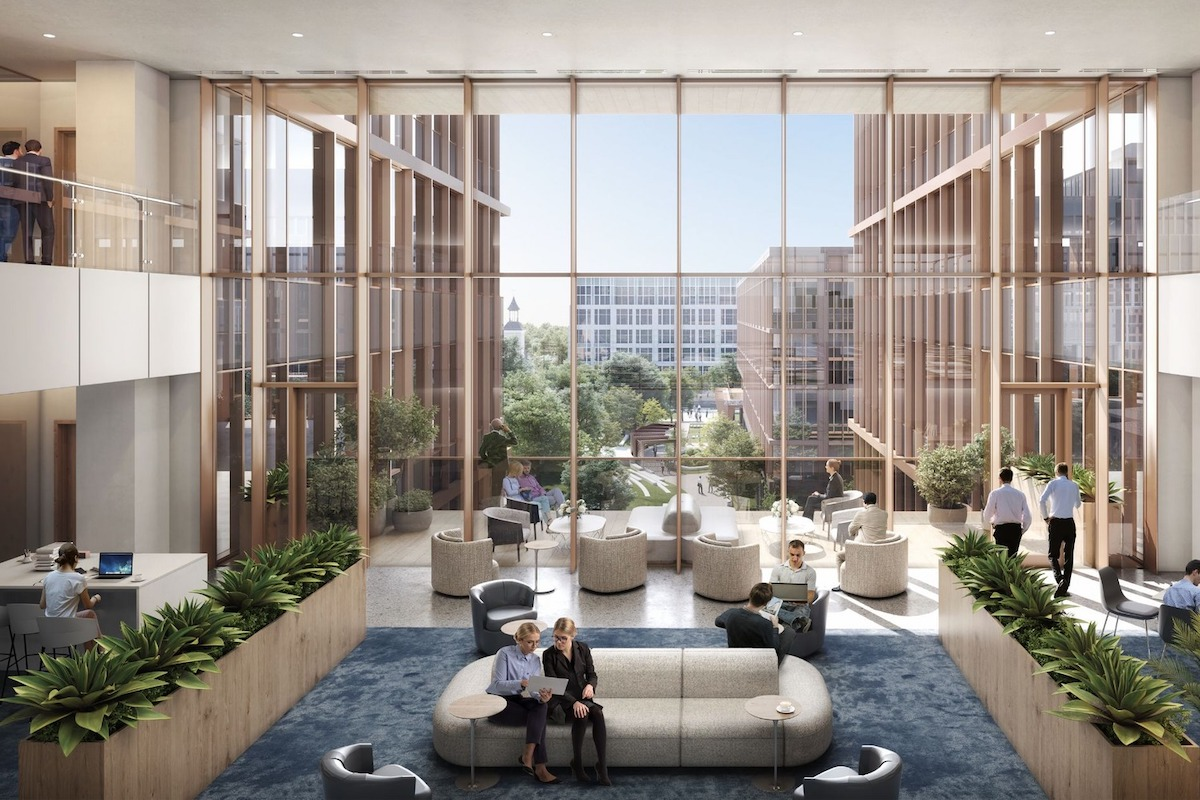
A project poised to transform downtown Austin, Texas, continues to progress, with construction on two new state office buildings, an underground parking garage, and the final block of the Texas Capitol Mall — a tree-lined, pedestrian-friendly promenade that will serve as both a gateway to the State Capitol building and as a space for civic events and festivals.
Known officially as the State of Texas Capitol Complex Phase II, the ongoing project will consolidate Texas state government agencies into state-owned buildings located just blocks from the Texas Capitol building. The project represents a partnership between owner Texas Facilities Commission (TFC), architect HOK, and general contractor JE Dunn.
Crews will complete construction on Phase II by late 2026, allowing offices to be fully operational at the new complex by summer 2027. The project represents a continuation of earlier, Phase I work, which was completed in 2022 and included construction of two new office buildings, more than 2,000 spaces of above- and below-ground parking for state employees, a new central utility plant, and three city blocks of the Texas Capitol Mall.
JE Dunn had served as the construction manager at risk (CMAR) for key aspects of Phase I work, prior to being named the general contractor for the complex’s Phase II construction.
“[The Texas Capitol Complex] is a project that is very visible and that will be used for many, many decades,” said Phil Emanuel, Vice President and Group Manager at JE Dunn Construction. “So, we’re approaching this work with a collective sense of great pride and responsibility.”

| Your local Manitou dealer |
|---|
| Star Equipment LTD |
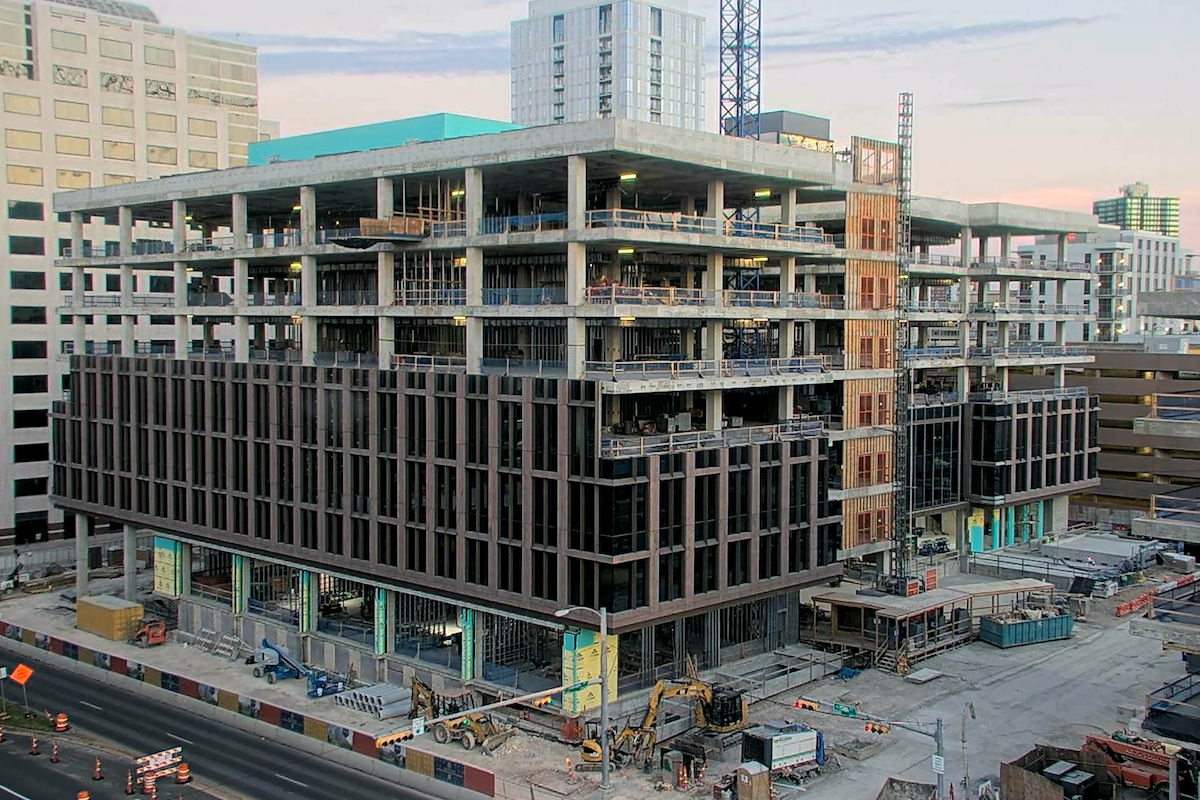
Once complete, the $500 million Phase II project will add two new government buildings to the State Capitol Complex: an eight-story, 360,000-square-foot structure at 1501 Lavaca Street, and a five-story, 165,000-square-foot facility at 1500 Congress Avenue. Both buildings will feature onsite, underground parking. Their facades will feature a gridwork of “sunset red” granite set against glass curtain walls.
The new buildings will source their red granite from the same quarry near Burnet, Texas — not far from Austin — that provided the red granite for the State Capitol’s construction in the 1880s.
“It’s pretty special that you can see a building built in 2025 that has the exact same material as a building built roughly 150 years before it, right down the street,” Emanuel said.
Construction of the two new state office buildings — along with the two buildings finished in Phase I — will allow Texas state employees to move from their current, leased office spaces scattered throughout Austin into one, centralized government center.

| Your local Leica Geosystems Inc dealer |
|---|
| Laser Specialist inc |
“Consolidating all state agencies within the Capitol Complex creates the potential to maximize operational efficiencies between and within the agencies, offers visitors easier access to agency offices, and eliminates the cost of leased space for these offices,” the Texas Facilities Commission said on its website, outlining the benefits of the Phase I and Phase II Capitol Complex initiatives.
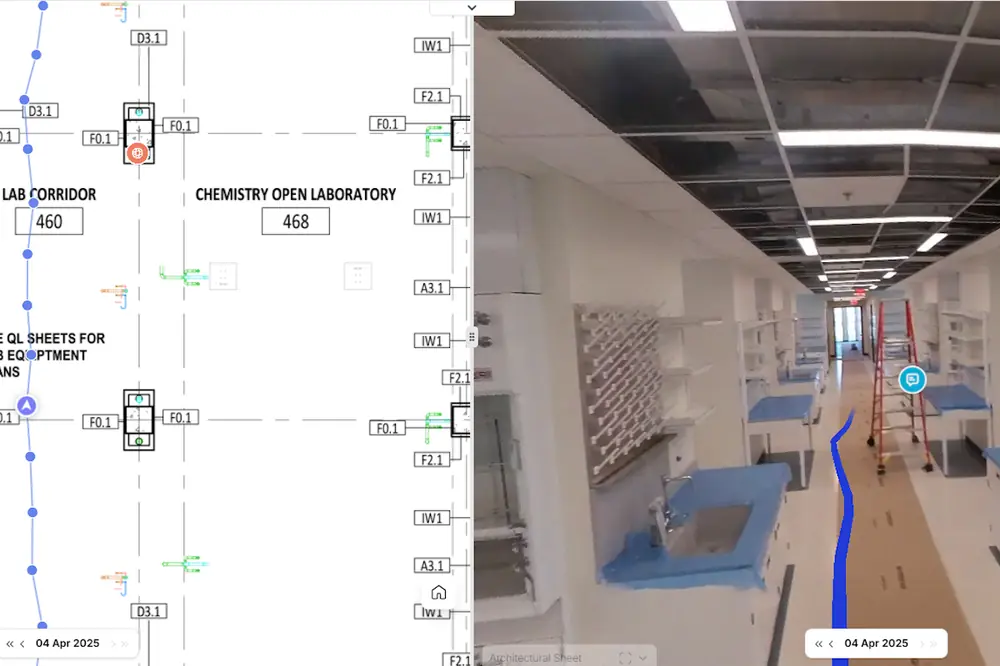
JE Dunn entered into planning discussions for Phase II with TFC beginning in April 2022. Throughout the next 12 months, JE Dunn teams worked with the project architect and key TFC representatives to fine-tune the Phase II final designs using Revit software.
In April 2023, JE Dunn crews started demolishing the existing structures on the Lavaca Street and Congress Avenue sites using backhoes and excavators. That removal work allowed new excavation for the Phase II project to begin on those sites in early summer 2023.
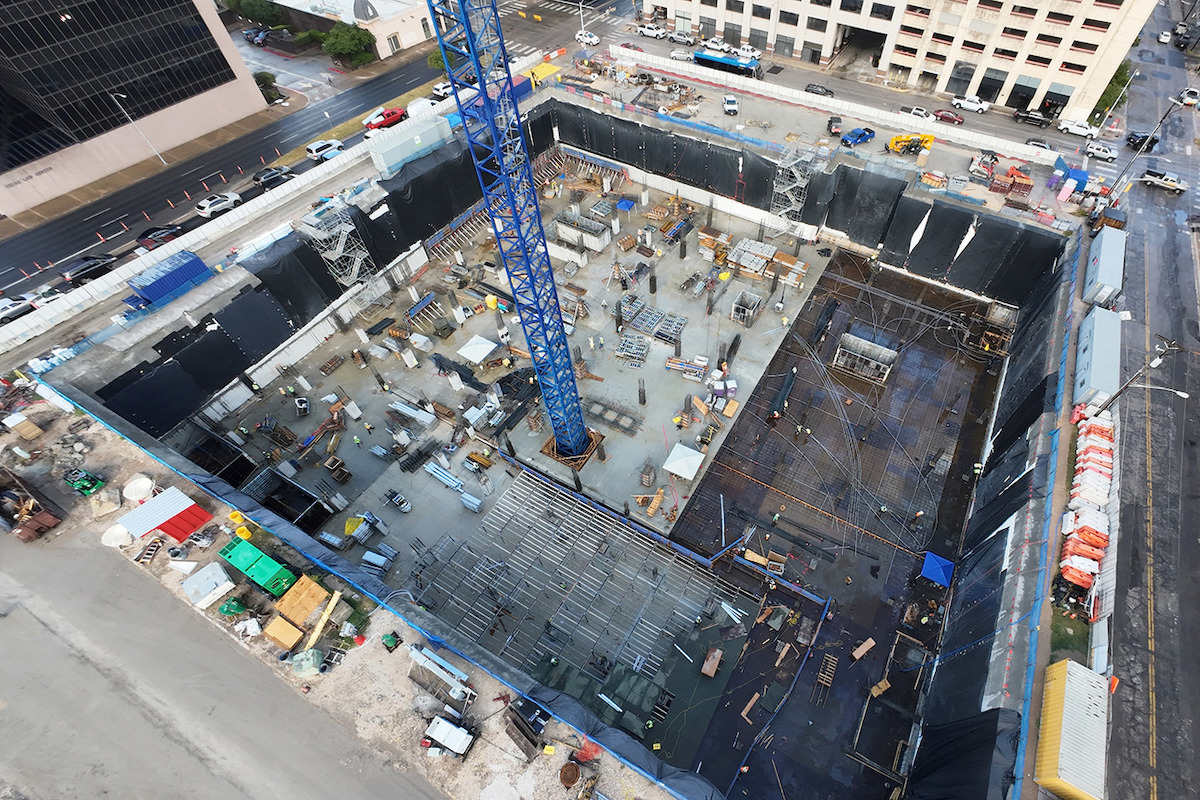
According to data shared by TFC, building crews have since hauled away some 380,000 cubic yards of material as they have worked to excavate the Lavaca Street site to a depth of 65 feet and the Congress Avenue site to 78 feet deep. Excavations along the Texas Capitol Mall portion of the Phase II build site reached a depth of 70 feet.

| Your local Trimble Construction Division dealer |
|---|
| SITECH Midway |
| SITECH Mid-America |
| SITECH Central LLC |
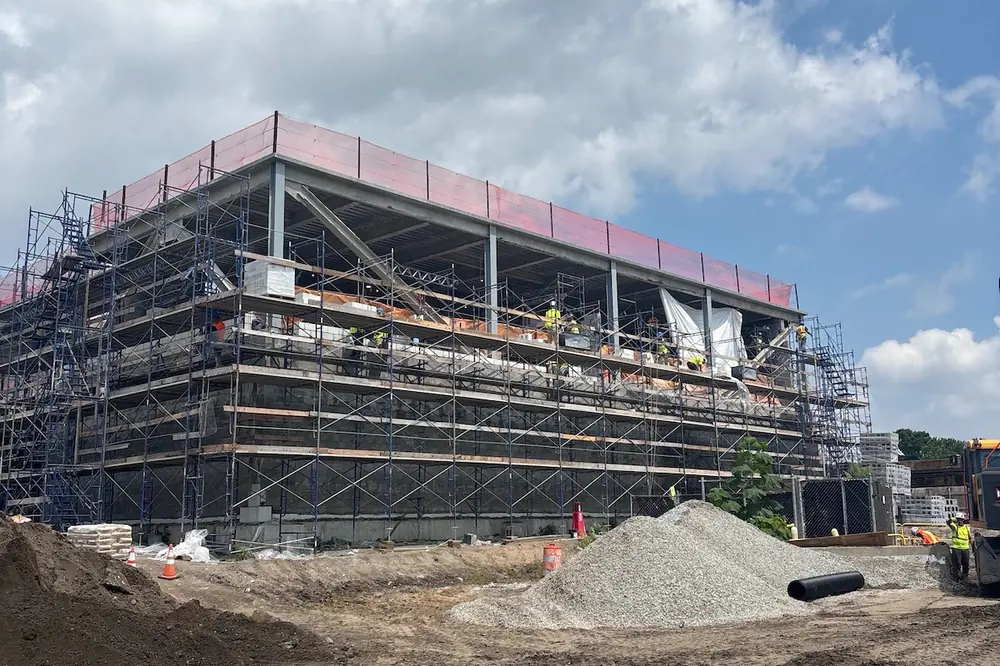
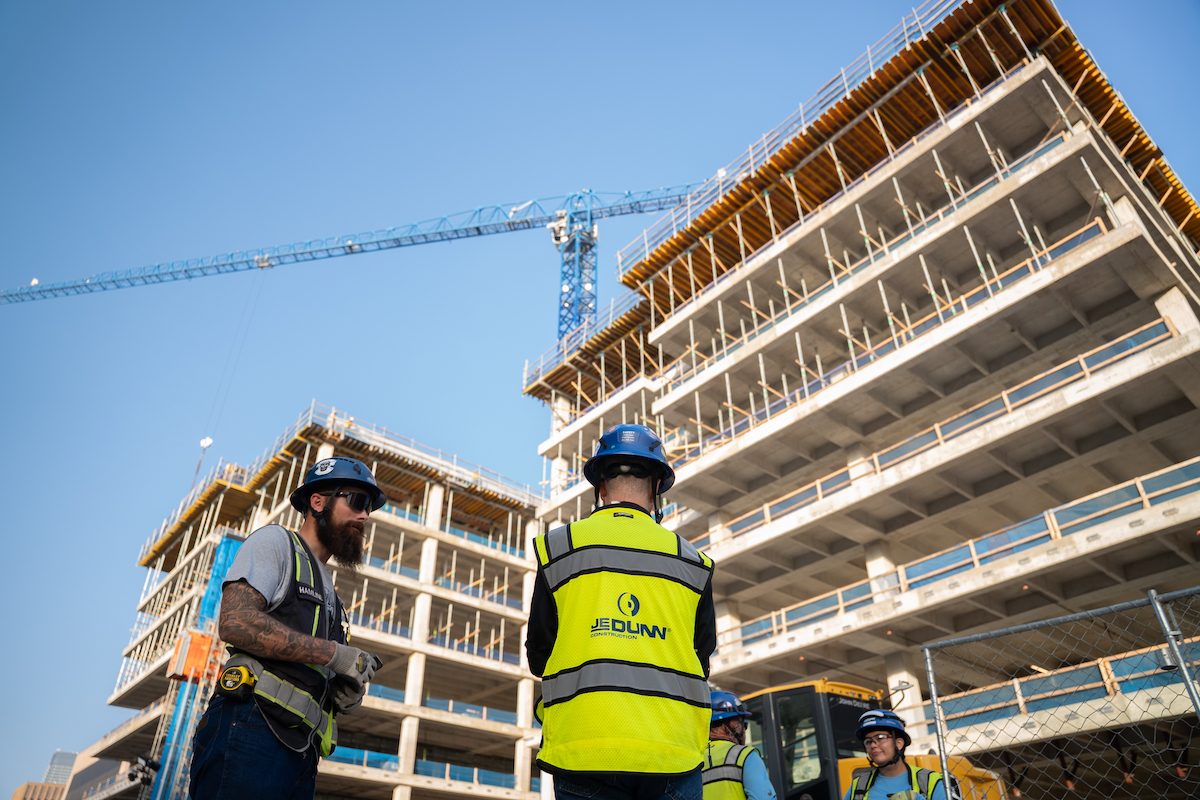
“The excavation was about a year-long process,” Emanuel said. “And then we built the underground parking structures. Work on the above-grade office structures followed, with those topping out in August of 2025. We’re now working on core and shell construction, exterior closure, and interior finishes, with a target completion of December 2026.”
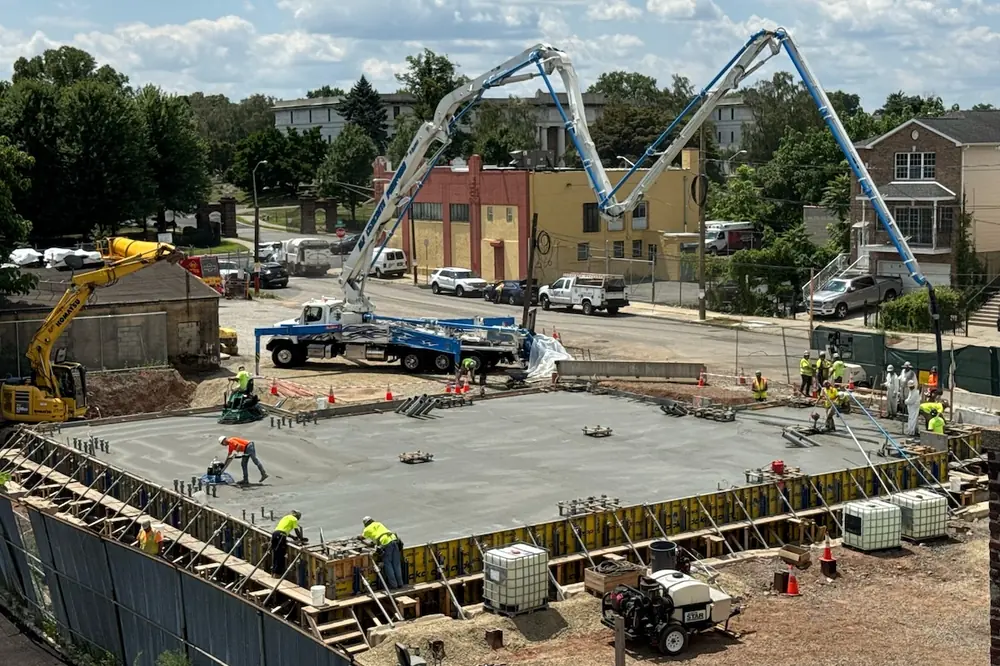
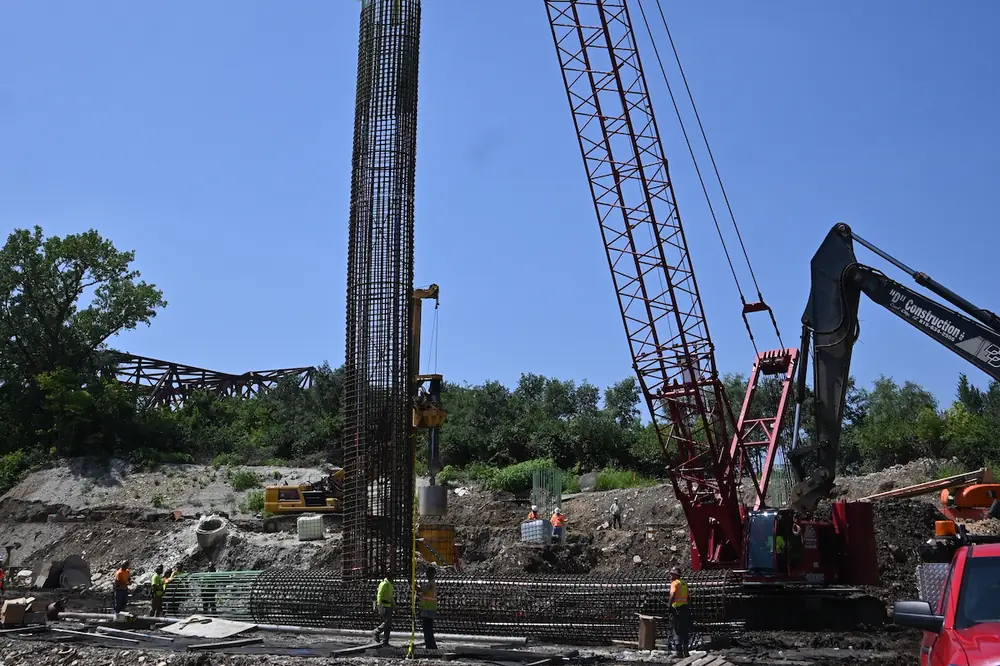
To date, Phase II has included more than 890,000 manhours of work, including the placement of 149 foundation piers, roughly 4,900 tons of rebar, and more than 90,000 cubic yards of concrete.
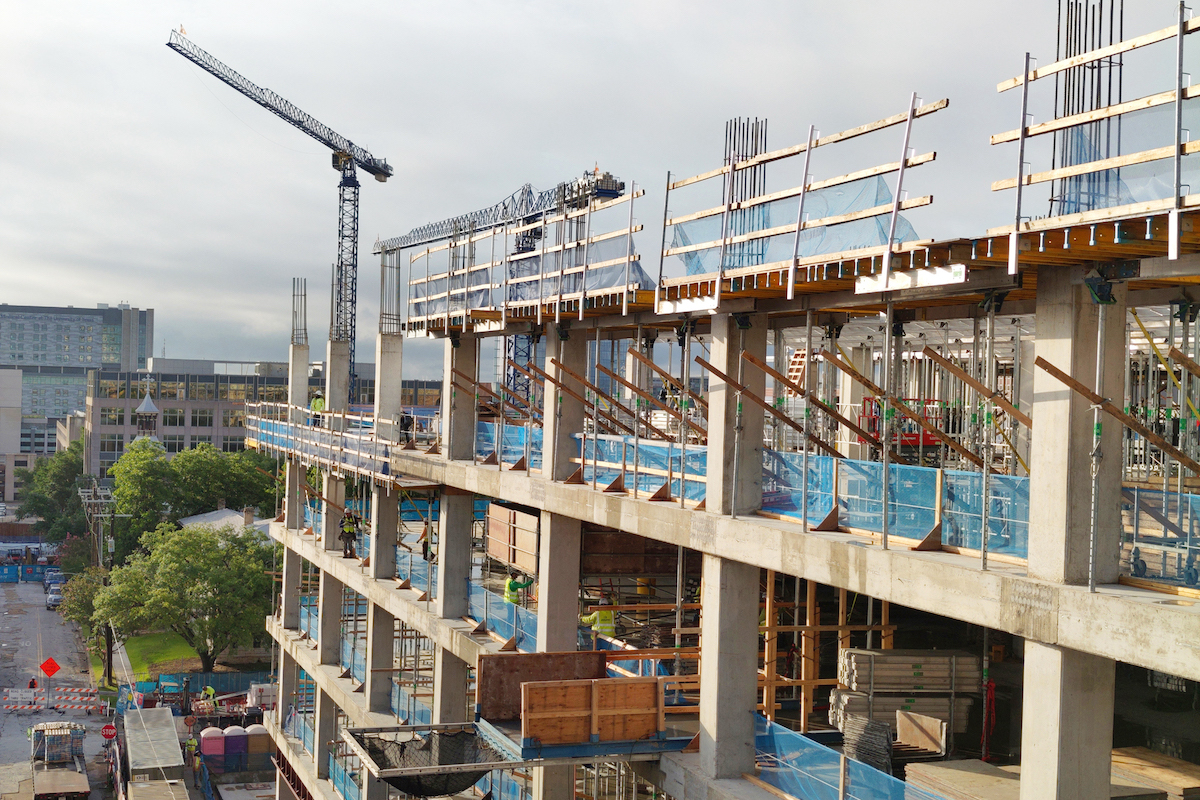
“Our self-perform concrete team completed all the concrete work, including the cast-in-place concrete structures from top to bottom,” Emanuel said.
Given the fact that the build sites were relatively confined and surrounded by historic buildings, getting concrete to the right positions required “a pretty extensive system of booms and line pumps that ran from the streets through the structure up to a placing boom,” Emanuel said. “That allowed us to pump the concrete to all of the buildings’ columns and decks.”

| Your local Gehl Co dealer |
|---|
| Star Equipment LTD |
Crews used a central tower crane at each building site to place other key structural materials. In all, more than 1.1 million pounds of heavy machinery have been used in the project so far, according to TFC data tracking.
To keep pedestrians safe as they traveled near the construction site, JE Dunn implemented strict limits to the allowed swing radius for its cranes. Crews also created a covered walkway to provide extra protection for walkers as they navigate the main pathway near the construction zone.
Construction progress updates, including daily camera views of both the Lavaca and Congress building sites, are available online at TFC’s Capitol Complex Project website. Completion of Phase II will represent the realization of the bulk of the existing Capitol Complex Master Plan as outlined in 2016.
JE Dunn’s crews have been heavily involved in the Texas Capitol Complex project since 2018, and their work on Phase I included overseeing the “Big Dig” — excavation and utilities relocation work on 12 city blocks — along with construction of the complex’s new central utility plant and paving of the pedestrian mall.

| Your local Topcon Positioning Systems Inc dealer |
|---|
| Star Equipment LTD |
“Phase I included an impressive excavation, and I think our experience with the excavation and utilities on Phase I, as well as our ongoing relationship with TFC, really helped us solidify the contract that we received to serve as general contractor of Phase II,” Emanuel said.
As with Phase I, the extensive downtown excavations involved in Phase II proved to be some of the most challenging features of the latest project’s overall scope.
“It’s a historic area — one of the oldest areas in the city of Austin,” Emanuel said. “So, we had to work around a lot of existing buildings and a lot of existing utilities. Utility coordination was definitely a big part of this project, especially early on.”
To avoid structural or operational mishaps, JE Dunn’s crews enacted several precision excavation processes, particularly in their approach to securing the foundation walls at the dig sites.

| Your local Takeuchi Mfg Ltd dealer |
|---|
| Kirby-Smith Machinery |
| Star Equipment LTD |
At the surface levels of the dig zones down to about 10 to 15 feet, crews used a soldier pile system to reinforce the excavation sites.
“That got us down past the majority of any of the surrounding utilities so that we were able to eliminate any conflicts with those,” Emanuel said.
Further below grade, JE Dunn crews utilized a rock nail wall retention system to reach the 65- to 78-foot excavation depths required for the Phase II build.
“We drilled rock nails into the surrounding limestone to basically create a temporary supportive excavation wall that allowed us to dig down to the required depths. And then we built the [office building and parking] structures inside of that retention system,” Emanuel explained.

| Your local Magni dealer |
|---|
| Kirby-Smith Machinery |
“It’s a pretty unique process that we do fairly often in downtown Austin, simply because of the geology there,” he added. “There’s a lot of hard limestone in the area, so we’re able to drill into the existing stone bed to create fairly extensive, supportive excavation systems.”
Another key challenge was ensuring no part of the Phase II project obstructed sightline views of the State Capitol, since those are protected by law.
“Austin has designated Capitol View Corridors, which are specific spots in the city where you have to be able to see the Capitol. In those areas, local building code prohibits building higher than a certain height, to protect those sightlines,” Emanuel said.
As work continues on the Phase II final stages, Emanuel said he feels grateful to have had the opportunity to be involved on a true legacy project — and to work for a client that is as supportive as TFC.

| Your local Gomaco dealer |
|---|
| Fabick CAT/MO |
| Road Machinery and Supplies Company |
“TFC understands construction, which makes them a great client to work for,” he said. “They know what they need from us, and they know what to expect. So, it creates a really collaborative, positive working environment for everyone.”
- Owner: Texas Facilities Commission, Austin, Texas
- General Contractor: JE Dunn Construction, Kansas City, Missouri
- Architect: HOK, New York, New York
- Owner Representatives: Square One, Austin, Texas; Hill International, Austin, Texas