
The civil and construction industry is poised for a breakthrough year in 2026. Major technology advances in 2025 — from field-focused ISO standards to AI-powered workflows — are accelerating and converging to reinforce the industry's emerging digital backbone.
At the recent Trimble Dimensions user conference in Las Vegas, Nevada, we asked attendees about the potential impact of improving digital data workflows on their 2026 performance: 97 percent said it would be "extremely positive" or "positive." More pointedly, we surveyed attendees about their priorities for the year ahead. The message was clear: 69 percent cited "adding or optimizing the right technology" as their biggest focus for 2026.
In this article we’ll spotlight the three biggest technology advances expected to deliver measurable results in the digital realm in the coming year.
You may have heard about the importance of the ISO 15143-4: Worksite Topographical Data Standard, enabling true plug-and-play interoperability between machines and software platforms. Now the value of that standard is coming into play. Expect to see a number of solutions emerge.
Common data environments (CDEs) have become the established foundation for managing design and construction data flows. The ISO 15143-4 standard builds on this foundation, taking interoperability to the next level by enabling design files to move seamlessly between different digital construction systems.
| Your local Magni dealer |
|---|
| Kirby-Smith Machinery |
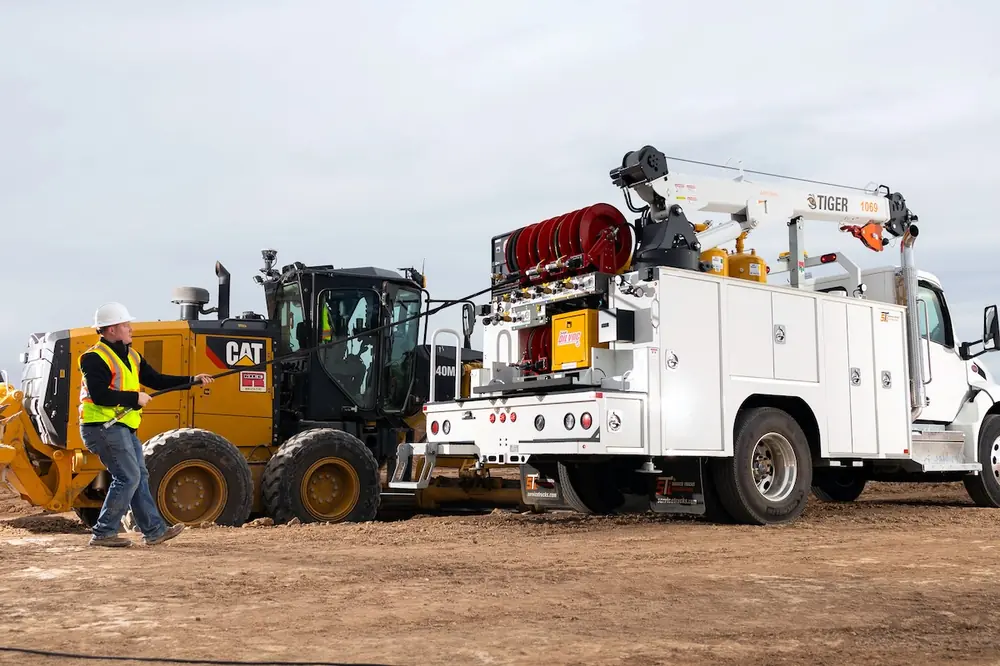
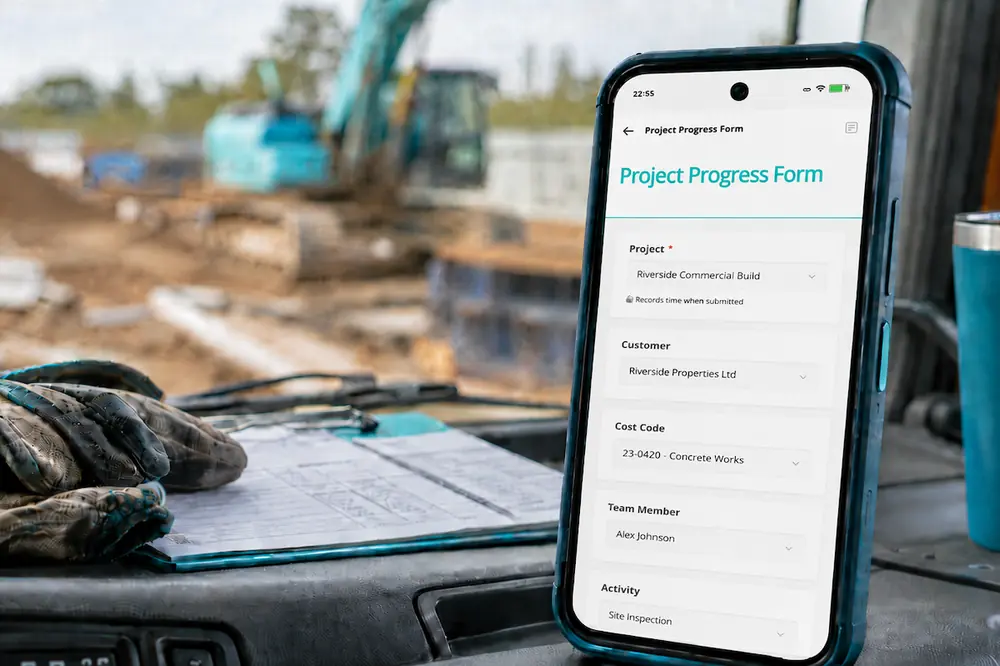
For instance, new functionality in Trimble WorksManager, a cloud-based field-to-office communication platform, allows users to send design files to other vendors' solutions that also support the ISO standard. This means mixed-technology fleets can operate using the same design files, eliminating the expensive and frustrating limitation of incompatible systems. It allows users to remotely send construction-ready models, manage onsite devices and machines, and troubleshoot issues to maintain productivity.
The business case for integration is proven. Central Builders of San Antonio, Texas, a 2025 Trimble Construction Innovation Award winner, connected their field operations, finance, and project management into a seamless ecosystem. The results: 90 percent reduction in manual data entry, 50 percent faster payments, and 35 percent reduction in rework — measurable impacts directly attributable to integration.
Contractors who master data integration in 2026 will gain competitive advantages their peers cannot match. They'll demonstrate digital capabilities that sophisticated clients increasingly demand. They'll win the complex, high-value projects where traditional approaches fall short.
More importantly, they'll build the foundation that makes everything else possible. Seamless data flow is essential to the increasing use of artificial intelligence (AI) and automated (and even autonomous) systems.

| Your local Takeuchi Mfg Ltd dealer |
|---|
| Kirby-Smith Machinery |
| Star Equipment LTD |
Artificial intelligence has become a prominent topic in construction industry news in recent years, alongside increased levels of investment. According to a recent report from market research firm S&S Insider, AI in construction market size was valued at $5.13 billion in 2025 and is projected to reach $33.31 billion by 2033, with a compound annual growth rate of 26.38 percent during the forecast period of 2026-2033. Further, the study found that AI adoption in construction reached 12 percent of projects in 2025, driven by AI-powered planning, monitoring, and safety solutions.
But what does AI actually mean for civil contractors in the coming year? The answer lies in agentic AI — intelligent systems that can observe conditions, plan actions, make decisions, and refine strategies over time. These aren't chatbots or simple automation; they're systems that work across connected workflows to deliver real productivity gains.
In 2026, expect to see many more practical applications emerge. AI-powered daily logs will let foremen update project status using voice prompts from their phones — no more hours at the computer after a long day in the field. AI will analyze machine control data to optimize cut/fill operations, flag potential grade conflicts before they become field problems, and generate progress reports without manual data entry. Predictive analytics will warn of material shortages days in advance, keeping projects moving.
AI capabilities will expand rapidly across construction software, with a focus on automating specific tasks that deliver immediate return on investment. Perhaps most telling, AI isn't replacing workers in the construction space — it's amplifying their capabilities. This is critical as the industry faces a shortage of nearly 500,000 workers in 2026 alone — you can't hire your way out of this gap, but you can multiply the productivity of the people you have.

| Your local Link Belt dealer |
|---|
| Kirby-Smith Machinery |
The coming year will also bring significant advances in automated tasks and semi-autonomous operations. This evolution delivers immediate productivity gains across key areas in the civil space.
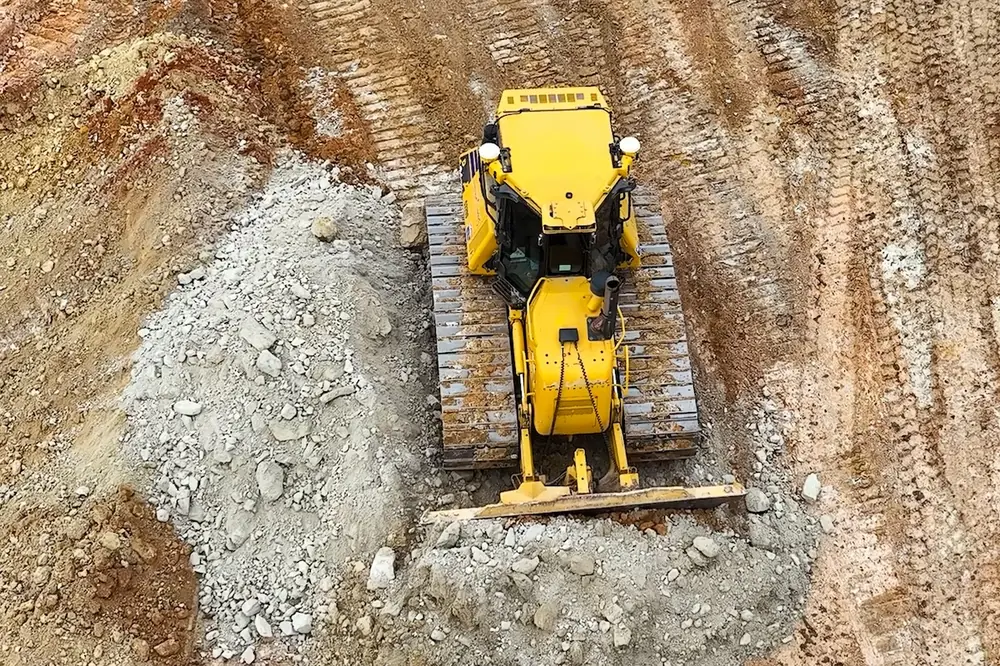
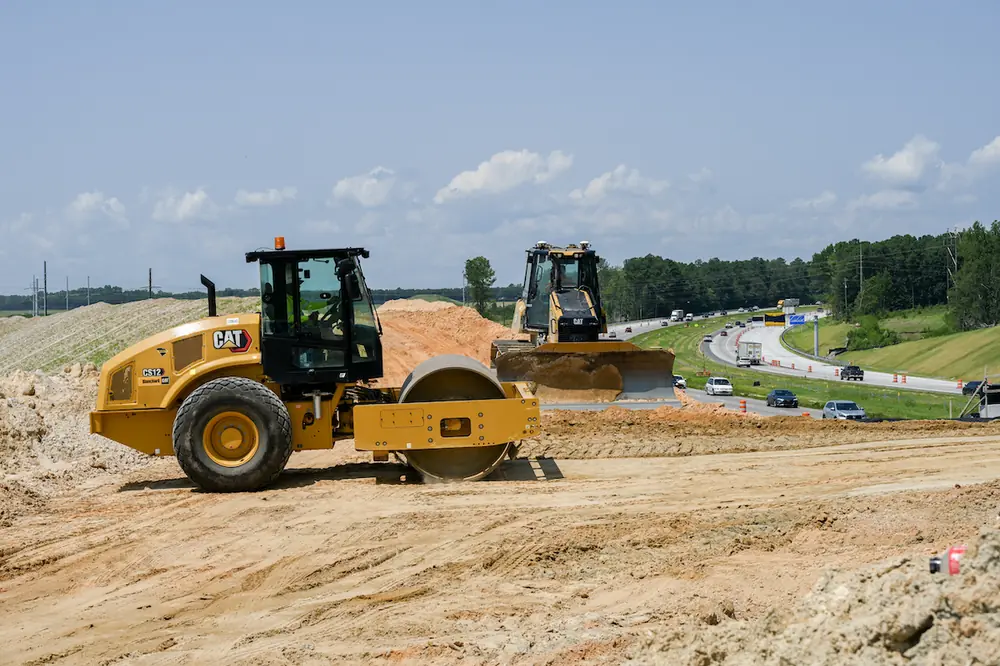
First, advanced machine control systems are becoming baseline expectations. They're table stakes for competitive bidding on modern earthmoving projects. Real-time grade control, 3D modeling, and GPS positioning integrate seamlessly, enabling operators to achieve first-time accuracy that previously required multiple passes. The result: fewer stakes, less rework, faster project completion.
Also, task-level automation is expanding rapidly. The focus is shifting to automating specific high-value tasks, such as automated compaction verification, slope checking, and volume calculations. Safety applications include proximity detection, rollover prevention, and operator fatigue monitoring.
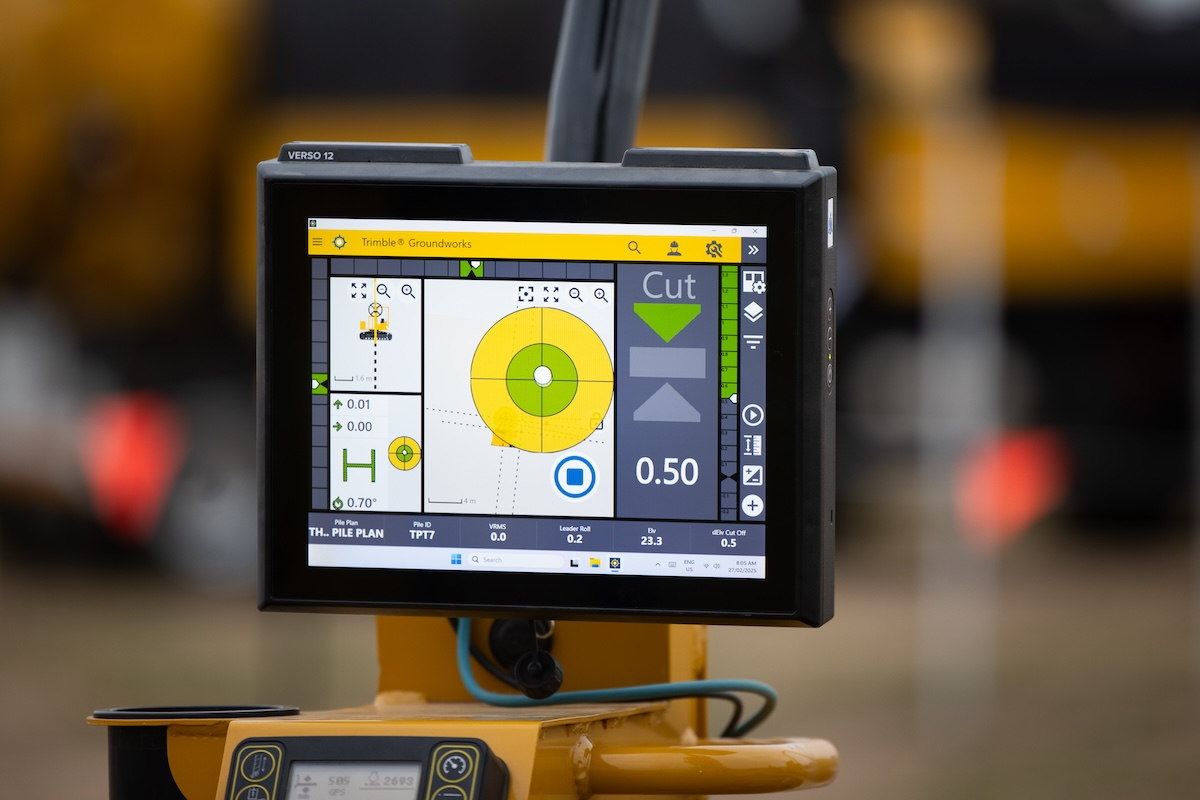
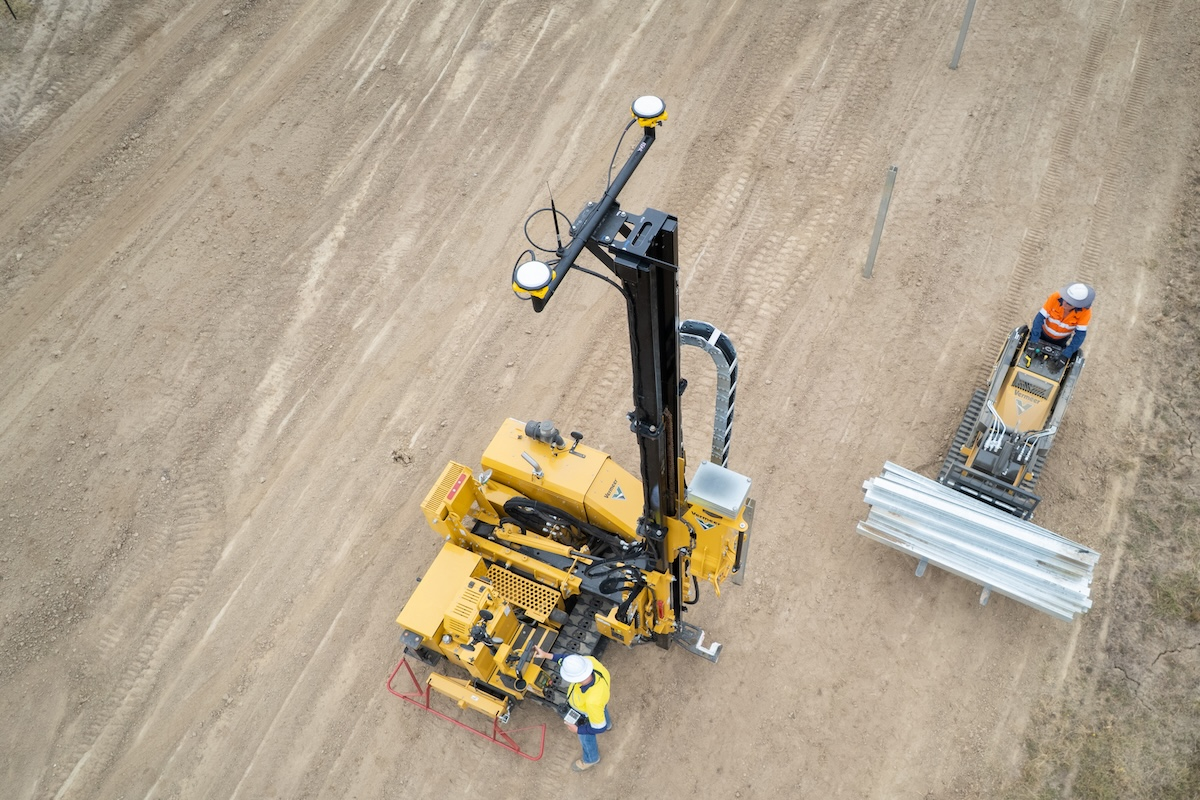
The renewable energy boom is driving demand for these automated solutions, with solar farm construction requiring the speed, precision, and efficiency that integrated systems deliver. A concrete example: Trimble Groundworks machine control now integrates with Vermeer PD10R and PD25R remote-controlled pile drivers for solar farm construction. The system moves the pile driver automatically to the precise location according to the project plan and optimizes the steps needed to drive the pile to accurate depth with minimal operator inputs. This allows one operator to complete what would otherwise be a two- or three-person job.

| Your local Leica Geosystems Inc dealer |
|---|
| Laser Specialist inc |
When paired with a communication platform like Trimble WorksManager, project managers gain real-time reporting of production and quality data, enabling them to troubleshoot operations remotely, monitor overall project progress, and ensure optimized piling rates. This combination of machine control and remote control represents the next step on the road to autonomy, with the potential to vastly improve worker safety, productivity, speed, and accuracy on solar and other infrastructure projects.
Automation depends on vast data sets to understand job site conditions, with machine learning improving with every project. Connected, cloud-based ecosystems enable sharing insights across your fleet. AI enhances both operator efficiency and foreman oversight of the overall project.
These three technologies — data integration, AI, and automation — aren't separate trends. They're interconnected, and each one amplifies the others.
Common data environments provide the foundation: centralized, accessible data that flows seamlessly across systems. AI agents leverage that data to automate decisions and accelerate workflows. Automation executes with precision, feeding results back into the system. The result is a continuous cycle of improvement and optimization — the connected job site that defines competitive advantage in 2026.

| Your local Topcon Positioning Systems Inc dealer |
|---|
| Star Equipment LTD |
But technology means nothing without adoption. In our survey at Dimensions, 38 percent of contractors ranked "getting employees to buy in and excel with technology" as their top 2026 priority. This is the bridge between technology potential and business results. Invest in training. Demonstrate value. Build confidence. Your people make the difference.
The path forward is clear: Start with data integration — ensure your systems communicate before adding new capabilities. Pilot AI applications on specific high-value workflows, implement machine control on key equipment, train teams thoroughly, and scale what works. These technologies are proven, not experimental.
The construction industry stands at an inflection point. Technology evolution is accelerating, not slowing down. The contractors who embrace connected workflows will win the work, attract the talent, and deliver the results that define success in this new era.
Scott Crozier is Vice President, Civil Construction Field Systems, at Trimble.