

I sit across from contractors and owners every month who are trying to recover time or money on a project that went sideways. They had the emails. They had the meeting minutes. They had a superintendent who could walk through exactly what happened. But when the attorney asked for a schedule narrative tying each impact event to the critical path, backed by formal notice, they had nothing usable.
The claim got filed. It got rejected.
That is the pattern. Contractors file claims all the time. The problem is those claims are unsubstantiated. The documentation is scattered. The schedule impacts were never quantified in real time. The contractual notice requirements were missed or sent too late. So a legitimate entitlement gets tossed because the record could not support it.
Construction disputes are expensive and getting worse. The average dispute value in North America now exceeds $60 million, up roughly 40 percent year over year, according to the 2025 Annual Construction Disputes Report from Arcadis, a global design and engineering firm. The average dispute still takes about 12.5 months to resolve. Factor in attorneys, expert witnesses, lost productivity, and the distraction for your project team, and the total cost can reach 10 to 15 percent of contract value.
Most disputes are not about whether something happened. Both sides know the design change was issued or the delivery showed up late. The fight is over fault, causation, and cost. Who is responsible? How much time did it actually take? Can you prove it?
Without contemporaneous documentation tied to the schedule, those questions become a battle of competing narratives. The party with the weaker records loses.
A schedule narrative is a written record submitted alongside each schedule update that explains what changed and why. For each event, it documents the date, the directive or source of the change, which activities were affected, what happened to the critical path, and a reference to the formal notice letter.
It is not a daily report or a change log. It bridges the schedule data and the real-world decisions that drove it.
You can keep the most detailed project diary in the world. But if you are not formally notifying the owner of changes within the contractually specified window, that diary may not help you.
Contracts have notice provisions for a reason. Missing the window can jeopardize your entitlement to recover, regardless of how well you documented the event internally. Requirements vary by contract, but the principle holds across the industry.
What holds up in mediation, arbitration, and litigation is a contemporaneous schedule narrative paired with timely, formal notice. The narrative ties each change event, delay, and owner decision to the schedule. It answers the questions a claims consultant or arbitrator will ask: What happened? When? What did it do to the critical path? Did you put the owner on notice?
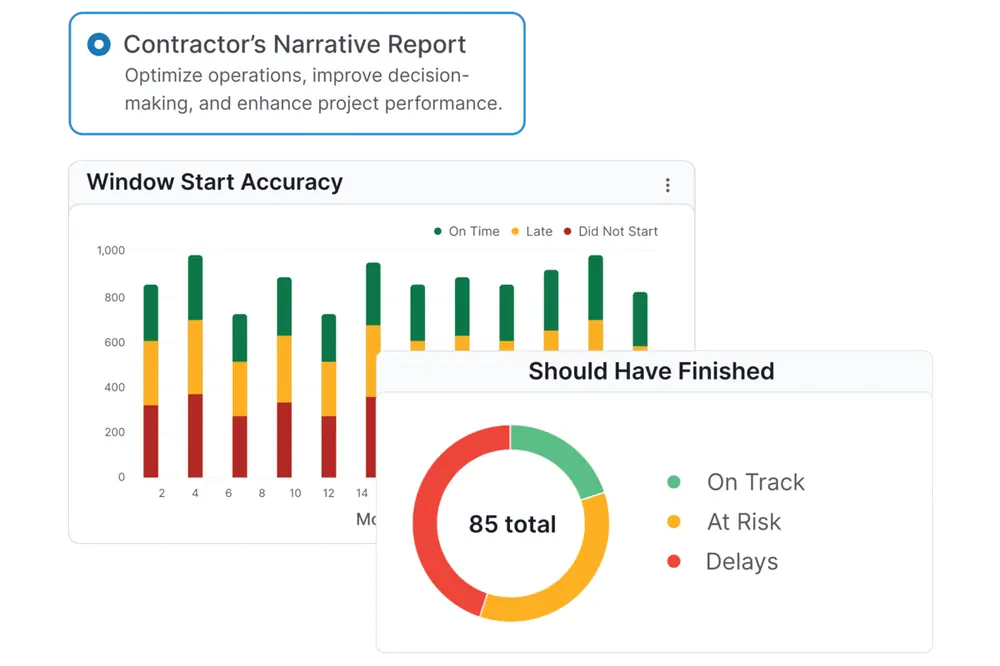
Most teams understand the concept, and few do it well. The schedule gets updated but the narrative explaining why activities shifted, why float was consumed, or why logic changed never gets written. Six months later, a delay consultant is reverse engineering the story from fragments — emails, submittals, RFI logs, and the recollections of people who already moved on to their next project.
On a recent data center engagement, the owner issued a series of incremental scope additions over four months. None were dramatic on their own. An additional equipment pad here, a revised cable tray routing there, a few extra fire suppression tie-ins. Each one added a few days and shifted work sequences slightly. The general contractor sent notice letters for the bigger changes but treated the smaller ones as normal course of business.
By month eight, the project was six weeks behind and the owner wanted to know why. The GC knew it was the cumulative effect of those changes. But the schedule updates showed the delays without explaining them. The notice letters covered some impacts but not all. The undocumented smaller changes added up to more schedule impact than any single large event.
When it came time to build a time extension request, the claims consultant had to piece together a timeline from scratch. Half the impacts were supportable. The rest were real but could not be substantiated: no schedule narrative linking them to the critical path, no formal notice on file.
Now picture the same project where the project manager maintains a running schedule narrative with each update. Every change event gets a dated entry: what changed, who directed it, the estimated schedule impact, and a reference to the formal notice letter. The small stuff gets documented the same as the big stuff. When the time extension request is assembled, the narrative is already there. The delay consultant is not guessing. The schedule data and the written record tell the same story.
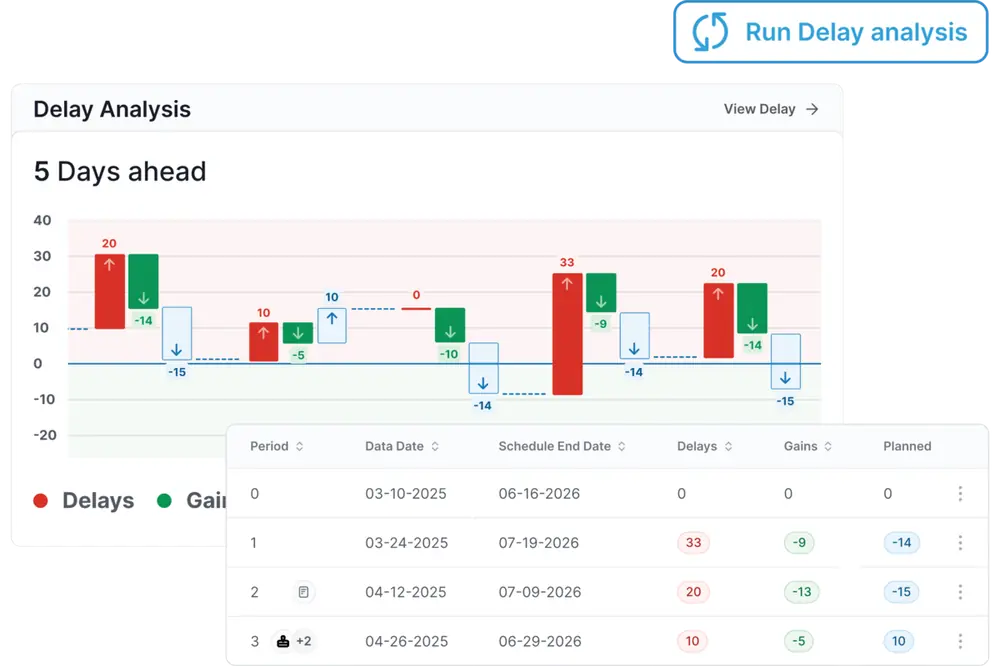
If you are updating your schedule properly, the data already shows where change events affect the critical path — float consumption, activity resequencing, logic changes, constraint shifts. The schedule narrative connects that data to the real-world events that caused it.
Without the narrative, you have schedule movement with no explanation. With it, you have a defensible record.
Forensic schedule analysts know this. AACE International’s Time Impact Analysis standard (RP 52R-06) relies on contemporaneous schedule data. Their Forensic Schedule Analysis standard (RP 29R-03) treats contemporaneous records as the gold standard. Records made in real time are reliable. Records reconstructed after a dispute starts are not.
If you are a project manager or contractor, make the schedule narrative part of your update process. Tie each change to a specific event. Reference the formal notice if one was issued. Quantify the schedule impact. If you have been absorbing changes without issuing notice, talk to your project counsel about next steps. Late notice is better than none, but the best practice is building it into the workflow from day one.
If you are an owner, require the schedule narrative as a deliverable. And read it. When both sides review the narrative together each month, disputes get smaller because you are resolving disagreements while the events are still fresh. The conversation shifts from "did this occur" to "what is the fair adjustment." That is a much shorter conversation.
Treat formal notice the way the contract intended. It is not adversarial. It is the mechanism that preserves everyone’s rights and keeps the project on honest footing. A general contractor who sends timely notice is not picking a fight; they are doing their job. An owner who requires one is not creating paperwork; they are building a shared record that protects both sides.
The claims that get rejected are often the ones that could have been won. The difference between a substantiated entitlement and a rejected one is rarely about whether the impact was real — it is about whether the record was there to prove it.
Graphics courtesy of SmartPM.
Michael Pink is CEO and Founder of SmartPM.