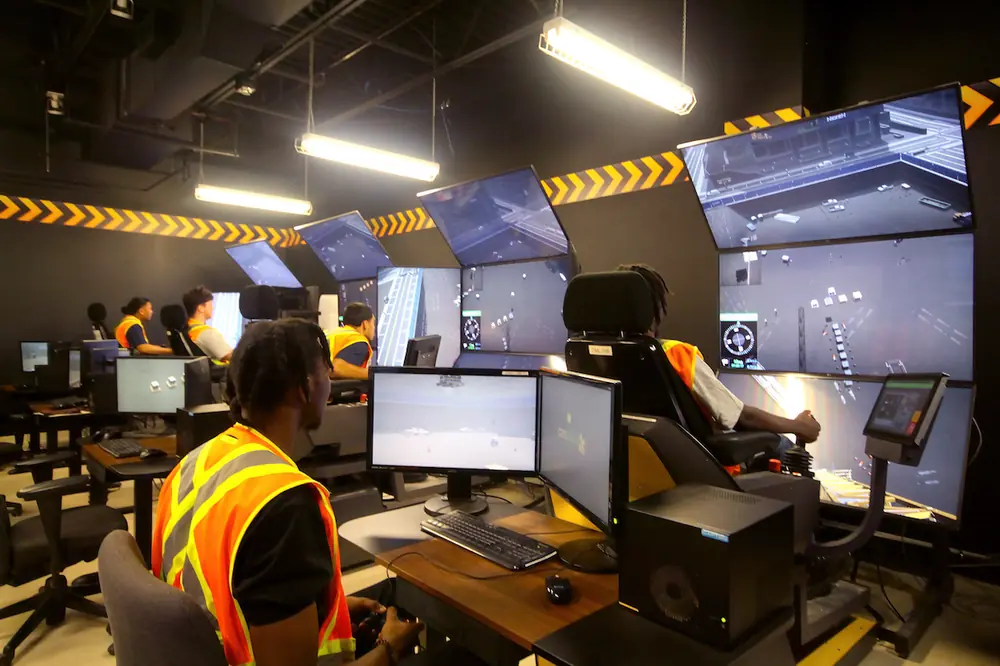


The construction industry is facing a familiar challenge with increasing urgency: how to build and maintain a skilled workforce in the face of labor shortages, accelerating project timelines, and rising safety expectations. Experienced operators are retiring, new entrants often arrive with limited hands-on experience, and the margin for error on today’s job sites continues to shrink.
Training has always been the bridge between workforce demand and capability. What is changing is how that training is delivered, and how effectively it can prepare operators before they ever step onto a job site.
Over the past decade, simulation-based training has transformed how operators develop hands-on skills. More recently, artificial intelligence (AI) has begun to play a supporting role, enhancing how training is delivered, monitored, and scaled. While closely related, these technologies serve distinct purposes. Simulation creates the environment where skills are developed. AI helps optimize how that training is guided, measured, and managed.
Traditional construction training has long relied on a combination of classroom instruction and on-the-job experience. This model often places learning under production pressure, where mistakes can result in equipment damage, rework, or safety incidents. It can also be difficult to consistently evaluate skill levels across different trainees and instructors.
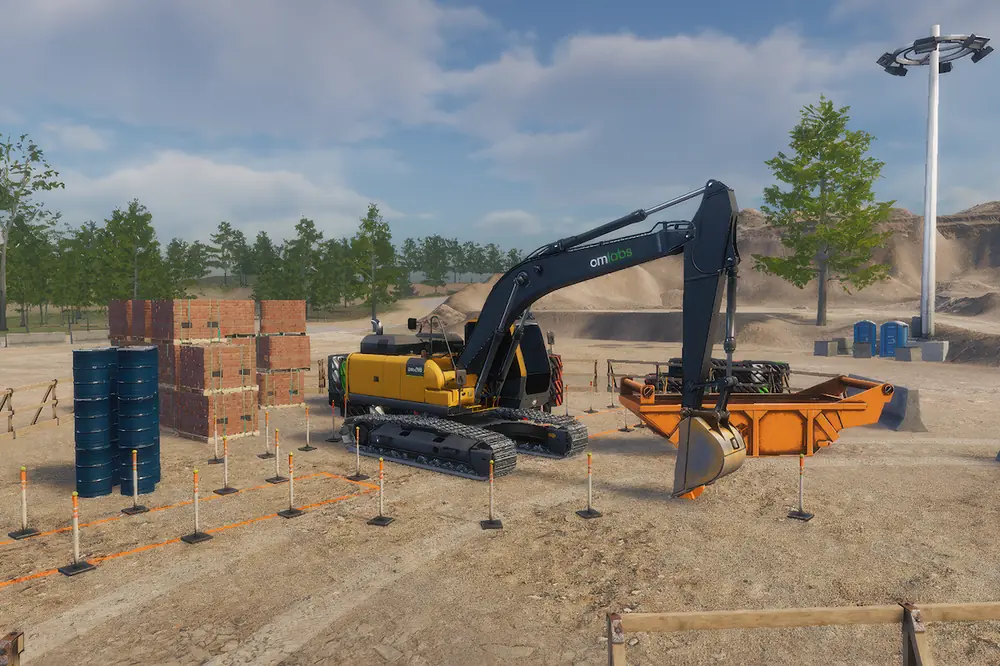
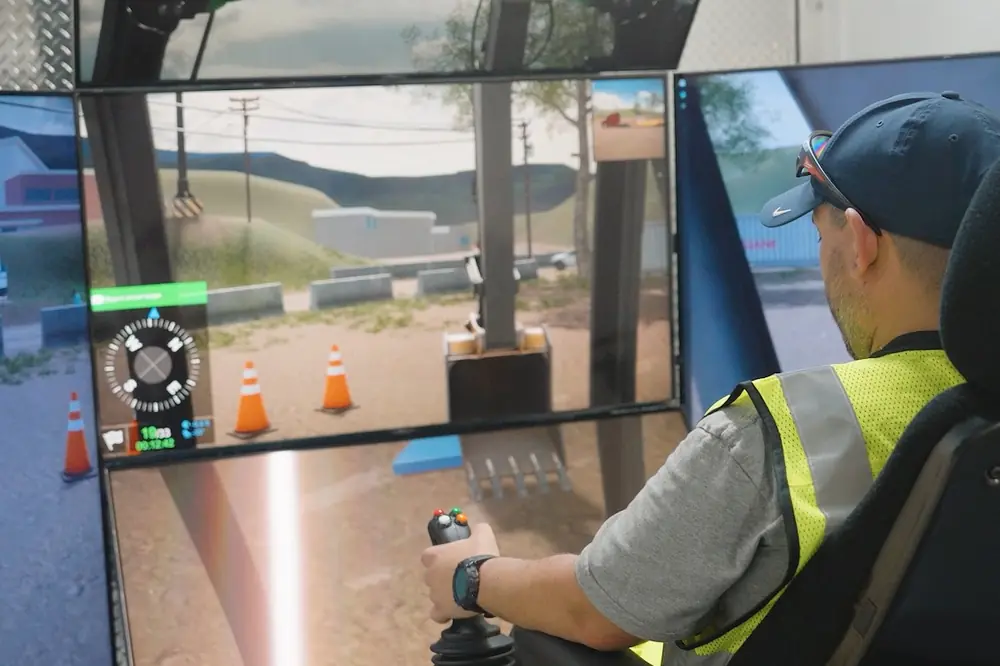
Simulation-based training addresses these challenges by providing a controlled, repeatable environment where operators can develop foundational skills before entering the field. Tasks such as trenching, driving, or grading can be practiced without real-world consequences, allowing trainees to build confidence and competence at their own pace.

| Your local Gomaco dealer |
|---|
| Terry Equipment |
Just as importantly, simulation introduces consistency. Every trainee can be exposed to the same scenarios, conditions, and expectations, helping organizations standardize training across crews and locations. This structured foundation is what enables more advanced tools such as AI to add value without replacing the core training experience.
AI functions as a support layer within the training process. Within simulation environments, trainees and instructors can interact directly with an AI assistant through voice or chat to ask questions or clarify procedures. This ensures that learners receive immediate guidance, even when instructors are working with multiple trainees at once.
At the same time, the use of an AI assistant helps reduce the burden of routine instructional tasks. By handling repetitive questions and reinforcing standard procedures, it allows instructors to focus on higher-value activities such as coaching, observation, and performance evaluation.
For instructors, an AI assistant also supports the training workflow by helping them navigate the platform, interpret results, and customize how performance is evaluated. This can include adjusting scoring criteria or refining how specific skills are measured, creating a more tailored and consistent training experience across trainees.

| Your local Trimble Construction Division dealer |
|---|
| SITECH Southwest |
| SITECH West |
Used in this way, AI enhances the training process — without changing its core — because hands-on skill development still happens through simulation and real-world experience.
One of the most important contributions of simulation is the ability to observe and measure operator performance in a consistent environment. AI builds on this capability by helping training programs make better use of that data.
Historically, determining whether an operator was ready for the field often relied on observation and judgment. While experience remains critical, it can be difficult to ensure consistency across instructors or training locations.
Simulation generates detailed performance data, such as task efficiency, precision, and adherence to safety procedures. AI can assist in organizing and interpreting this information, helping instructors identify patterns, highlight areas for improvement, and track progression over time.
| Your local Gomaco dealer |
|---|
| Terry Equipment |
This creates a more structured training pathway. Trainees advance based on demonstrated competency rather than time spent in training, and instructors can tailor their approach to individual needs. For organizations, this leads to greater consistency and confidence in workforce readiness.
Safety training is most effective when it goes beyond theory and becomes part of how operators think and act. Simulation plays a key role by allowing trainees to experience realistic scenarios — including high-risk situations — that would be difficult or unsafe to replicate in the field. Operators can practice responding to unstable ground conditions, equipment issues, or complex workflows in an environment where mistakes become learning opportunities rather than incidents.
AI enhances this process by reinforcing decision-making during training. For example, trainees can receive immediate, context-specific guidance while completing tasks to help them better understand how different actions affect safety and performance. Over time, this type of feedback helps build more consistent and instinctive decision-making in the field.
Technology-enabled training is also changing who can enter the construction workforce, and how quickly they can progress.
| Your local Gomaco dealer |
|---|
| Terry Equipment |
Simulation allows organizations to train individuals with little or no prior equipment experience in a controlled environment. AI-supported learning tools further accelerate this process by providing structured pathways and reinforcing foundational knowledge outside of hands-on training.
This combination makes it easier to onboard new workers, upskill existing employees, and transition operators between different types of equipment. It also helps organizations maintain consistent standards, regardless of a trainee’s starting point.
In an industry facing ongoing labor shortages, this ability to expand and develop the workforce is increasingly important. As construction training continues to evolve, simulation and AI are becoming part of more integrated systems that connect curriculum, hands-on training, and performance tracking.
In these environments, training is no longer a one-time event but an ongoing process. Operators can continue developing their skills over time, supported by structured learning pathways and informed by performance data. Organizations gain greater visibility into workforce capability, allowing them to plan more effectively and reduce uncertainty.
| Your local Gomaco dealer |
|---|
| Terry Equipment |
While new technologies are reshaping how training is delivered, the goal remains the same: to develop skilled operators who can work safely and effectively in the field.
Simulation provides the environment where those skills are built. AI enhances how training is delivered, supported, and measured. Together, they create a more consistent, scalable, and effective approach to workforce development, without replacing the expertise and judgment that experienced instructors bring to the process.
As the industry continues to adapt, the most effective training programs will be those that use technology with purpose, supporting both the people delivering training and the operators learning to do the work.
Alan Limoges serves as the Manager of Product Growth at CM Labs, where he leverages a background in engineering and a track record of cultivating strategic partnerships.