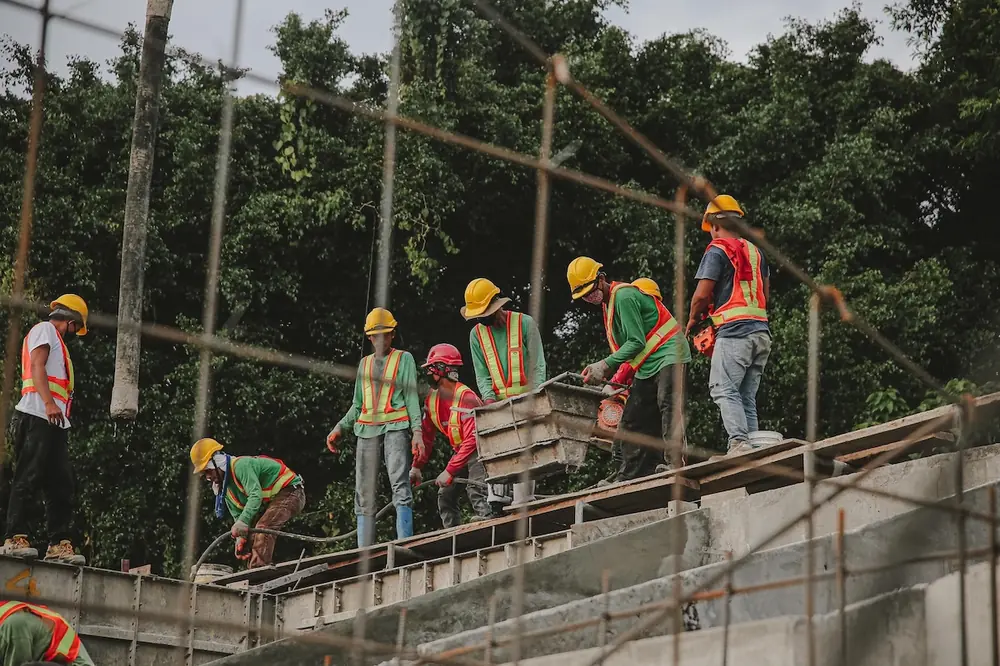

New research found that multiskilling can shorten construction schedules by up to 38 percent.
By expanding workers’ skills and improving workforce flexibility, contractors can increase their capacity to meet growing construction demands without relying solely on a constrained labor market, according to Associated Builders and Contractors’ (ABC) analysis of the research.
“America faces a fundamental challenge: We have more to build than our workforce can currently support," said Michael Bellaman, ABC President and CEO. “This research demonstrates that a solution is already within reach. By investing in our craft professionals, expanding their skills, and removing unnecessary barriers to using those skills, we can create more opportunity for workers and greater capacity for contractors to build America.”
The findings come from the final report in the three-part multiskilling research series conducted by the Simplar Foundation. The most recent report analyzed nearly 90,000 labor hours across 18 construction projects involving 11 contractors. Researchers examined project labor records to evaluate how multiskilled workers helped contractors match available skills to changing project needs, maintain workflow continuity, and manage daily staffing demands.
Findings from the report titled “Schedule Duration and Labor-Curve Outcomes Associated with a Multiskilled Labor Strategy” include:

| Your local Komatsu America Corp dealer |
|---|
| Continental Equipment Corp (CEC) |
Shorter Project Schedules
Multiskilled crews completed work in approximately 22 percent to 38 percent fewer workdays than a modeled single-trade labor strategy was estimated to require. Conversely, restricting workers to one trade required 28 percent to 62 percent more workdays to accomplish the same work.
Improved Workforce Availability
On most project days (73 percent), relying on single-trade staffing would have left at least one trade without sufficient available labor compared to multiskilled crews.
Greater Staffing Flexibility
A single-trade strategy required more than one-third additional staffing on the busiest project days, underscoring the value of workers with multiple skills who can adapt to changing project needs.
Broader Worker Capabilities
Researchers documented 80 unique trade and skill combinations across 18 trades. Multiskilled workers performed an average of 3.2 different trades or skills over the course of their projects.

| Your local Deere & Co dealer |
|---|
| AIS Construction Equipment |
These findings build on the two earlier research releases. Taken together, ABC said the entire study demonstrates the significant potential of multiskilling to strengthen the construction workforce:
- Workforce utilization: Multiskilled crews increased their share of time directly advancing construction work by 39 percent and reduced waiting and idle time by 68 percent.
- Productivity: Controlled field trials found that multiskilled workflows increased production rates by 37 percent to 50 percent and completed closely sequenced construction work involving frequent trade handoffs approximately 30 percent faster.
- Staffing and schedules: Project labor records demonstrated the potential for substantially shorter schedules and greater flexibility to meet daily labor needs.
These improvements do not depend on individual craft professionals performing tasks faster or working harder, ABC said. Instead, multiskilling allows appropriately trained and qualified workers to apply a broader range of skills.
“This research gives the construction industry something it has needed for a long time: measurable evidence of how workforce flexibility translates into project performance,” said Brian Lines, Ph.D., PE, Principal Investigator and Associate Professor at the University of Kansas. “The benefits come from giving qualified workers the flexibility to apply their skills across multiple tasks, reducing unnecessary delays and keeping projects moving even [when] workforce needs change. This approach offers significant potential to improve project delivery in an industry facing persistent workforce constraints.”
The national multiskilling research series was conducted by the Simplar Foundation in collaboration with Arizona State University, the University of Kansas, and the University of North Carolina at Charlotte.

| Your local Trimble Construction Division dealer |
|---|
| SITECH Michigan |
To learn more about the research series, visit simplarfoundation.org/multiskilling or abc.org/multiskilling.