
Fuel costs have always been part of the equation in construction. But with tighter margins and rising operating expenses continuing to pressure job sites, contractors are paying closer attention to where fuel is being wasted and how to reduce it without slowing down production.
That’s not always easy. Today’s crews are expected to do more with fewer people, tighter schedules, and equipment that rarely sits still. Machines move from grading and loading to material handling and attachment work throughout the day, often across multiple phases of a project. Keeping equipment productive while controlling operating costs has become a balancing act.
As a result, many contractors are focusing more on how equipment is used onsite, not just engine performance. From telematics to preventative maintenance, there are practical ways to reduce waste without slowing production.
One of the biggest sources of fuel waste on a job site is also one of the easiest to overlook: idle time.
Construction equipment can spend more than half of its operating time idling — and even at idle, diesel-powered machines may burn nearly a gallon of fuel per hour. Across large fleets and long project schedules, that adds up quickly, especially when machines are sitting between tasks, waiting on layout checks, or staged while another crew finishes work nearby.

| Your local Komatsu America Corp dealer |
|---|
| Road Machinery and Supplies Company |
The challenge is that idle time often feels productive in the moment. Operators may leave machines running to maintain cab comfort during extreme temperatures or because repeatedly shutting down and restarting equipment can interrupt workflow. But over time, those extra engine hours increase fuel costs, add wear to the machine, and create unnecessary maintenance demands.
That’s why more contractors are turning to telematics and onboard machine data to better understand how equipment is actually used in the field. Modern fleet management systems can track fuel burn, operating hours, and idle percentages in near real time, helping managers spot machines that are spending too much time sitting instead of working.
Features like auto-idle systems and in-cab fuel monitoring also help crews identify unnecessary fuel burn during the workday.
While reducing idle time is an important first step, the biggest gains often come from cutting total machine time onsite.

| Your local Iowa Mold Tooling Co Inc dealer |
|---|
| Star Equipment LTD |
In many cases, that means completing work faster and with fewer repeat passes. Whether crews are grading, trenching, or handling material, improving workflow often has a bigger impact than simply focusing on fuel burn alone.
Technology plays a growing role in that shift. Machine control and grading systems are becoming more common across everyday job site tasks. Site plans can now be uploaded directly into the machine, allowing operators to grade more accurately from the cab instead of stopping repeatedly to check layout stakes or rework sections that are off grade.
That added precision can significantly cut down on rework. A grading task that once took six hours and required multiple passes, layout verification, and manual corrections may now be completed in a fraction of the time. Instead of stopping to reposition equipment or verify grade elevations with another crew member holding a grade rod, operators can stay focused on the work in front of them and finish the job correctly the first time.
Those time savings affect more than fuel costs. Less machine time means fewer engine hours, less wear on equipment, and more flexibility to move machines between projects. It can also reduce the number of people needed for certain tasks. In some cases, digital grading systems allow contractors to handle layout and grading directly from the cab instead of assigning additional crew members to continually check elevations throughout the process.

| Your local Manitou dealer |
|---|
| Star Equipment LTD |
For years, contractors often leaned toward larger equipment to ensure they had enough power for changing job demands. But with fuel costs and transportation expenses continuing to rise, more crews are taking a closer look at whether every task actually requires maximum horsepower or machine size.
In some cases, a smaller machine may complete the same work more efficiently while lowering fuel use and simplifying transportation. That becomes especially important on projects where equipment moves frequently between phases or job sites. A machine that can be hauled with a pickup and trailer instead of requiring a semitruck and heavy-haul coordination can reduce transportation costs and simplify scheduling across the project.
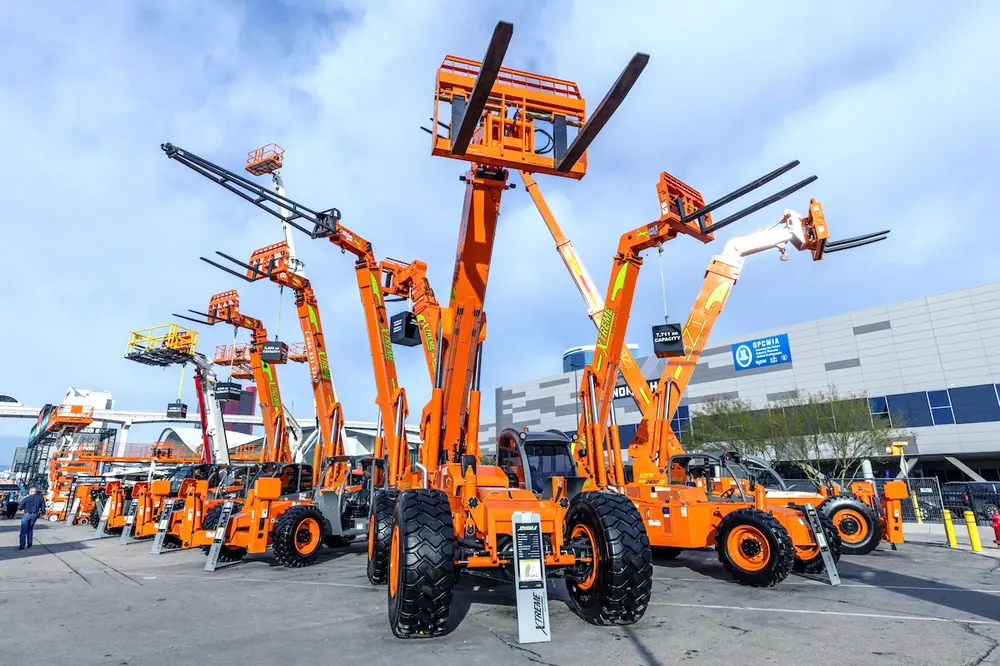
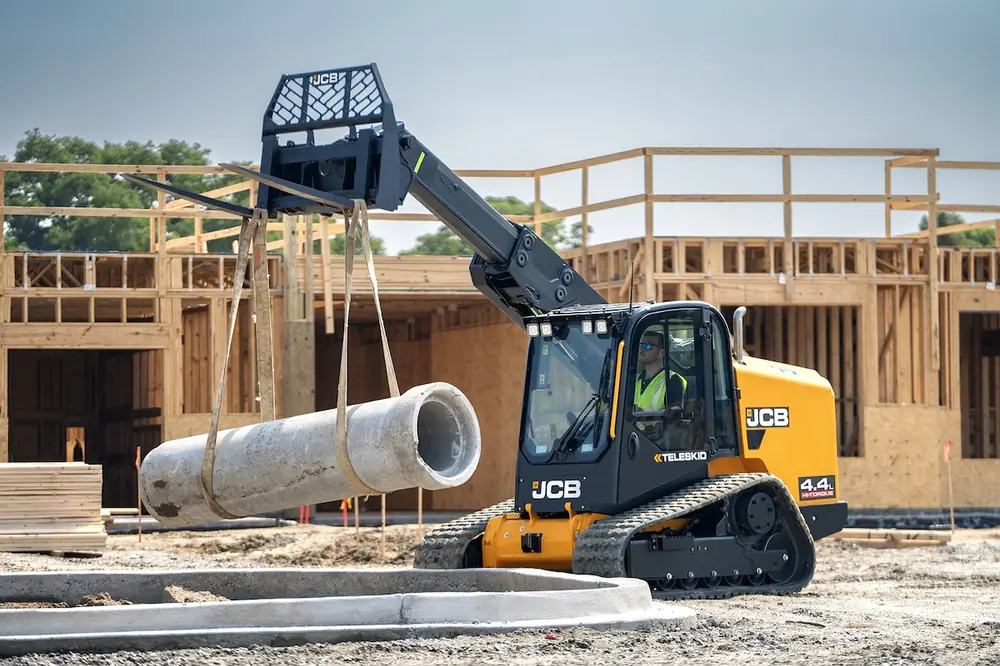
Contractors are also looking for ways to keep machines working instead of sitting and waiting on the next task. A loader that can move from grading to pallet handling to attachment work without bringing in additional equipment can help crews stay productive while reducing unnecessary machine movement around the site.
Choosing the right machine size also matters. Running a higher-horsepower machine for lighter-duty applications may increase fuel use without delivering much additional benefit. In many situations, smaller, more efficient machines can complete the same work while maintaining the lifting power, hydraulic performance, and versatility needed for the job.

| Your local Gehl Co dealer |
|---|
| Star Equipment LTD |
The goal is not simply reducing the number of machines onsite; it is making sure each machine is used effectively for the work in front of it.
Fuel efficiency does not just come down to how a machine is operated. It also depends on how well the machine and its attachments are maintained.
Small maintenance issues can quietly increase fuel use over time. A clogged air filter, for example, forces the engine to work harder to pull air through the system, increasing fuel burn and putting additional strain on the machine. Worn cutting edges, dull brush cutter blades, or damaged trencher teeth can have a similar effect. The attachment may still function, but it often takes longer and requires more power.
Attachment setup also plays a major role in machine performance. Contractors sometimes pair machines with attachments that are either too large or require more hydraulic flow than the machine is designed to handle. In those situations, the machine may technically run the attachment, but performance suffers. Operators may compensate by running at higher throttle settings or making additional passes, increasing fuel use without improving productivity.

| Your local Trimble Construction Division dealer |
|---|
| SITECH Midway |
| SITECH Central LLC |
| SITECH Mid-America |
Weight matters, too. Larger attachments can significantly affect machine stability and transport logistics. A contractor may choose a compact machine specifically to avoid heavy-haul transportation requirements, only to add a large attachment that pushes the trailer setup closer to CDL limits or requires additional hauling considerations.
Even with advances in machine technology, operator habits and job site coordination still play a major role in fuel use and overall efficiency.
On busy projects, small decisions made throughout the day can add up quickly. Running at full throttle during lighter applications when the machine does not require full power, leaving equipment idling while waiting on another crew, making repeated passes because of poor positioning, or traveling unnecessarily across the site all increase fuel use and machine hours without adding productivity.
In many cases, the issue is not the machine itself — it’s how work is organized around it.

| Your local Gomaco dealer |
|---|
| Fabick CAT/MO |
| Road Machinery and Supplies Company |
As labor shortages continue affecting the industry, contractors are placing more focus on operator flexibility and workflow coordination. Instead of assigning operators to a single task or machine all day, many crews look for ways to keep people and equipment moving efficiently between responsibilities as work changes throughout the project.
That may mean training operators to handle multiple machines, improving communication between crews, or better sequencing work to reduce unnecessary waiting and repositioning onsite. Even small adjustments, such as staging material closer to the work area or reducing the number of times equipment needs to cross the site, can make a measurable difference over the course of a project.
Equipment design also supports those efforts. Simpler controls, better visibility, and easier attachment changes can help operators — especially newer workers — transition between tasks more efficiently. But technology alone is not the solution. Long-term efficiency still depends on good operators, good planning, and keeping machines working instead of waiting.
Contractors may not have much control over fuel prices, but they do have control over how equipment is used.
| Your local Magni dealer |
|---|
| Kirby-Smith Machinery |
Reducing fuel waste is rarely about one major change. More often, it comes from a series of smaller decisions that improve how machines, operators, and workflows work together throughout the day. Cutting unnecessary idle time, reducing repeat passes, matching the right machine to the task, and keeping equipment properly maintained can make a measurable difference over the course of a project.
Technology helps contractors identify many of those opportunities faster than before. But telematics, automation, and machine features only go so far on their own. Long-term savings still depend on good planning, efficient workflows, and keeping equipment productive instead of waiting on the next task.
Lee Tice is the Senior Product Manager for compact equipment, including skid steers, compact track loaders, teleskids, and mini excavators, for JCB North America.