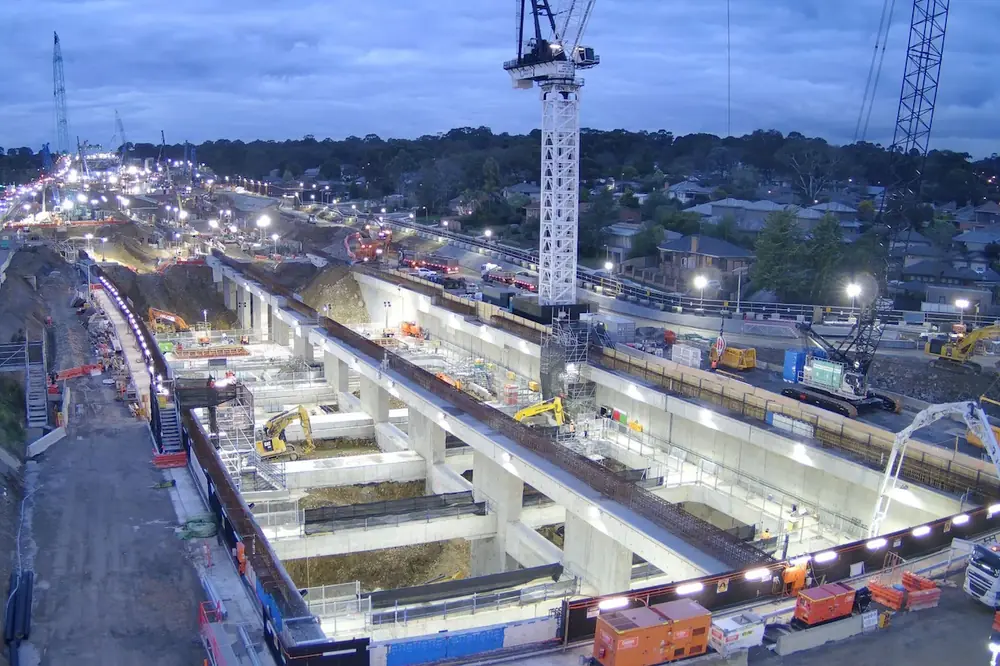
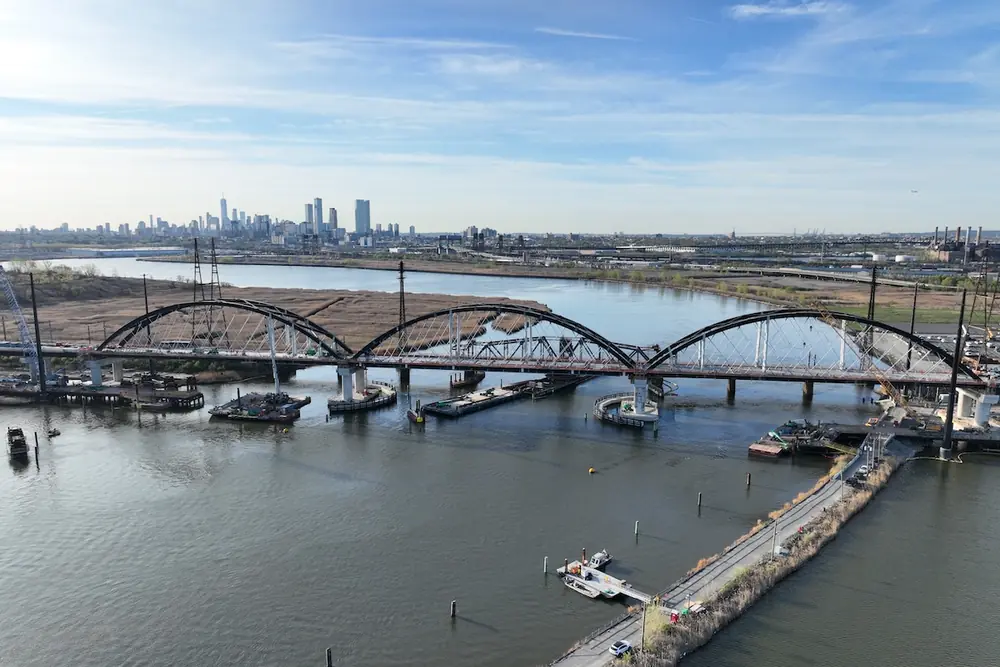
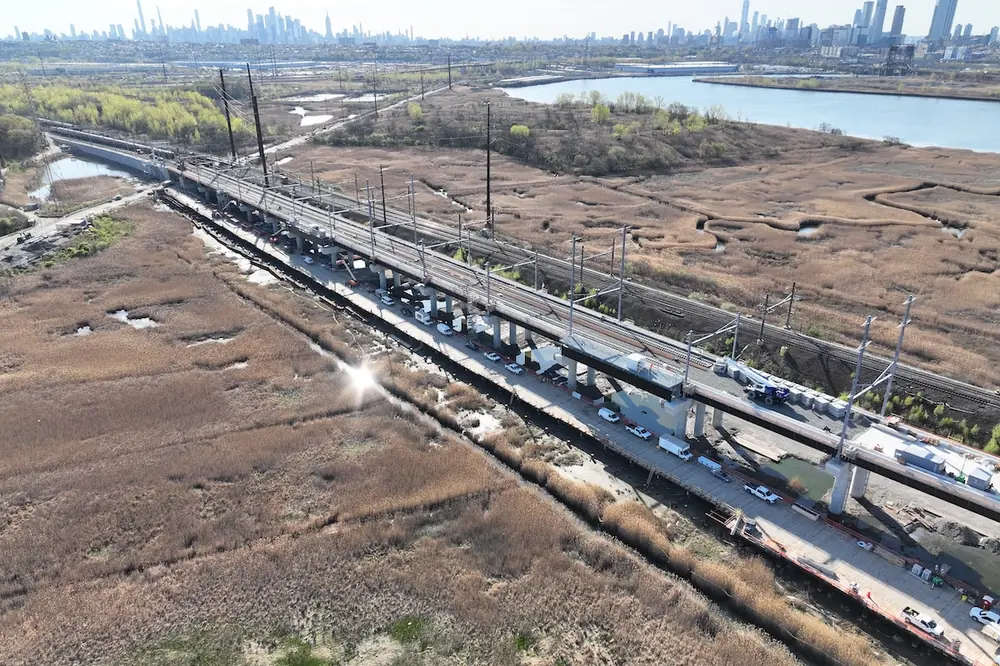


NJ Transit and Amtrak’s $2.3 billion Portal North Bridge replacement project remains on track in Kearny, New Jersey, with the construction team and rail lines achieving milestones aimed at improving service reliability in the Northeast Corridor.
“The project will have benefits locally and nationally,” said Chrissa Roessner, Chief of Construction and Project Management for NJ Transit.
Built 116 years ago, the existing railroad swing bridge spans the Hackensack River. More than 400 trains travel on two tracks carrying about 300,000 riders daily, back and forth from New York and Newark, New Jersey. The need for frequent repairs and maintenance on the swing structure, combined with significantly higher rail traffic than when the bridge was built more than a century ago, has turned the bridge into a chokepoint for riders.
“For decades, the old Portal Bridge has been a source of delays and frustration for the hundreds of thousands of commuters and travelers who rely on the Northeast Corridor every day,” New Jersey Governor Mikie Sherrill said in a statement.
Replacing the old, swing-span bridge is part of NJ Transit’s multiyear strategic plan and a component of the Gateway Program to expand rail capacity between New York and Newark. The program also includes the Hudson Tunnel Project and an NJ Transit storage yard.

| Your local Manitou dealer |
|---|
| Star Equipment LTD |
Amtrak, the U.S. Department of Transportation, the Capital Investment Grant Program, the New Jersey Transportation Trust Fund, and the New Jersey Turnpike Authority provided funds for the project.
The project covers 2.44 miles from Kearny to Secaucus, New Jersey. It will allow trains to travel at higher speeds.
Portal Partners Tri-Venture, consisting of Gannett Fleming (GFT) of Newark, HNTB in Newark, and Jacobs of New York, designed the new construction. GFT handled track design, rail signaling systems, electric traction power systems, geotechnical design, and retaining walls.
Skanska-Traylor, a joint venture between Skanska USA Civil, with headquarters in New York, and Traylor Bros. of Evansville, Indiana, received the $1.56 billion construction contract, the largest single construction contract in the history of NJ Transit.

| Your local Leica Geosystems Inc dealer |
|---|
| Laser Specialist inc |
“Rather than dividing the project into isolated scopes, the team operates in a highly integrated manner, with shared leadership, resources, and decision-making,” said Laszlo Borhi, Skanska Project Executive. “This collaborative approach allows the team to respond more effectively to challenges and maintain consistency across all aspects of construction.”
“The contractor has been very cooperative,” Roessner said. “I cannot say enough about Skanska-Traylor being a true partner.”
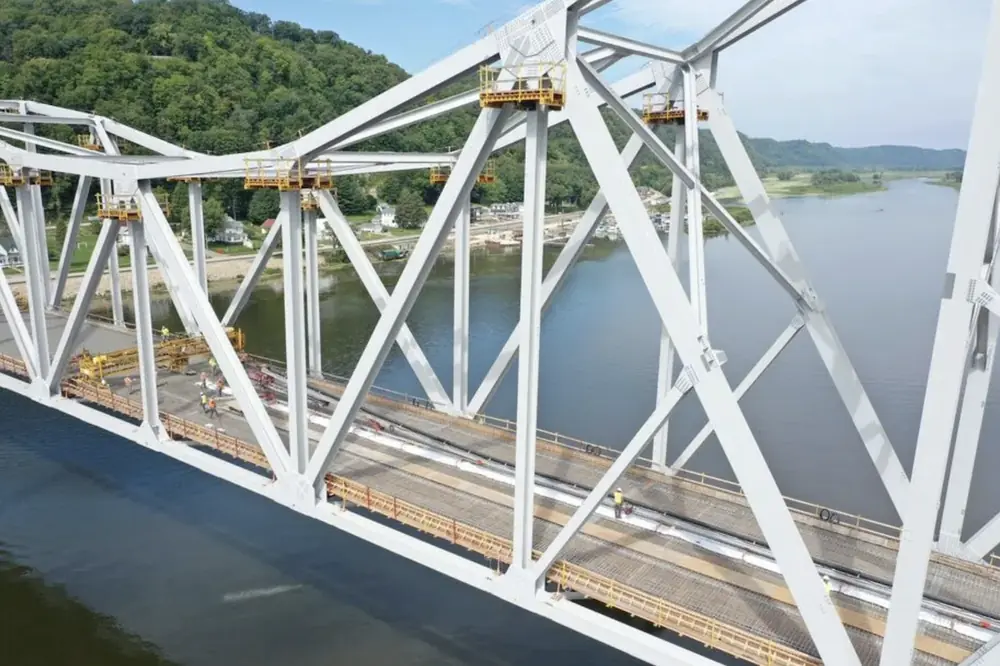
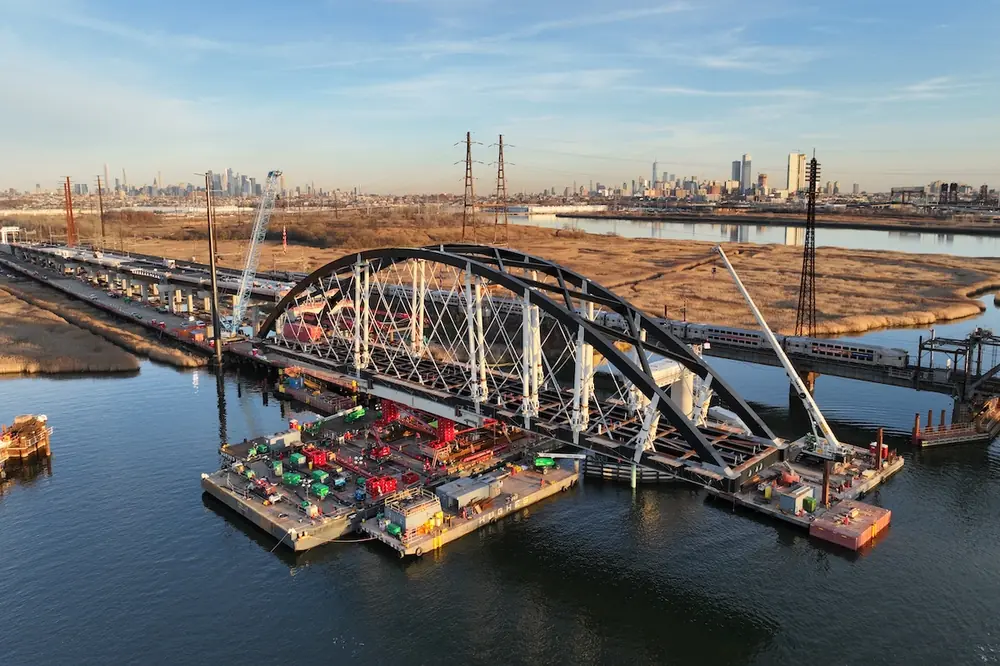
The project includes a 1,200-foot-long tied-arch bridge over the river and 6,200 feet of approaches.
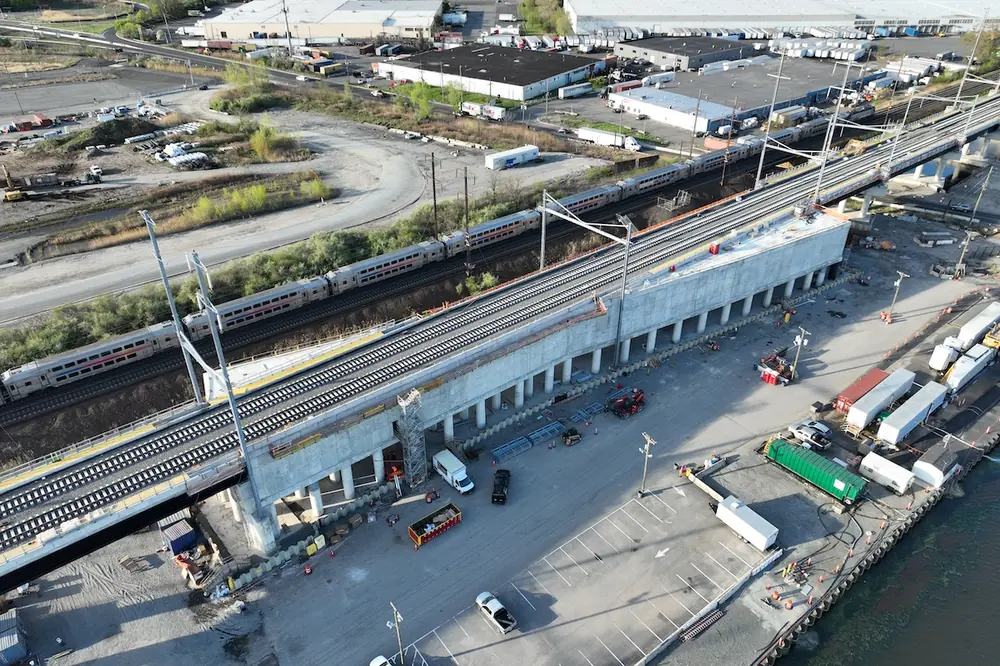
The scope includes building 4,500 linear feet of retaining walls; a total of 6,180 linear feet of railroad embankment, some on both sides of the river; engineered fill, used in the embankments; concrete piers; structural steel bridge spans; rail systems and track realignment; and related incidental works.

| Your local Trimble Construction Division dealer |
|---|
| SITECH Midway |
| SITECH Central LLC |
| SITECH Mid-America |
“The approach spans consist of steel girder structures that connect seamlessly to the main arches and support the new track alignment,” Borhi said.
Roessner noted that materials were obtained from across the nation. The new bridge sits adjacent to the older structure. That required every crane working in proximity of the old bridge to be outfitted with crane limiters.
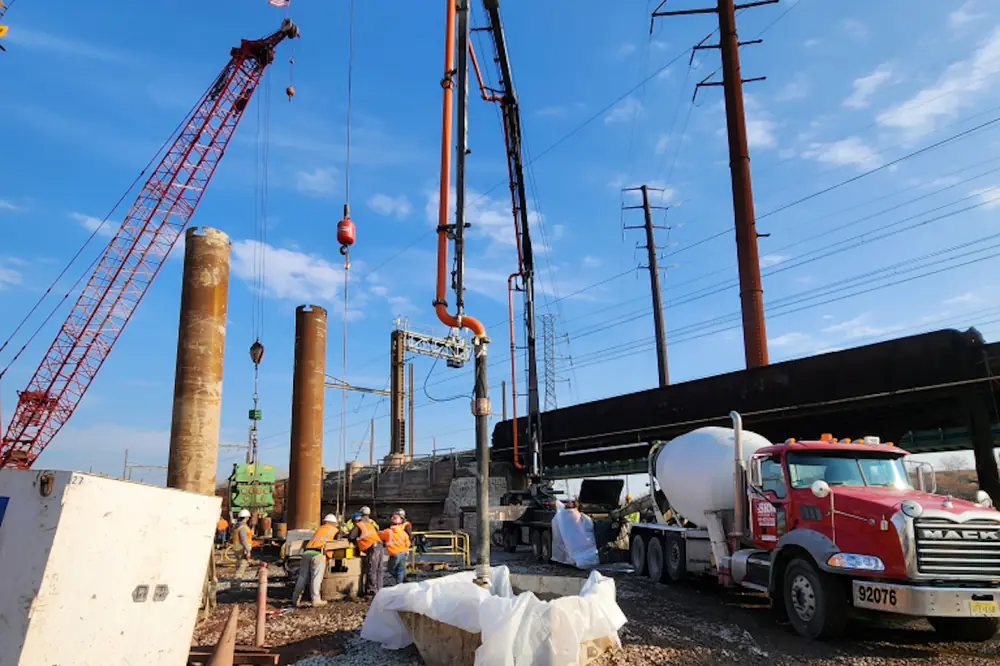
This represents one of several technologies that helped keep the project on track. Others, according to Borhi, included GPS and laser scanning for precise layout and positioning, along with drones for site monitoring and progress tracking.
“The Portal North Bridge replacement project is a critical investment in one of the busiest and most important rail corridors in the country,” Borhi said.

| Your local Gehl Co dealer |
|---|
| Star Equipment LTD |
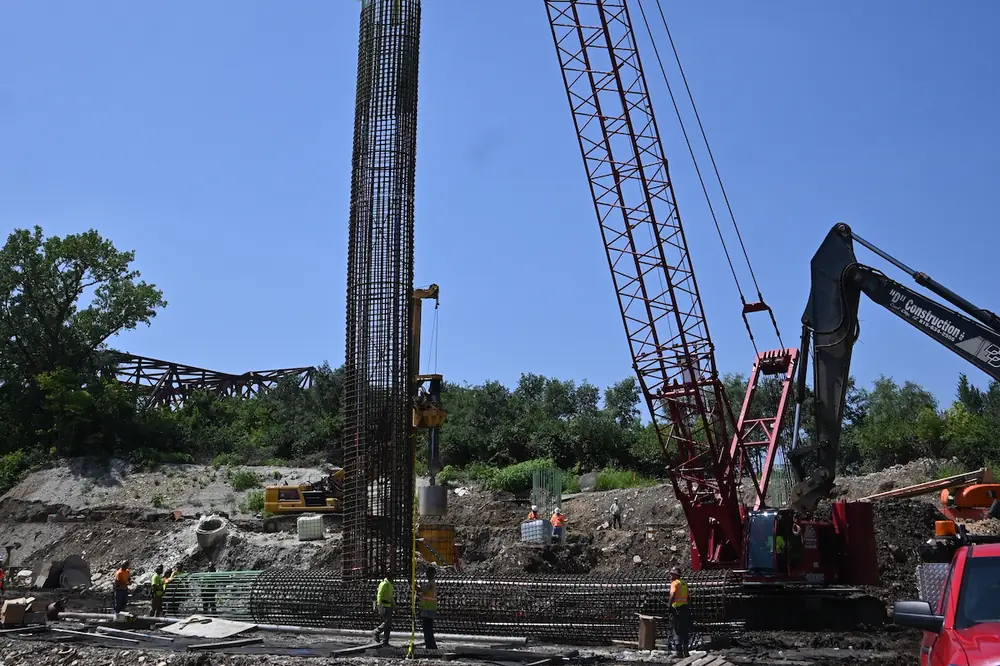
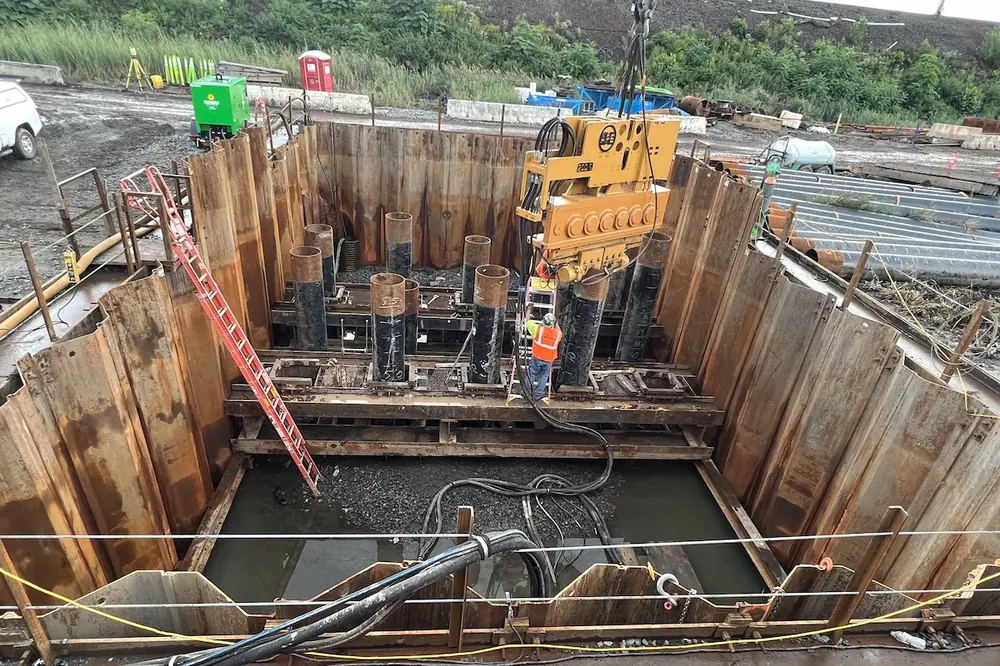
The project consumed 45 million pounds of structural steel, 215,000 cubic yards of concrete, and more than 210,000 linear feet of piles. The team placed more than 21,000 linear feet of drilled shafts: 32 8-foot-diameter shafts for the main span and a combination of 24-inch-diameter pipe piles and 5-foot-diameter drilled shafts for the approaches. The deepest drilled shaft reaches 150 feet down to a rock bearing layer.
The team faced numerous environmental considerations, including passing through marshlands and soil contaminants requiring clean-up of the former industrial property.
“The project is located within the environmentally sensitive Hackensack Meadowlands, requiring careful coordination with regulatory agencies and strict environmental controls,” Borhi said. “To minimize impact, the team utilized both temporary trestle systems and stone causeways to access work areas within the wetlands. Additional measures include strict erosion and sediment controls, water quality monitoring, and coordinating with environmental agencies to ensure compliance and protection of local ecosystems.”
According to Roessner, challenges included “performing earth work and ground intrusive operations, piles, drilled shafts, [and] excavation in a Department of Environmental Protection-designated site. Settlement of existing infrastructure necessitated continuous movement monitoring.”

| Your local Topcon Positioning Systems Inc dealer |
|---|
| Star Equipment LTD |
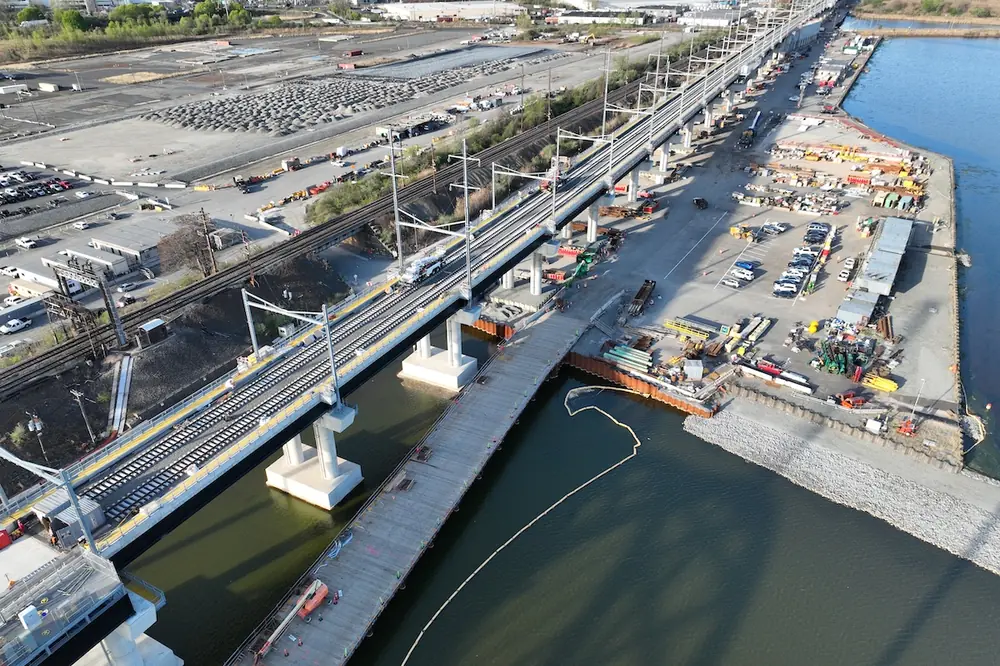
Skanska-Traylor worked on the new bridge accessed by four construction trestles totaling 3,400 feet long. Two of those trestles will remain in the river, one as a fishing pier and the other for maintenance.
“Access through a wetland and waterway environment necessitated temporary construction platforms,” Roessner said.
Borhi explained that trestles provided a safer, more efficient, and controlled access to construction work within the river, which presented navigational and logistical challenges, including narrow channels, swift currents, and adjacent heavy rail traffic.
“The trestles allowed crews to work from stable platforms with consistent access, reduce dependency on tides and weather, and improve overall productivity and safety,” Borhi said.

| Your local Takeuchi Mfg Ltd dealer |
|---|
| Kirby-Smith Machinery |
| Star Equipment LTD |
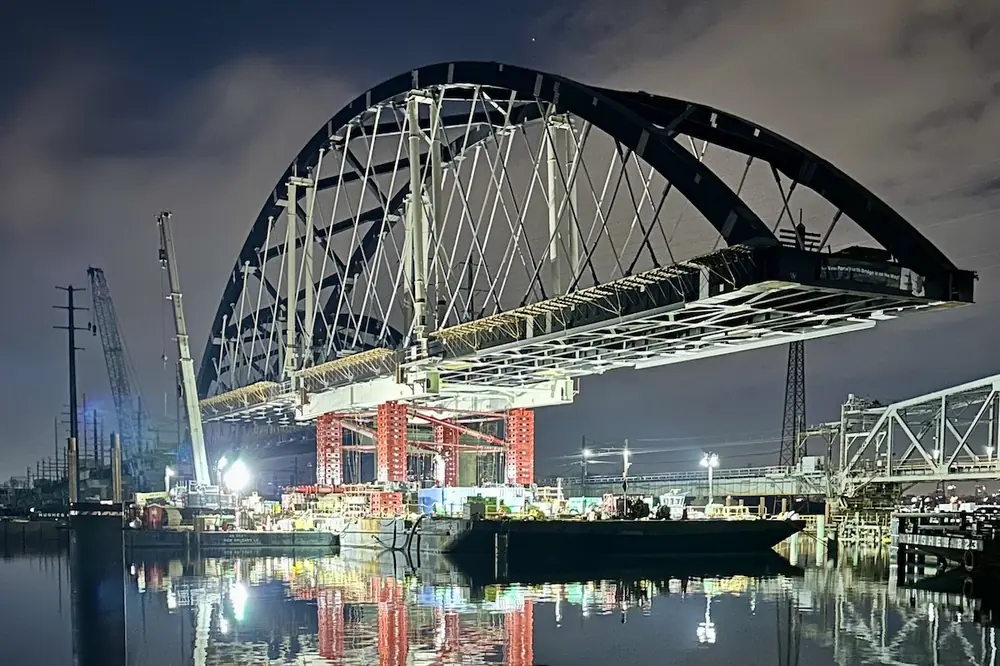
The new 1,200-foot-long main fixed-span bridge rises to 50 feet above the river’s channel, double the current height clearance, which will enable marine traffic to pass without disrupting rail service. According to HNTB, this project is one of the first network tied-arch rail bridges in the United States.
The construction team had the three 400-foot-long network tied-arch spans assembled at a yard in Port of Coeymans, New York, just south of Albany. The spans then floated on barges down the Hudson River to the Hackensack River, an approximate 129-mile journey. Crews then lifted the arches into place using high-capacity jacks. The team also used the tide to assist with the lifts.
“Preassembly improves quality control, enhances safety, and significantly reduces installation time over waterway operations and adjacent active rail,” Borhi said.
“The work requires extensive coordination across multiple stakeholders to deliver the project while maintaining uninterrupted revenue train service,” Borhi said. “The project maintains a clear focus on safety, sustainability, and long-term performance.”

| Your local Magni dealer |
|---|
| Kirby-Smith Machinery |
Projects involving active rail lines represent a key challenge for contractors, because they require close cooperation with the railroads to avoid disruptions to rail traffic and address the installation of catenary structures.
“It’s not as easy to detour a train [as it is traffic on a road],” Roessner said. “It’s a huge feat to be where we are.”
Roessner added that the challenge is “maintaining rail traffic on the most heavily traveled railroad in the Western Hemisphere while constructing major infrastructure features within close proximity.”
GFT designed the trackwork coordination and planned for coordination with rail operations. The stakeholders met regularly with executive oversight, according to Roessner.

| Your local Gomaco dealer |
|---|
| Fabick CAT/MO |
| Road Machinery and Supplies Company |
“The success comes from the communication,” she said. “Everyone shares the goal of having a successful project and making that happen.”
The project remains on budget and on schedule, a source of pride for NJ Transit, with Roessner attributing it to the team’s communication and collaboration.
“We’re most proud of the team’s ability to deliver a project of this scale and complexity while maintaining active rail service and upholding the highest standards for safety, quality, and environmental responsibility,” Borhi said. “This project represents the best of what infrastructure delivery can achieve.”
An early milestone, 75 percent completion, occurred after the installation of the main spans in 2024 and 2025.

| Your local Iowa Mold Tooling Co Inc dealer |
|---|
| Star Equipment LTD |
In March 2026, one track opened on the new bridge. During the period leading up to that transition, the rail companies adjusted their schedules. Borhi considered this cutover one of the most complex elements on the project.
“This required meticulous planning and coordination,” Borhi said.
Up next, crews will move the second track to the new bridge in the fall of 2026. Skanska-Traylor plans to dismantle the old bridge the following year.
“For the surrounding community and broader region, the new Portal North Bridge will deliver more reliable rail service, fewer delays, and increased capacity along the Northeast Corridor,” Borhi said. “It will strengthen connectivity across the region, support economic activity, and provide a more resilient, future-ready piece of infrastructure for the region. Ultimately, it’s an investment in the future of transportation.”

| Your local Komatsu America Corp dealer |
|---|
| Road Machinery and Supplies Company |
- Owner: NJ Transit
- Contractor: Skanska-Traylor (Skanska USA Civil, New York, New York; Traylor Bros., Evansville, Indiana)
- Designer: Portal Partners Tri-Venture (Gannett Fleming, Newark, New Jersey; HNTB, Newark, New Jersey; Jacobs, New York, New York)