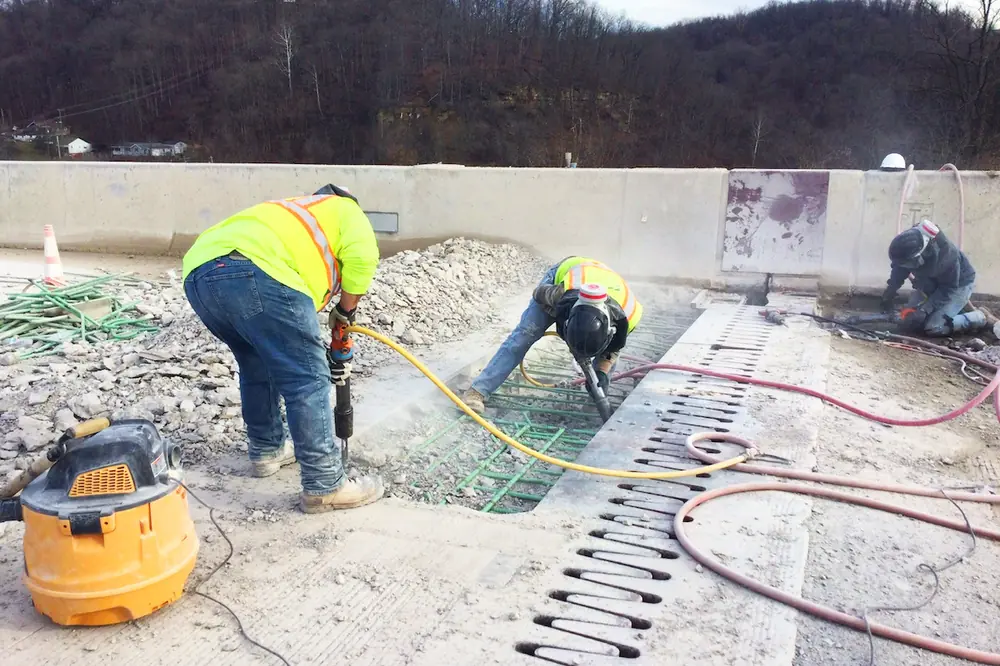
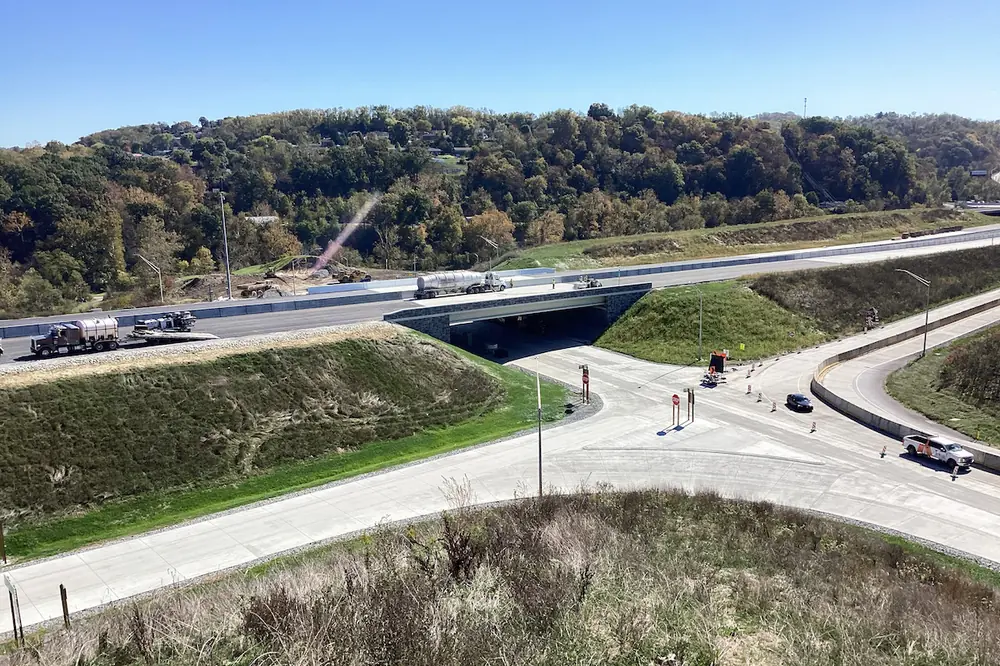
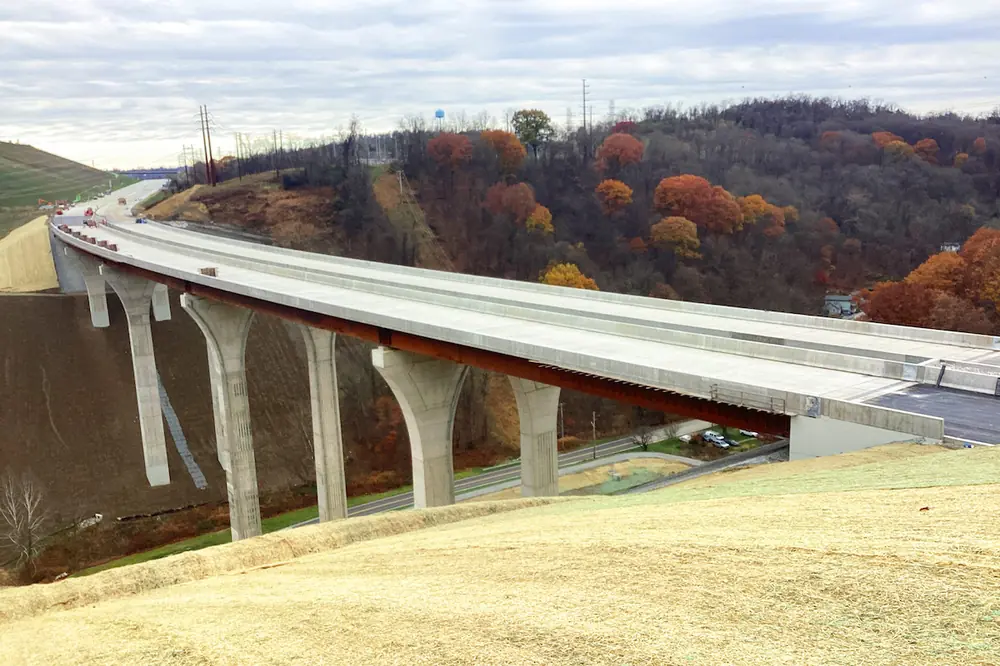

Crews are nearing construction completion on two key sections of the PA Route 51 to I-376 Project, the largest-to-date expansion of Pennsylvania Turnpike 43, better known as the Mon/Fayette Expressway, since it connects the Monongahela River Valley with Fayette County in southwestern Pennsylvania.
The Pennsylvania Turnpike Commission, an independent state agency created in 1937 to construct, finance, operate, and maintain more than 500 miles of roadway within the Pennsylvania Turnpike system, is overseeing the project.
The development of PA Turnpike 43 originated through a statewide legislative mandate issued in the 1980s. Three previously completed sections of the Mon/Fayette Expressway — stretching roughly 54 miles — have been operational since the early 2000s, connecting I-68 near Morgantown, West Virginia, to PA Route 51 in Jefferson Hills, Pennsylvania, in Allegheny County.
Launched in early 2023 and fall 2023, respectively, the two most recent construction projects will extend the Mon/Fayette Expressway roughly 5 miles through challenging terrain south of the Monongahela River across southern portions of the greater Pittsburgh, Pennsylvania, metropolitan area.
"This is the heart of Pittsburgh's steel industry. U.S. Steel has three plants in this region, but there had been no real, limited-access highway in the area," said John Dzurko, Senior Engineer and Project Manager with the Pennsylvania Turnpike Commission.

| Your local Iowa Mold Tooling Co Inc dealer |
|---|
| Star Equipment LTD |
The first project, dubbed Section 53A1, begins at the existing PA Turnpike 43 and PA Route 51 interchange and continues northward to just north of Coal Valley Road in Jefferson Hills Borough. As part of the project’s $214 million contract, general contractor Trumbull Corporation has excavated more than 4 million cubic yards of earth and constructed six bridges to extend the turnpike by roughly 3 miles. Trumbull crews will also construct a cashless toll point within this section of the expressway. Section 53A1 is expected to open to traffic in October 2026.
The second construction project, a $165.6 million contract described as Section 53A2, picks up where 53A1 ends, extending the expressway roughly 2 miles further northward to the vicinity of Camp Hollow Road in West Mifflin Borough. Trumbull Corporation is also serving as the general contractor on this portion of the extension, which will include excavation of 3.7 million cubic yards of earth and the construction of five bridges plus a full interchange and two roundabouts along Camp Hollow Road. The Camp Hollow Road interchange is expected to open to traffic in November 2026, with the full 53A2 project set for completion by June 2027.
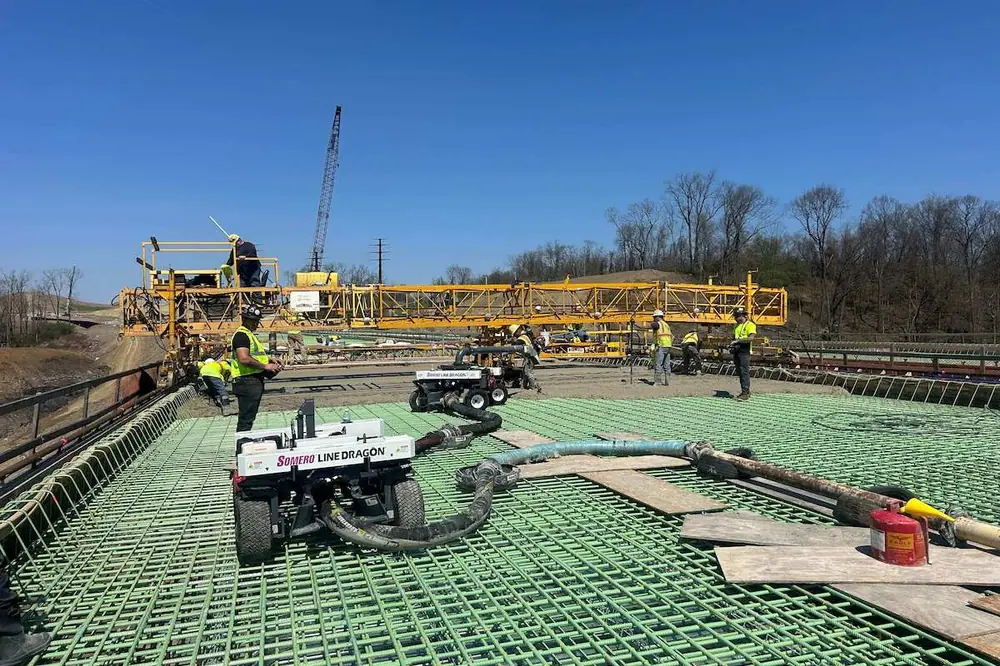
Construction costs on Sections 53A1 and 53A2 have been funded through a share of the state’s oil franchise tax. Through both sections, the turnpike will include four lanes of concrete pavement, providing two lanes of through traffic in each direction.
Five additional southern phase project expansions, identified as Sections 53B1A, 53B2, 53C1, 53C2, and 53C3, will eventually extend the Mon/Fayette Expressway to PA Route 837 near the city of Duquesne, Pennsylvania, roughly 11 miles southeast of Pittsburgh. Work on Section 53B1A has already begun, while work on the remaining four sections is still to come.

| Your local Manitou dealer |
|---|
| Star Equipment LTD |
“This southern phase alone is so massive that it needed to be divided into seven construction sections at an estimated cost of $1.3 billion,” PA Turnpike Chair and Pennsylvania Department of Transportation Secretary Mike Carroll said in a 2023 press release about the project. In his statement, Carroll added that he expected the project to generate nearly $2.8 billion for the economy across the Monongahela Valley.
Eventually, when both the southern and northern planned expansions of the Mon/Fayette Expressway are complete, the roadway will run from Morgantown, West Virginia, to its expected final terminus at I-376 exit 61 near Monroeville, Pennsylvania, roughly 15 miles to the east of Pittsburgh.
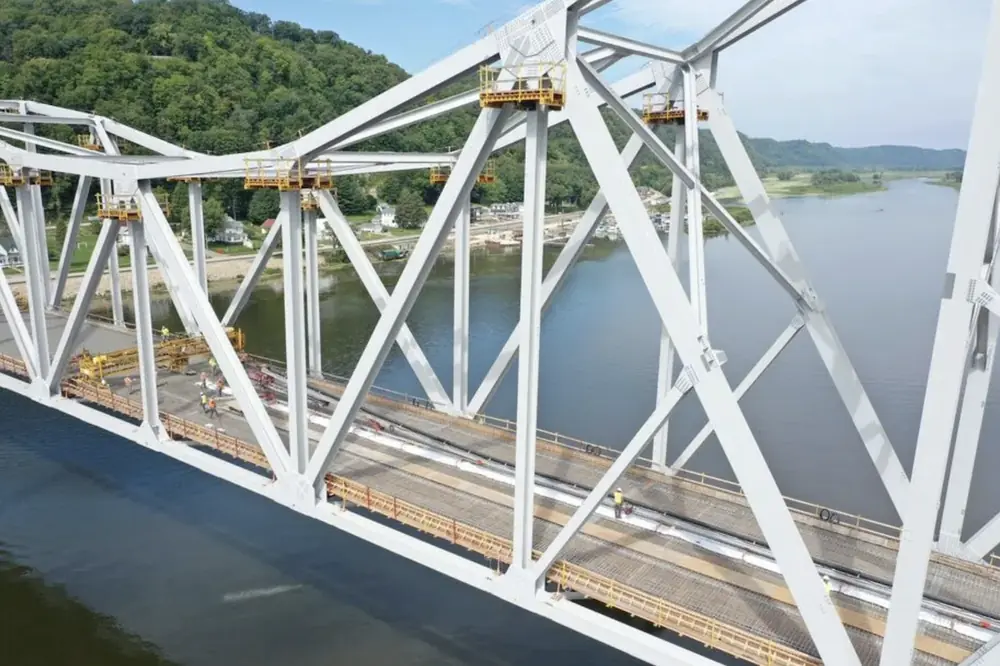
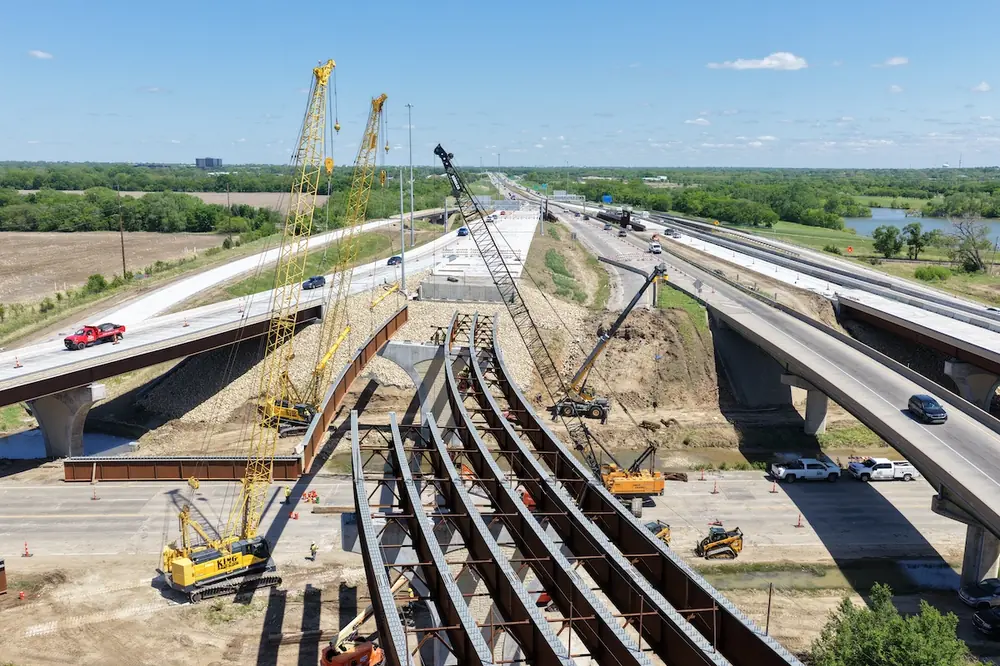
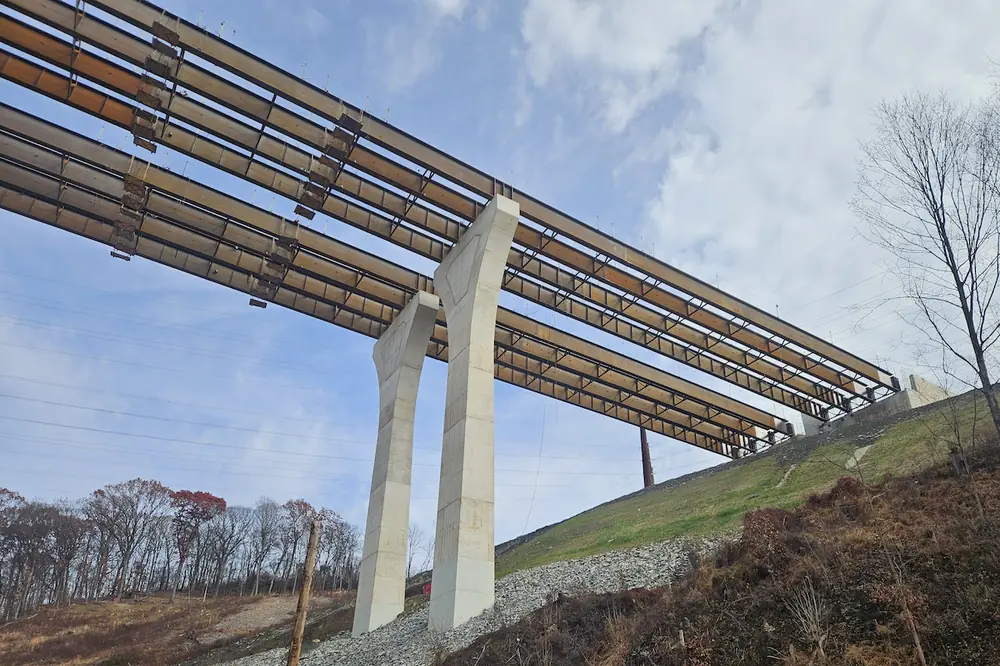
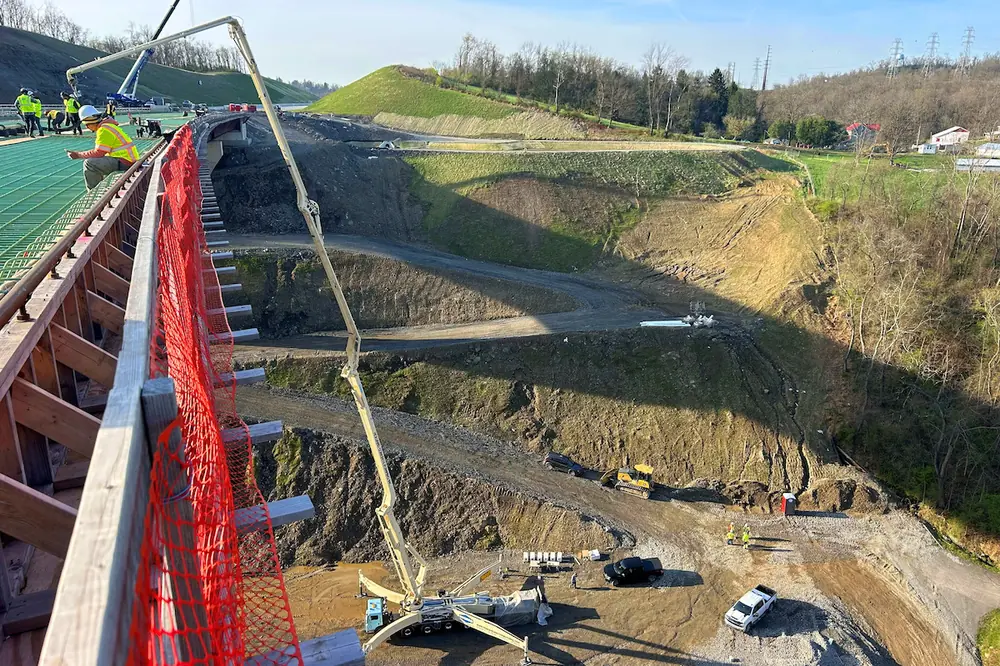
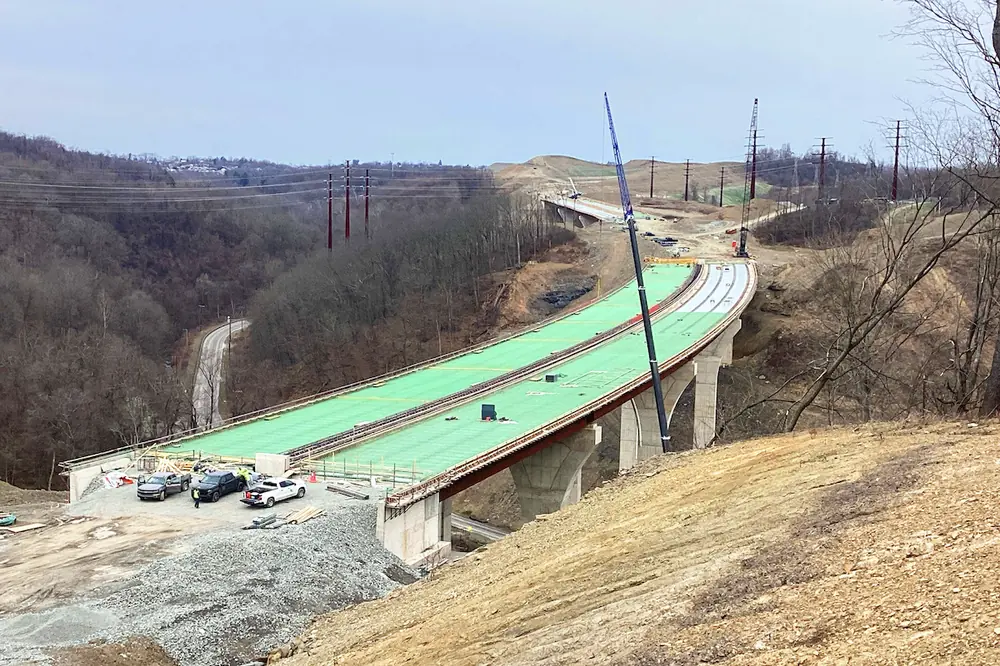
Navigating the meandering hills and valleys along the new alignment for Sections 53A1 and 53A2 required 11 bridges in total. Some of the newly installed bridges stand as high as 200 feet tall. A few stretch as far as 1,300 feet long. The sweeping deck lengths and elevations are a direct result of the area’s hilly topography.
“The [turnpike] alignment flows through really rough terrain. That’s why the construction called for so many bridges and such large-scale excavation,” Dzurko said.

| Your local Leica Geosystems Inc dealer |
|---|
| Laser Specialist inc |
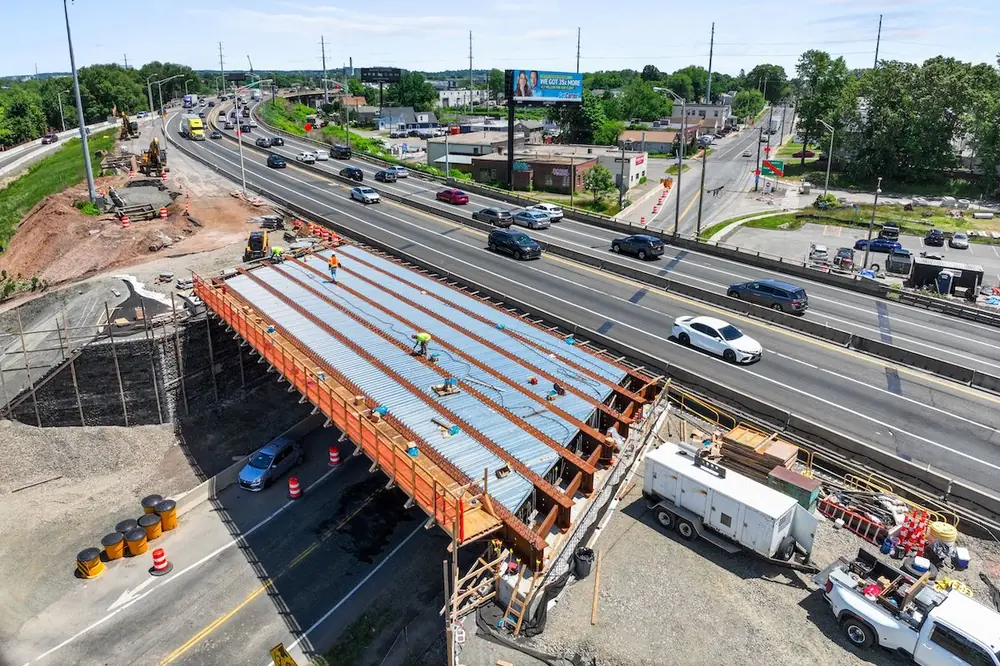
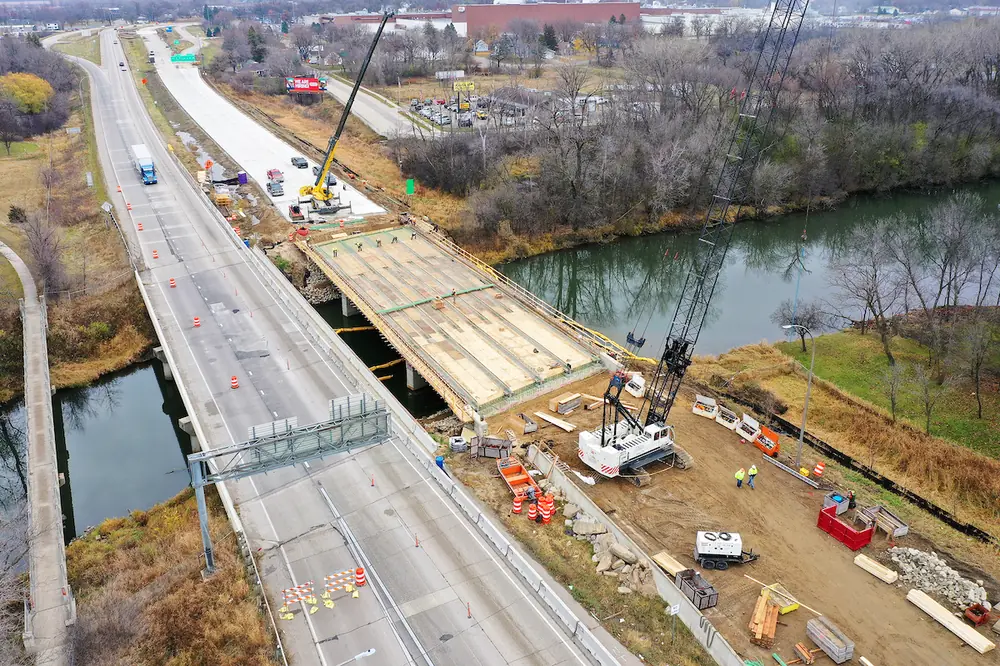
Several bridges occur in areas where the new expressway is set to flow over low-lying, pre-existing, two-lane state roads already in the region.
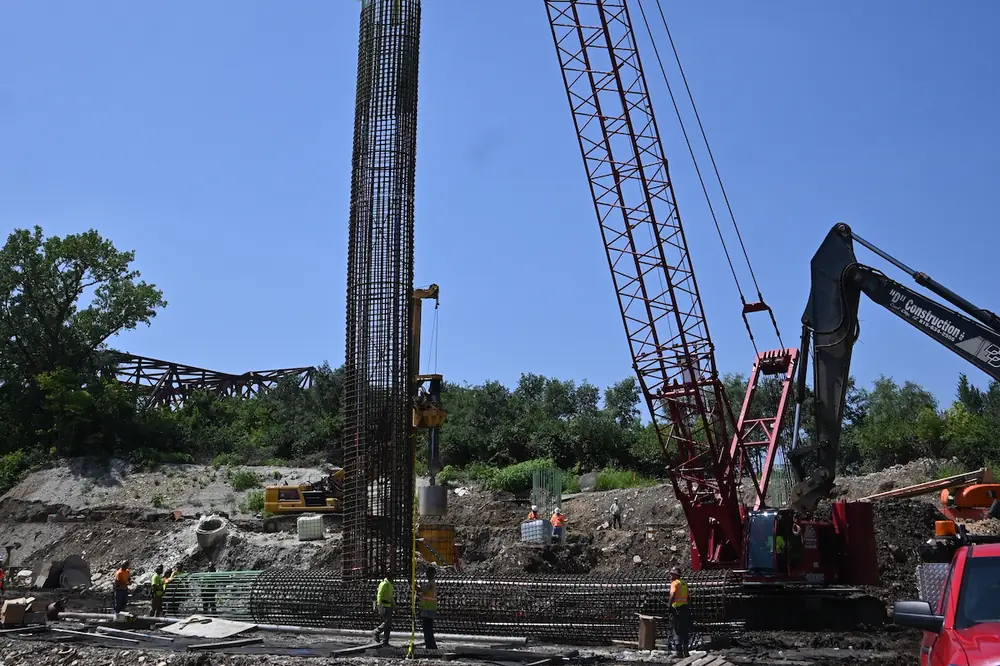
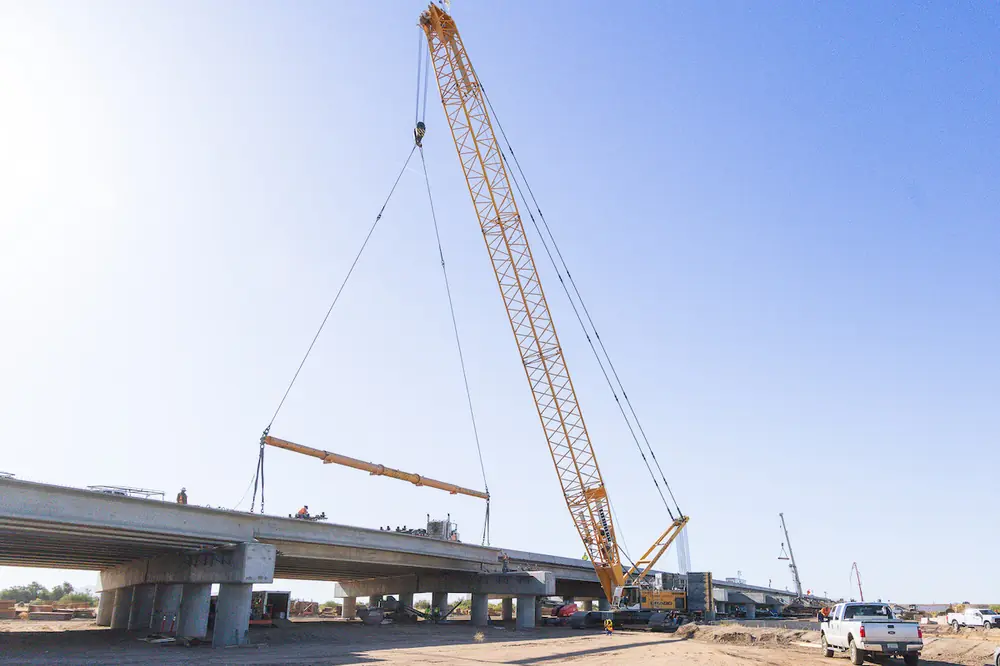
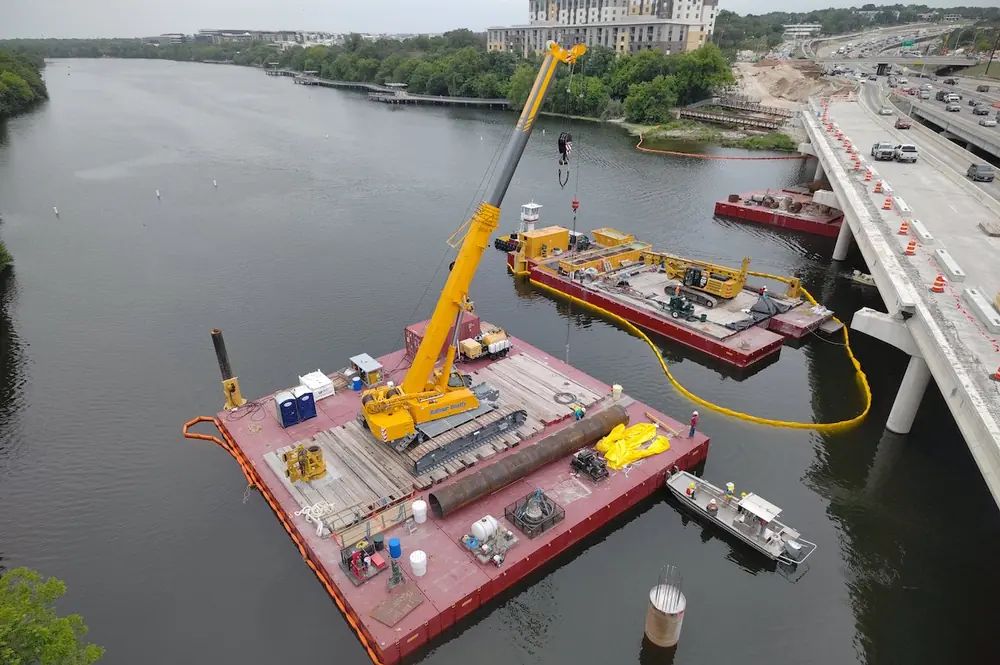
“We actually had to build some pretty massive bridges, and do it kind of in a box,” Dzurko said. “We had existing ramp bridges to the left and right, a state route and local roads below us, and power lines above us. So, there was a lot of coordination in terms of our 650-ton crawler crane setups and how we logistically tackled the bridge construction.”
Ten of the newly constructed bridges in the 53A1 and 53A2 sections involve steel beam, curved girder designs. Components were fabricated off site by High Steel Structures in Lancaster, Pennsylvania, and W&W | AFCO Steel, based in Virginia. The remaining bridge, located at Jefferson Boulevard, features precast, pre-stressed concrete beams. To give delivery crews adequate access to the bridge construction zones, Trumbull crews developed site-specific access roads at multiple points along the turnpike expansion.
Navigating the new turnpike alignment within the existing footprint of previous roadway infrastructure was a challenge in itself.

| Your local Gomaco dealer |
|---|
| Fabick CAT/MO |
| Road Machinery and Supplies Company |
“We built a bridge over State Route 51 and the existing interchange at Jefferson Boulevard to carry our main line through. To the north of Jefferson Boulevard, we cross State Route 885, so we built a new bridge that will carry 885 over our new highway. And then we built two twin structures that carry our main line over Coal Valley Road,” Dzurko said, explaining just a few of the six bridges required in Section 53A1.
Construction on all six bridges along Section 53A1 has been completed.
Navigating the new roadway alignment from a ground-level perspective also involved complications. Because the area is dotted by natural coal seams that had been previously mined, crews had to fill the old mine voids with cement grout to ensure roadway and environmental stability.
In some areas, crews over-excavated roadway excavation cuts and then built a slurry wall — essentially an underground dam, formed from concrete — to prevent any potentially contaminated water from draining from the abandoned mining sites into the roadway construction zone.

| Your local Komatsu America Corp dealer |
|---|
| Road Machinery and Supplies Company |
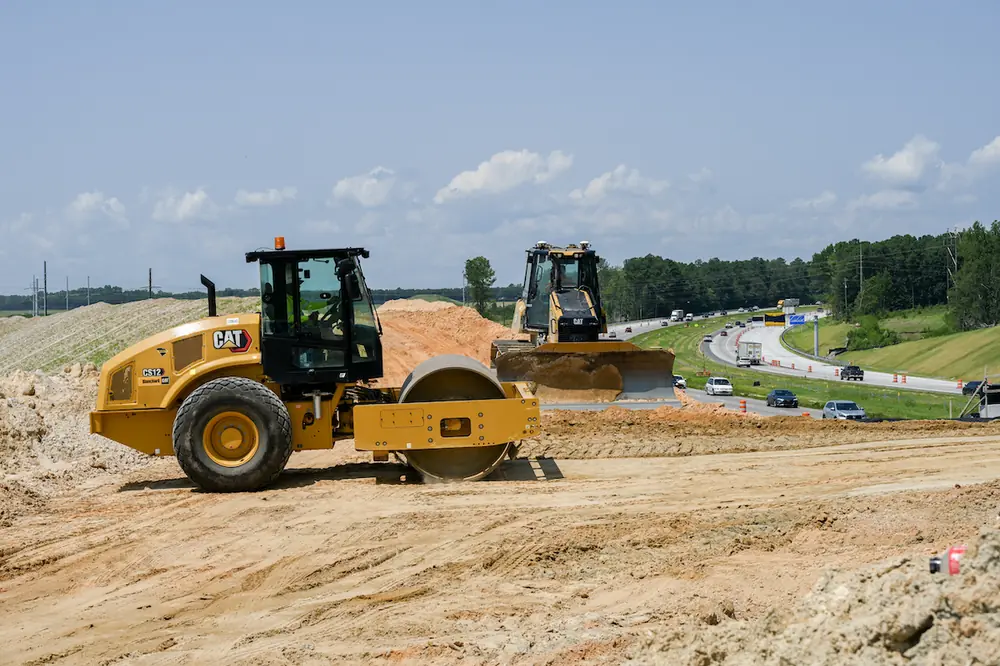
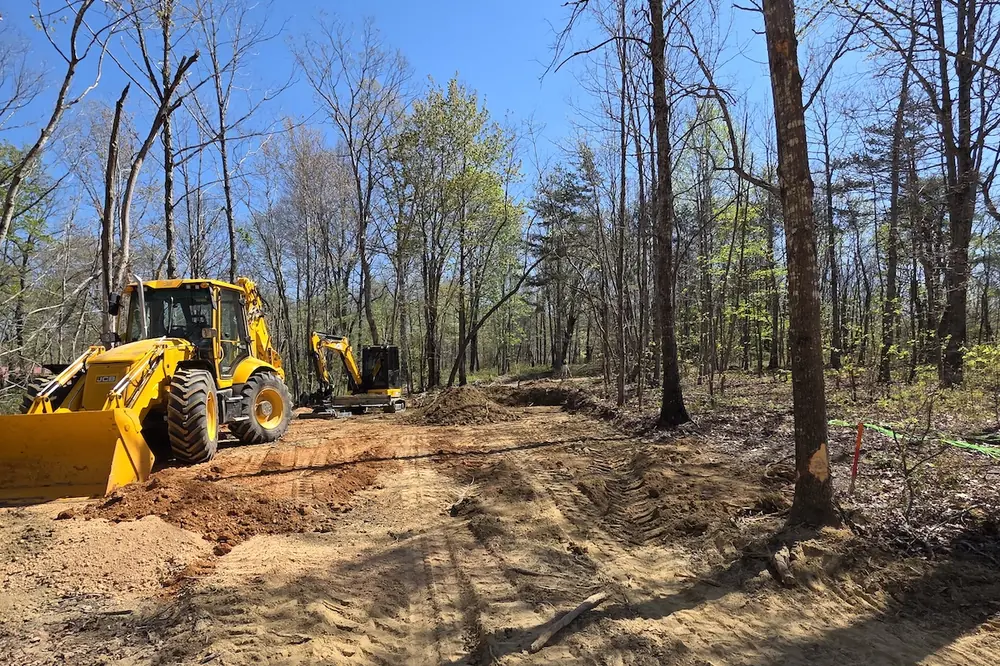
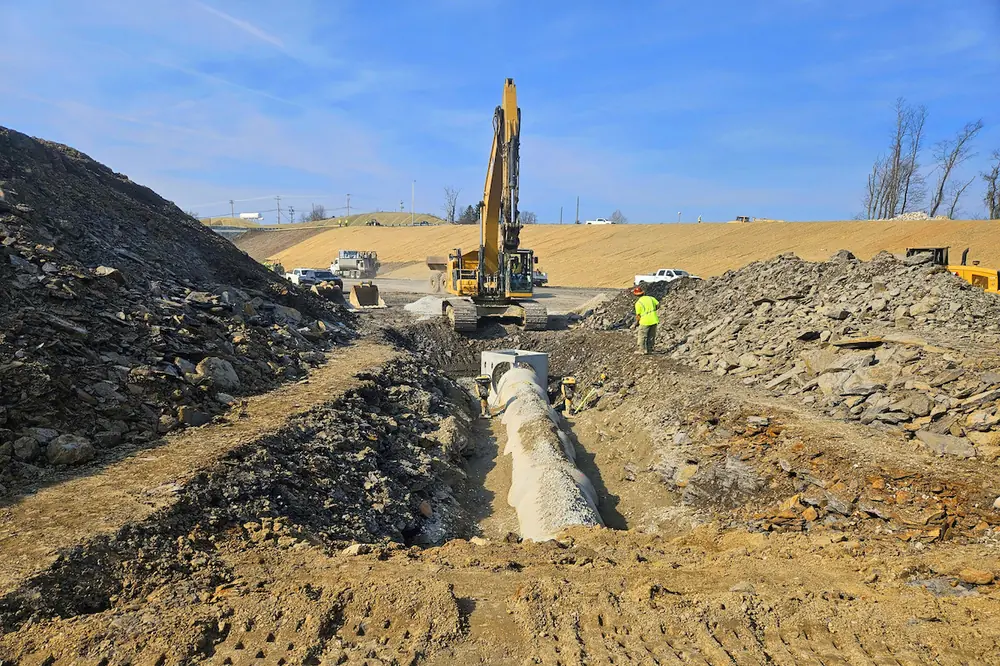
To reposition the millions of cubic yards of excavated dirt the projects produced, crews created modified embankments, or hills, alongside the new expressway. These carefully engineered earthen fills eliminated the need to truck excess dirt to faraway disposal sites.
Crews built a dog-bone double roundabout system with a bridge in between to carry Camp Hollow Road traffic over the new expressway.
“The exit and on-ramps will come to roundabouts, which will carry the through traffic for Camp Hollow Road,” Dzurko explained.
The similarity in project scope for Sections 53A1 and 53A2 — combined with the fact that both sections involved the same general contractor — led to consistency and familiarity across the projects, according to Dzurko.

| Your local Topcon Positioning Systems Inc dealer |
|---|
| Star Equipment LTD |
Ten out of the 11 new bridges on the new turnpike expansion incorporate weathering steel, also known as Corten steel, a high-strength, low-alloy steel that develops a stable, rust-like patina over time. As a result, it does not require painting.
“We were dealing with a lot of multi-girder, steel superstructures, and we wanted them to be maintenance-friendly,” said Shane Szalankiewicz, Western Construction Engineering Manager for the Pennsylvania Turnpike Commission.
The bridges were designed to sustain a useful service life of at least 75 to 100 years.
Similarly, the pavement construction incorporated a long-life concrete product, which is “designed to have a longer service life than traditional concrete paving,” Dzurko said.

| Your local Link Belt dealer |
|---|
| Kirby-Smith Machinery |
Specifically, the long-life concrete product includes optimized aggregate gradation, advanced additives, and a lower water-to-cement ratio. These features increase its overall structural integrity and enhance its ability to withstand flaking, cracking, and other signs of usage or weathering degradation.
Once complete, Sections 53A1 and 53A2 will likely carry a mix of both industrial and residential traffic. Crispin Havener, Assistant Press Secretary for the Pennsylvania Turnpike Commission, said the expressway gives the commission “a unique opportunity to support the mobility and commerce of the area.”
- Owner: Pennsylvania Turnpike Commission
- General Contractor: Trumbull Corporation, Pittsburgh, Pennsylvania
- Design Manager: HDR Engineering, Omaha, Nebraska
- Section Designers: GFT, Mechanicsburg, Pennsylvania; Pennoni, Philadelphia, Pennsylvania
- Onsite Construction Manager: Johnson, Mirmiran & Thompson Inc. (JMT), Hunt Valley, Maryland
- Consultant Construction Engineering Firms: Larson Design Group, Cranberry Township, Pennsylvania; SAI Consulting Engineers Inc., Pittsburgh, Pennsylvania