
When people think about innovation in construction, they picture robots laying bricks, drones scanning job sites, or artificial intelligence flagging design errors mid-project. But the real revolution is happening long before the first shovel hits the ground — it’s happening in preconstruction, the most strategic, underestimated, and under-digitized phase of a project’s lifecycle.
Today, a new class of AI, known as agentic AI, is poised to transform preconstruction from a fragmented planning process into a streamlined, intelligent engine that powers entire projects. Agentic models build on large language models (LLMs) by taking action and completing tasks on behalf of users. Where LLMs research and summarize to provide actionable insights, agentic AI takes the action to bring those insights to life.
At its core, preconstruction is about translating ideas into executable realities. It’s where critical decisions around scope, budget, and risk alignment are made or missed — yet most teams still rely on spreadsheets, email threads, and memory to coordinate inputs on multimillion-dollar efforts.
The cost of misalignment during this phase is steep. The Seventh Annual CRUX Insight Report from global consultancy firm HKA analyzed over 2,000 projects around the world, revealing significant cost and time overruns in the construction and engineering industries. For the projects analyzed in the Americas, the study found that cost overruns averaged out to more than half a billion dollars and were most commonly due to design errors and scope changes.
This is a massive cause of concern. Preconstruction needs tools to anticipate, act, and guide projects to avoid these overruns in a market with shrinking profit margins. That’s where purpose-built AI tools can help dramatically. By providing an agile and versatile way to interface with project data, as well as complete critical workflows in preconstruction, tools like Amplify from ConCntric serve as a force multiplier.

| Your local Gomaco dealer |
|---|
| Terry Equipment |
We’re all familiar with chatbots that summarize meetings or rewrite emails. But these tools are passive; they recommend what to do, but leave the real work to you. Agentic AI is a step forward. It doesn’t stop at giving advice — it can take that request, carry out the analysis, and deliver finished outputs.
Designed for real-world workflows, agentic AI systems can sift through data, highlight issues, and generate actionable deliverables that normally eat up hours of effort. They streamline the path from prompt to result, helping teams work faster with fewer gaps and less manual busywork.
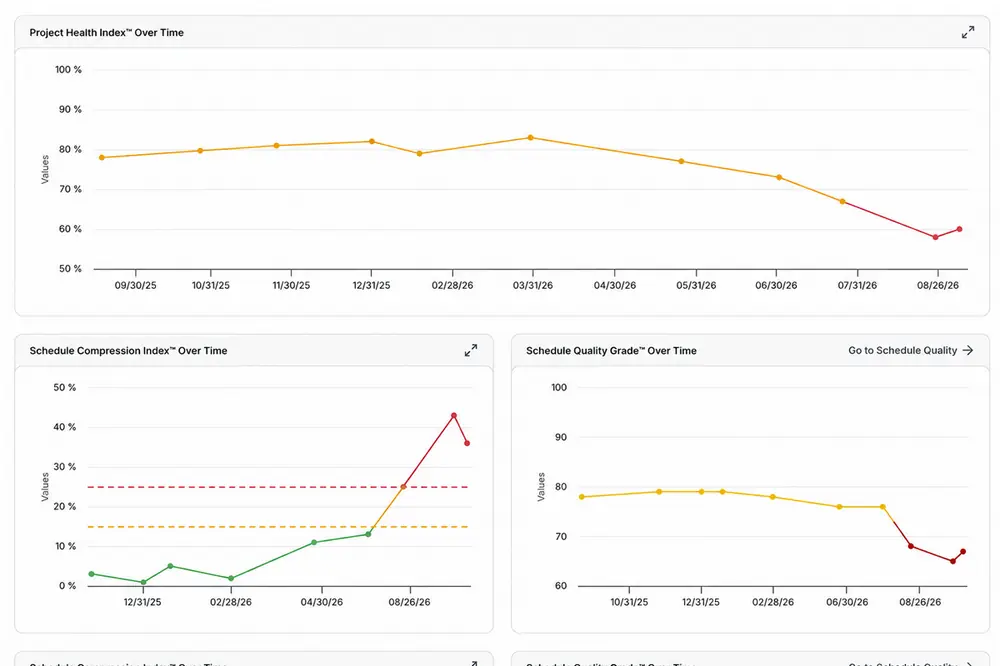
Imagine uploading a coordination meeting transcript and asking your AI to review it. Instead of simply summarizing, it might surface a mismatch between a design assumption and a budget allocation, generate a heat map of unresolved risks, and prefill your dashboard for the next meeting. The difference is clear: not just advice, but action.
Preconstruction is uniquely suited to benefit from this kind of automation and intelligence:
- Preconstruction work often pulls from scattered emails, specifications, and spreadsheets, which traditionally lack a consistent structure. A unified data architecture that transforms this information into a usable, standardized format enables agentic AI to quickly spot patterns, flag risks, and generate actionable outputs.
- Preconstruction is highly collaborative and most successful when design, finance, construction, procurement, and ownership communicate efficiently and effectively. Agentic AI ensures that ever-changing data is kept up to date so all stakeholders get what they need when they need it.
- Activities like risk register updates, value optioneering, budget adjustments, and schedule impact assessments are time-consuming but critical. Automating these workflows allows teams to spend their time on strategy, not data wrangling.

| Your local Trimble Construction Division dealer |
|---|
| SITECH Southwest |
| SITECH West |
Construction remains one of the least digitized industries. Adopting advanced technologies like AI could rapidly add productivity gains — and nowhere is that potential greater than in preconstruction.
The impact of agentic AI is innately cultural. Construction professionals already know what needs to be done, and they get it done. What’s often left behind are the tasks that should be done — they could improve outcomes but rarely make the cut because there’s never enough time.
By handling the heavy lifting, agentic AI creates space for teams to tackle both kinds of tasks, freeing up mental bandwidth and reshaping how they collaborate. Meetings shift from status updates to solution sessions, communication gets sharper, and surprises become rare.
What we’re seeing in preconstruction is a broader blueprint for how modern organizations must operate: turning fragmented input into cohesive, confident action. The success of any high-stakes initiative depends on clarity, coordination, and the ability to anticipate problems before they escalate. Agentic AI is showing us what that looks like.
| Your local Gomaco dealer |
|---|
| Terry Equipment |
We’re still in the early days of this transformation, but one thing is clear: If we want to build smarter, safer, and more predictably, we must start where risk is highest and visibility is lowest. That’s preconstruction. The planning tools of the future are intelligent, proactive, and purpose-built. With agentic AI, construction finally has a chance to plan as boldly as it builds.
Steve Dell’Orto is the Founder and CEO of ConCntric, a preconstruction platform. He has over 25 years of industry experience and previously served as Executive Officer for one of the largest privately owned general contractors in the U.S.