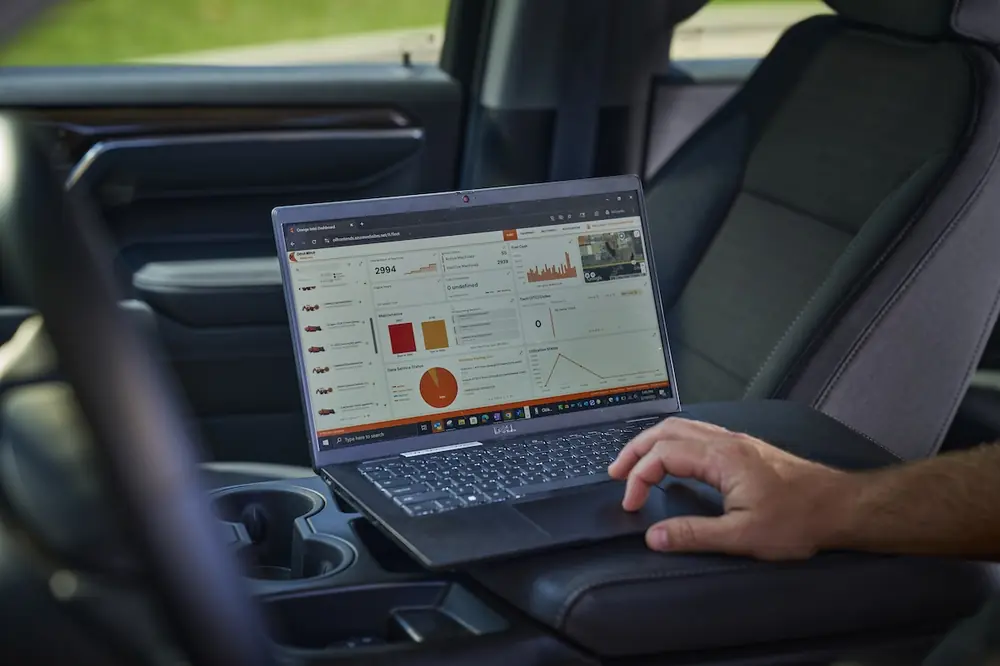
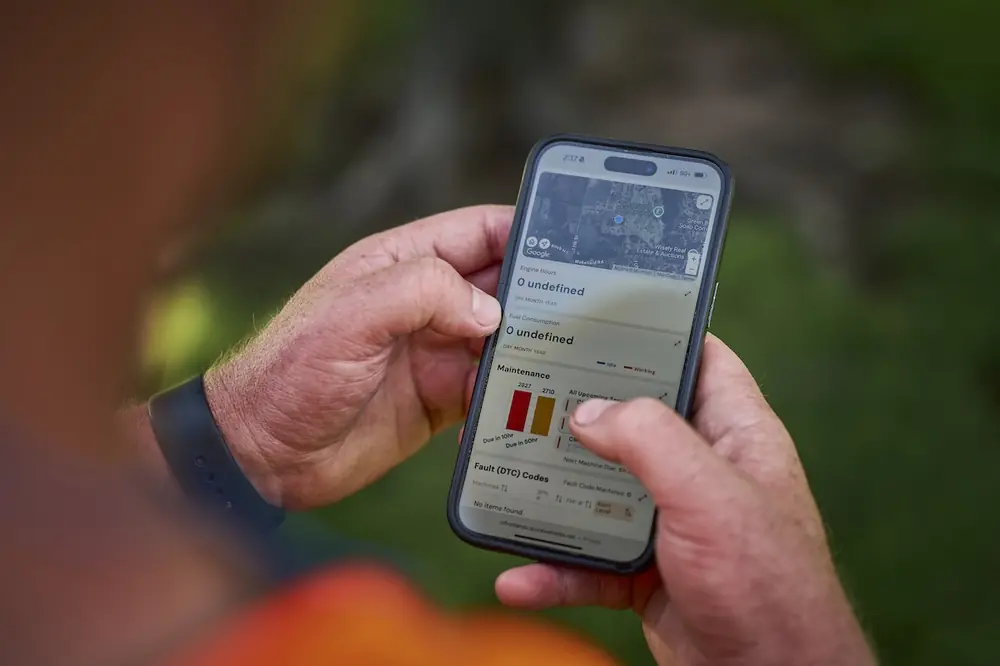

Not long ago, telematics was valued primarily for its ability to monitor the locations of equipment deployed to job sites. But today, as labor challenges persist and project schedules tighten, many contractors are looking to tap into the richer data available from telematics systems.
It’s no longer just a simple question: Where is my machine? Instead, many firms want to understand something bigger: How can I get the most from every machine, operator, and hour on the job site?
This evolution of telematics systems from tracking tools to operational intelligence can help improve productivity, uptime, and job site performance.
Telematics locating data remains as important as ever. The National Insurance Crime Bureau estimates the annual cost of heavy equipment theft in the U.S. could be as high as $1 billion, with fewer than one in four stolen pieces of equipment recovered.
Today, contractors can monitor their fleets and be notified of unexpected movements in real time using the capabilities of modern telematics platforms. For instance, they can use geofencing to create digital boundaries around job sites or equipment yards. If a machine is moved past one of those boundaries, the contractor can be notified so they can immediately investigate.

| Your local Trimble Construction Division dealer |
|---|
| SITECH Allegheny |
| SITECH Northeast |
At the same time, users can leverage the data from these modern platforms to understand much more about the operation of their machines. This includes engine hours, idle time, fuel consumption, maintenance status, and utilization rates. Tapping into these insights can help contractors better deploy, operate, and maintain their machines — and correct operator behavior where needed.
When contractors harness the job site intelligence available from telematics, they can improve the things that matter most to their business.
Too often, equipment maintenance only happens after something starts to go wrong. A warning light appears. Something about the machine’s operation starts sounding different. Or the machine stops working altogether.
This reactive maintenance approach can be costly and disruptive when it stops work and requires projects to be rescheduled. Contractors can better avoid these stoppages when they use telematics data to adopt a predictive maintenance strategy.
| Your local Trimble Construction Division dealer |
|---|
| SITECH Allegheny |
| SITECH Northeast |
Operating hours, machine health data, and maintenance alerts contribute to more informed maintenance decisions, rather than relying solely on fixed calendar intervals. By utilizing and understanding the telematics data, contractors can more accurately manage maintenance schedules.
Automated alerts also allow teams to respond to issues like low fluid levels and overheating before they lead to failures.
For contractors looking to leverage telematics to reduce downtime, a practical starting point is regularly reviewing machine health alerts and fault-code reports. Small changes to parameters like temperature or pressure can uncover issues early — possibly days or weeks before they lead to a breakdown.
Contractors can make this process more manageable by assigning one person to review fault codes, machine health alerts, and upcoming service needs at the beginning or end of each week. That review can help teams prioritize which machines need attention first, schedule service around active jobs, and avoid unexpected downtime.
| Your local Trimble Construction Division dealer |
|---|
| SITECH Allegheny |
| SITECH Northeast |
Amid the ongoing labor shortage, finding ways to do more with less has become the norm. Telematics can help get the most from crews and equipment.
For starters, telematics data provides greater visibility into how equipment is being used across job sites. Instead of relying solely on observations from the field, contractors can review operating hours, idle time, utilization rates, and machine performance data to better understand how work gets done.
These insights can help identify opportunities to improve. For example, contractors may discover that certain machines spend significant portions of the day idling, while others are consistently overutilized. Addressing these imbalances can help reduce fuel consumption, limit unnecessary wear, and make better use of available equipment.
Telematics data can also support workforce development efforts. By reviewing equipment usage trends and operating patterns, managers can identify training opportunities and help operators adopt more efficient practices. Over time, these small improvements can add up to meaningful gains across crews and job sites.
| Your local Trimble Construction Division dealer |
|---|
| SITECH Allegheny |
| SITECH Northeast |
For contractors looking to get started, regularly reviewing idle-time and utilization reports is a practical first step. These metrics can quickly reveal inefficiencies and help ensure both equipment and crews are being used as effectively as possible.
In addition to improving performance in day-to-day operations, contractors can use telematics to better plan projects and manage their fleets.
Modern telematics platforms can bring machine data together in one place to provide a clearer understanding of what is happening across job sites. Instead of evaluating individual assets in isolation, contractors can identify trends, allocate resources more effectively, and keep projects moving efficiently from start to finish.
For each new project, contractors should consider reviewing past performance data from comparable projects to more accurately estimate work. Instead of relying on experience-based assumptions, they can use this historical data to better anticipate equipment needs, timelines, and resource requirements. This can help to more accurately bid jobs and reduce surprises when work begins.
| Your local Trimble Construction Division dealer |
|---|
| SITECH Allegheny |
| SITECH Northeast |
To turn that data into action, contractors should establish a regular review process between project managers, fleet managers, and field supervisors. Looking at utilization, idle time, production trends, and maintenance needs together can help teams make more informed decisions about equipment assignments, crew planning, maintenance timing, and future fleet investments. Over time, those conversations can turn telematics from a reporting tool into a practical planning tool.
Tracking machine performance across jobs can also give a clearer picture of fleet utilization. It can show how machines are being used and how much product they’re installing. This can help uncover issues like machine underutilization, better plan for future projects, and make more efficient use of fleet resources over time.
For example, a contractor may discover that some machines sit idle for extended periods while other assets are overworked. With this visibility, workloads can be balanced across the fleet and future investment decisions can more accurately reflect the work being done.
Today, contractors need to know more than the locations of their machines to succeed amid talent shortages and compressed project schedules.
| Your local Trimble Construction Division dealer |
|---|
| SITECH Allegheny |
| SITECH Northeast |
By understanding how machines and their operators are performing from one job site to another, contractors can move beyond simply knowing where their equipment is and start making smarter decisions about how work gets done.
Chapman Hancock is Manager of Product Marketing at Ditch Witch.