
The construction industry is healthy and growing, even as powerful headwinds buffet the broader architecture, engineering, and construction (AEC) landscape. The positive momentum for construction firms is tenuous, however, and maintaining it is going to require ongoing improvement on multiple fronts.
That’s among the conclusions in the recently released 2026 AEC Inspire Report, a benchmarking study based on survey responses from nearly 300 industry leaders. The report (of which I am co-author) portrays a construction industry with clear strengths — and a clear need to build on those strengths in order to thrive amid ongoing market, policy, and economic uncertainty.
Compared to the broader AEC industry, construction may be the most buoyant, at least here in 2026. In our report, construction firms show the highest rates of growth in both revenue and headcount, for example. They also boast the lowest overhead rates, the fastest collection times, and the highest revenue generated per employee. Not surprisingly, construction firms also are more mature in their management of resources, projects, and technology than their architecture and engineering counterparts.
While optimism about the current business environment is lagging among AEC executives overall, the outlook among construction industry executives is decidedly more positive. A large majority — 83 percent — express some degree of optimism about the business environment, compared to 77 percent of engineering executives and 65 percent of architecture executives.
Overall optimism across the AEC industry has dropped in the past two years, with two-thirds (66 percent) of AEC executives saying their outlook is positive, compared to 71 percent in 2025 and 79 percent in 2024.

| Your local Trimble Construction Division dealer |
|---|
| SITECH Allegheny |
| SITECH Northeast |
Despite a pervasive sense of optimism about the current business climate, construction firms aren’t without their challenges. Their win rate lags relative to their peers in other industries, and they’re more challenged to retain talent, for example.
The talent issue is a longstanding one for construction. Even as firms increasingly embed artificial intelligence into various aspects of their business, they can’t rely completely on technology to overcome what is clearly a need for more skilled tradespeople.
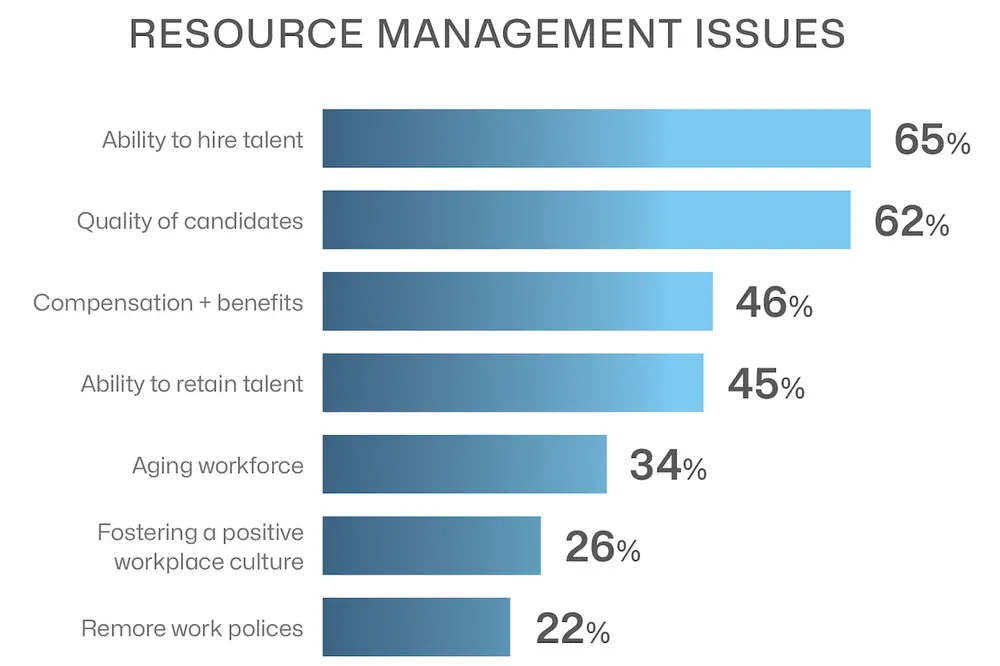
Talent acquisition and retention remain the number one overall business concern for AEC firms today. What’s more, AEC executives identify the ability to hire talent and the quality of candidates as their top two resource management challenges. This suggests construction firms would be wise to invest in talent development, and specifically in programs to develop skilled tradespeople. Today there’s a growing array of programs to that end, many of them involving partnerships.
Change management is another area where additional focus can pay dividends for construction companies. In the area of business development, for example, the report finds a relatively low rate of adoption of business development tools. Firms that accelerate their workforces’ embrace of advanced, AI-driven business development capabilities (such as for opportunity identification, opportunity scoring, and proposal generation) can unearth more high-quality opportunities, make better-informed go/no-go decisions about opportunities, and boost the quantity and quality of their proposals.
| Your local Trimble Construction Division dealer |
|---|
| SITECH Allegheny |
| SITECH Northeast |
A combination of trusted data and AI can help firms target more optimized-margin, capability-aligned projects with high win probabilities, which translates into fewer labor hours wasted on unsuccessful pursuits and more spent on revenue-generating work. AI-driven tools also can inform planning by providing insight into labor inefficiencies, profitability trends, and win rates by project type, client type, or market.
On-point strategic planning also has to be a strong point for construction firms. I recently talked with a construction executive who said their company’s work building distribution centers to support a particular hyperscaler’s infrastructure development had suddenly and unexpectedly come to a halt. Thankfully, the firm had planned ahead so it was ready to pivot to other kinds of work.
In a fast-moving business environment, planning over multiple horizons — including near-term (down to six- or even three-month windows) and out to one year and beyond — enables firms to orient to longer-term North Star goals while staying nimble enough to adjust to changing market scenarios, economic conditions, government policies, and more.
What are some of the key trends shaping the broader AEC industry in 2026? Here’s a glimpse at other key findings from the report:
- To fuel growth, AEC firms are making new business a high priority, with 71 percent saying they’re submitting more proposals this year than last.
- Average annual firm revenue has softened slightly from $260 million in 2025 to $256 million in 2026.
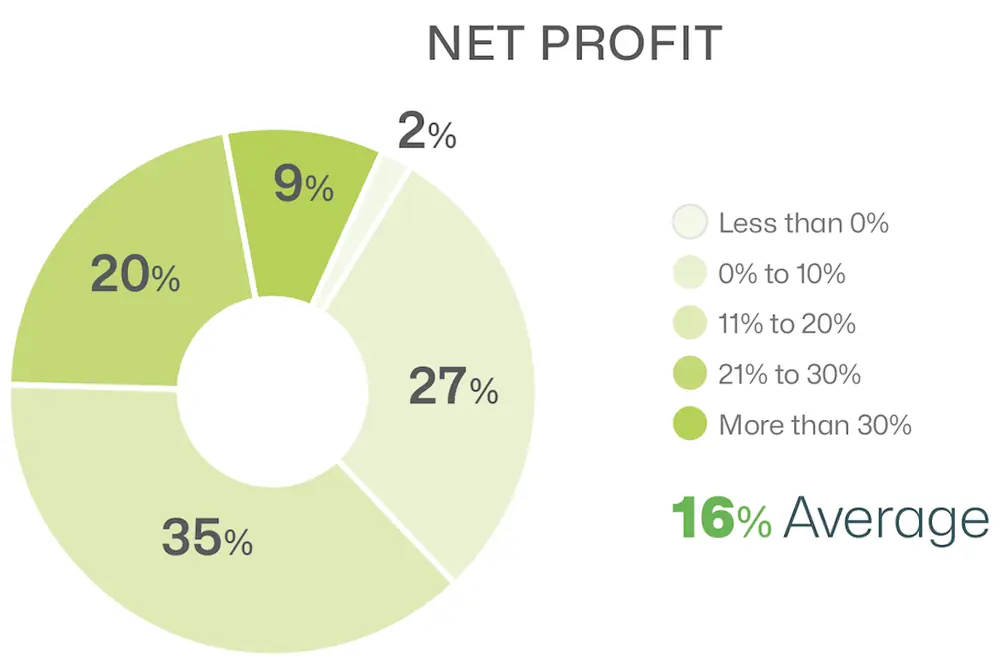
- Net profitability has increased over the past two years and stands at 16 percent in 2026, up from 13 percent in 2024 and 15 percent in 2025.
- AEC firms are more concerned about winning new business than at any time in the last four years.
- While average firm proposal output has nearly doubled in two years, win rates have stagnated from 56 percent in 2024 to 52 percent in 2025 and 50 percent in 2026.
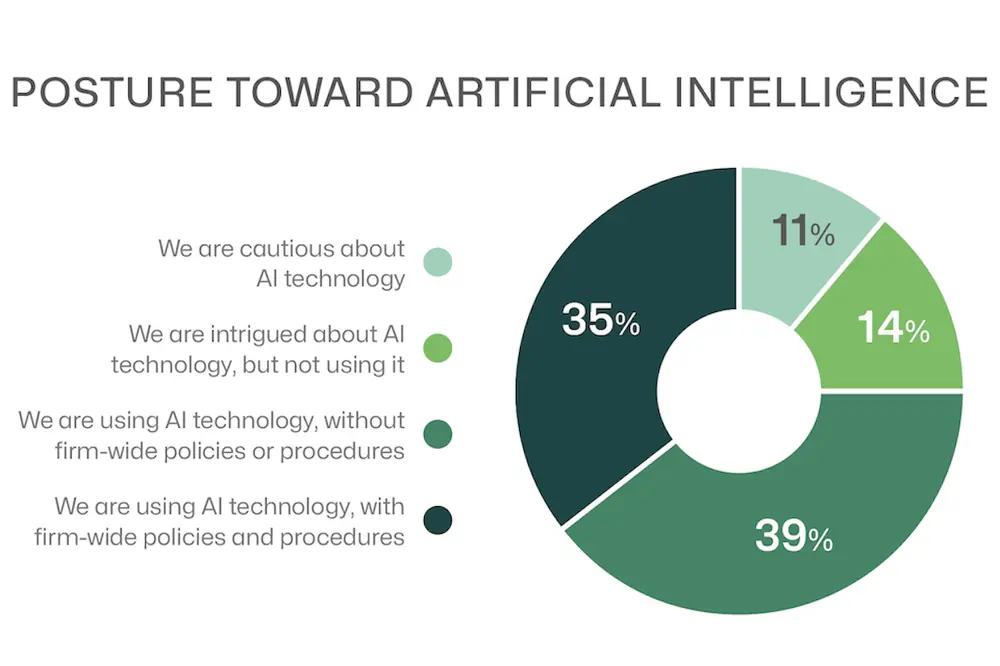
- Three-quarters of AEC firms now use AI, up roughly 20 percent from a year ago. However, just 29 percent report high confidence in the underlying data that fuels their AI tools, a disconnect that can undermine a firm’s AI investments.
- AI is used most heavily within business development and marketing.
- A large majority of firms — 92 percent — have some kind of go/no-go process, yet just 47 percent report they have a formal go/no-go process.
| Your local Trimble Construction Division dealer |
|---|
| SITECH Allegheny |
| SITECH Northeast |
Whether it’s leveraging AI more broadly, formalizing the go/no-go process, or other measures, the onus is on construction firms to continue finding ways to steel themselves against the headwinds they’re bound to face throughout the remainder of 2026 and beyond.
To download the full report, visit info.unanet.com/2026-aec-inspire-report.
Graphics from Unanet’s 2026 AEC Inspire Report.
Akshay Mahajan is Executive Vice President, AEC, at Unanet, a company that creates AI-first business solutions.