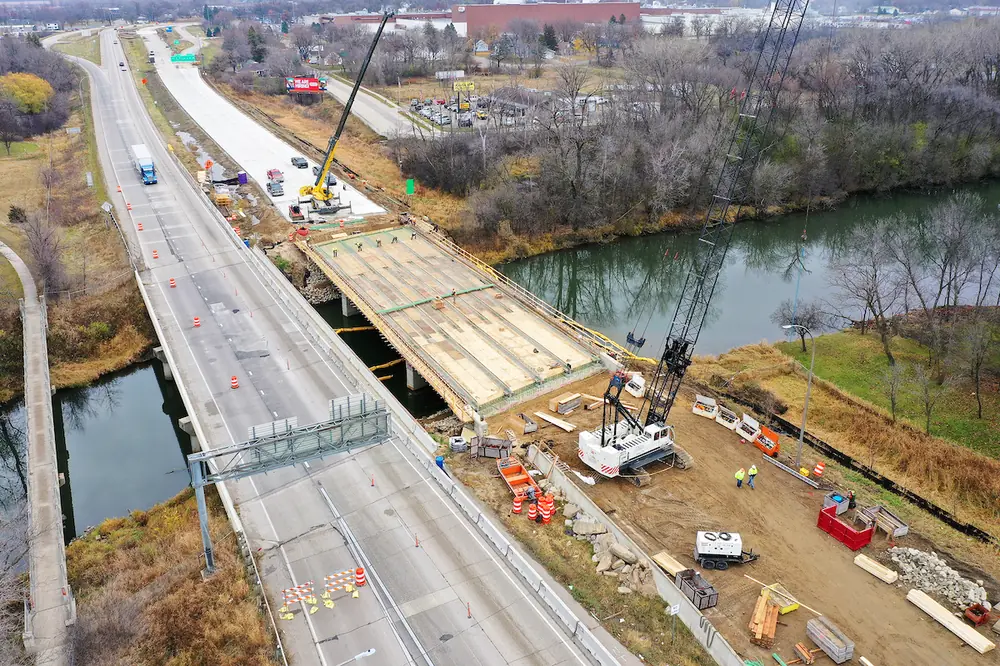

Two Washington State Department of Transportation (WSDOT) projects won regional awards in the 2026 America’s Transportation Awards competition, sponsored by the American Association of State Highway and Transportation Officials (AASHTO).
“For almost two decades, the America’s Transportation Awards has highlighted the innovative work state DOTs do to improve communities and enhance the lives of the people who live and visit them,” said AASHTO Executive Director Jim Tymon. “But the truth is, these projects are just a fraction of the incredible work done by state DOTs every year. AASHTO is proud to recognize the diverse and forward-thinking projects that are improving safety, mobility, and quality of life in communities across the country.”
Thirty-six transportation projects were submitted by 15 states in the Western Association of State Highway and Transportation Officials region for this year’s competition. Projects are judged in four categories: Quality of Life/Community Development, Operations Excellence, Best Use of Technology and Innovation, and Safety.
All nominated projects first compete at the regional level against projects of their own size (small, costing up to $10 million; medium, costing between $10 million and $100 million; or large, costing more than $100 million).
The three top-scoring projects from regional competitions throughout the U.S. advance to the Top 12 and compete for two national honors in the 2026 America’s Transportation Awards. The Grand Prize will be chosen by an independent panel of transportation industry judges, and the People’s Choice Award will be decided through online public voting. AASHTO will reveal both winners at its annual meeting in November 2026.

| Your local Trimble Construction Division dealer |
|---|
| SITECH Allegheny |
| SITECH Northeast |
The following projects in the Pacific Builder & Engineer area won 2026 regional America’s Transportation Awards.
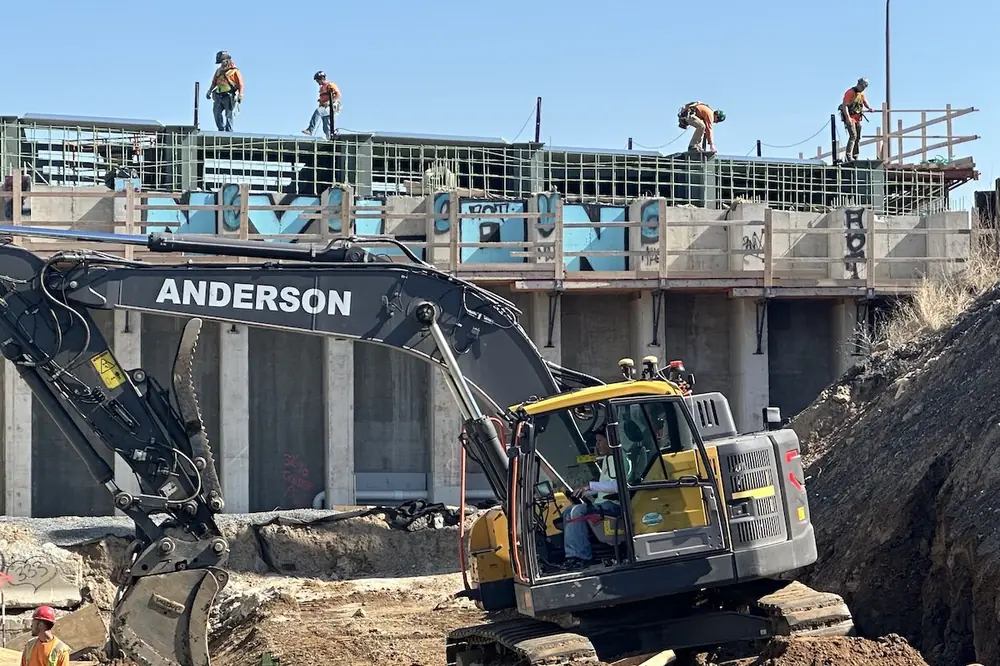
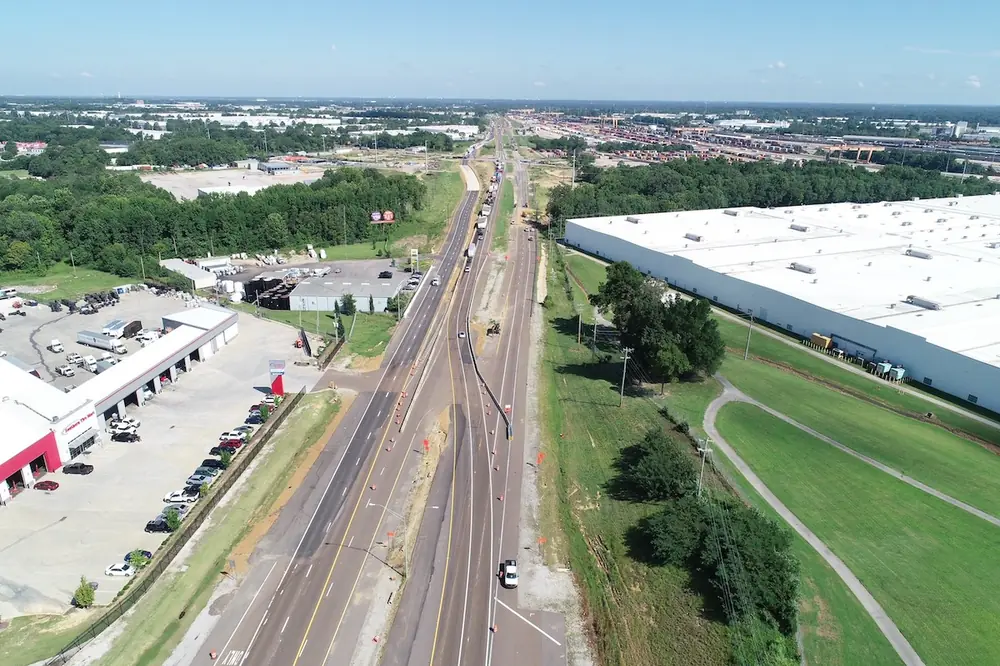
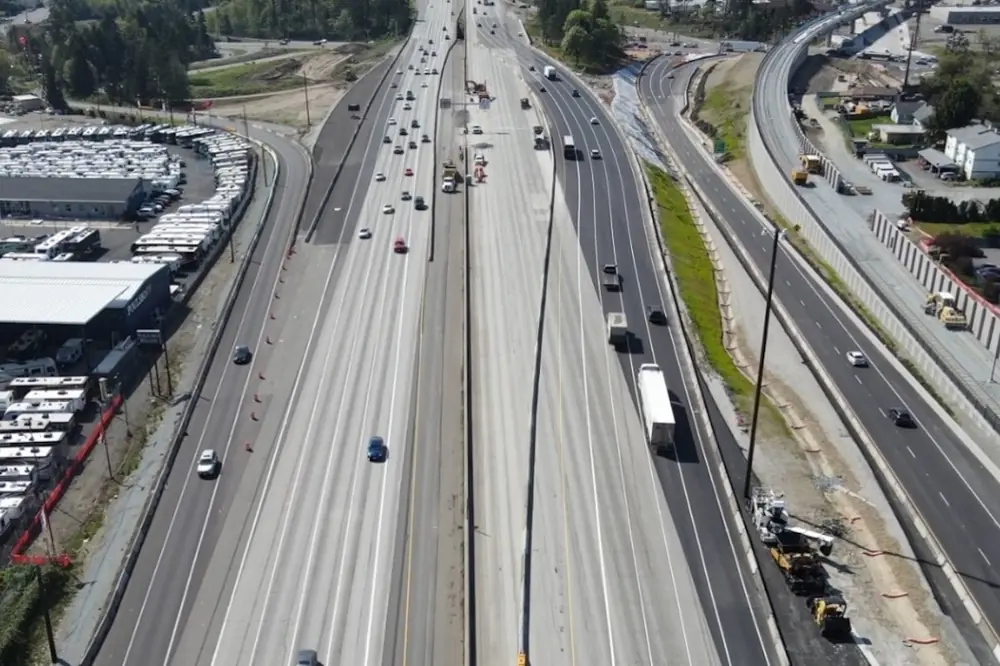
This $267 million project completed the first mile of a new 3-mile corridor that will close a critical gap in the freight route connecting Interstate 5 and the Port of Seattle, improving safety, mobility, and multimodal access in south King County, Washington.
The project’s design-build team included Guy F. Atkinson Construction of Renton, Washington — a division of Clark Construction — and Jacobs of Bellevue, Washington, as the primary engineer.
With more than 30,000 daily freight trips serving Seattle’s ports, the completed expressway is expected to deliver significant travel-time savings and operational benefits. Variable tolling offers a faster and more reliable route, supporting freight movement and economic activity while preserving toll-free options on many local roads. Construction also included new Veterans Drive tunnels beneath I-5 to reduce congestion and improve local access.
| Your local Trimble Construction Division dealer |
|---|
| SITECH Allegheny |
| SITECH Northeast |
This project was the second of three phases in WSDOT’s State Route 509 Completion Project. Atkinson is also delivering the final phase, scheduled to open to traffic in 2028, with final completion in 2029.
“Providing a safe, sustainable, integrated, and resilient transportation network is key to our future,” said Roger Millar, former WSDOT Secretary. “The SR 509 Completion Project is another step in that direction. We’re building more than a highway; we’re also creating multimodal options including trails and shared-use paths that will allow people to connect more easily to local jobs, businesses, and neighbors in support of vibrant and thriving communities.”
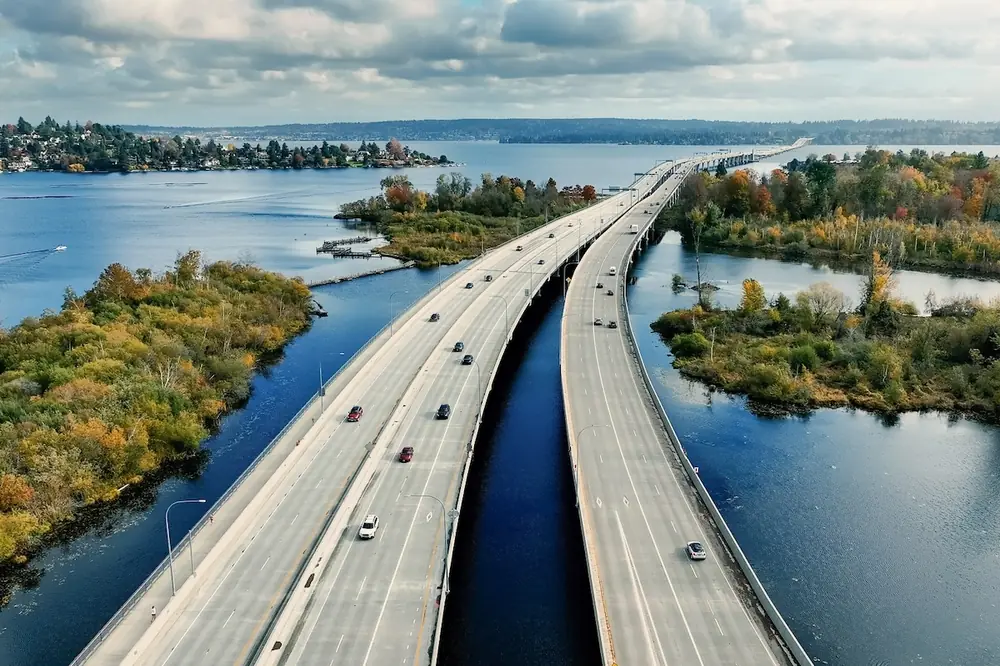
Completed through a design-build contract awarded to Graham, with T.Y. Lin International serving as the design team lead, this $487 million project improved safety in the earthquake-prone area.
Built in the 1960s, the original four-lane approach bridge to Seattle’s Union Bay relied on hollow columns and sat near three fault lines, making it vulnerable to collapse during a major earthquake.
| Your local Trimble Construction Division dealer |
|---|
| SITECH Allegheny |
| SITECH Northeast |
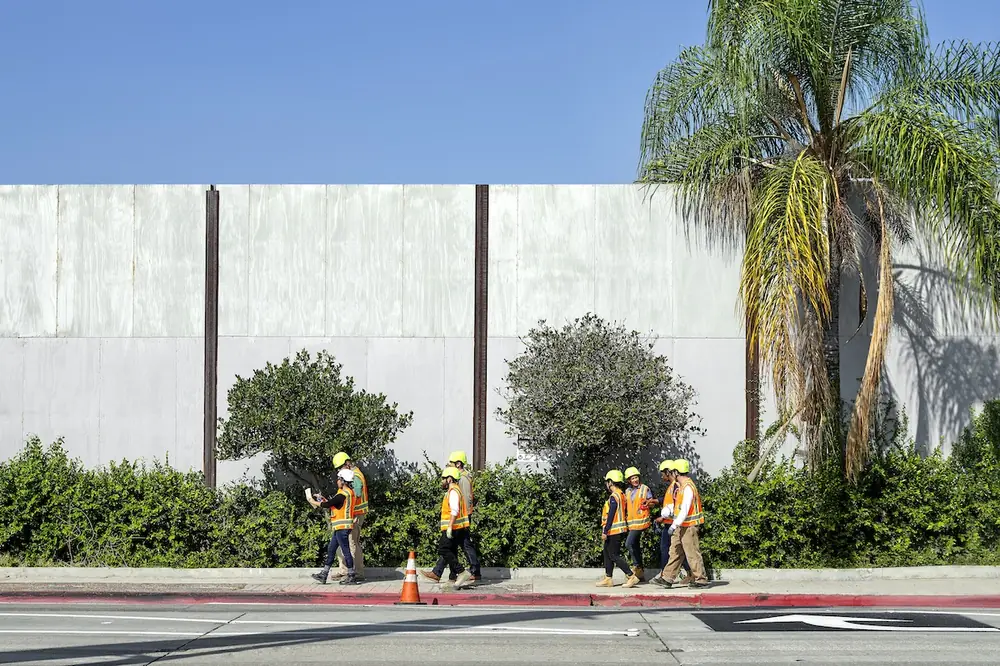
The project replaced the vulnerable structure with a new earthquake-resilient bridge and added a 3-acre, landscaped lid featuring regional transit stops and public open space. New bicycle and pedestrian trails — including a car-free bridge over the highway — now connect local and regional networks.
Located at one of the state’s most complex interchanges, the project also improved traffic flow through new high-occupancy vehicle (HOV) lanes, ADA-accessible transit stops, and a multimodal transit hub with bike lockers and dedicated bus access ramps.
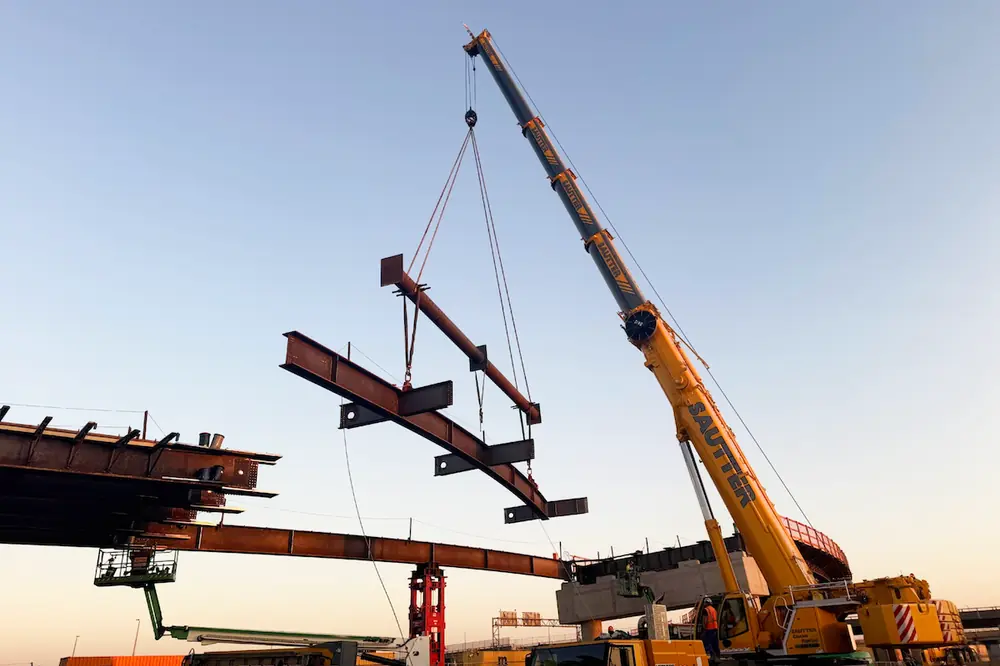
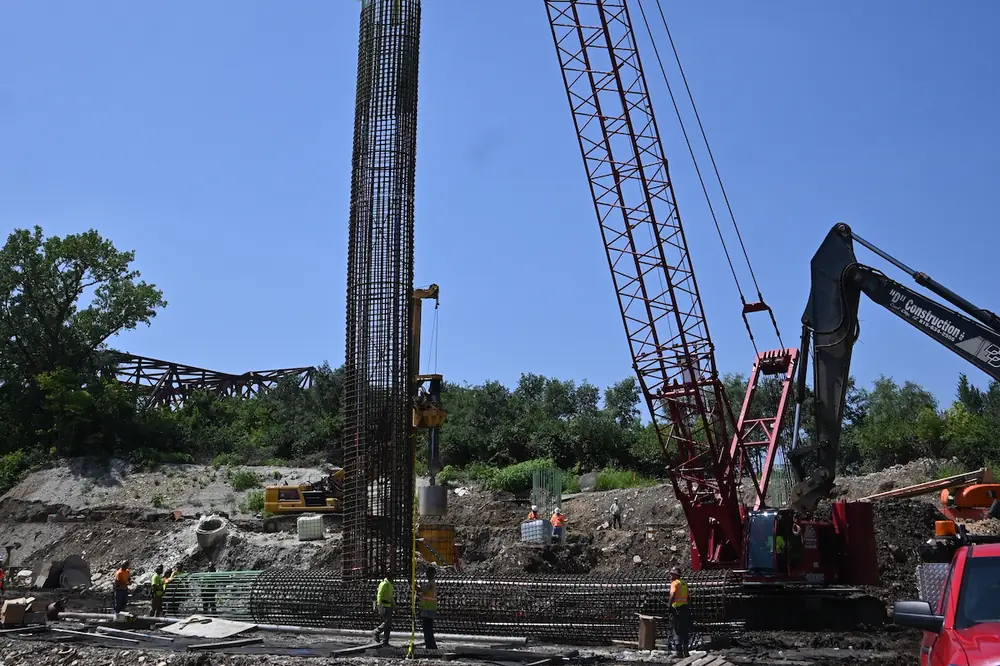
To build the new 1.2-mile-long bridge over the lake — in a heavily populated area and adjacent to ongoing traffic — the team used two sets of gantry cranes. Each crane stood 69 feet tall and measured 98 feet across. The cranes worked in pairs from two temporary trestles on the north and south sides of the existing bridge. A total of 2.25 million square feet of trestle containing approximately 63,000 linear feet of I-beam was required for the project.
American Bridge spearheaded the gantry crane operation. Attached to 6-foot-tall wheels, the cranes with 100-ton lift capacity removed sections of the old bridge and lowered in sections of the replacement structure, which contained 470 concrete girders and 120 precast substructure elements.
| Your local Trimble Construction Division dealer |
|---|
| SITECH Allegheny |
| SITECH Northeast |
The gantry crane system offered several advantages, according to Steve Peer, Communications Manager for WSDOT’s SR 520 Bridge Replacement and HOV Program.
“Crews are able to remove large sections of the old bridge and demolish them offsite — reducing noise and dust and, maybe most importantly, preventing debris from falling into the lake,” he said. “The gantry cranes also allow us to build the bridge from above rather than from below, which reduces the environmental footprint of having to construct a larger work bridge.”
This project tied for first place in its category with the Texas Department of Transportation’s U.S. 181 Harbor Bridge project.
Photos courtesy of WSDOT