When
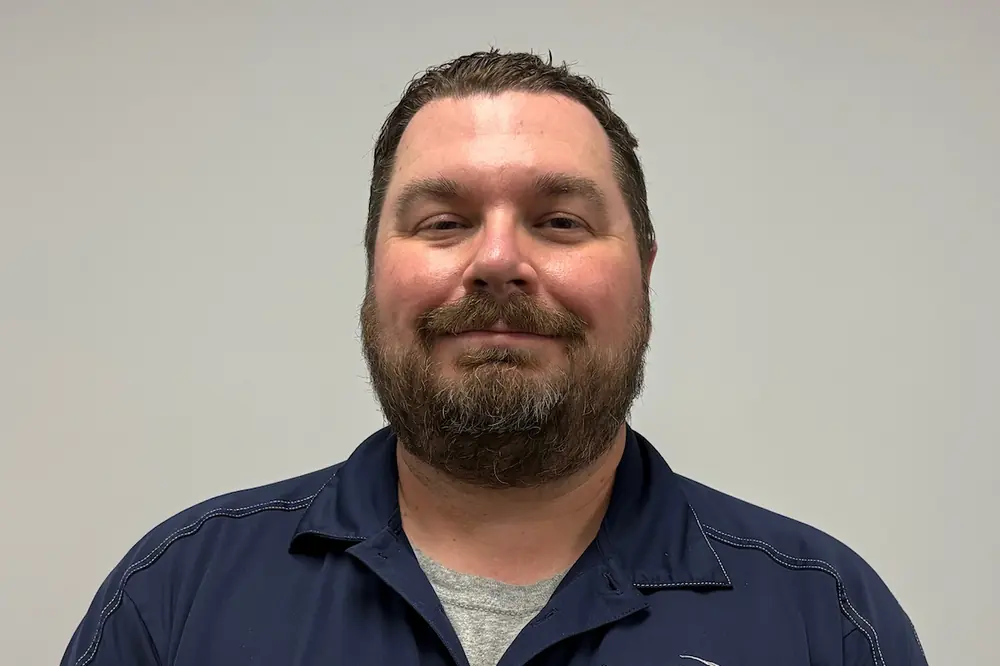
Robert “Bob” Lanham, Jr., P.E., started his tenure as 2020 President of the
Associated General Contractors of America (AGC), he set three main goals: expand member engagement, increase federal investment in construction, and reduce and reform federal regulations on construction and development.
Then the COVID-19 pandemic hit.
As it turns out, “The need for those priorities intensified,” Lanham said. “Because of the overall economic downturn, increased federal investment is even more important. And we need our members to continue to press Congress. When a businessperson tells them, ‘You injured my business, you cost me money, I had to lay people off,’ the power of that is incredible.”
As a U.S. Army veteran, Lanham is used to succeeding in difficult circumstances. “Motivating people and getting them to do the tasks set before them in extreme conditions takes extreme leadership,” he said. “I was able to learn that on the job when I was 23 years old.”
A 1981 honors graduate and member of the Corp of Cadets at Texas A&M University in College Station, Texas, Lanham received his Army commission upon college graduation. Trained as a paratrooper, he served as a combat engineer officer, reaching the rank of Captain. In 1985 he separated from the Army, then joined Williams Brothers Construction Co., Inc., in Houston as a Project Engineer. Over the next 35 years, he worked in virtually every aspect of the business. In 2013, he was named President of the company.
A life member of the AGC of America’s Board of Governors, Lanham served 10 years in various positions on the organization’s Board of Directors. In 2005, he was recognized by AGC with the Committee Chair of the Year for his work with the Environmental Forum. He also served as President of the AGC of Texas in 2000 and 2011 and chaired and participated on dozens of AGC committees and task forces at the state and national levels. He was chairman of The Road Information Program in 2006 and continues to serve on its Executive Committee. Texas A&M recognized him as a Distinguished Graduate of its Department of Civil Engineering in 2015.
In his interview with Associated Construction Publications, Lanham shares the lessons he learned throughout his career and how AGC is helping contractors navigate through new regulations and the uncertainties ahead.
Where did you grow up?
In the Houston area.
Why did you join the Army?
I bleed red, white, and blue. I also served in the Junior ROTC in high school and received a four-year Army scholarship to college.
How has your military service helped your career?
It trained me in leadership in its purest form. I had to get people to do things in harsh environments and be happy to do it just because I asked. In addition, I experienced construction in the most adverse conditions. My most difficult project was building an airstrip in Central America. There was no clean water. It was near the equator, either 120 degrees and dry or 90 degrees and raining. We were builders, though, so we built ourselves a little bit of quality of life out in the middle of nowhere.
Finally, I learned an attitude of mission first – never envision failure. Making contingency plans detracts from time spent making sure what you’re doing goes right. As a leader, you have to be positive. I deal with negatives if they occur, but I don’t take away from the mental horsepower and discussions that make my plan succeed.
Who has been the biggest influence on your career?
Doug Pitcock, CEO of Williams Brothers and 1984 President of the AGC of America. He took a chance on a young man and provided me with unprecedented opportunities for growth and development.
What lessons have you learned in your professional life?
Never seek credit for success. Never react impulsively to a situation. Sleep on big decisions.
What’s the best advice you ever received?
Never be afraid to question information, whether in a boardroom or dealing with a new challenge.
What do you hope to accomplish during your tenure as AGC President?
Part of my theme for the year is “Engage today for a better tomorrow.” I intended to encourage member engagement in all aspects of AGC during my visits to chapters and while speaking at various events. That’s been challenged because of so many meetings going virtual. However, we’re still seeing an uptick in member engagement because of the uncertainty everyone faces about the viability of their business, their market, and our country during the pandemic. With AGC’s action alerts that help members contact a member of Congress about a particular issue, we’ve seen more responses in this period than the entire previous year. As an association, we’ve been able to accomplish so much, even when everyone was locked in. But we have to keep that up. AGC does an exceptional job advocating on behalf of the industry, but the impact of our members’ interactions with their representatives and senators is a hundredfold more powerful than our lobbyists.
Second, we need to increase federal investment in construction. Historically, capital improvements have been bipartisan issues. Unfortunately, gridlock is so bad now, infrastructure packages become partisan Christmas trees to hang every social reform imaginable, regardless of party. If they can’t get an issue through, they hang it on the infrastructure bill, turning it into partisan politics. We need to continue to press for investment not only at the state and local levels, but federally to provide connectivity for interstate commerce. More importantly, if we can’t move goods to ports in a cheaper, more efficient way, we’ll lose out in the global economic race.
Finally, we need to reduce and reform federal regulations on construction and development. If we don’t have policies that allow the economy to bounce back, we could see ourselves in a sustained down period.
What has been the biggest impact of COVID-19 on the construction industry so far?
In addition to new safety measures and regulations, I’d say it’s the uncertainty in future construction markets. We’re already seeing proposed projects suspended and current projects delayed, especially in private, commercial markets. I think public works will see the impact in coming years. Because they track tax revenues as they’re collected, that market tends to lag. I think it will eventually affect everybody, just not in a uniform timeline. That will force cost-cutting and some hard decisions for construction business leaders. Do I furlough employees? Will I get them back? Can I afford to keep paying them if I don’t have work? The challenge is choosing the lesser of the evils that will put them in a position to survive until there’s some recovery.
How is AGC addressing challenges created by the pandemic?
AGC developed a dedicated webpage (agc.org/coronavirus) with a compendium of best practices that we update regularly. It includes CDC recommendations, locally developed initiatives, and ways to train and assist employees in protecting themselves and everyone else on a project.
In addition, we’ve continued to advocate for the industry. For instance, when the Cybersecurity and Infrastructure Security Agency (CISA) released guidelines at the beginning of the pandemic, AGC worked to get clarification in the language related to construction, determining that we’re an essential business. Unfortunately, not all states followed CISA’s guidance. With the Paycheck Protection Program, originally the loans were extremely difficult – if not impossible – for the construction industry, but we got that fixed.
What are AGC’s other priorities in the coming year?
Our first priority is construction markets – lobbying Congress for increased investment in America’s infrastructure. We’ve focused on the National Defense Authorization Act, the Water Resources Development Act, and the expiration of the FAST (Fixing America’s Surface Transportation) Act. We need to continue to press Congress and encourage our members to support AGC’s Political Action Committee. In the coming election, we need our members to actively support pro-development, pro-business, pro-growth candidates who can work with us on creating a better environment to help the economy stabilize and flourish again.