

A substation transformer ordered today won't show up for roughly three years. That's not a typo, and it's not a worst-case estimate — industry lead times for substation transformers have stretched from around 140 weeks in 2023 to more than 160 weeks now, according to Wood Mackenzie research cited by Data Center Knowledge, with some buyers reporting waits closer to four years for certain configurations.
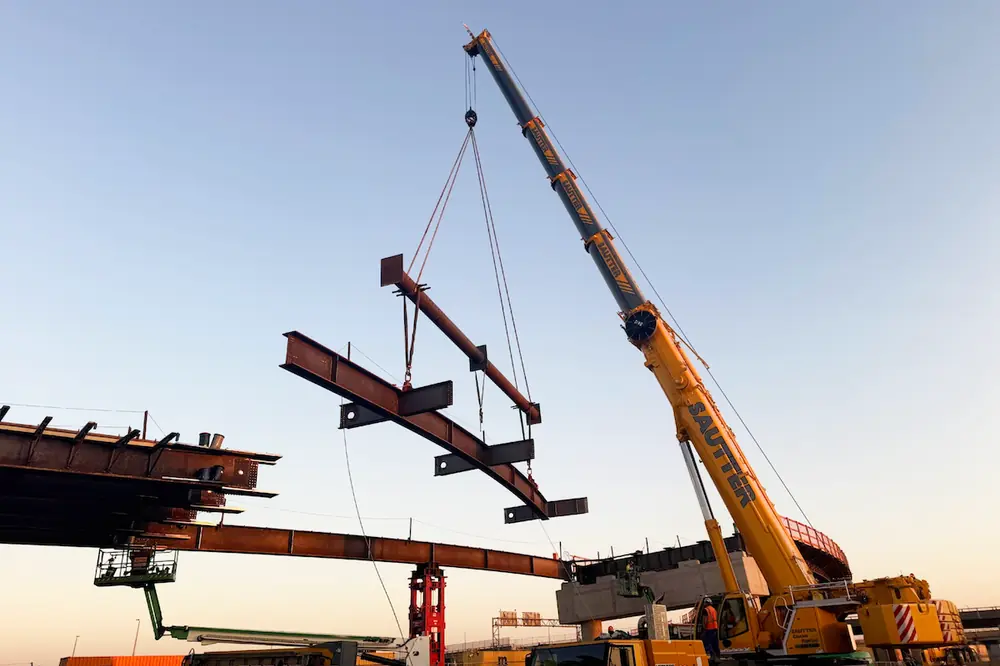
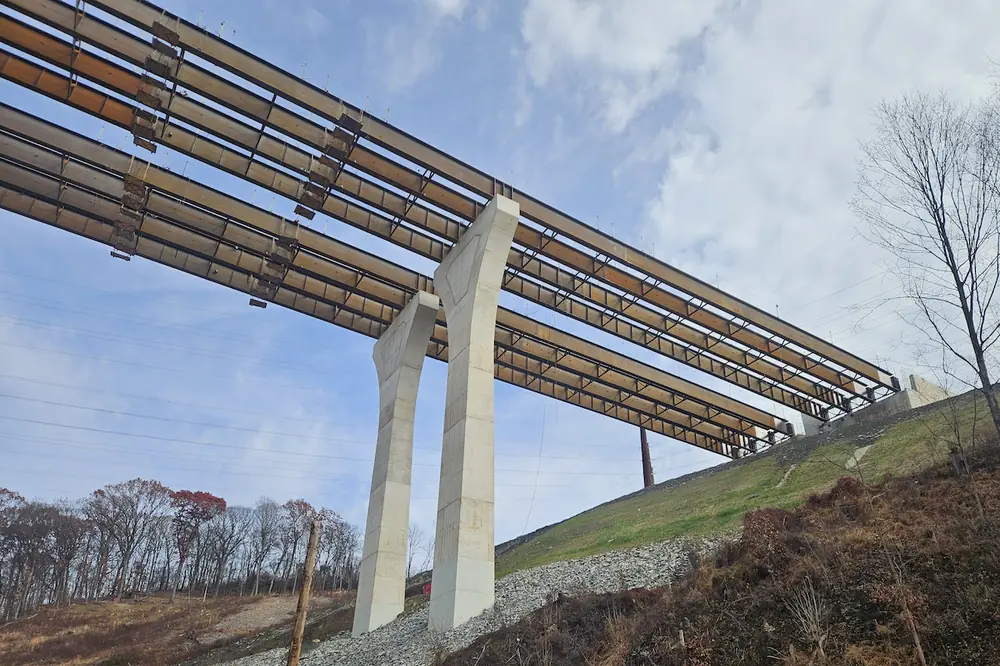
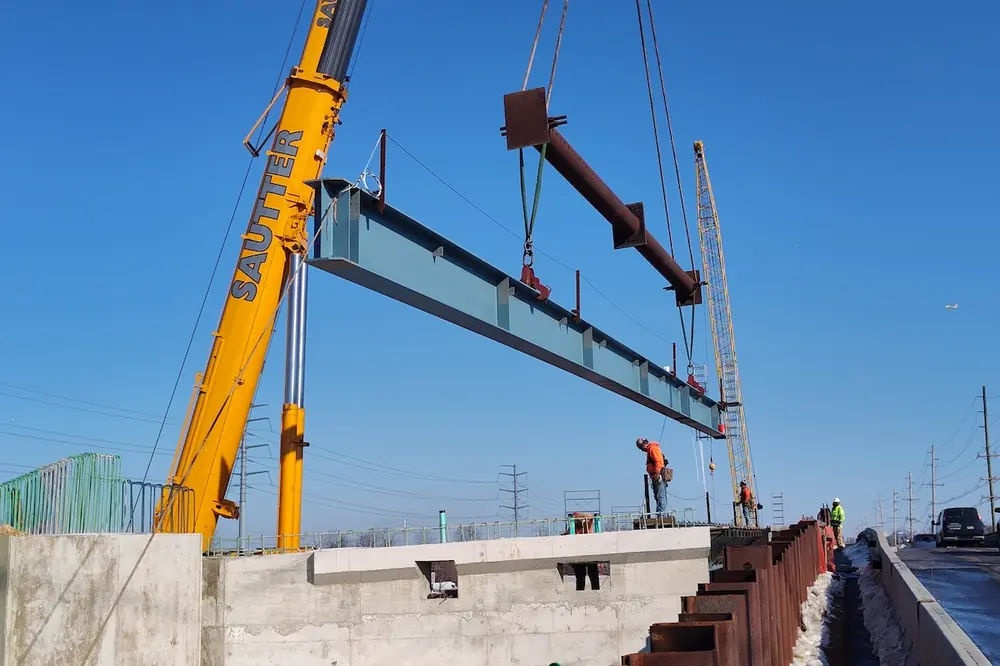
Structural steel is a different animal but tells the same story: fabrication and delivery are running 14 to 20 weeks in most U.S. markets in 2026 — and that's before design development and submittal review, which can add another month or more.
If you're running a project with either of those items anywhere near your critical path, the schedule you build on day one is making a bet on numbers that were already moving before you finished writing them down.
Every experienced project manager already knows procurement can blow up a schedule. What's changed is how often that risk sits buried where nobody's looking.
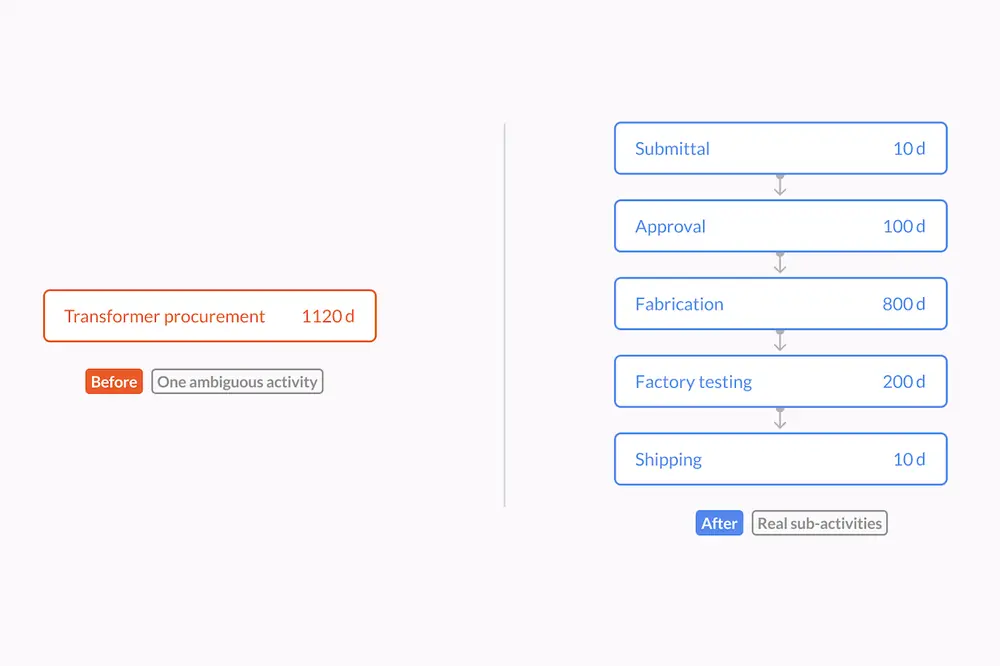
A traditional critical path method (CPM) schedule represents a long-lead item as a single activity: order date, duration, delivery date. That's technically correct and practically useless, because it treats a transformer or a steel package as one block instead of the multi-stage process it actually is — submittal, approval, fabrication, factory testing, shipping, delivery, installation. Each of those stages has its own risk, its own owner, and its own chance of slipping. Compress all of that into one bar on a Gantt chart and you've compressed the visibility right along with it.

| Your local Trimble Construction Division dealer |
|---|
| SITECH Allegheny |
| SITECH Northeast |
The result is a schedule that looks fine until the week someone realizes the submittal for a critical switchgear package never actually got approved, and the fabrication clock nobody thought to track hasn't started.
The instinct is to treat long-lead items as the procurement department's job to track separately from the schedule. That's exactly the disconnect that causes the damage.
A transformer delivery date only matters in relation to everything downstream of it — energization, testing, commissioning, substantial completion. If procurement is tracking delivery dates in a spreadsheet and the scheduler is tracking sequence logic in P6, the two systems agree with each other right up until the day they don't.
The fix isn't better procurement software. It's putting procurement milestones directly into the sequence logic where the whole project team, including trade partners, can see how a slipping submittal date actually cascades. A visual, whiteboard-style planning environment — where the master schedule, the lookahead, and the procurement log live on the same canvas instead of three disconnected systems — makes that cascade visible to everyone, not just the person who happens to own the spreadsheet.
| Your local Trimble Construction Division dealer |
|---|
| SITECH Allegheny |
| SITECH Northeast |
Regardless of what tool you use, these four strategies can help keep projects on schedule.
Break Long-Lead Items Into Sub-Activities
Don't schedule "transformer procurement" as one 160-week bar. Schedule submittal, approval, fabrication milestones, factory acceptance testing, and shipping as separate, sequenced activities, each with its own float. That's the only way to see which sub-stage is actually eating your buffer.
Tie Procurement Milestones to Trade Partner Logic
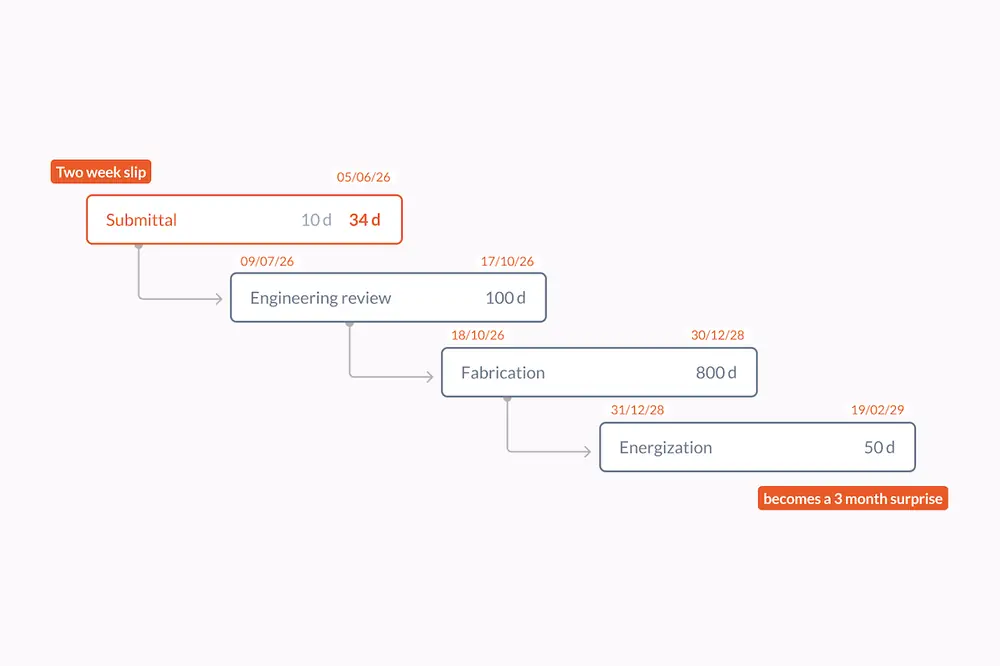
Look beyond the master schedule. A submittal approval delay on an electrical package doesn't just push a delivery date — it pushes every downstream trade waiting on that equipment to start their work. Make sure the schedule shows that chain explicitly, so a two-week slip in engineering review shows up as a visible impact on the electrical subcontractor's start date, not a surprise three months later.
Involve Trade Partners in Sequencing Conversations Early
Subcontractors and suppliers usually know before the general contractor when a fabrication timeline is slipping. A collaborative planning environment where they can flag that directly onto the shared schedule catches the problem when there's still float to recover it. A monthly status meeting catches it after the float is gone.
| Your local Trimble Construction Division dealer |
|---|
| SITECH Allegheny |
| SITECH Northeast |
Revisit Long-Lead Assumptions
Do this on a cadence that matches how fast the market is moving, not how fast your schedule updates. Steel and electrical equipment pricing and delivery windows have moved enough in the past two years that lead-time assumptions baked into a schedule at bid time can be stale by the time procurement actually places the order. Build in a checkpoint to revalidate long-lead durations against current market data before they become the excuse for a missed milestone.
None of this changes the underlying reality that a substation transformer takes three years to build. It changes how much runway you have to react when a piece of that three-year chain slips. A submittal delay caught in week two — while there's still float elsewhere in the schedule — is a resequencing conversation. The same delay discovered in month 11 — after the float from every other trade has already been consumed — is a claim.
Heavy civil projects have always lived and died on long-lead procurement. That part isn't new. What's changed is the volatility. Transformer lead times don't move by a few weeks anymore; they move by tens of weeks, sometimes hundreds, year over year. A schedule that treats procurement as a single static bar can't absorb that kind of movement. A schedule that treats it as a sequence of visible, trackable, collaboratively owned milestones can.
The projects that stay on the critical path aren't the ones that got lucky on lead times. They're the ones that saw the slip coming early enough to do something about it.
| Your local Trimble Construction Division dealer |
|---|
| SITECH Allegheny |
| SITECH Northeast |
Graphics courtesy of Planera
Nitin Bhandari is the Co-Founder and CEO of Planera, an AI-native scheduling platform.