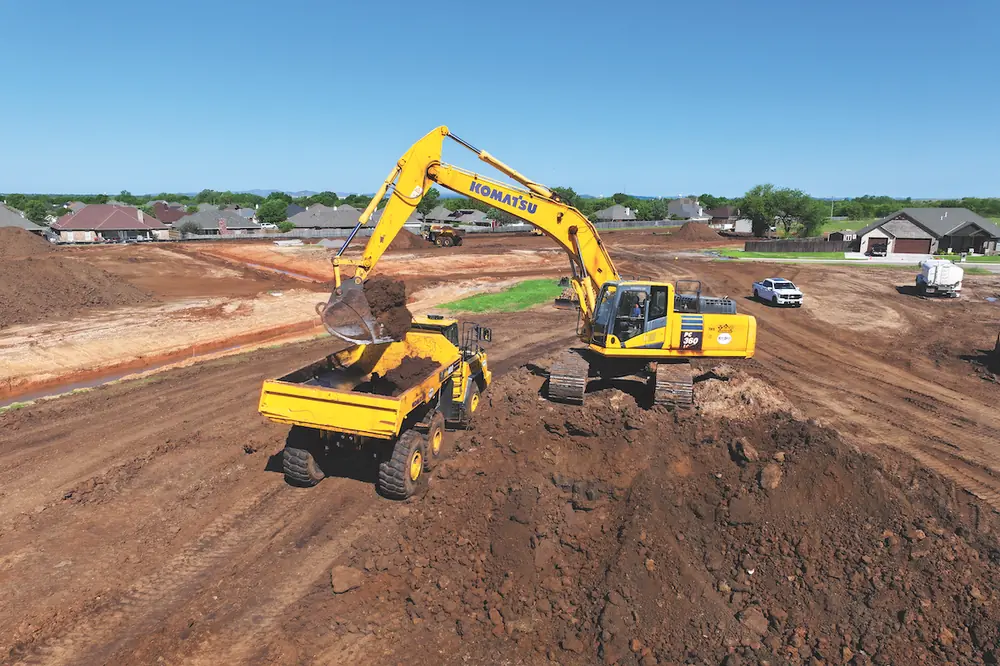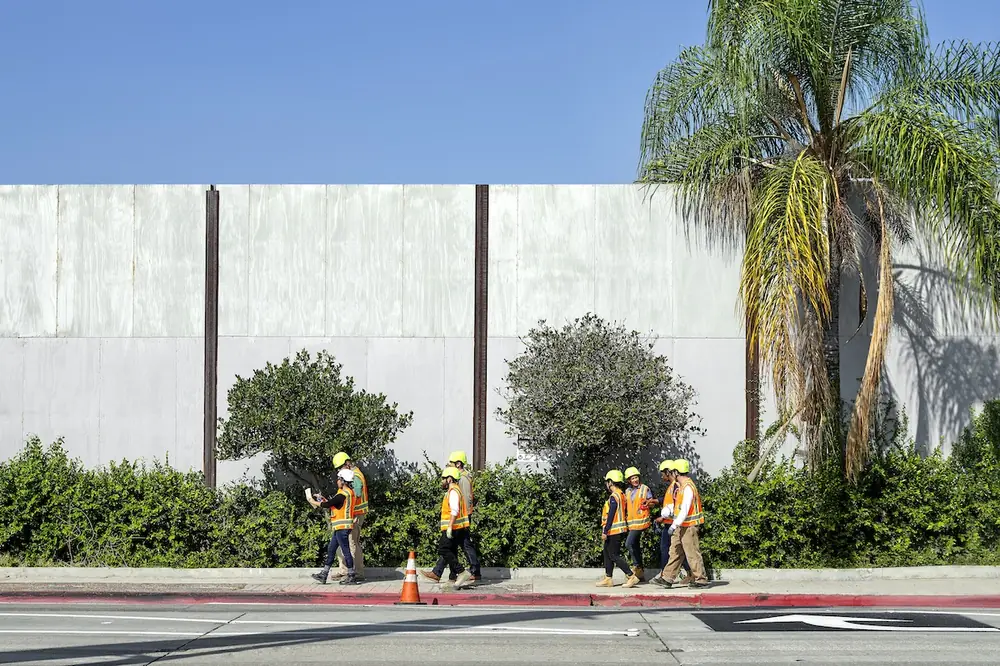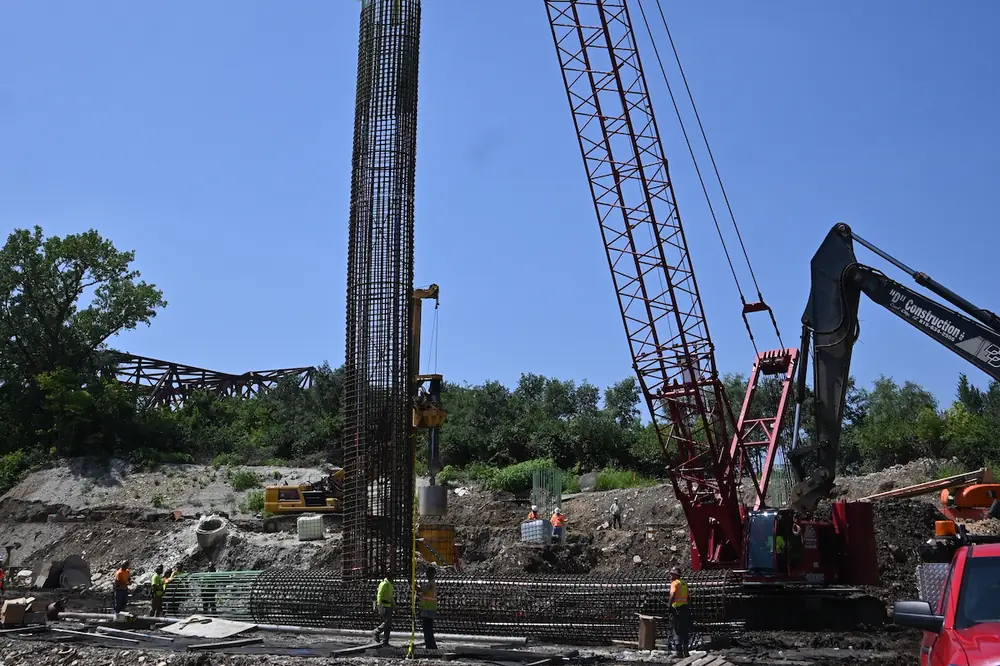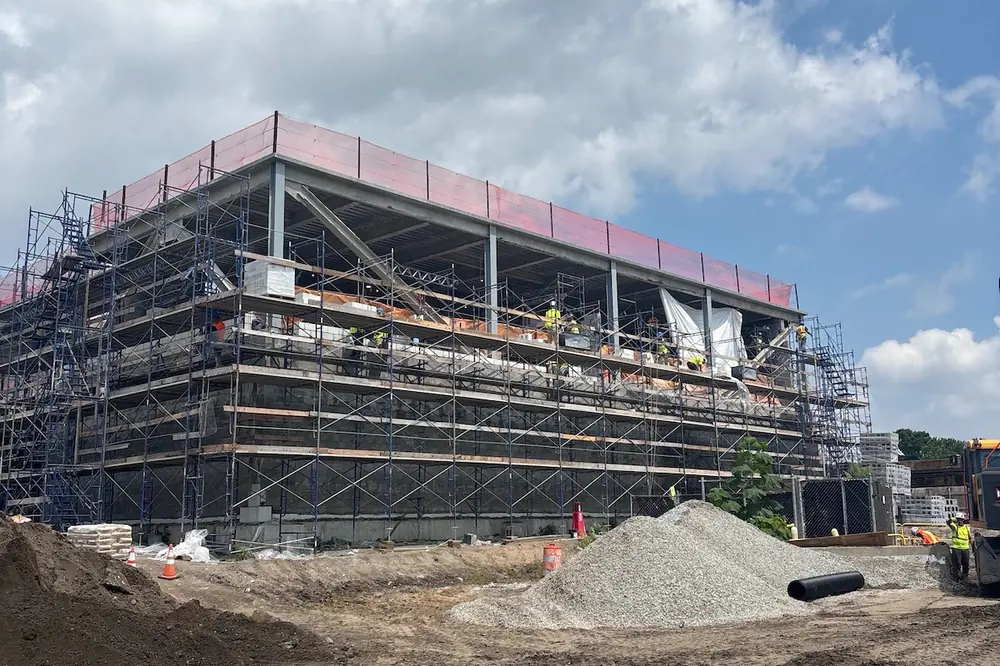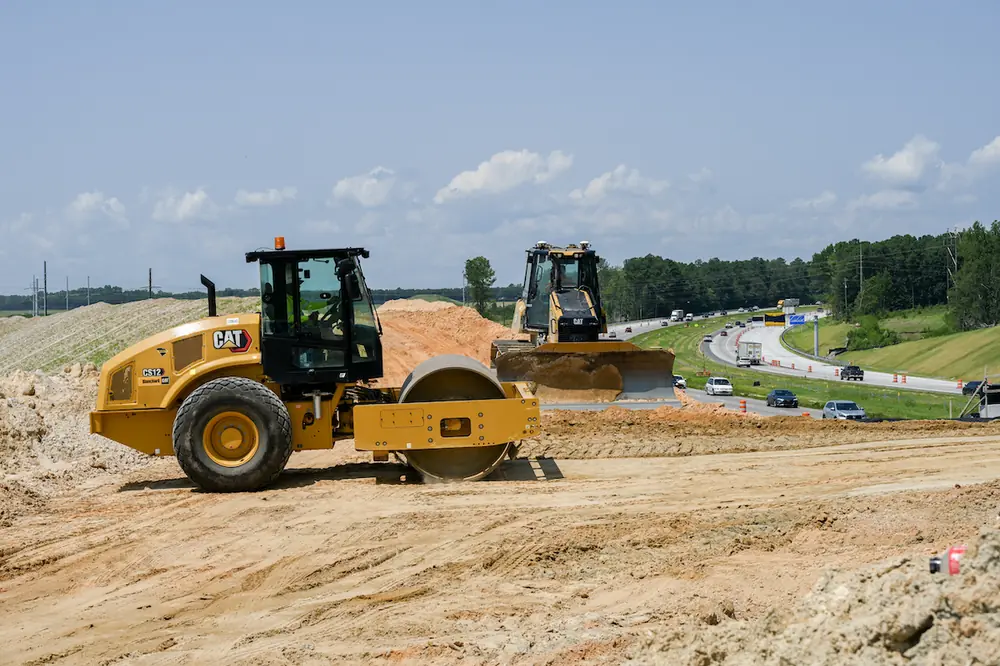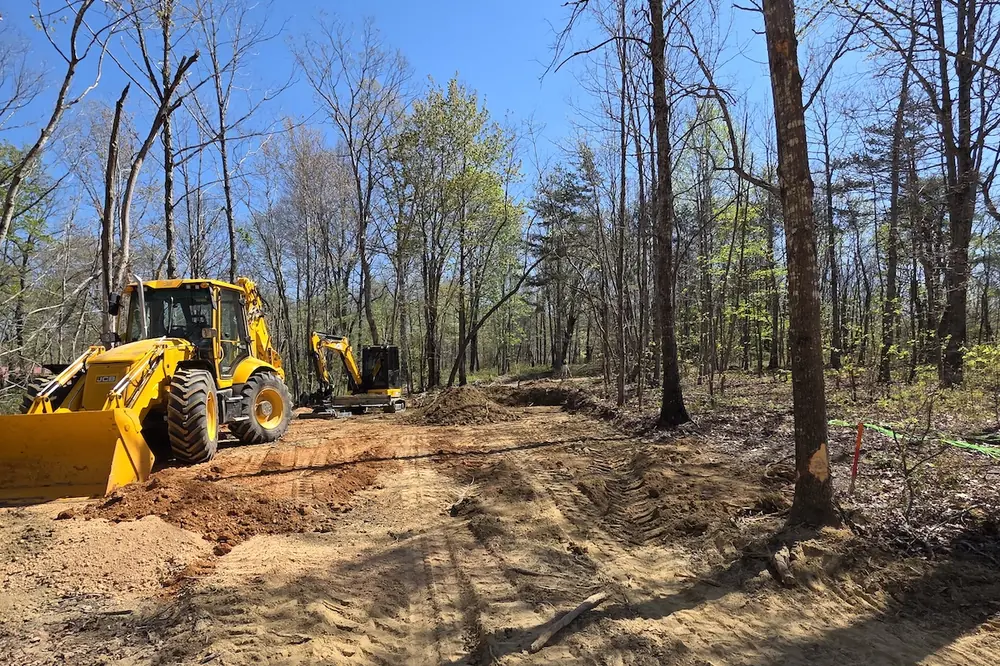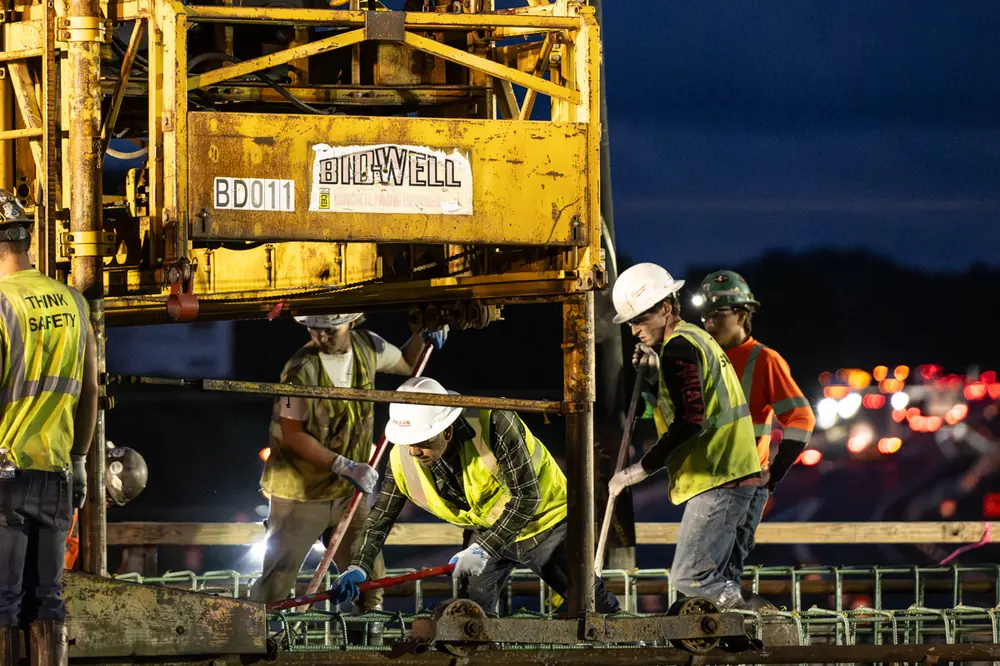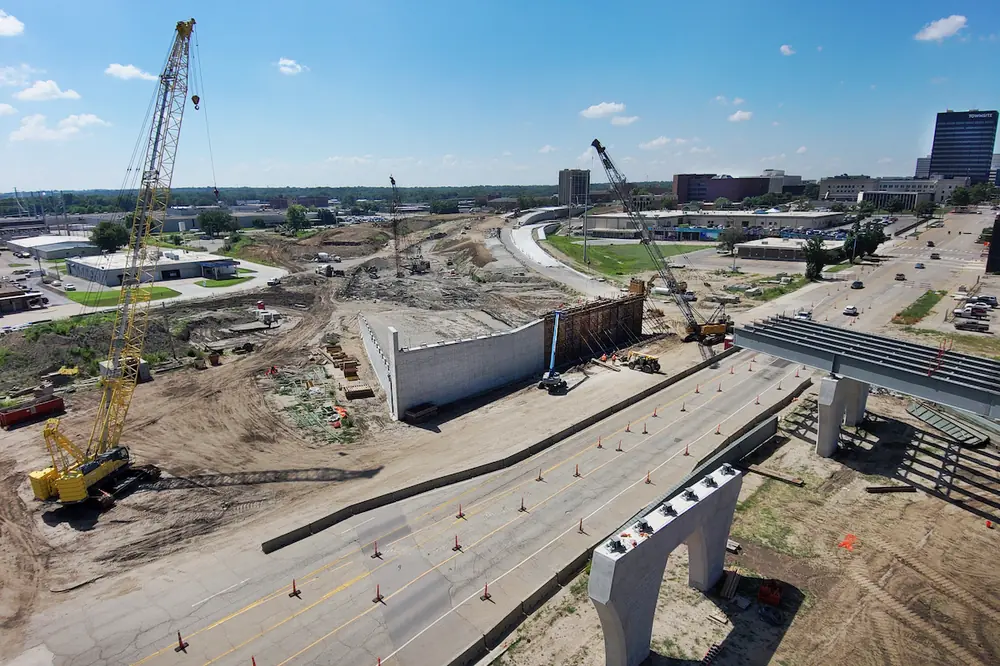
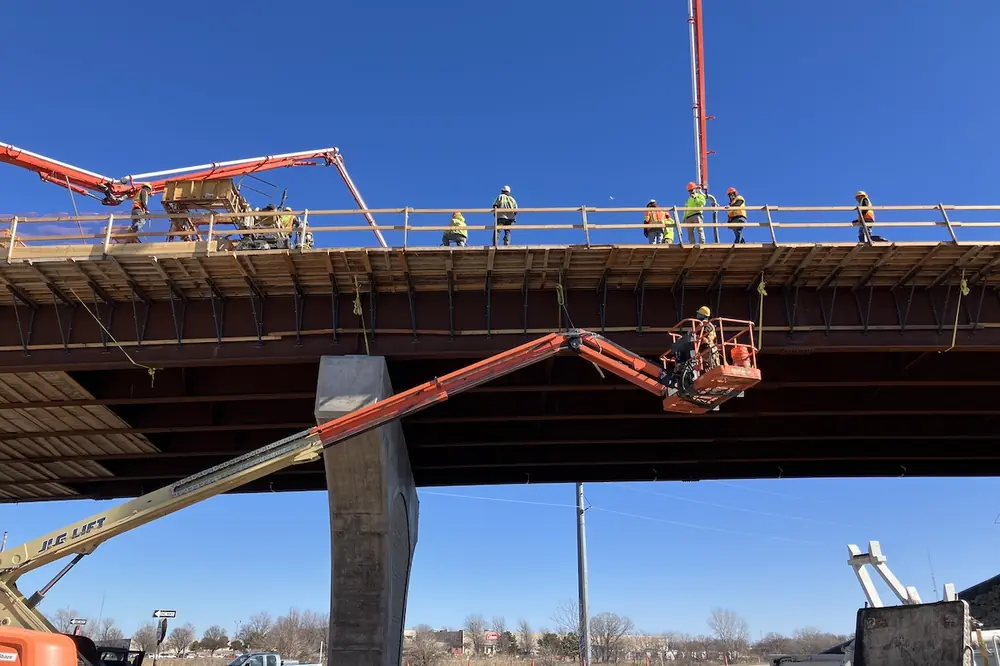
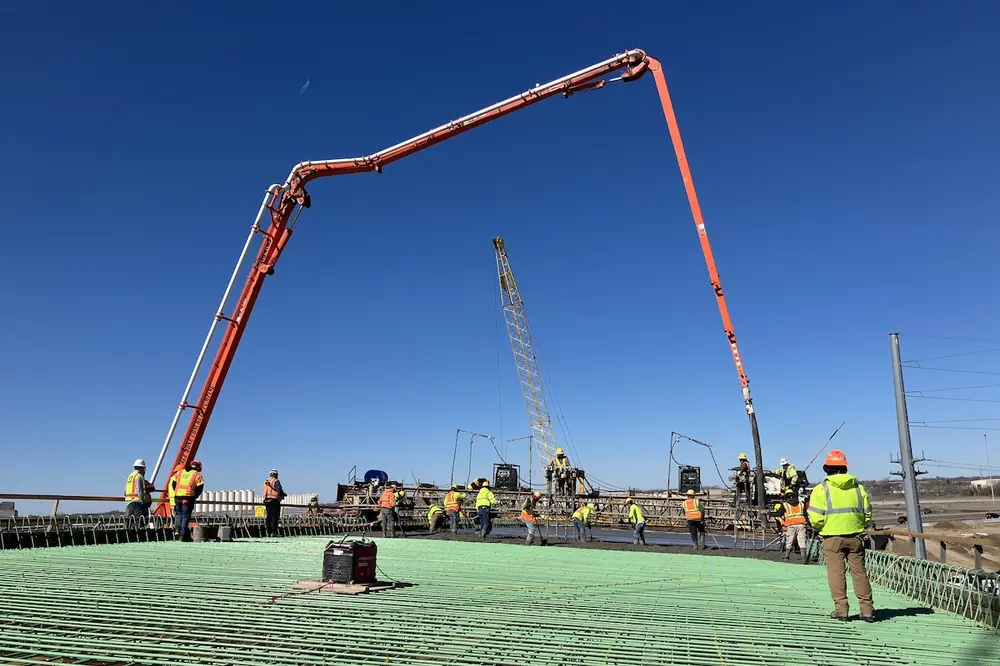

Wichita, located in south-central Kansas, is home to approximately 400,000 residents, while the Greater Wichita region’s population of nearly 800,000 is expected to surpass 870,000 by 2035. To prepare for that growth and modernize the area’s infrastructure, the Kansas Department of Transportation (KDOT) is advancing the Wichita North Junction Project. The joint venture of Bob Bergkamp Construction and King Construction is serving as the general contractor.
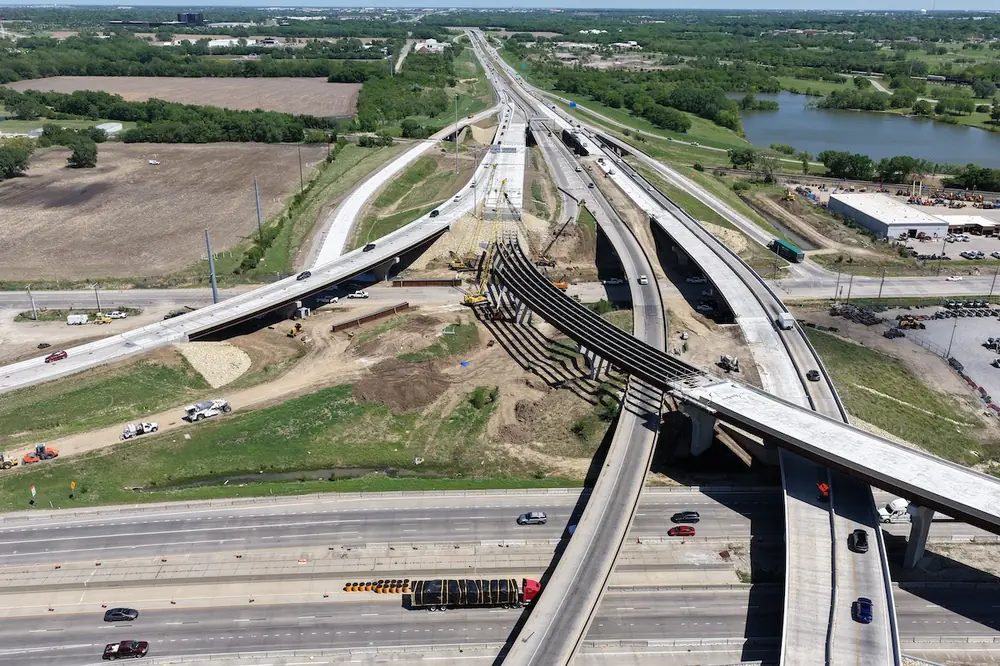
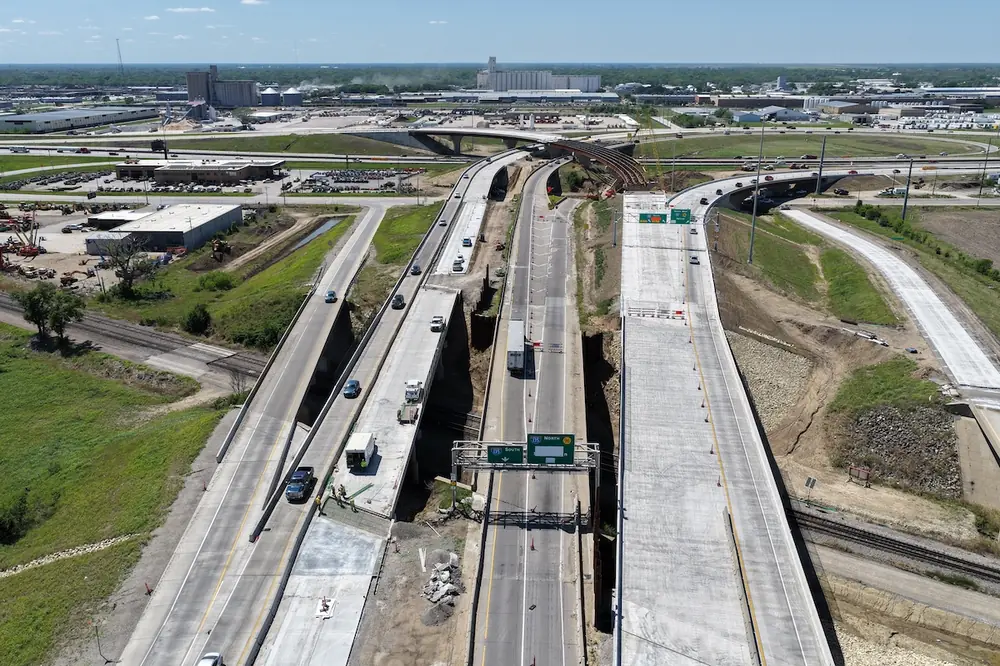
The Wichita North Junction connects four major roadways. I-135, I-235, K-254, and K-96 were constructed over several decades between the 1960s and 1990s. Today, the roadways have an average daily traffic of over 97,000, which is projected to increase to 160,000 in the coming decades.
In 2015, KDOT completed a concept study that led to the Wichita North Junction Project. The study identified the following needs:
- Address aging infrastructure
- Improve traffic movement
- Enhance safety at the interchange
The project, which covers 2.82 miles, is being delivered in phases. The first phase, known as the Green Project, was completed in 2021 and focused on I-235.

| Your local Hitachi dealer |
|---|
| CLM Equipment Co |
The second phase, or Gold Project, is broken up into two phases. According to KDOT’s website, Phase 2A entails “replacing the southbound I-135 ramp to southbound I-235, replacing the northbound I-135 loop ramp to southbound I-235 with a new two-lane flyover ramp, and extending the acceleration lane on the westbound K-254 ramp to southbound I-135. Work on Gold Project Phase 2A began in April 2021 and was completed in December 2023.”
The third phase, known as the Purple Project, includes relocating the I-135 and K-254/I-235 mainlines, removing left-side on- and off-ramps, and completing interchange connections for three major highways (I-235/I-135/K-254). KDOT has completed the preliminary design but has yet to move forward with letting the project.
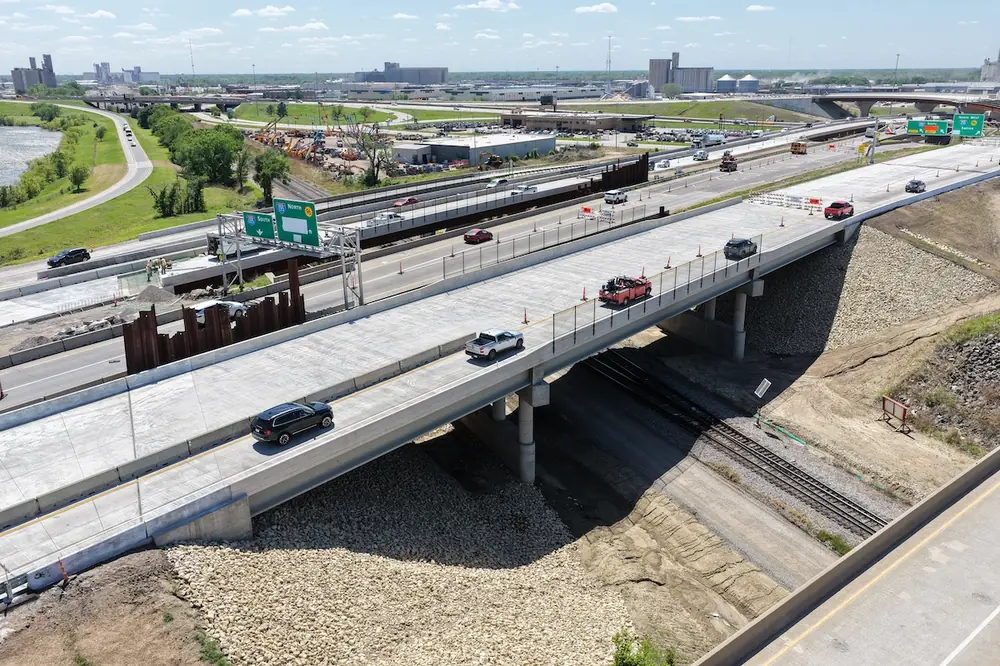
The team is now focused on Phase 2B, which began in February 2023 and is anticipated to be completed in spring 2028.
J.B. Wilson, KDOT Public Information Officer for the Wichita Metro, noted that this phase includes multiple improvements:

| Your local ASV dealer |
|---|
| CLM Equipment Co |
- A completed direct connection from northbound I-235 to eastbound K-96
- New ramp configurations for westbound K-96 traffic at I-135, including a recently opened connection to northbound I-135
- Construction of a new flyover from westbound K-96 to southbound I-135
- Widening of southbound I-135 south of K-96
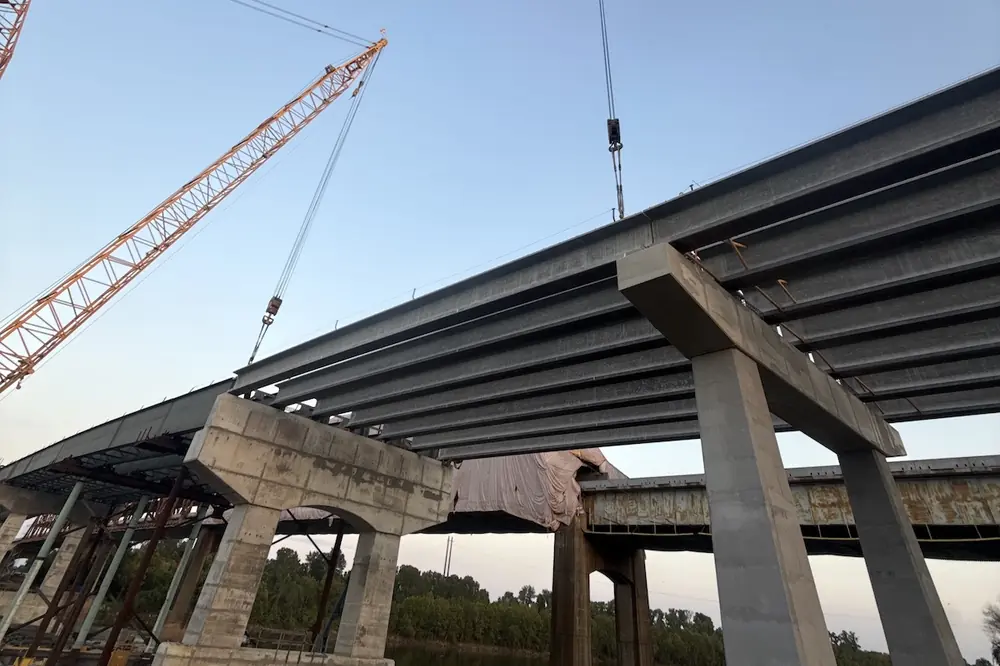
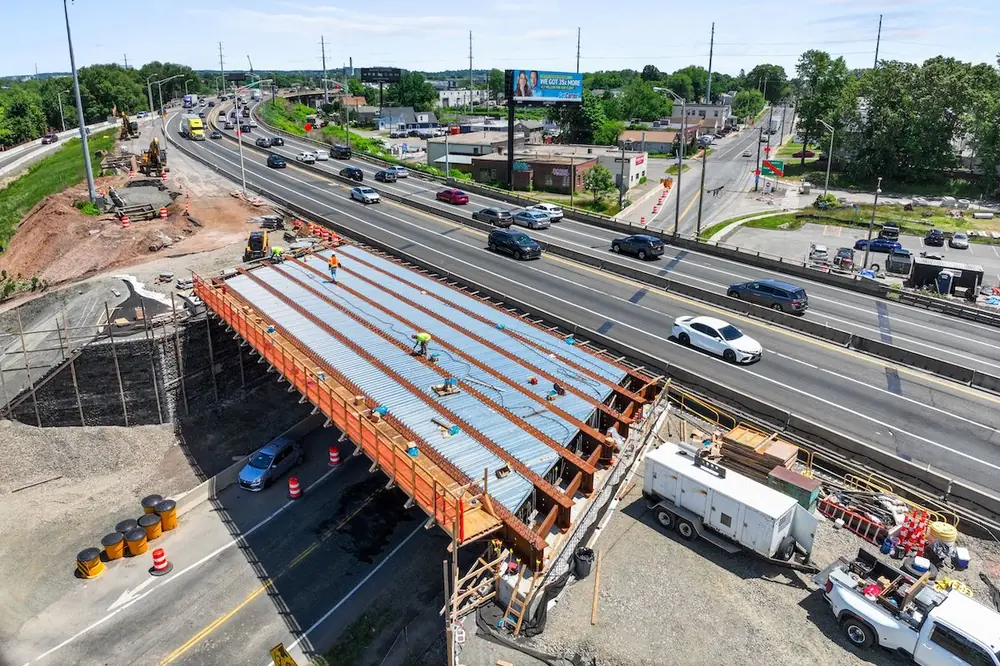
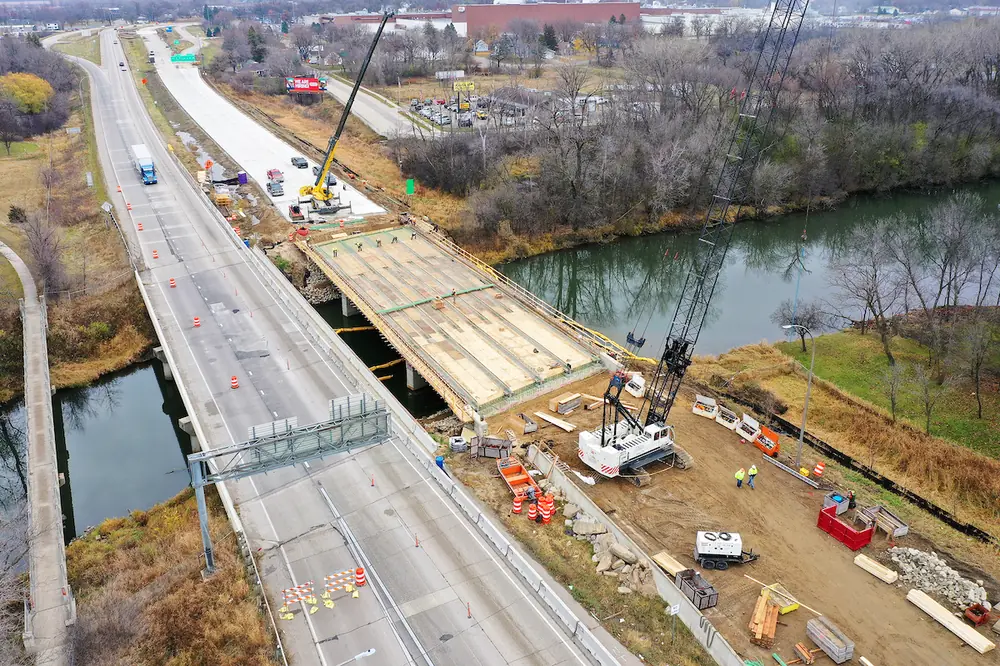
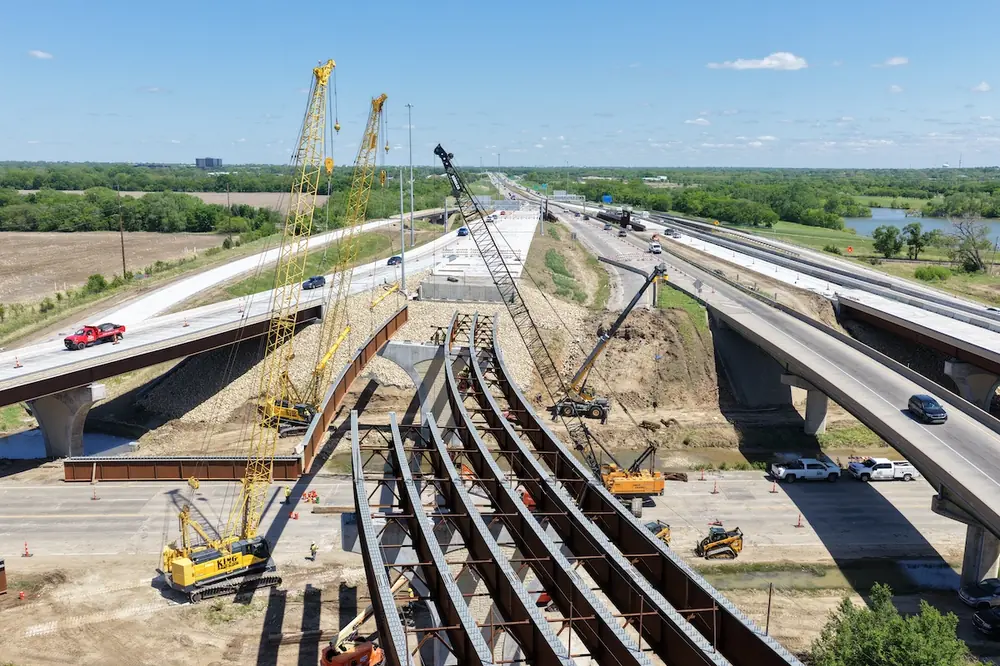
- Ongoing bridge work, including structures carrying eastbound K-96 over Hydraulic and the Union Pacific rail line
The new ramp configurations will be the key to improving traffic flow and increasing safety in the area.
“The former loop ramp from northbound I-135 to southbound I-235 created backups primarily during the evening peak period, when traffic was limited to a single lane,” Wilson said. “The new two-lane flyover is intended to improve traffic movement through that area.”
“The new two-lane flyover has been associated with reduced crashes at that location and has helped reduce congestion related to traffic backups,” he added.

| Your local NPK Construction Equipment Inc dealer |
|---|
| WPI |
Another benefit of replacing the loop ramps will be the direct connections intended to improve traffic flow through the interchange. These changes help reduce the need for short weaving maneuvers and increase overall capacity.
“The project will create more direct connections and longer merging areas,” Wilson said. “They’re designed to reduce conflict points and provide drivers with additional time to navigate the interchange.”
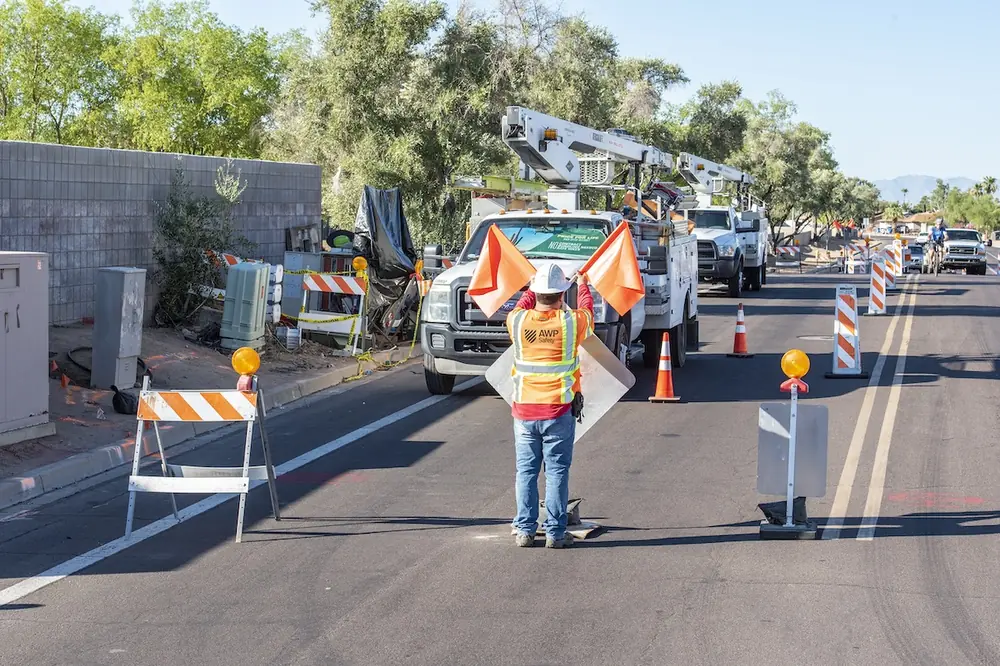
Although construction projects are intended to improve traffic flow in the long run, they often require lane closures or reduced access to the roads and bridges being upgraded, leading to increased congestion for drivers during construction. That balance between short-term pain and long-term gain is especially evident in Phase 2B of the Wichita North Junction project.
“The project has required periodic closures on I-135, I-235, and K-96 for activities such as bridge demolition and girder placement,” Wilson said.

| Your local Hitachi dealer |
|---|
| ASCO Equipment |
He added that maintaining traffic through the heavily traveled interchange during construction has been a primary challenge. It has required detailed sequencing of construction activities to keep traffic moving while work occurs near active traffic operations.
The team has taken steps to limit the disruption. Many of the larger closures have been scheduled during weekends, when traffic volumes are typically lower. In addition, detour routes have been implemented to maintain access through the area.
Another challenge Wilson cited is reconstructing the bridge structures while maintaining traffic flow.
“In some locations, bridge construction has been completed in stages, allowing traffic to shift onto newly built sections while work continues on the remaining portions,” he said.

| Your local Trimble Construction Division dealer |
|---|
| SITECH Tri-Rivers |
The challenge is made more severe since the teams are constructing the bridge structures over an active Union Pacific rail yard.
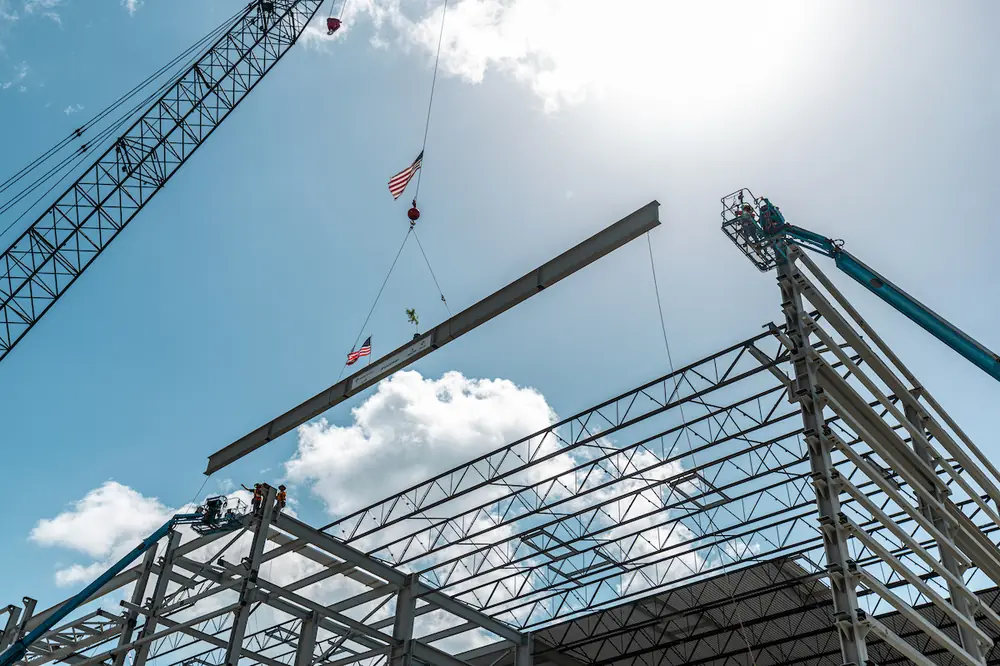
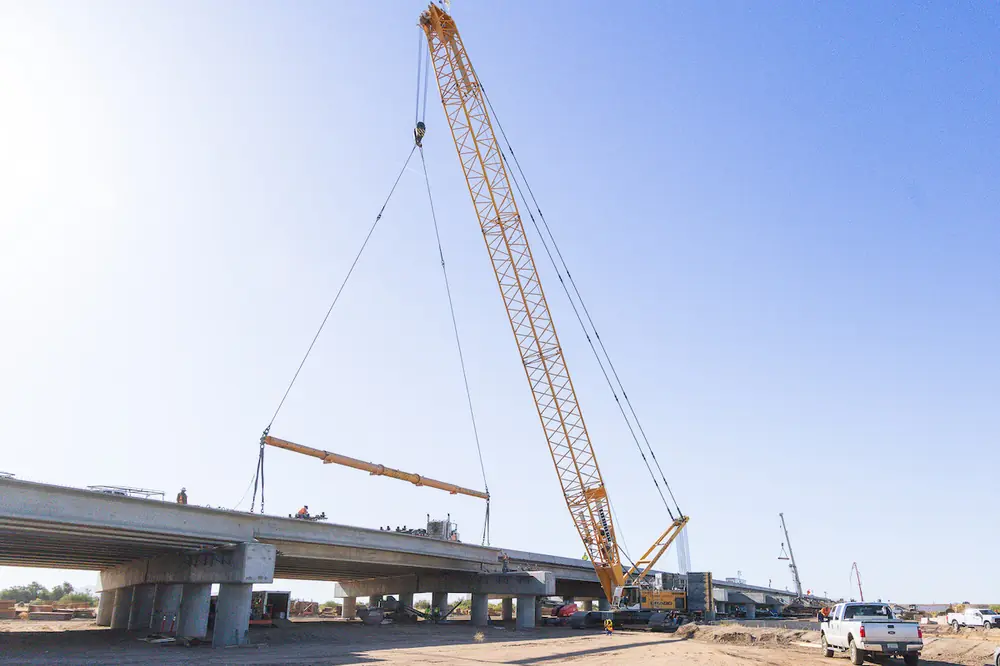
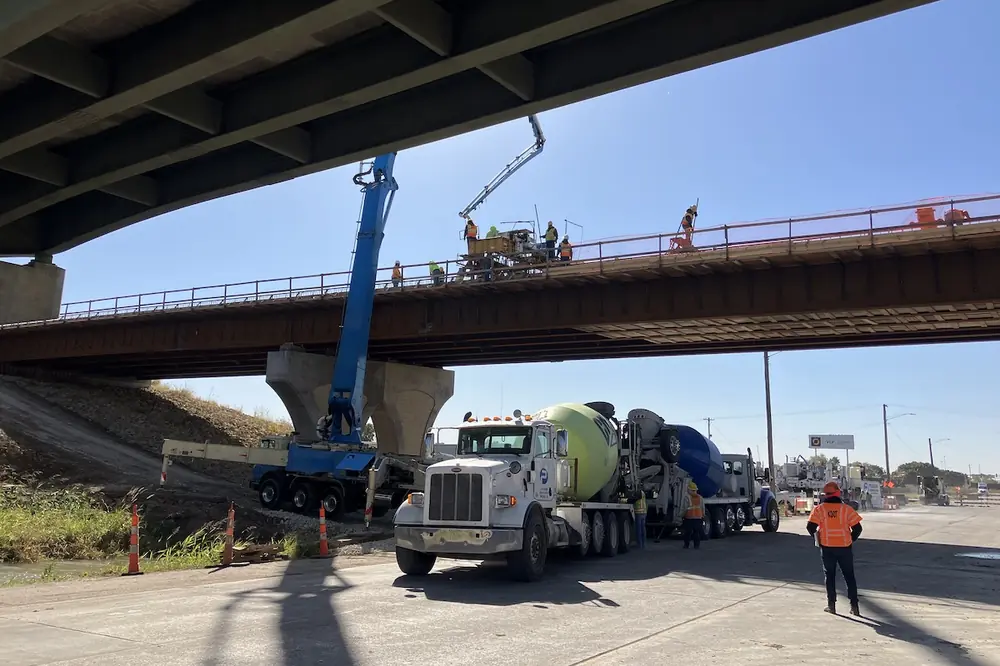
“This has required coordination with rail operations and the use of large-capacity cranes to place bridge girders while minimizing impacts to rail activity,” Wilson said.
“In several cases, rail operations and highway work must be coordinated so that activities such as track access or crane operations occur at the same time as scheduled roadway closures, allowing both systems to operate within the same construction windows,” he added.
Utility relocations, phased bridge construction, and maintaining access for multiple contractors working in overlapping areas have also required ongoing coordination among KDOT, the project team, local agencies, and rail partners.

| Your local Wirtgen America dealer |
|---|
| Kirby-Smith Machinery |
Moving and maintaining the large-scale equipment used in major highway construction efforts, such as this one, has also been a challenge.
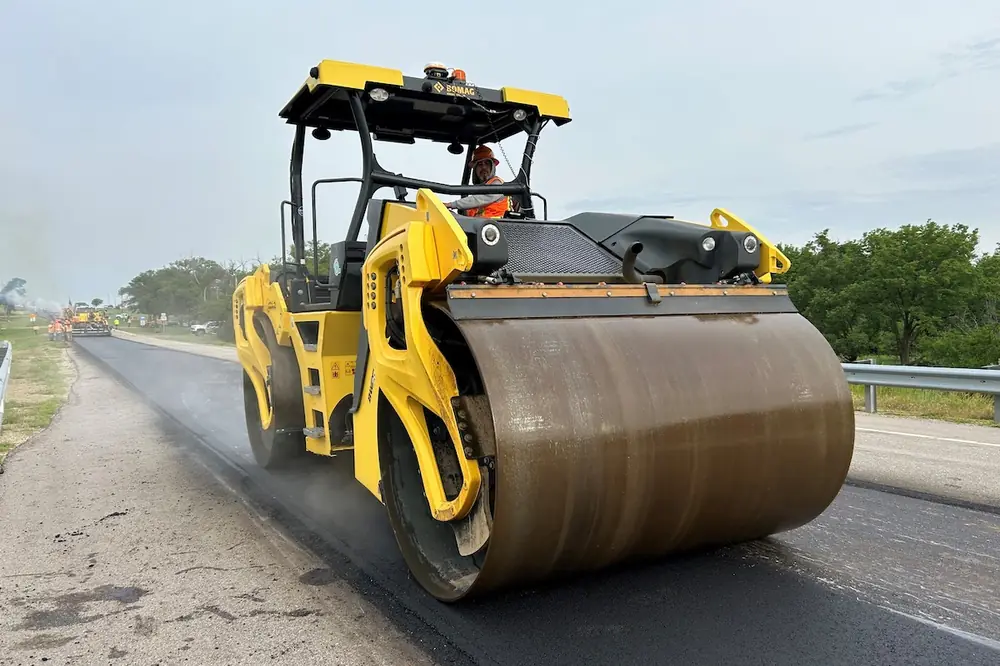
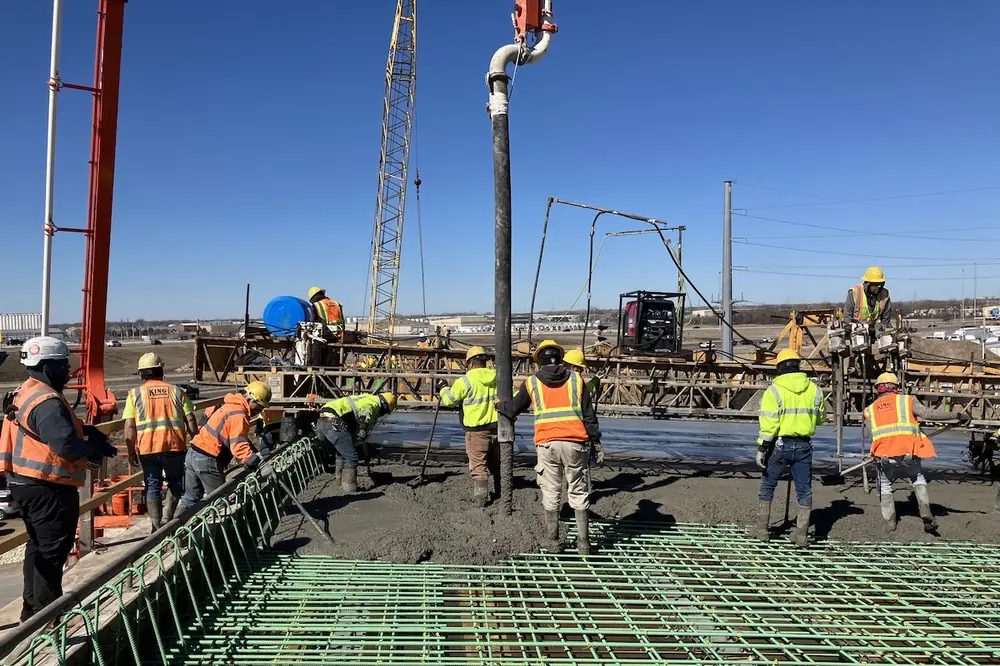
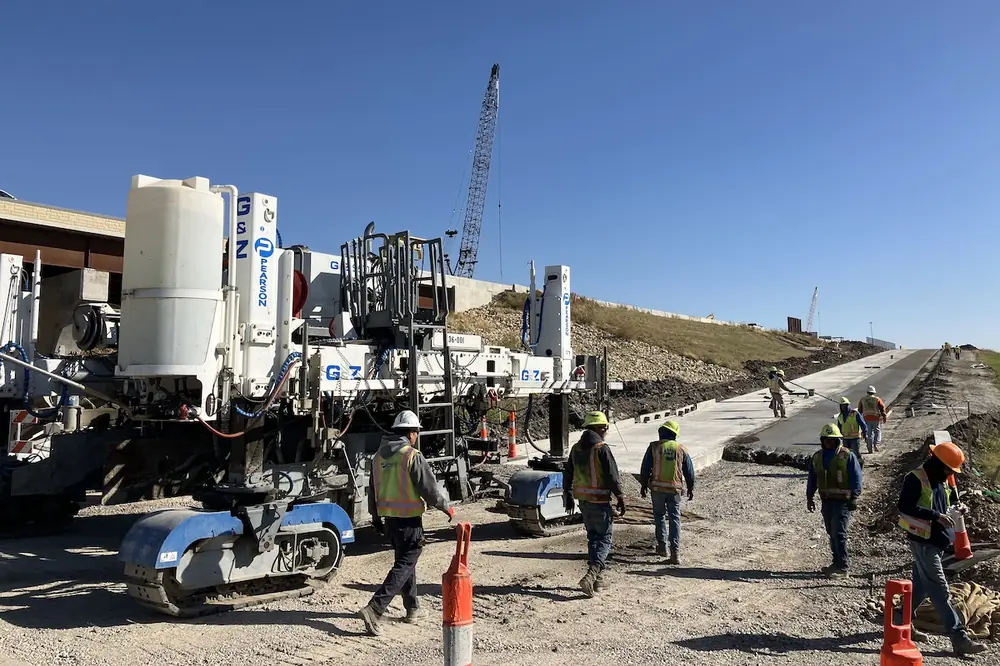
The concrete paving has been completed using specialized paving equipment, including placers and slipform pavers.
The joint venture comprises two Kansas-based firms. King Construction of Hesston has been around since 1954 and specializes in bridge construction. Bob Bergkamp Construction is a local team based in Wichita. Founded in 1955, the company is now in its third generation of family ownership and specializes in civil construction.
The two firms partnered on Phase 2A, and KDOT was pleased with their work.

| Your local Leica Geosystems Inc dealer |
|---|
| Laser Specialist inc |
“Based on that prior experience, they have demonstrated strong communication, which has been a consistent strength in coordinating project activities,” Wilson said.
Bergkamp Project Manager Jarret Gowdy said that the two firms have been a good match for the project.
“This project exemplifies what each of the contractors brings to the table, whether it’s grading operations, MSE wall construction, bridge construction, subgrade stabilization, cement treated base work, or overall general contractor abilities,” he said.
He added that their capabilities and the project's location made the team interested in pursuing it.

| Your local Yanmar dealer |
|---|
| CLM Equipment Co |
| WPI |
Bergkamp and King also partnered on Phase 2B. The joint venture has kept the project on schedule, despite a few challenges.
Project scheduling has been influenced by several factors, including weather conditions and coordination requirements.
“Periods of unseasonably wet weather limited opportunities to complete certain operations, resulting in some weekend closures being rescheduled,” Wilson said. “When this has occurred, specific operations have been rescheduled and work has been shifted into other available windows, including weekends where appropriate.”
Additional schedule adjustments have occurred to accommodate utility relocations and coordination with local agencies and railroad partners.

| Your local Case Construction Equipment Inc dealer |
|---|
| ASCO Equipment |
As of this writing, the project is also on budget. The construction budget for Phase 2B is approximately $141 million, significantly higher than the earlier phases. Phase 1 had a construction budget of $51 million, while Phase 2A came in at $36 million.
The federal government is providing 100 percent of the funding for Phase 2B. The project received a $21 million Better Utilizing Investments to Leverage Development (BUILD) grant. According to the U.S. Department of Transportation website, BUILD grants are for “surface transportation infrastructure projects with significant local or regional impact.”
When this phase is completed, it will build on previous improvements.
“Phase 2A addressed key congestion points, while Phase 2B expands those upgrades to additional movements within the interchange,” Wilson said.

| Your local Bomag Americas dealer |
|---|
| WPI |
Wichita-area drivers can expect to see improved traffic flow and safer roads ahead.
- Owner: Kansas Department of Transportation
- General Contractor: Bob Bergkamp Construction, Wichita, Kansas; King Construction, Hesston, Kansas
- Designer: Professional Engineering Consultants, P.A., Wichita, Kansas
- Engineer: HNTB, Kansas City, Missouri