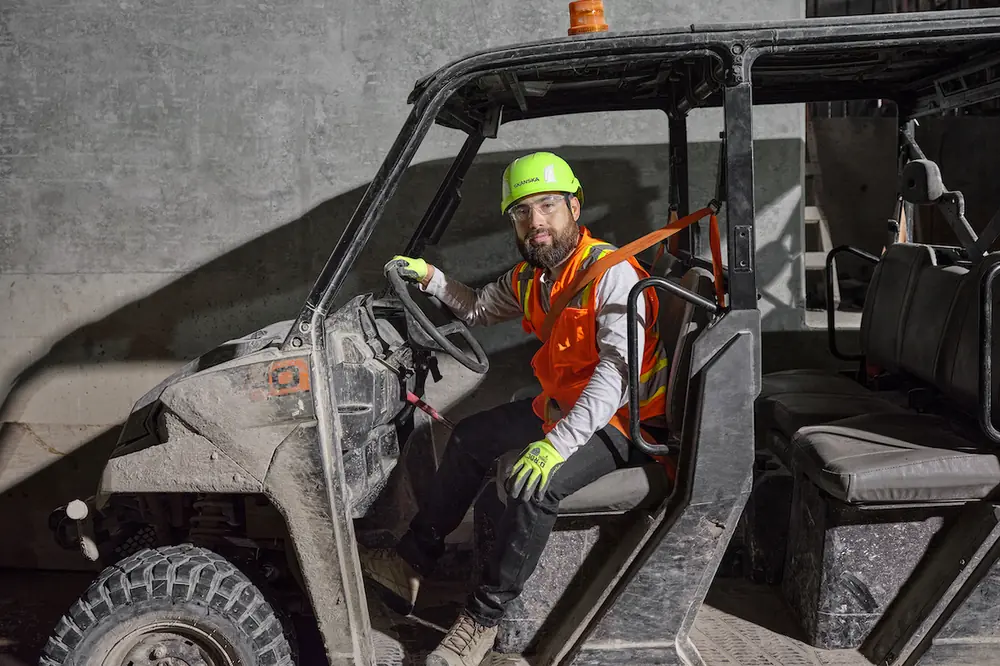

After more than a decade of planning, engineering, and construction beneath one of the busiest corridors in the country, the Los Angeles Metro Purple (D) Line Extension Section 1 is now open, marking a major milestone in the region’s push to expand transit capacity and reduce congestion.
The $2.3 billion project, delivered by a joint venture of Skanska, Traylor Brothers, and J.F. Shea Construction, extends heavy rail service along Wilshire Boulevard with three new underground stations at La Brea, Fairfax, and La Cienega. The long-awaited expansion is bringing new connectivity to one of the most densely developed urban corridors in the United States.
For the project team, the achievement represents not only the completion of a complex transit system, but also the culmination of years of work navigating challenging underground conditions, intense urban constraints, and evolving construction phases.
Constructing a major subway extension in Los Angeles required far more than traditional heavy civil work. From the outset, the project demanded careful planning to address the realities of building deep underground in a highly developed area.
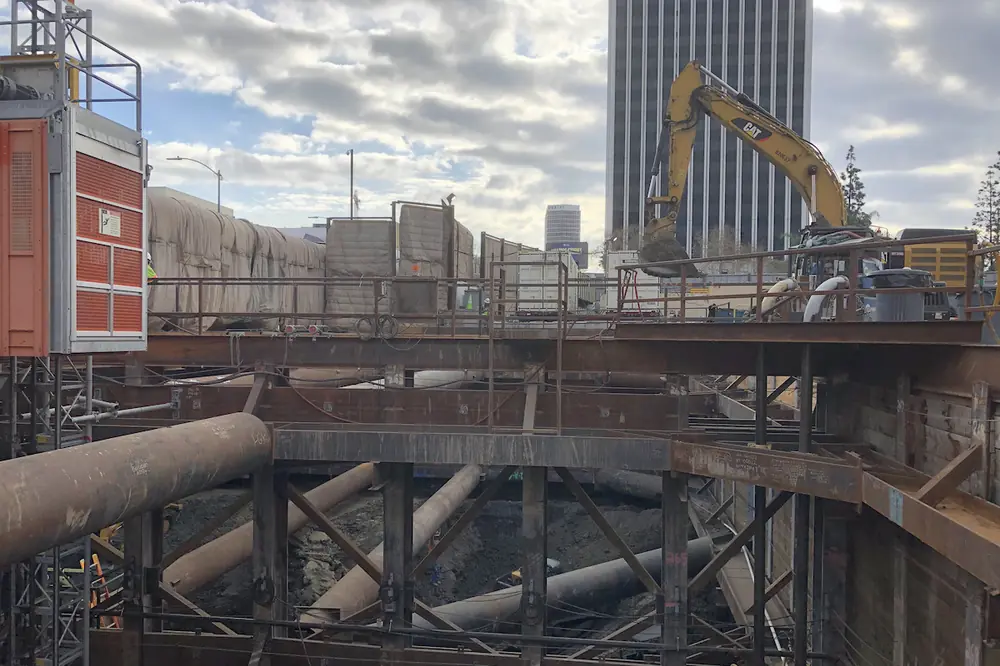
“One thing we’ve got to understand here in L.A., especially along Wilshire Boulevard, is that it’s an extremely densely populated area, and that in itself makes the job very tough,” said Geoffrey Bender, Project Executive of Operations at Skanska USA Civil West. “Any tunneling job or underground work already carries risk, but here, the logistics of getting materials and equipment in and out of tight construction zones made it even more challenging.”

| Your local Trimble dealer |
|---|
| WPI |
| Kirby-Smith Machinery |
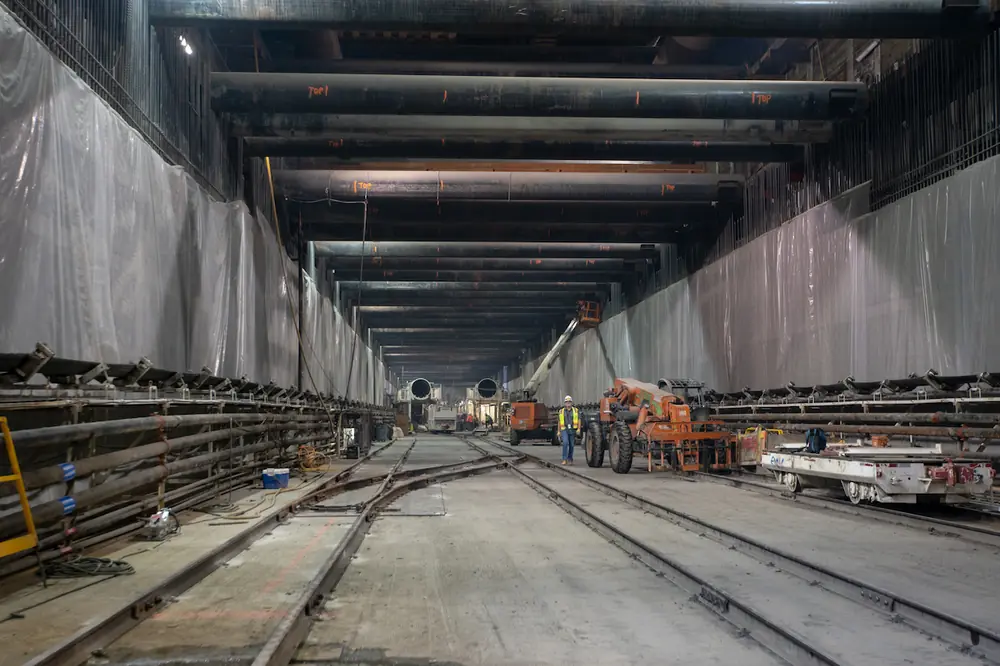
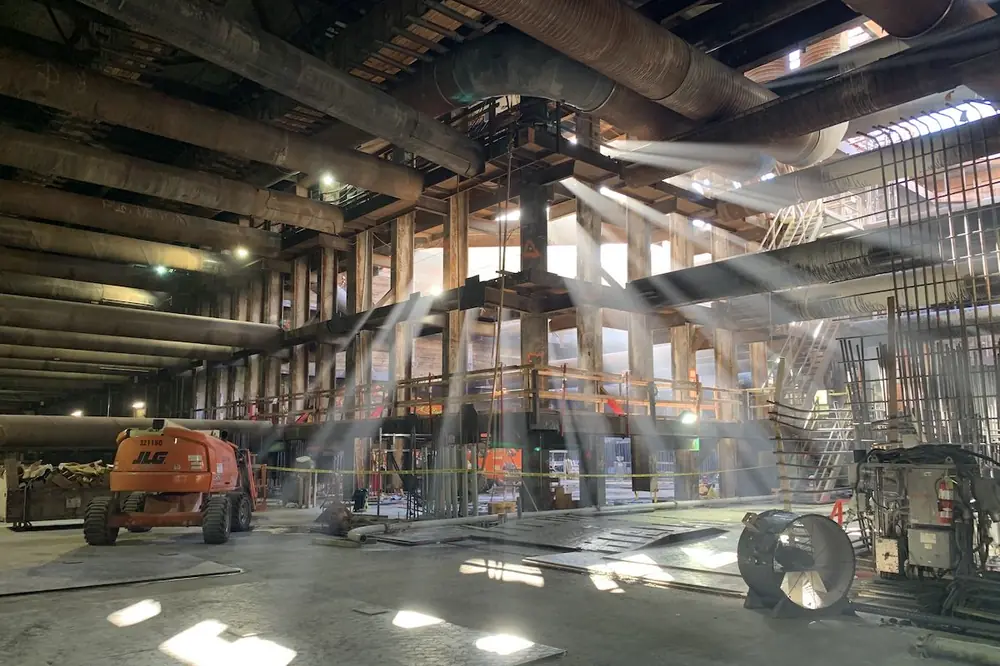
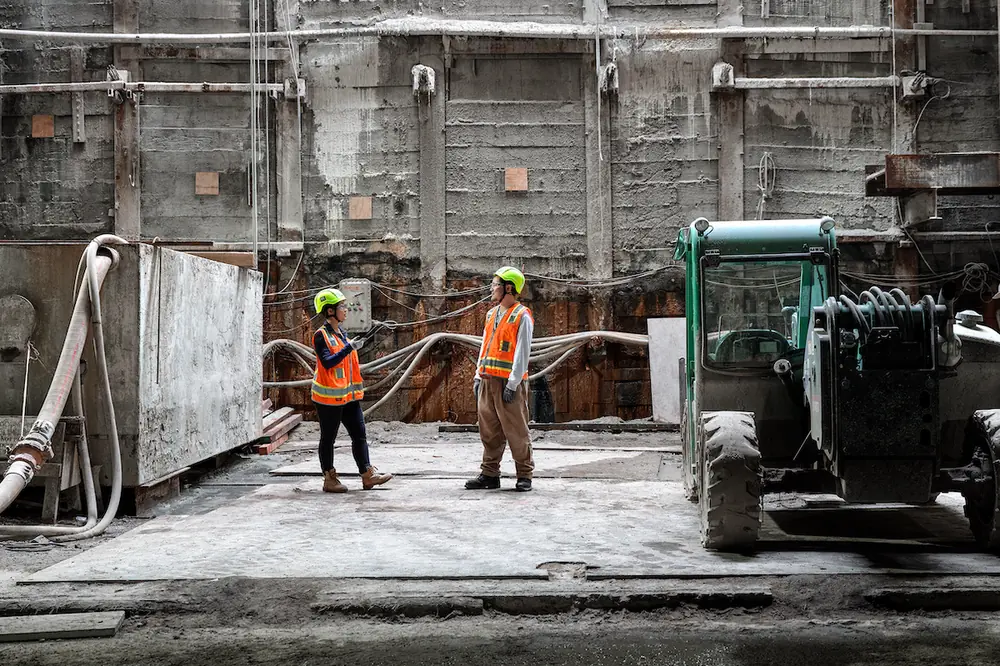
In addition to the urban density, the project required the construction of three underground stations reaching depths of more than 80 feet — conditions that introduced further complexity. At those depths, groundwater became a significant factor.
“We had a very intense dewatering system and program,” Bender said. “We were extracting water out of the ground before it could enter the station excavations, treating it on site, and then discharging it into the storm system rather than overloading the city’s sewer infrastructure.”
That approach not only supported construction operations but also aligned with sustainability goals by minimizing environmental impacts.
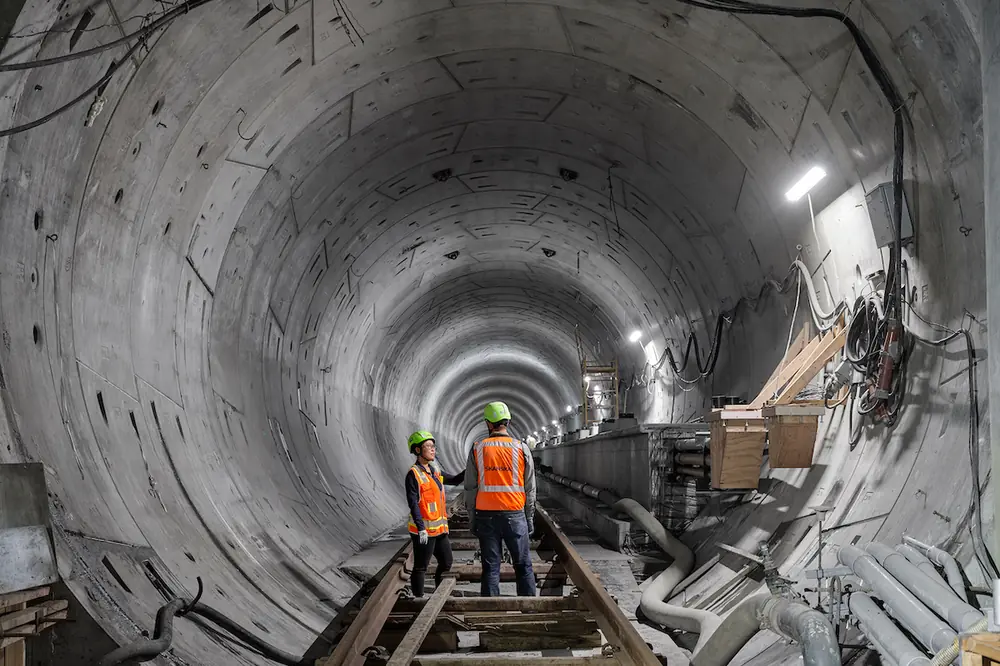
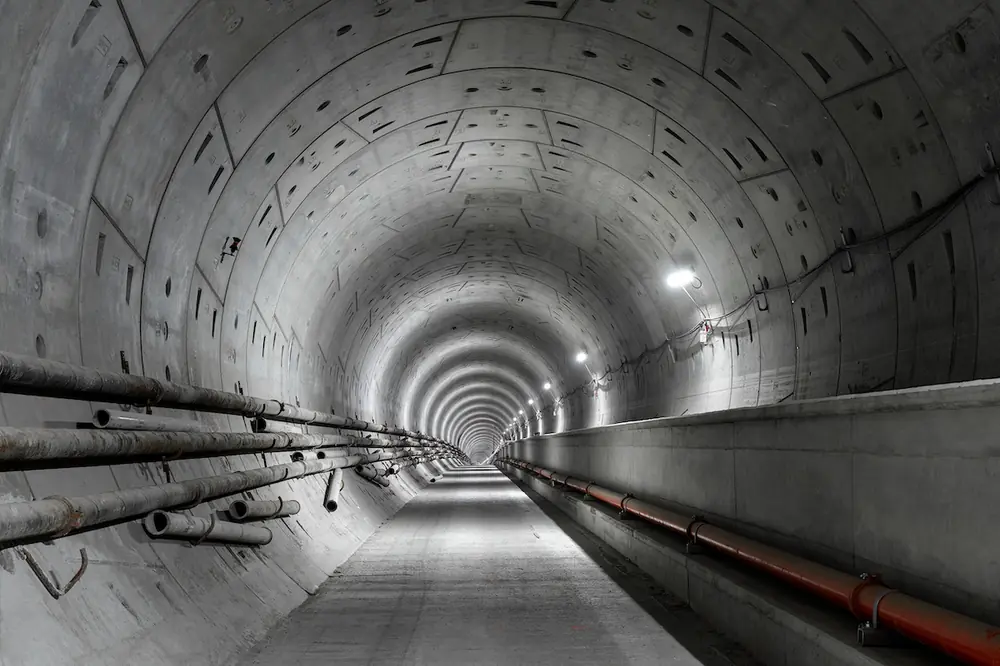
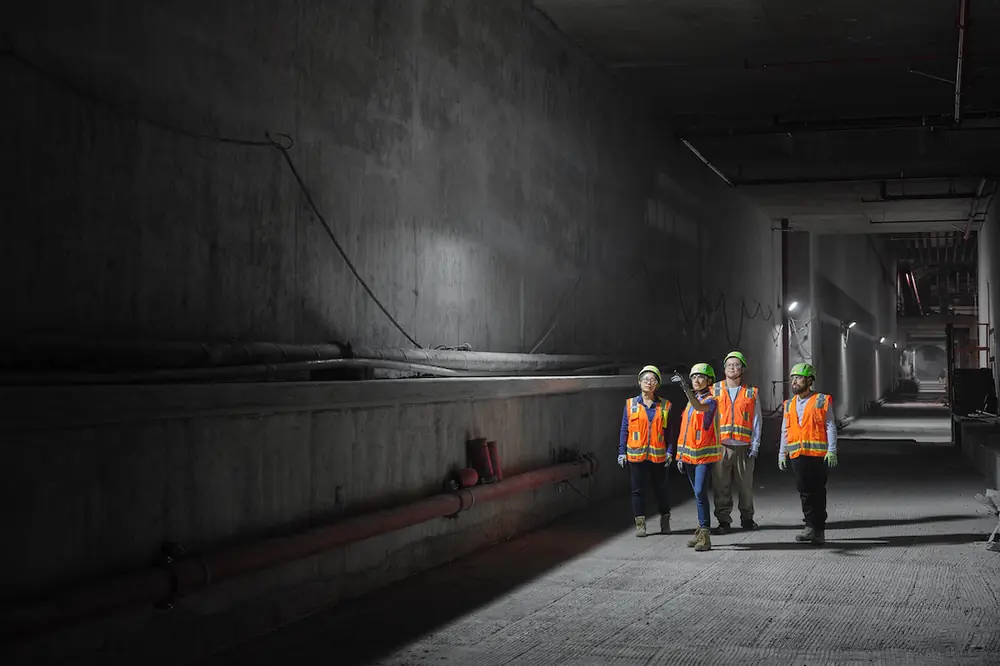
At the core of the project was the tunneling operation, which relied on two earth pressure balance tunnel boring machines (TBMs) to excavate the nearly 4-mile extension.

| Your local Komatsu America Corp dealer |
|---|
| WPI |
| Kirby-Smith Machinery |
Unlike conventional excavation methods, the TBMs were designed to maintain equilibrium with surrounding soil conditions, reducing the risk of settlement and protecting adjacent infrastructure.
“We used earth pressure balanced tunnel boring machines, which essentially apply pressure at the face of the machine equal to the pressure of the earth pushing back,” Bender said. “What we’re doing is fooling the ground into thinking nothing is happening.”
As the machines advanced, crews installed precast concrete rings behind the cutterhead, forming the structural lining of the tunnels. This continuous process allowed tunneling to progress while maintaining stability in the surrounding soil.
The sequencing of the tunneling work played a critical role in overall project delivery. Crews began by excavating the La Brea station, which served as the launch point for the TBMs. From there, the machines traveled east toward the existing Wilshire/Western station before being removed, transported back to La Brea, and relaunched westward to complete the remaining segment.

| Your local Gomaco dealer |
|---|
| Clark Machinery |
“The tunnel boring machines are always the critical path of the job,” Bender said. “That dictated the sequencing, what had to be built first, where we had to excavate, and how the work progressed across the corridor.”
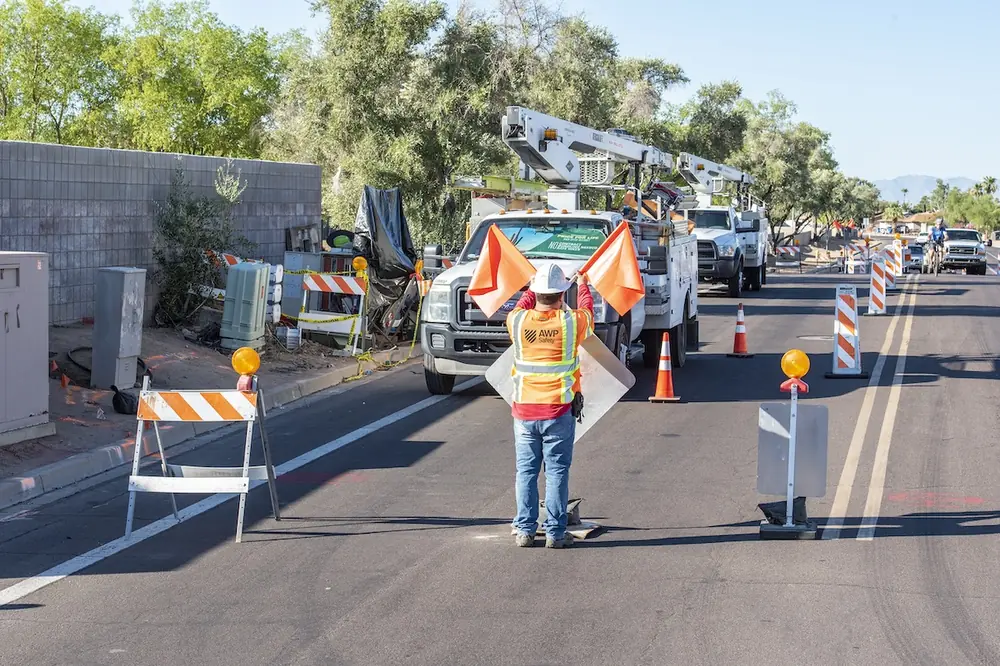
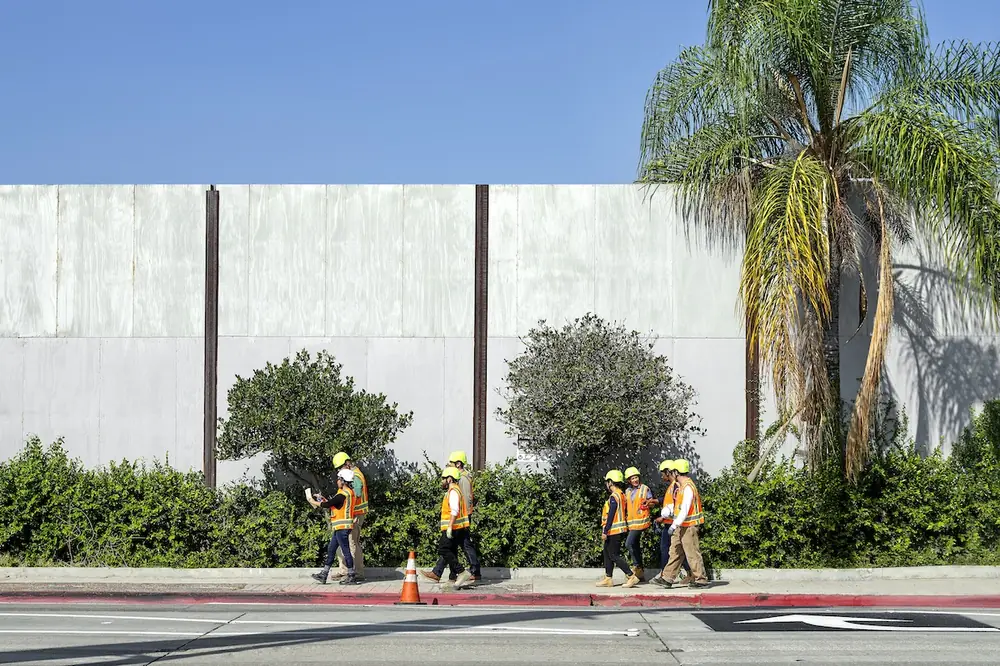
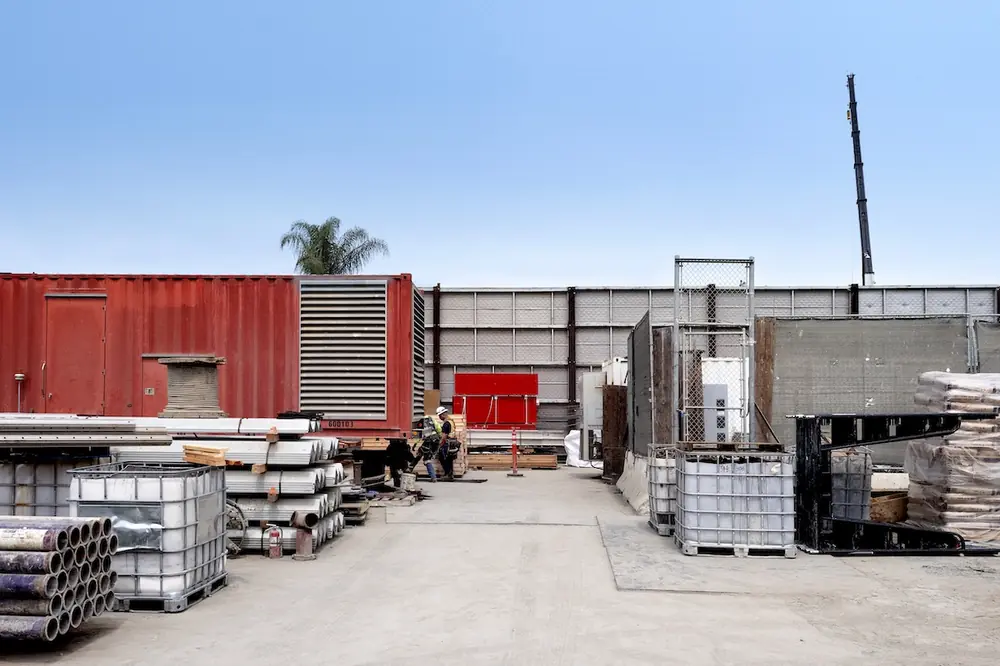
While tunneling progressed underground, construction activity above ground required equally careful coordination to maintain access for motorists, businesses, and pedestrians along Wilshire Boulevard.
Because extended closures of the corridor were not feasible, the team developed a phased approach that allowed work to proceed while minimizing disruption.
“Any type of extended closure of Wilshire Boulevard was highly frowned upon,” Bender said. “So even major operations like decking were limited to weekends, while weekday traffic was allowed to move largely unimpeded.”
| Your local Hitachi dealer |
|---|
| ASCO Equipment |
Lane reductions were used strategically, typically reducing traffic from three lanes in each direction to two while work was underway. At the same time, maintaining pedestrian access remained a priority, with clearly marked detours and ADA-compliant pathways in place throughout construction.
Behind the scenes, the coordination effort extended to a wide range of stakeholders, including utility providers, city agencies, and regulatory bodies.
“There were constant discussions with utilities and city departments about how to relocate infrastructure while minimizing disruptions,” Bender said. “It required a tremendous amount of engineering and coordination to make sure everything stayed on track.”
Even temporary road closures required formal approval, underscoring the importance of the corridor to the region.

| Your local Wirtgen America dealer |
|---|
| Kirby-Smith Machinery |
“We had to go before the Los Angeles Bureau of Public Works to get permission for weekend closures,” Bender said. “That shows how critical Wilshire Boulevard is to the city.”
Beyond excavation and structural work, the project also required the integration of sophisticated rail systems, including track, power, communications, and train control.
To manage this complexity, the joint venture relied on a network of specialized subcontractors, each responsible for specific components of the system.
Rail installation was performed using low vibration track blocks, an alternative to traditional embedded track systems designed to reduce noise and vibration in urban environments.

| Your local Yanmar dealer |
|---|
| CLM Equipment Co |
| WPI |
“That was one of the innovations on the project, and it helps improve performance in a dense urban setting,” Bender said.
Other subcontractors handled electrification, communications, and train control systems, working in parallel to ensure seamless integration with the completed tunnels and stations.
This layered approach required careful coordination among multiple disciplines, with the joint venture overseeing the process to keep all elements aligned.
Working beneath Los Angeles presented a range of geotechnical challenges, including variable soil conditions, groundwater, and the presence of naturally occurring gases.

| Your local Hitachi dealer |
|---|
| CLM Equipment Co |
To address these risks, the team implemented a comprehensive monitoring system designed to track ground movement, structural performance, and environmental conditions in real time.
“We had a robust monitoring system in place, with thresholds that would trigger a stop in excavation if conditions changed,” Bender said.
That system proved essential in maintaining safety throughout construction, particularly in areas where conditions were less predictable.
The project also encountered tar sands, which introduced additional hazards due to the presence of methane and hydrogen sulfide gases.

| Your local Wirtgen America dealer |
|---|
| Kirby-Smith Machinery |
“Those gases can be extremely dangerous, so we had continuous gas monitoring throughout the tunneling and station excavation operations,” Bender said.
By combining monitoring technology with adaptive construction methods, the team was able to respond quickly to changing conditions and maintain progress.
Although the project was first announced in 2014, construction did not begin immediately, as the design-build process required several years of planning and design work before field activities commenced.
“There were about two to three years of design before we actually broke ground,” Bender said. “Even though I’ve been here for about 10 years, every couple of years the scope would change. You might be installing piles, then decking Wilshire Boulevard, then excavating stations, then pouring mass concrete. It was constantly shifting.”

| Your local Case Construction Equipment Inc dealer |
|---|
| ASCO Equipment |
That progression reflects the complexity of large-scale transit construction, where different components must be completed in sequence while maintaining overall momentum.
Prior to the launch of the D Line Extension Section 1, Bender said the team completed testing and began running trains through the system as part of pre-revenue operations. This was the final stage before the extension opened to the public, bringing new transit options to communities along the corridor.
Looking back, Bender noted that the project offers valuable lessons for future large-scale transit initiatives, particularly in the areas of coordination, planning, and adaptability.
“Early utility coordination is critical. It can make or break a project,” he said. “And integrated systems planning from the very beginning is essential to keep everything moving in the same direction.”

| Your local ASV dealer |
|---|
| CLM Equipment Co |
He also emphasized the importance of continuous monitoring and flexibility when working in challenging subsurface conditions.
“Adaptive construction methods and geotechnical monitoring were key to managing the risks safely,” Bender said.
Equally important was maintaining strong relationships with the community and stakeholders throughout the project.
“Community access, environmental responsibility, and communication with stakeholders are all critical,” Bender said. “Everyone has to be working toward the same goal.”

| Your local Hitachi dealer |
|---|
| CLM Equipment Co |
The opening of the D Line Extension Section 1 marks a significant step forward for Los Angeles’ transit system, improving access and connectivity along one of the city’s busiest corridors.
For the project team, the completion represents more than just the end of a construction effort; it is the realization of a long-term vision to expand transit capacity and support the region’s continued growth.
After years of work beneath the surface, the results have emerged above ground, delivering lasting benefits for commuters, businesses, and the broader community.
- Owner: LA Metro
- Contractor: Skanska, Stockholm, Sweden; Traylor Brothers, Evansville, Indiana; and J.F. Shea, Walnut, California
- Subcontractors (Primary): JNA Builders, Los Angeles, California (station canopies and structural steel); G&F Concrete Cutting, Santa Fe Springs, California (sawcutting); Dakota Communications, Los Angeles, California (community relations); EC Applications, Anaheim, California (waterproofing); GECTWO, Gardena, California (electrical); Marvella Steel Placers, Signal Hill, California (rebar)