
Doing more with less is important for maximizing efficiency and profits. What would happen to the bottom line if you could replace multiple machines with just one?
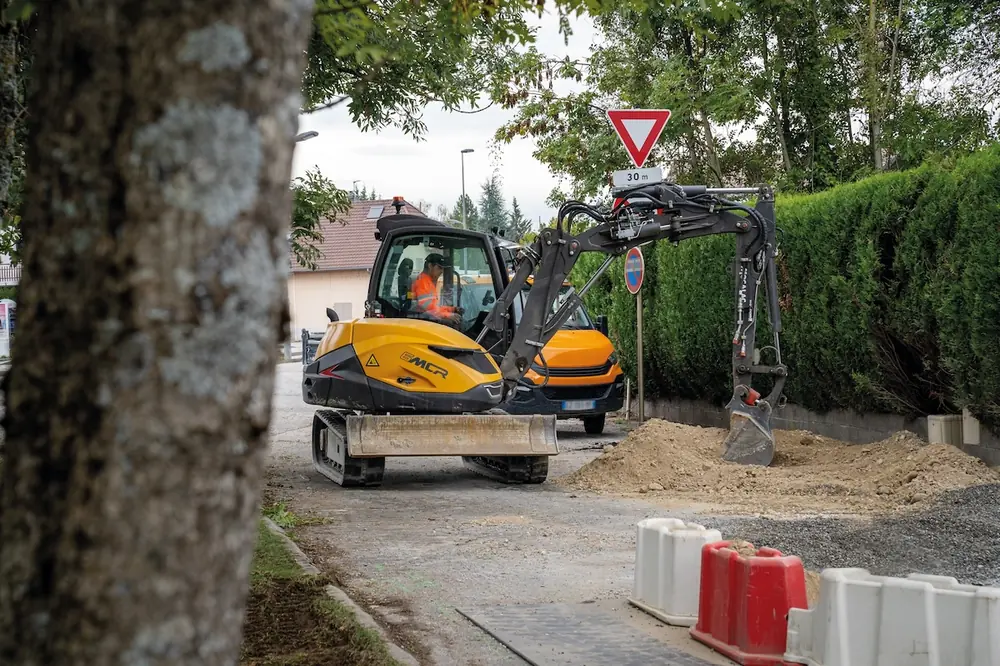
With crawler skid excavators, contractors can harness the speed and agility of a compact track loader (CTL), the maneuverability and digging capabilities of a mini excavator, and the reach of a telehandler in a single machine.
Here’s an overview of the key features of crawler skid excavators that provide mobility, versatility, and speed to get the job done with limited equipment and crew requirements.
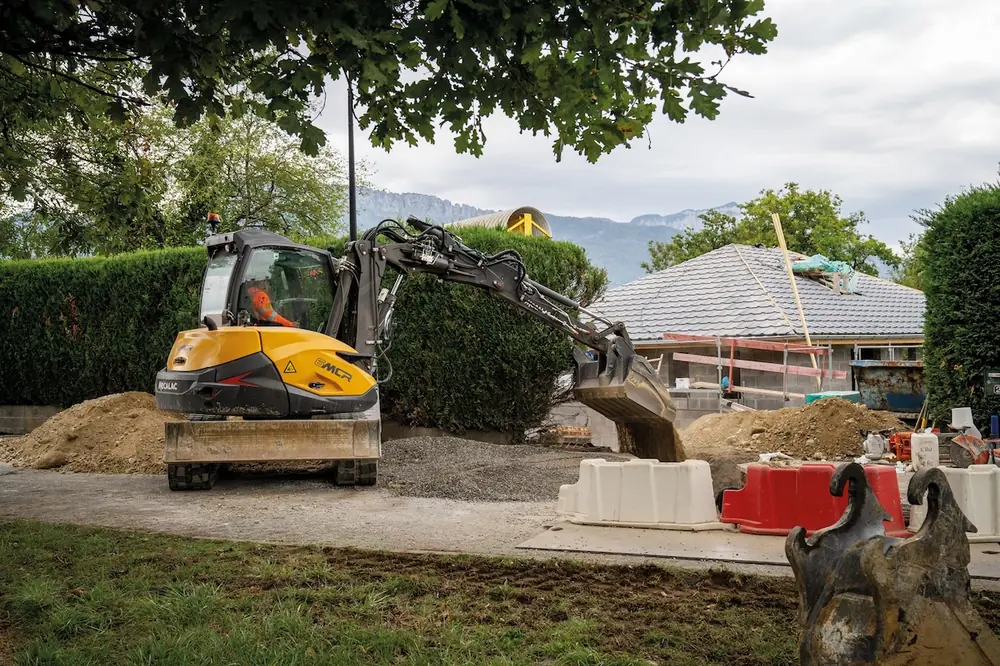
Boom design is key to versatility. The mono-boom design is very common and provides ample power for digging and other applications, but has limited range of motion due to its rigid nature.
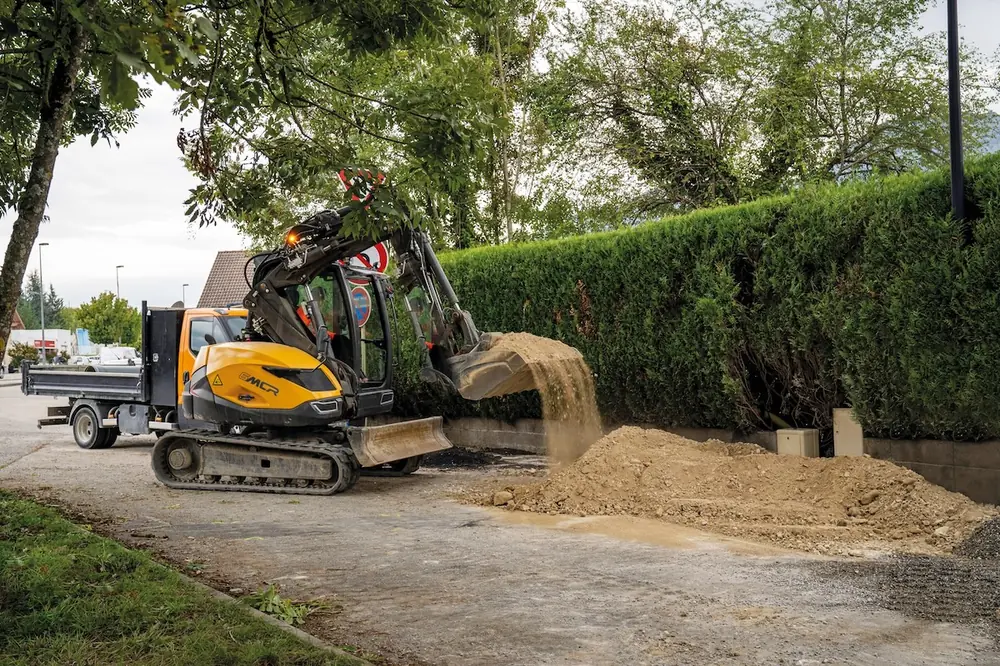
When space is at a premium, a side-mounted, two-piece boom can provide greater mobility. This design features an articulated arm with five joints, including one between the second and third sections, that allow for limited side-to-side motion. Bending or straightening each joint in sequence results in a boom that can extend almost straight in any direction or fold back in on itself for maximum compactness.

| Your local ASV dealer |
|---|
| CLM Equipment Co |
What does this look like in practice? Say a mono-boom excavator and a similar-sized crawler skid excavator with a side-mounted, two-piece boom are both tasked with digging a trench. Both machines start their trench at a similar distance. However, as the bucket works back toward the machine, the mono-boom excavator must stop and reposition while the crawler skid excavator is able to continue digging — until the bucket is under the machine if necessary. By working from a single position, contractors save time and effort.
The crawler skid excavator’s two-piece boom also needs less space to operate, limiting the need for large work crews with handheld equipment or fleets of small equipment.
Working against the blade with a mono boom excavator, for example, requires laying the main part of the boom almost straight out with the dipper stick and bucket folded under. This position nearly doubles the overall length of the machine and requires a lot of clearance around the excavator for working or swinging. With a side-mounted, two-part boom, the bucket can be positioned directly in front of the blade or along the tracks for a compact, 360-degree footprint that is only slightly wider than the body of the machine.
A variety of tools for applications ranging from material handling to trenching to demolition allow operators to increase the machine’s versatility.

| Your local Iowa Mold Tooling Co Inc dealer |
|---|
| Nichols Fleet Equipment |
By angling the first part of the boom back along the cab, operators create a compact profile that maximizes lifting power and increases overall stability. That allows for the use of larger skid steer buckets up to 0.98 cubic yards and enables the crawler skid excavator to operate as a CTL or skid steer as well as an excavator.
The boom design also allows for the loader bucket to be braced against the blade for applications such as grading and ground leveling. Doing this stabilizes the bucket, distributing the forces to the frame of the crawler skid excavator and reducing stress on the boom to prolong component life.
Operators can also use a set of forks for material handling. Unlike mono-boom excavators, the two-part boom provides a greater range of motion while maintaining level forks when retrieving pipe, stone, or other materials, then quickly and safely transporting them to the area where workers need them. This eliminates any need for wheelbarrow brigades, manually loading or unloading pallets, or other time- and labor-intensive methods.
Crawler skid excavators not only have the potential to reduce the need for multiple machines onsite — whether that’s excavators, telehandlers, backhoes, or CTLs — they also lead to game-changing productivity.
| Your local Hitachi dealer |
|---|
| ASCO Equipment |
Manny Mendez is National Sales and Service Manager for Mecalac North America.