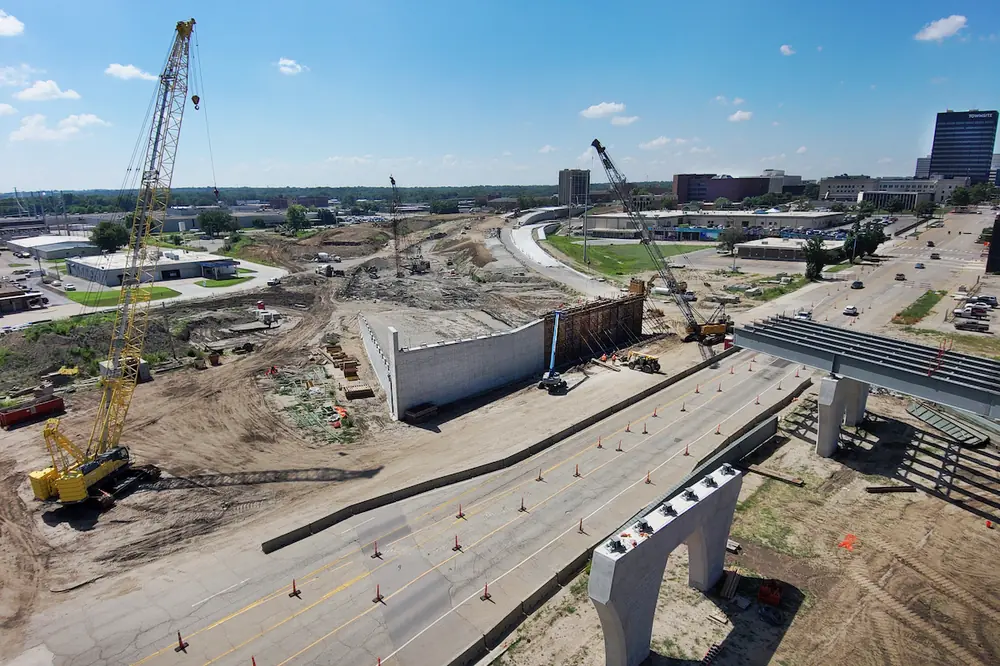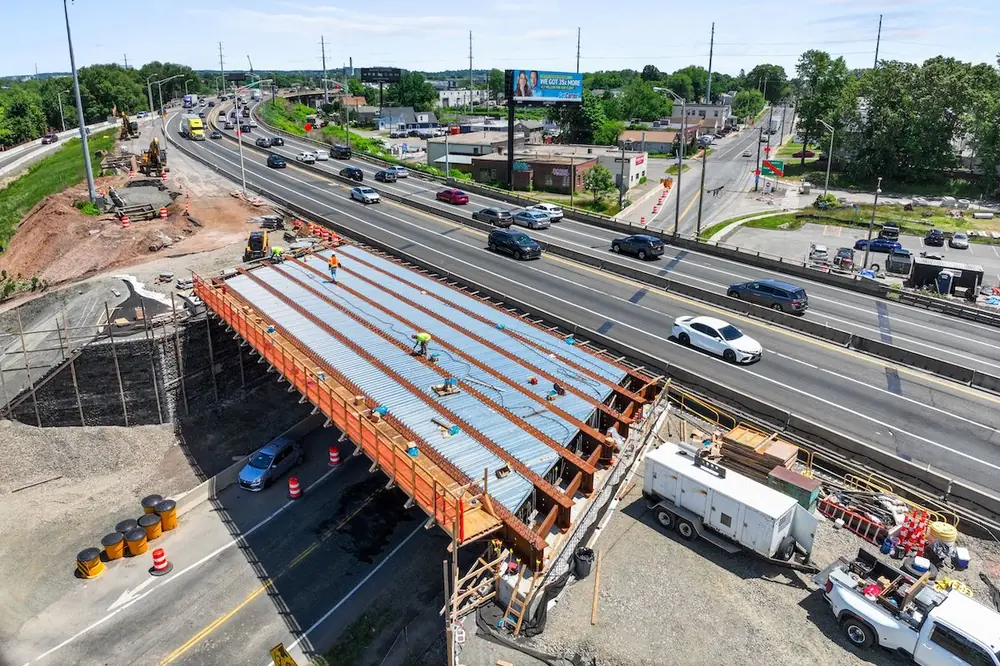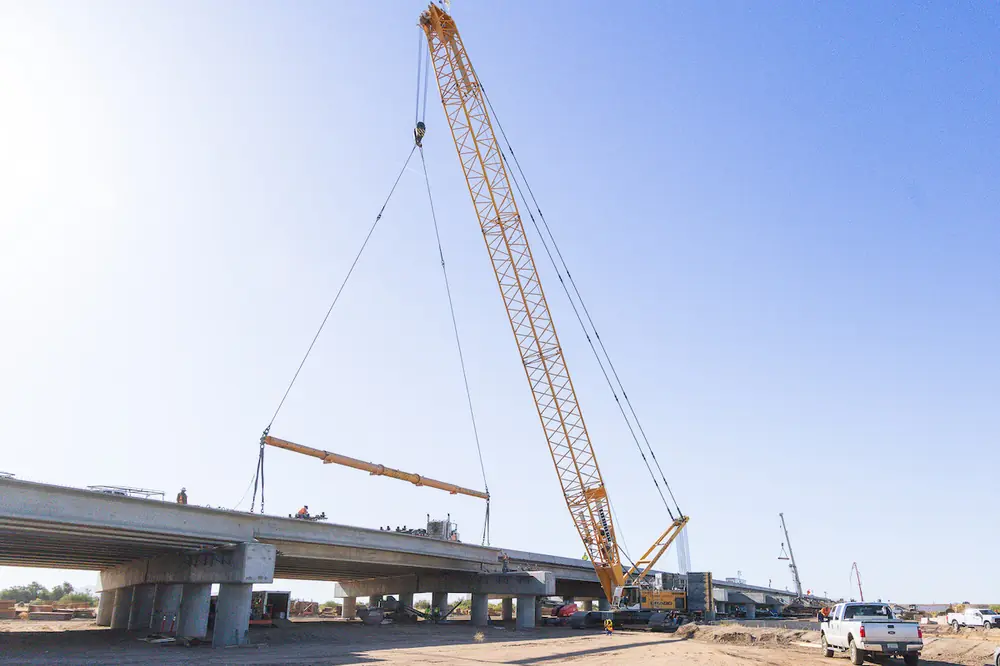

Today's infrastructure projects are not just larger. They are more constrained, more technical, and less forgiving. Work often takes place in tighter footprints, with limited access, more complex reinforcement, and stricter safety controls, all of which place greater demands on sequencing and how work is carried out.
In this environment, productivity gains are no longer coming from a single breakthrough. They are the result of coordinated improvements across equipment, planning, and field operations.
Long viewed as a temporary support system, formwork is playing a more strategic role in how projects are planned and delivered. Advances in modular systems, pre-assembly, and integrated access are helping contractors standardize workflows, keep crews productive, and maintain reliable cycle times, even in demanding conditions.
A recent deep-shaft project in Rhode Island illustrates how these advances are being applied on job sites.
The Narragansett Bay Commission's Phase III Combined Sewer Overflow (CSO) Program is one of the most ambitious environmental infrastructure projects in New England. At its heart lies the Pawtucket Tunnel, a 2.2-mile-long, 30-foot-diameter underground storage system with capacity equal to 92 Olympic-sized swimming pools. When complete, the tunnel will help prevent combined sewer overflows into Narragansett Bay during storm events, improve water quality, and expand regional sewer capacity.

| Your local Bomag Americas dealer |
|---|
| WPI |
At the center of this phase is a deep rock tunnel located roughly 125 feet below the surface.
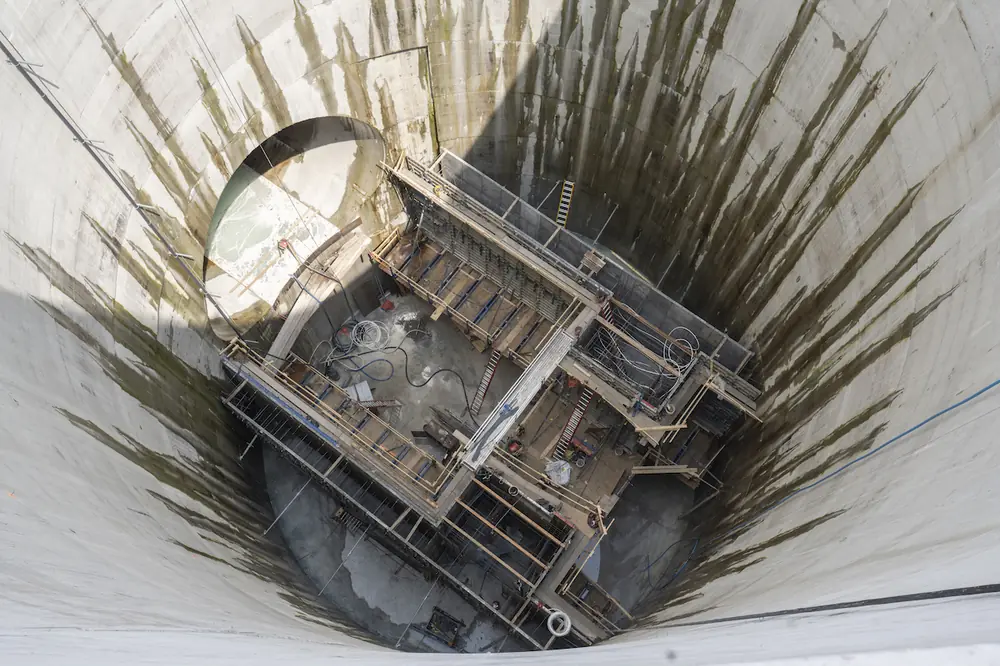
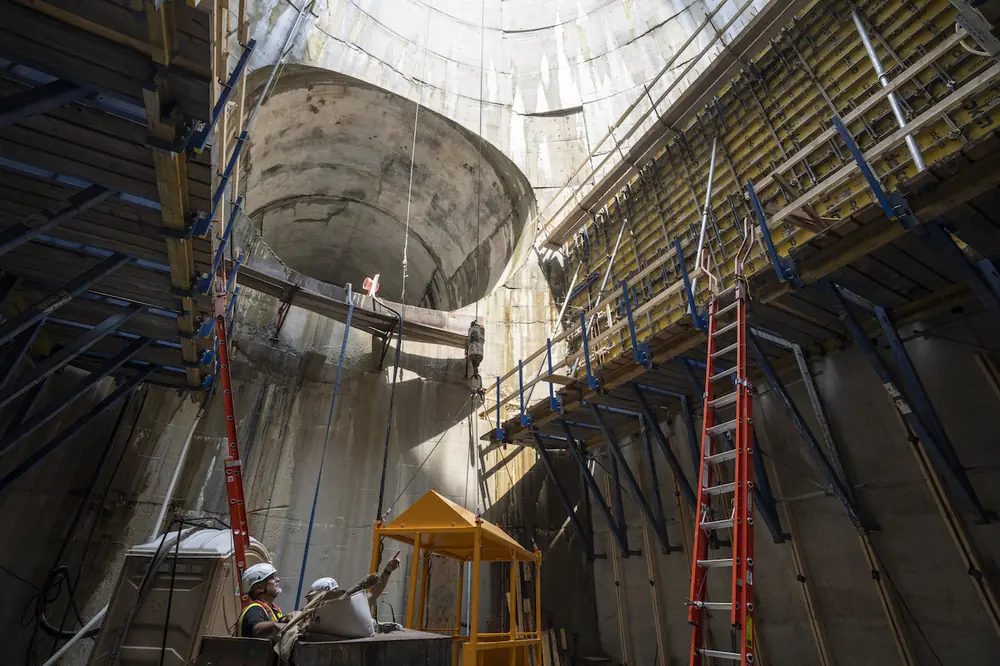
To facilitate this tunnel, the project team needed to construct three deep vertical shafts: an elevator shaft and pipe support shaft, each 115 feet deep, along with a screening and overflow shaft reaching 140 feet below grade to intercept storm-driven flows and direct them into the tunnel system.
Tight urban conditions with limited staging and restricted crane access made material handling and sequencing difficult from the start. As work moved deeper, reinforcement became denser and more complex. At the same time, the height of the pours generated significant lateral concrete pressures that had to be carefully managed.
Hart Engineering needed a formwork system capable of handling one- and two-sided walls while resisting the high pour pressures associated with deep, heavily reinforced sections. The system also had to support safe vertical access and accommodate complex reinforcement layouts and transitions between shaft sections, all while maintaining one-week cycle times more than 100 feet below grade.

| Your local Trimble dealer |
|---|
| Kirby-Smith Machinery |
| WPI |
Traditional forming methods would have required more customization and additional setup time, making it difficult to maintain the project schedule.
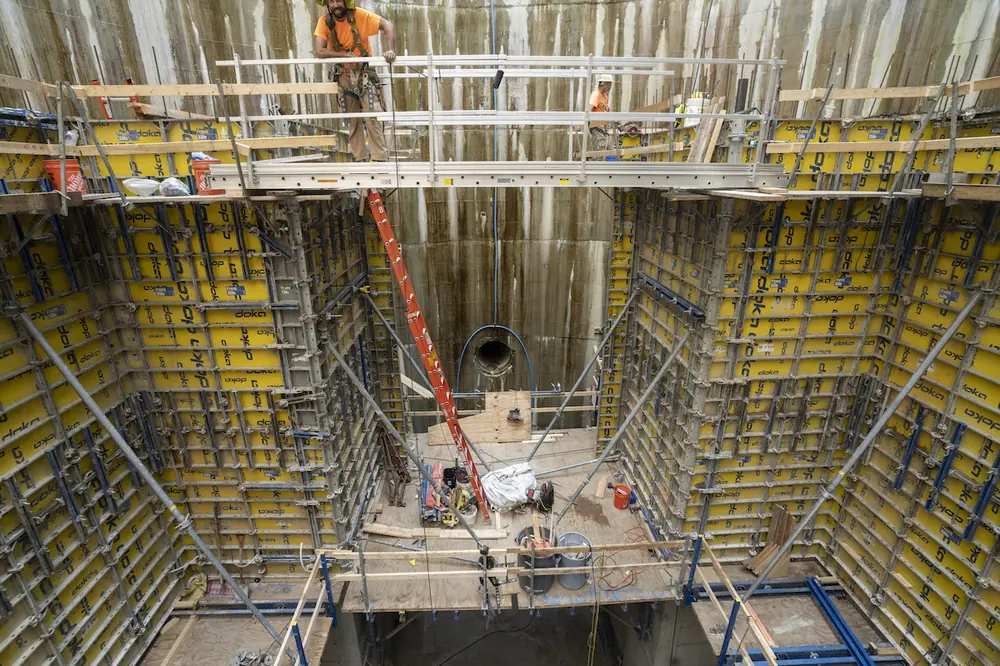
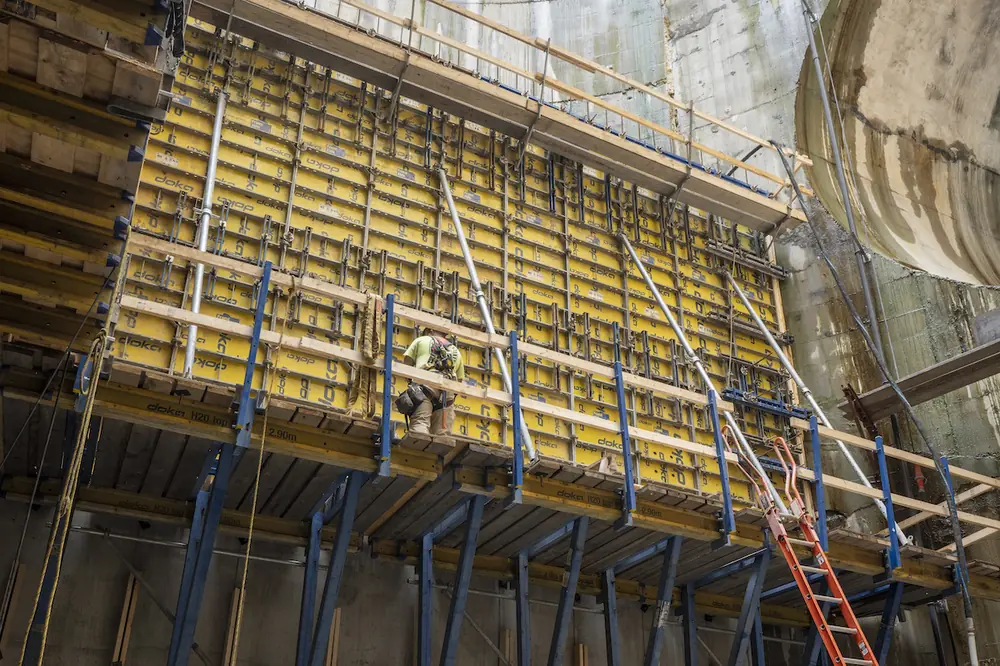
Doka Frami Xlife handset panels were used in the tighter shaft sections, where crews needed to adapt quickly to changing wall configurations in confined working areas. The lightweight system could be moved and adjusted without crane support, helping maintain productivity in sections where limited access and shifting geometry would typically slow progress.
For larger shaft diameters and transition zones, Hart Engineering used Doka Top 50 timber-beam formwork to manage the higher concrete pressures from deep pours and heavy reinforcement. The system combined high load capacity with near-custom flexibility, helping maintain alignment through complex geometries while reducing the need for extensive custom forming and redesign.
For vertical access, Doka MF240 climbing platforms provided fully enclosed working decks and perimeter protection as the shafts progressed. The platforms moved with each lift, eliminating the need to rebuild access and protection systems at every stage, thereby reducing downtime between pours and ensuring safety as work advanced.

| Your local Wirtgen America dealer |
|---|
| Kirby-Smith Machinery |
By standardizing the forming approach across three shaft configurations, crews were able to carry the same setup from one phase to the next, eliminating the need for field adjustments and helping keep the project on schedule.
Early coordination between Hart Engineering and Doka was a key factor in the project’s success. Formwork planning began well before construction and focused on sequencing pours, anticipating concrete pressures, and optimizing reuse cycles across all three shafts. This upfront coordination reduced the need for field modifications and helped ensure materials, equipment, and crews were aligned from the outset.
As the shafts deepened and conditions changed from one section to the next, crews had to manage increasing lateral loads acting on the formwork and more complex reinforcement and geometry.
In the larger sections, the forming system had to handle those loads while working around dense reinforcement and changing configurations. By using a system that could be adjusted for both one- and two-sided walls, Hart Engineering was able to maintain placement rates without switching between different setups or slowing the cycle.

| Your local Gomaco dealer |
|---|
| Clark Machinery |
The Pawtucket Tunnel project highlights how formwork is becoming more central to how complex infrastructure is built.
As infrastructure work becomes more demanding, contractors are looking for ways to reduce uncertainty and improve execution. Integrated formwork solutions, supported by early engineering input, offer a practical path to standardize processes, improve labor efficiency, and maintain predictable schedules under challenging conditions.
When formwork is approached as a coordinated system rather than a temporary structure, it becomes a tool for managing complexity, not just supporting concrete.