

Risk in construction is inevitable. For decades, the industry has assumed that loss is, too, treating disputes, rework, and fee erosion as unavoidable costs of doing business. New data suggests that assumption is wrong.
Contractors know conditions and requirements are constantly shifting, and even the best-laid plans can be disrupted. They have spent decades developing processes and practices to manage that uncertainty, but some of the most consequential risks remain hidden until it's too late. The financial stakes can be significant. According to the Arcadis 2026 Annual Construction Disputes Report, the average construction dispute value in North America is $56 million.
Part of the challenge is that risk doesn't live in just one document. A contract clause that seems reasonable on its own may create a conflict when read alongside a specification, a drawing, an addendum, or a downstream agreement. Other risks emerge when project teams interpret information differently or don't understand what the project documents require when conditions change or an issue arises.
As projects become larger and more complex, so does the volume of information contractors must review to find those risks. Today, a new generation of purpose-built artificial intelligence (AI) is helping contractors analyze project documents and the relationships between them, connecting the dots to surface risks that might otherwise go unnoticed.
Identifying risk before a project begins is only part of the equation. Contract terms and other project requirements must be understood and applied as the work progresses.

| Your local Topcon Positioning Systems Inc dealer |
|---|
| Linder Industrial Machinery |
In fact, the Arcadis study shows that errors and omissions in contract documents, once the leading cause of construction disputes, have now fallen to second place. The failure has moved downstream to whether the risks teams identify are carried forward and acted on as the project unfolds.
Consider something as common as a weather delay. A contractor may have negotiated language protecting it from delays, but preserving that protection may depend on providing notice within a specified time frame. If the project team doesn't recognize and act on that obligation when the delay occurs, the contractor could lose the protection. The risk was found. The protection was negotiated. The loss happens anyway, because no one carried the obligation forward to the moment it mattered.
That distance between finding a risk and acting on it — the carry-forward gap — is a coordination failure, not a detection failure, and it is where much of the industry's preventable loss lives.
Project teams face this challenge throughout the lifecycle of a project. They need to understand not only what individual documents say, but how information in one document may affect an obligation or create risks elsewhere. As the volume and complexity of the project information grows, making those connections becomes increasingly difficult.

| Your local Bomag Americas dealer |
|---|
| Linder Industrial Machinery |
Traditionally, the responsibility for spotting risks has fallen on experienced construction professionals who know which provisions deserve closer attention, what questions to ask, and when to revisit project documents. That knowledge is built over years of experience and isn't easily transferred from person to person.
Today, AI is helping contractors scale that expertise. In addition to analyzing information across project documents and identifying relationships that might otherwise be missed, purpose-built systems can incorporate company standards, risk tolerances, preferred positions, and lessons learned into how project information is analyzed. This gives more people access to knowledge that otherwise resides with a handful of experienced employees.
However, scaling expertise is more than accessing knowledge. It’s about standardizing how the work itself gets done so a contract review, a notice obligation, or a buyout follows the same rigorous process on every project, whether it's run by a seasoned project manager or the newest hire.
In an industry facing a wave of retirements and a persistent labor shortage, that consistency is how hard-won expertise survives turnover instead of walking out the door.

| Your local Iowa Mold Tooling Co Inc dealer |
|---|
| Nichols Fleet Equipment |
The rapid adoption of generative AI has given contractors access to tools that can summarize contracts, find clauses, and answer questions about documents in seconds. While those capabilities are useful, identifying and managing construction risk is a more complicated task.
General-purpose AI models understand language, but they aren't designed to handle the nuances of construction contracts and specifications. Defined terms, markups, and flow-downs can affect how information should be interpreted. A provision that appears straightforward on its own may mean something different when considered alongside information in other project documents.
Purpose-built AI adds industry context to the capabilities of large language models. Many of these tools are designed to understand construction terminology, documents, and industry practices, allowing them to interpret project information through real construction expertise rather than simply processing words on a page.
Domain expertise, however, is only part of what contractors should consider when evaluating AI for risk management. The technology also needs to be able to analyze information across documents. A construction-specific tool that reviews a contract or specification individually may still miss a risk that only becomes apparent when the two are considered together.

| Your local Trimble Construction Division dealer |
|---|
| SITECH Mid-South |
| SITECH Tri-Rivers |
When thousands of pages of project information are involved, skipping sections or missing cross-references can lead to an incomplete picture. Contractors need AI tools that can thoroughly review the relevant information, follow connections across documents, and bring inconsistencies or potential risks forward for closer review.
Equally important is transparency. Generative AI can produce answers that sound convincing, even when they are incomplete or incorrect. When an answer could influence a decision involving cost, schedule, or contractual obligations, contractors need a way to verify it.
That means being able to trace a finding back to the relevant clause, page, and source language in the project documents. AI tools should provide traceability by linking answers and insights directly back to the exact language in the source documents that informed their analysis, keeping the human in the loop and giving them confidence in their decisions.
Finally, contractors should expect AI to make the organization consistent, not just the individual faster. Speed is the easy AI story; nearly any tool can summarize a contract in seconds. The harder and more valuable work is encoding a company's standards and processes so they are applied the same way every time, on every project.

| Your local Wirtgen America dealer |
|---|
| Beard Equipment Co - AL |
| Tractor & Equipment |
General-purpose AI makes one person more productive. Purpose-built AI, done right, makes the whole company more consistent — and consistency is what protects margins.
Construction will always involve uncertainty and risk. Unexpected challenges arise, and no amount of planning can account for every variable.
Purpose-built AI tools give contractors a new way to manage that uncertainty by helping them identify risks earlier, understand how information across project documents fits together, and make more informed decisions as work progresses.
These tools are also extending the knowledge of experienced professionals across the organization, turning expertise that has traditionally been difficult to transfer into repeatable processes that any project team can follow. With better information and greater visibility into potential risks, contractors can act early, preventing small issues from becoming costly disputes, delays, or unexpected costs.

| Your local Komatsu America Corp dealer |
|---|
| Linder Industrial Machinery |
Risk will always be part of construction. Loss doesn't have to be. With AI that finds risk across the full set of project documents and helps teams carry it forward to the moment it matters, contractors can close the carry-forward gap and get closer to a goal all builders share: making every project run like your best one.
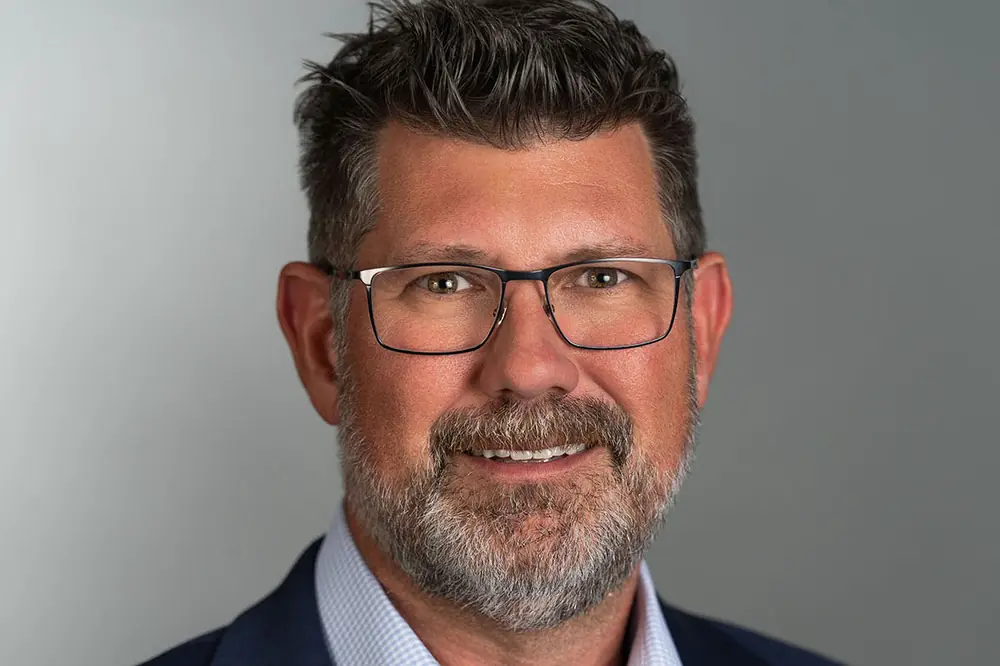
Josh Levy is Vice President of Risk and Compliance Solutions at Trimble. He was previously Co-Founder and CEO of Document Crunch, which was acquired by Trimble in 2026.