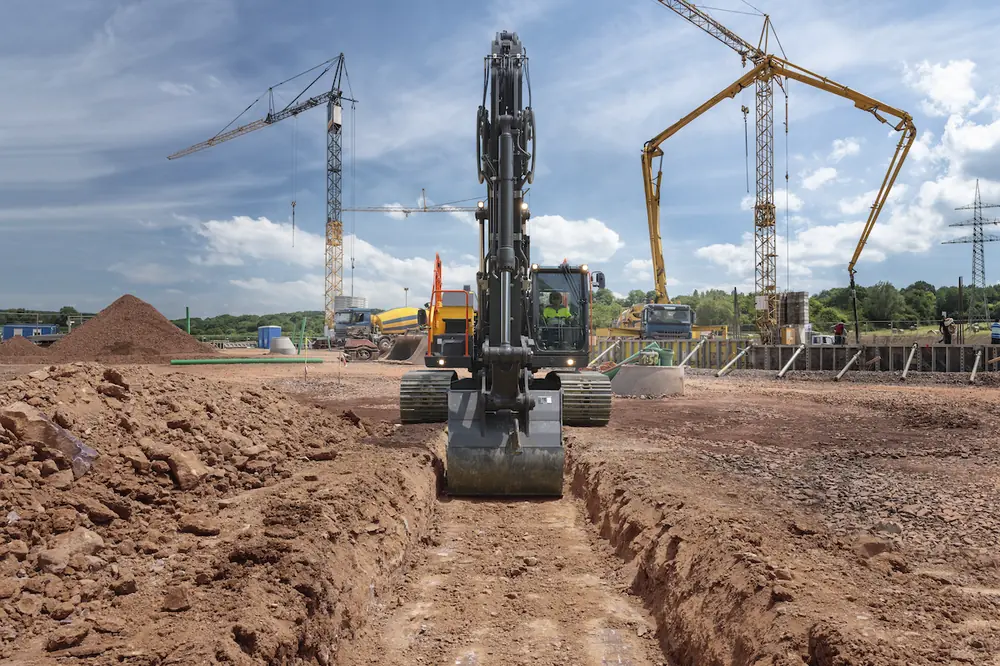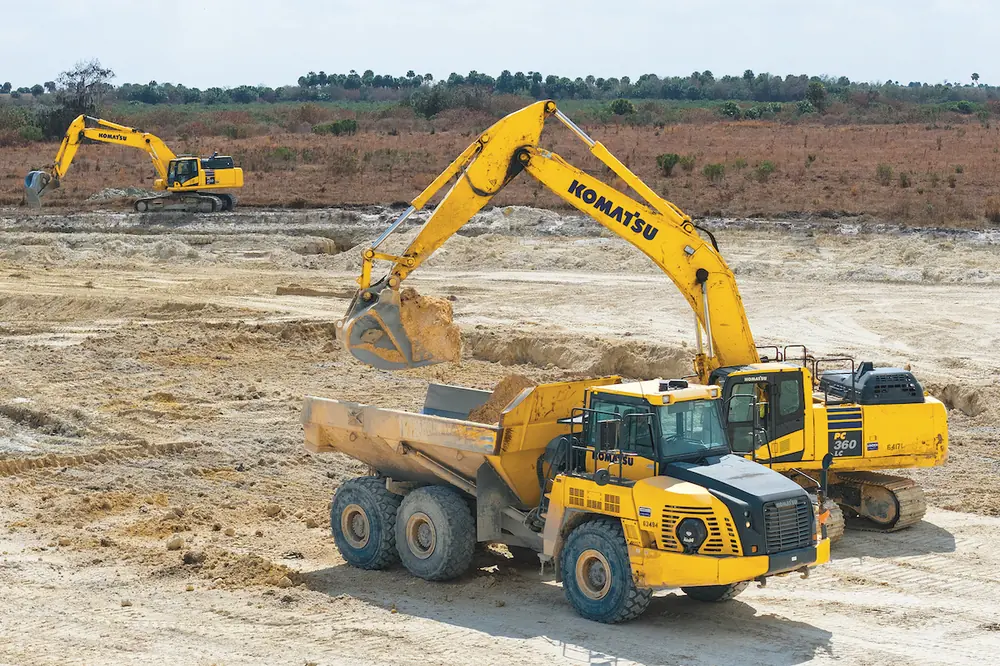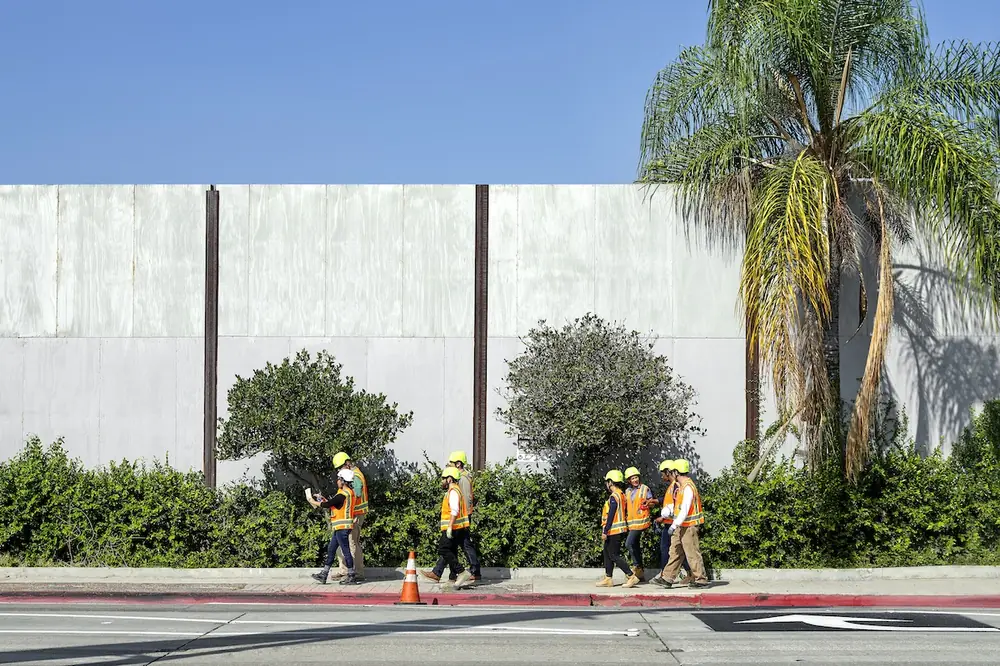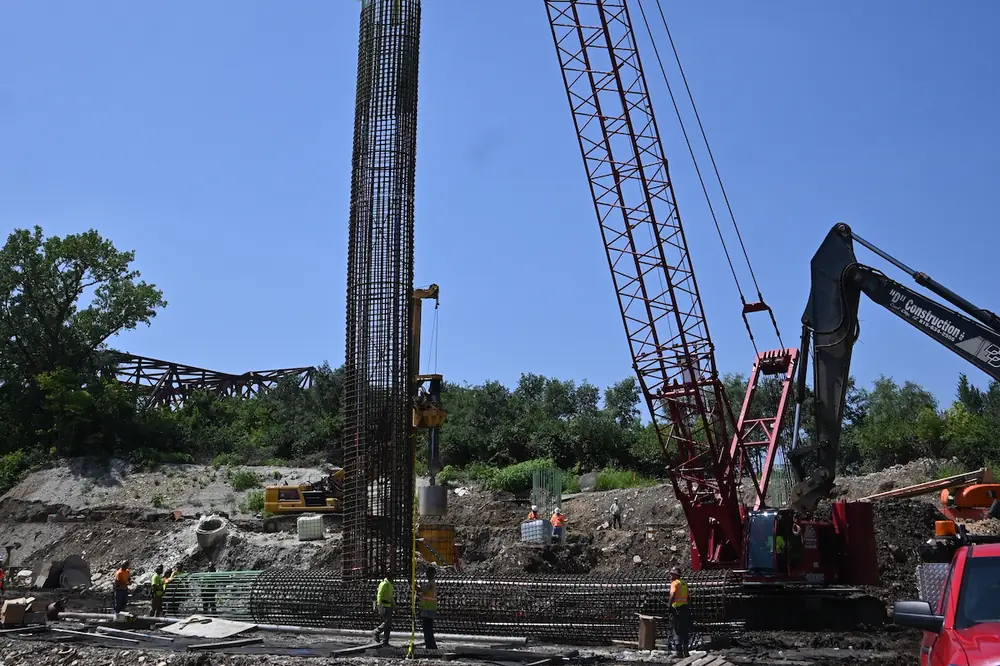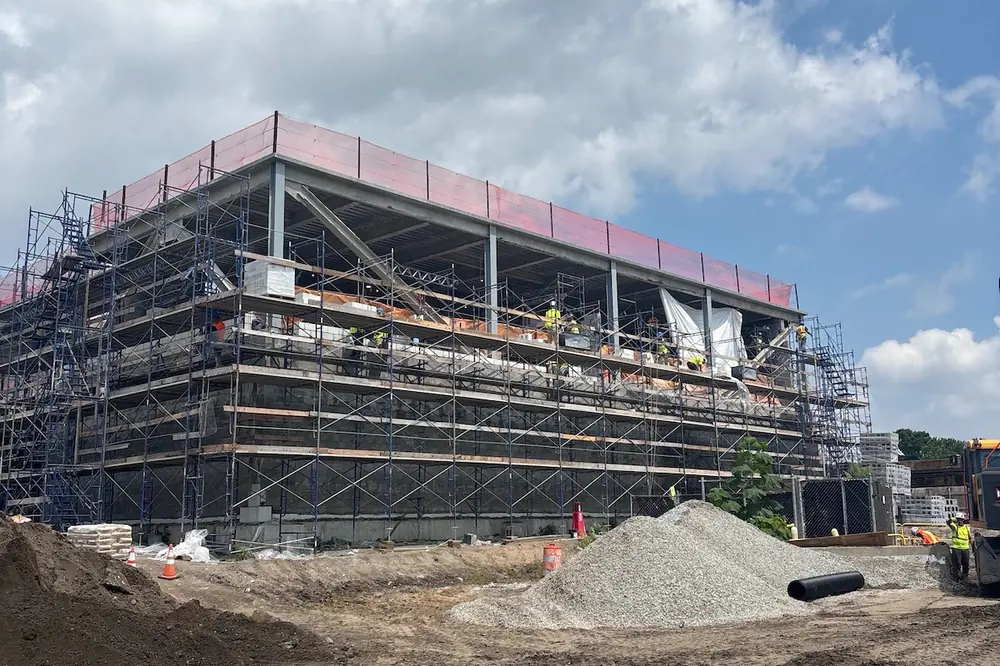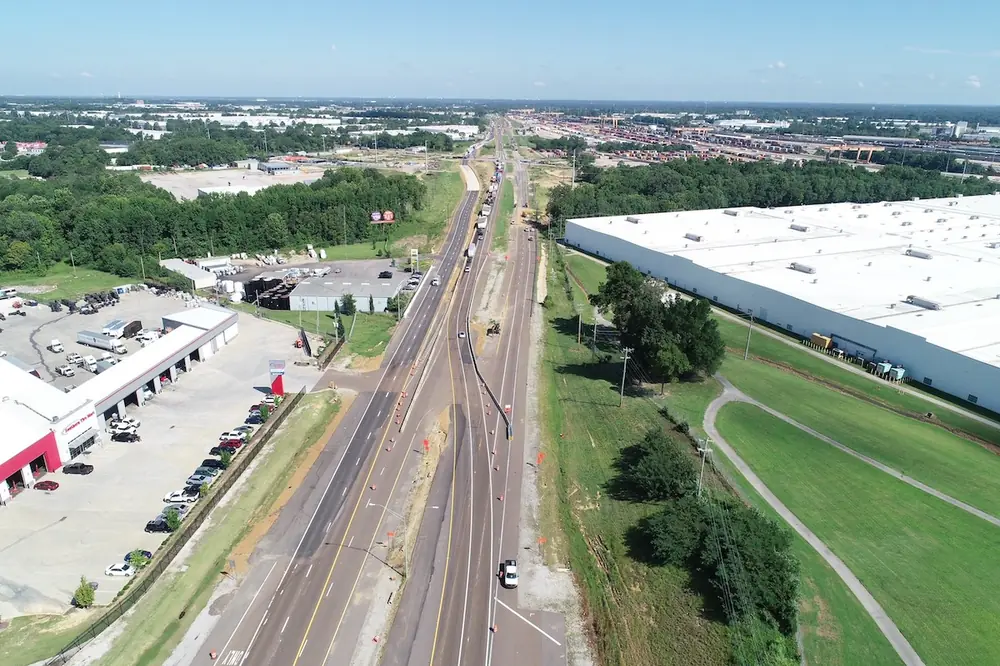


Digging, grading, and loading get much of the attention on an earthmoving project, but those activities are only part of the production cycle. Once material comes out of the ground, it still needs to be transported, staged, reused, placed, or removed. If material movement cannot keep pace with production, equipment may sit waiting or spend valuable operating time hauling a small amount of material instead of doing the work it was selected to perform.
That makes material movement more than a support function; it is a key part of overall job site efficiency.
Historically, larger sites allowed contractors to rely on larger equipment like dump trucks to move material — but tighter job sites increasingly require compact equipment that can maneuver in limited spaces.
In these scenarios, contractors have traditionally relied more heavily on wheelbarrows and multi-purpose machines, such as skid steers and compact track loaders, to move material. There is a logical reason for that approach: A skid steer or compact track loader can accept different attachments and perform numerous tasks.
But versatility and hauling efficiency — transporting material from point A to point B and unloading it — aren't necessarily the same thing.

| Your local Wirtgen America dealer |
|---|
| Beard Equipment Co - AL |
| Tractor & Equipment |
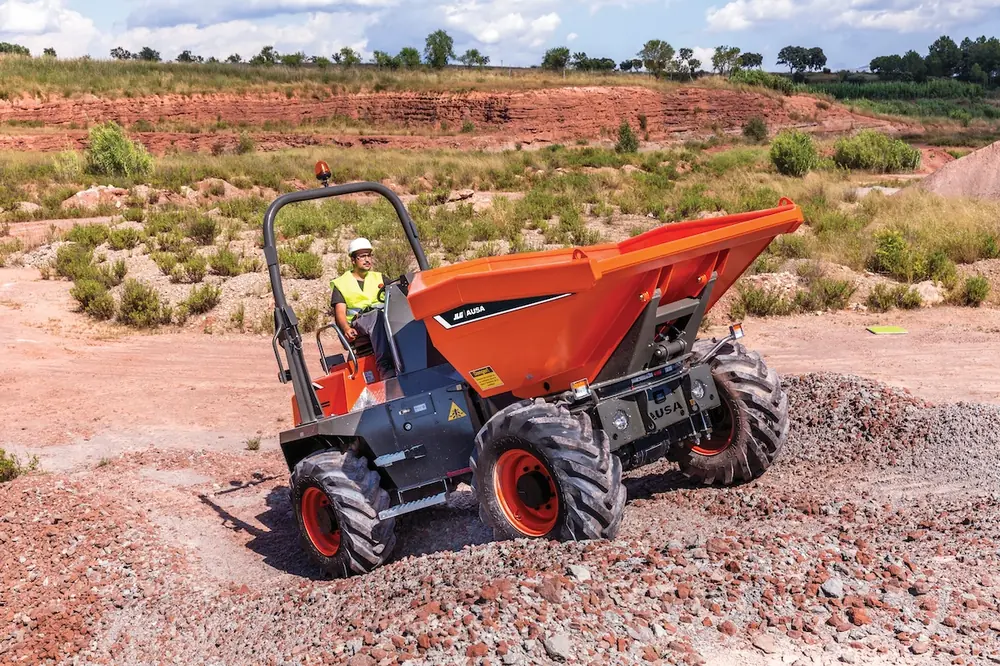
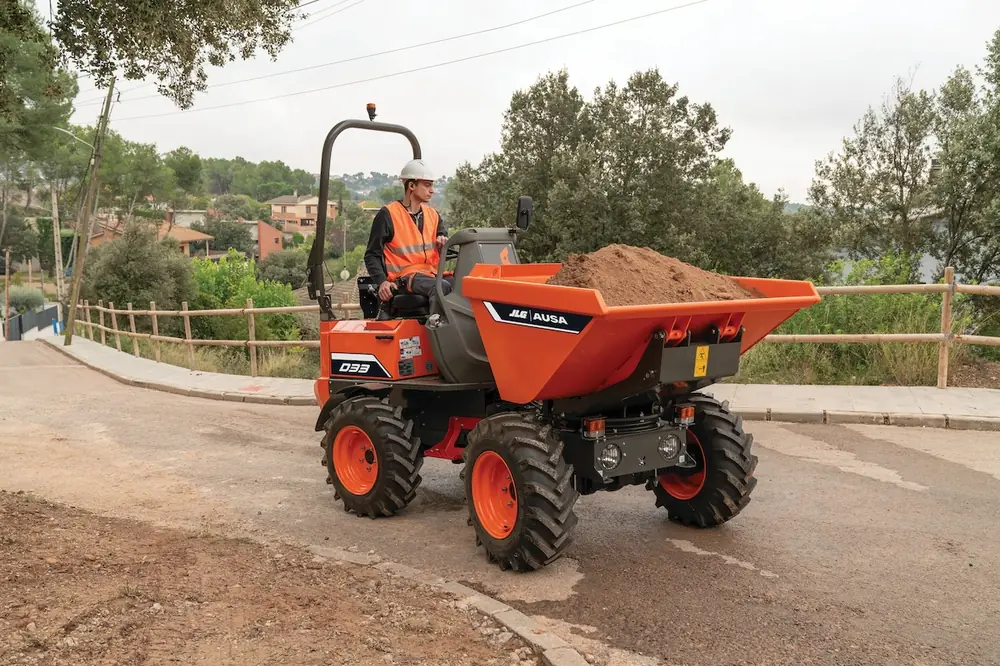
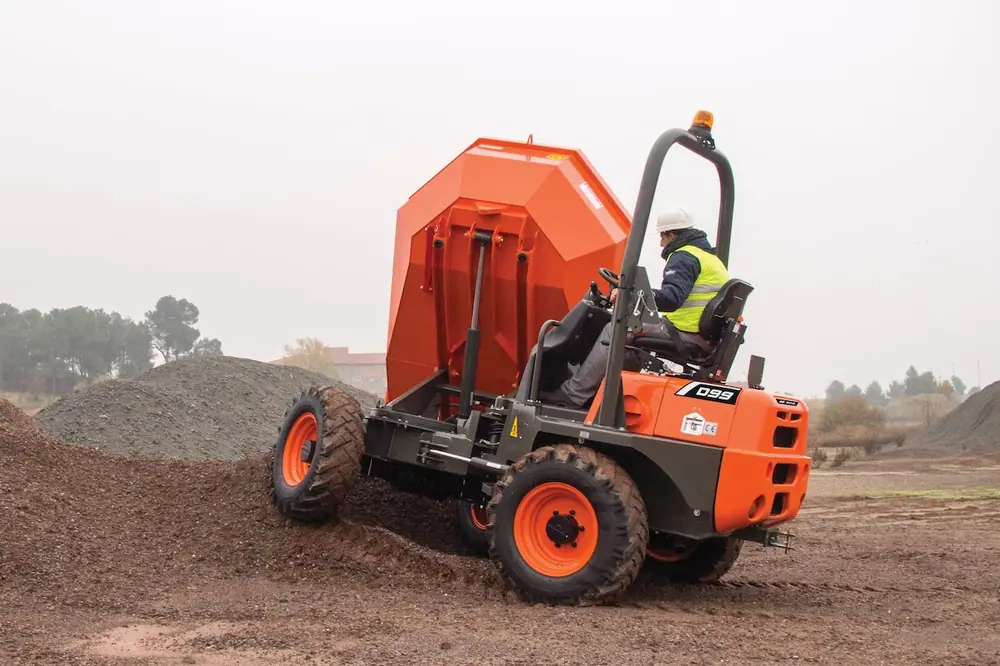
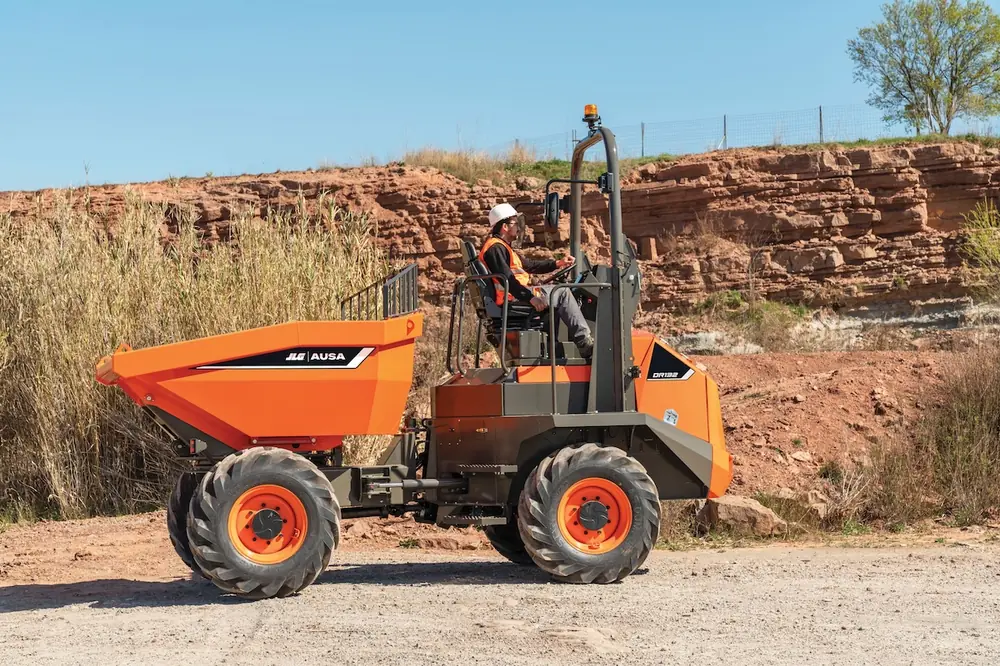
Dedicated dumpers give contractors another way to improve material distribution while letting other machines like skid steers and compact track loaders stay focused on digging and loading.
Here are five ways well-planned material flow with dumpers or other equipment can improve job site efficiency.
1. Plan the Route Before the First Load Moves
A productive haul cycle starts before the machine moves.
Identify where the material originates, where it ultimately needs to go, and the practical travel routes between those points. Consider haul distance, grades, ground firmness, turning areas, access restrictions, and other equipment operating nearby.

| Your local Topcon Positioning Systems Inc dealer |
|---|
| Linder Industrial Machinery |
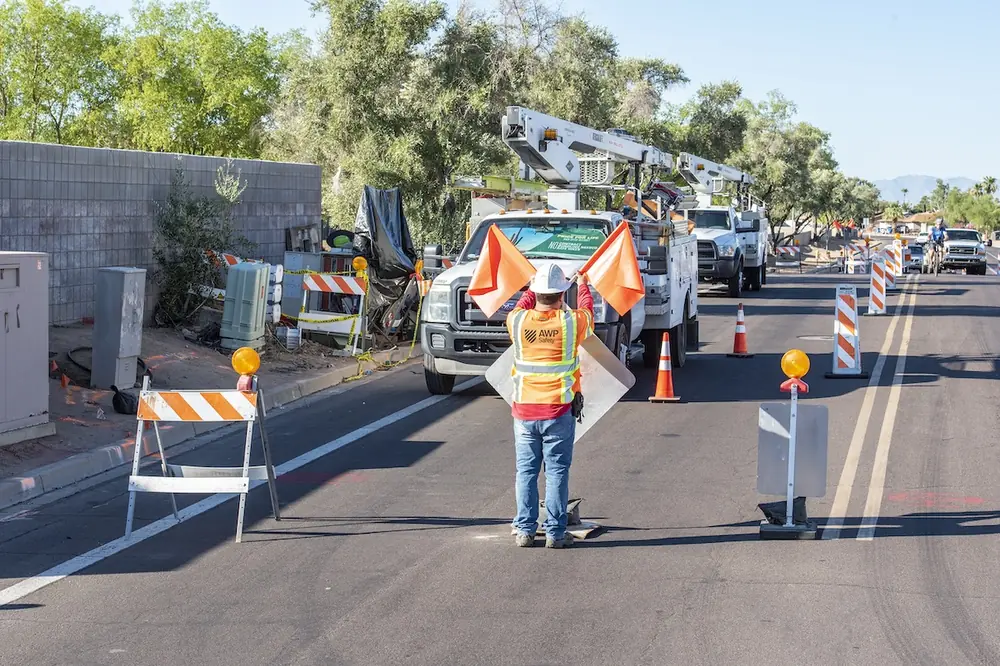
Traffic management should also be part of the plan. Establish clear travel paths and tipping zones, and account for pedestrian traffic when planning how equipment will move through the site.
Don't assume the shortest route is automatically the most efficient. A slightly longer route may allow a machine to maintain a more consistent cycle if it avoids congestion, difficult ground conditions, or interference with another operation.
Look for potential bottlenecks, too. Loading areas, intersections, narrow passages, and dumping locations can all become waiting points if several machines need the same space.
The objective is not simply to minimize distance; it is to establish a predictable, repeatable route that keeps material moving with as little waiting, maneuvering, and interference as possible.

| Your local Iowa Mold Tooling Co Inc dealer |
|---|
| Nichols Fleet Equipment |
2. Match Hauling Capacity to Production
Payload tells you how much a machine can carry. Cycle time tells you how efficiently that capacity contributes to production.
Think about the complete cycle: Load. Travel. Dump. Return. Repeat. The goal is to keep that cycle balanced and consistent, because the slowest step in that cycle can become the bottleneck for the entire operation.
Don't evaluate a dumper or other hauling equipment in isolation; watch the loading machine too. Is the excavator waiting for the dumper to return? Or is the dumper waiting for the excavator? Is either machine spending unnecessary time maneuvering? These observations can help identify whether hauling capacity and production are properly matched.
A larger piece of equipment isn't necessarily more productive simply because it carries more per trip. Site access, travel speed, turning radius, loading time, and dumping requirements can all affect the actual cycle. Conversely, equipment that is too small for the volume being produced can require more trips to accomplish the same work.

| Your local Gomaco dealer |
|---|
| Ring Power Corporation |
This is also where a dedicated dumper can change the workflow. Rather than having an excavator, skid steer, or compact track loader produce material and then transport it, one machine can stay focused on production while another handles the haul cycle.
The goal is not to maximize one machine’s output in isolation. It is to balance production and hauling so material keeps flowing and the entire operation spends less time waiting.
3. Move Material Once Whenever Possible
One of the simplest ways to improve material flow is to reduce unnecessary handling.
On some job sites, excavated material is moved out of the immediate work area and temporarily stockpiled. Later, another machine loads it again for transport to its final destination. Sometimes that intermediate step is necessary. But when it isn't, it adds another movement to the process.

| Your local Wirtgen America dealer |
|---|
| Dobbs Equipment (DXC) |
A more efficient workflow can load material directly into the hauling equipment, transport it to the planned destination, and distribute or dump it where needed without requiring the machine to reposition.
Before moving material, ask where it ultimately needs to go:
- Can excavated material travel directly to a backfill location?
- Is it going to be stockpiled for later use?
- Does it need to leave the site entirely?
- Can material required in another work area be placed there now rather than staged somewhere in between?
Fewer movements can save time, reduce labor demands, and limit unnecessary wear on equipment used for material transport.
4. Plan Ahead to Avoid Inefficiencies
Earthmoving projects change continuously. Material excavated during one phase may become backfill during another. A stockpile location that seems convenient today may interfere with utilities, foundations, or other work later. A wide-open travel route during initial site preparation may become much more constrained as construction progresses.

| Your local Bomag Americas dealer |
|---|
| Linder Industrial Machinery |
On job sites where access becomes increasingly constrained as work progresses, equipment selection may also need to change as the available work area shrinks.
Planning ahead can help avoid material-handling problems such as having to relocate a stockpile because it was placed in the path of future work or continuing to use equipment that no longer fits the available access. Think about where material needs to be not only at the end of the current cycle, but at the next stage of the project.
5. Build Safety Into the Plan
Material-flow planning also needs to account for safe operation. That includes selecting equipment appropriate for the task, using trained operators, establishing traffic routes, and operating within the manufacturer's instructions and machine limitations. Dumpers and other material handling equipment vary in size, style, and capacity, making machine selection an important part of planning the work.
Weather, ground conditions, project phasing, and congestion can also change the most efficient and appropriate way to move equipment through a job site.

| Your local Bobcat dealer |
|---|
| Pinnacle Central Co Inc |
Ground conditions deserve particular attention. Dumpers are designed for rough-terrain applications, but conditions still need to be evaluated for the specific machine and task. Conditions that were suitable for a haul route earlier in the week may warrant another assessment after significant rain or as excavation changes the site. Consider site conditions such as gradients, ground firmness, and typical travel routes when selecting and operating equipment.
The same applies to congestion. Additional trades, equipment, and deliveries can change traffic patterns as the project progresses. Routes that once allowed easy movement may become crowded or constrained.
Operators and supervisors should continually evaluate whether the route, equipment, and operating plan remain appropriate for current conditions and follow the manufacturer's instructions and limitations for the specific machine being used. Operators should use speeds appropriate for conditions and remain aware of other equipment and pedestrians in the work area.
In practice, many of the same decisions that improve material flow — reducing unnecessary maneuvering, establishing predictable travel paths, accounting for pedestrians and other equipment, and selecting machines appropriate for terrain and site conditions — are also important parts of a well-planned job site.

| Your local Trimble Construction Division dealer |
|---|
| SITECH Mid-South |
| SITECH Tri-Rivers |
Matthew Johnson is a Senior Product Specialist at JLG.