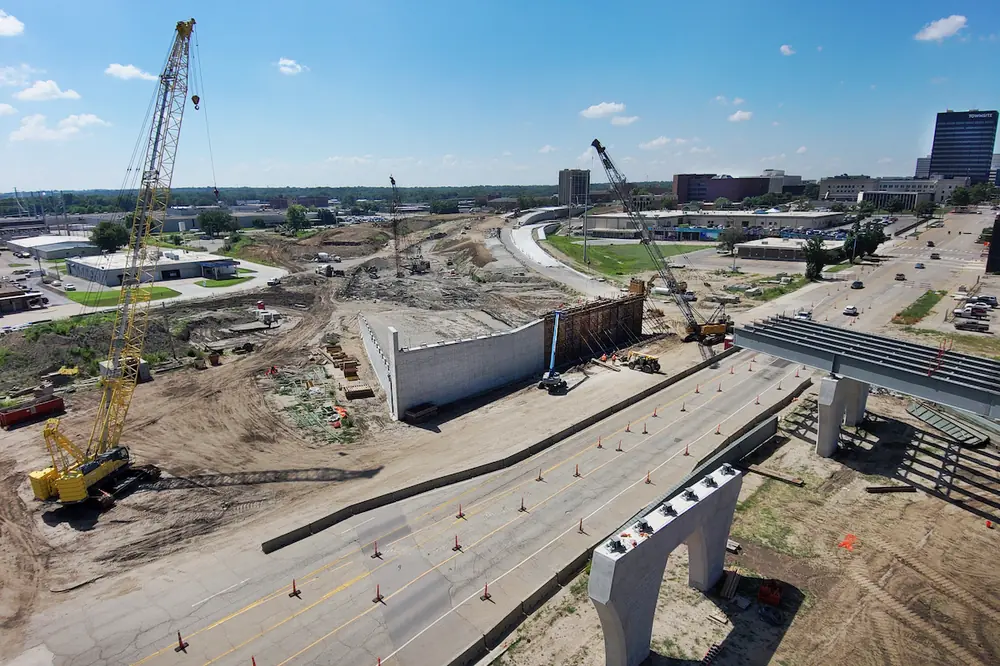

The Indianapolis Cultural Trail: A Legacy of Gene & Marilyn Glick, a 10-mile downtown bike and pedestrian path in Indianapolis, Indiana, connects neighborhoods, districts, and amenities while serving as the downtown hub for central Indiana’s huge network of multi-use trails.
The beautifully designed multi-modal trail system is often cited as an example of how high-quality trail infrastructure can drive urban revitalization around former industrial zones.
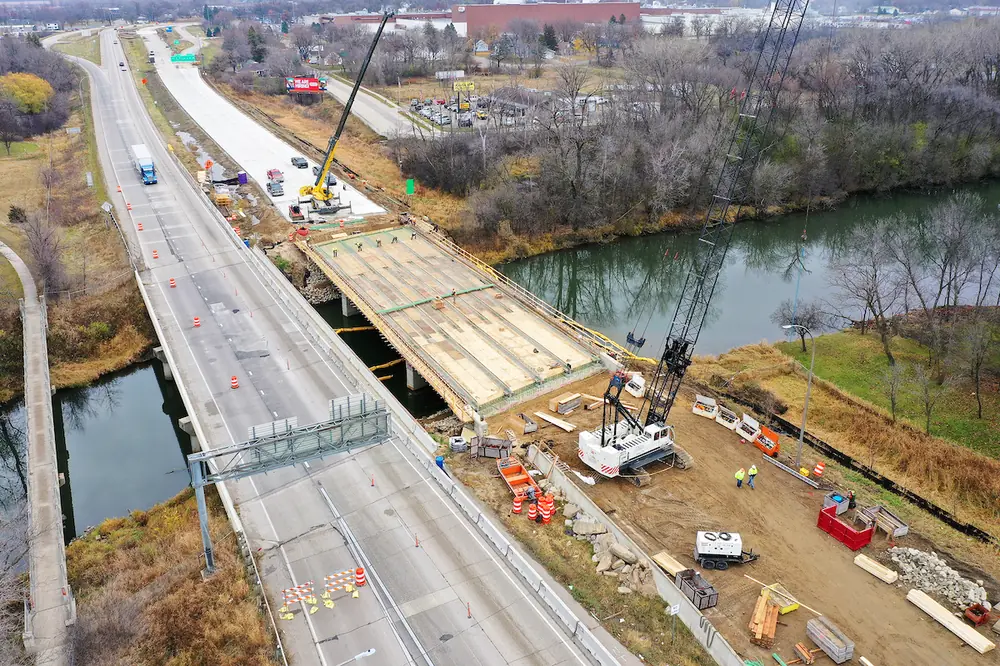
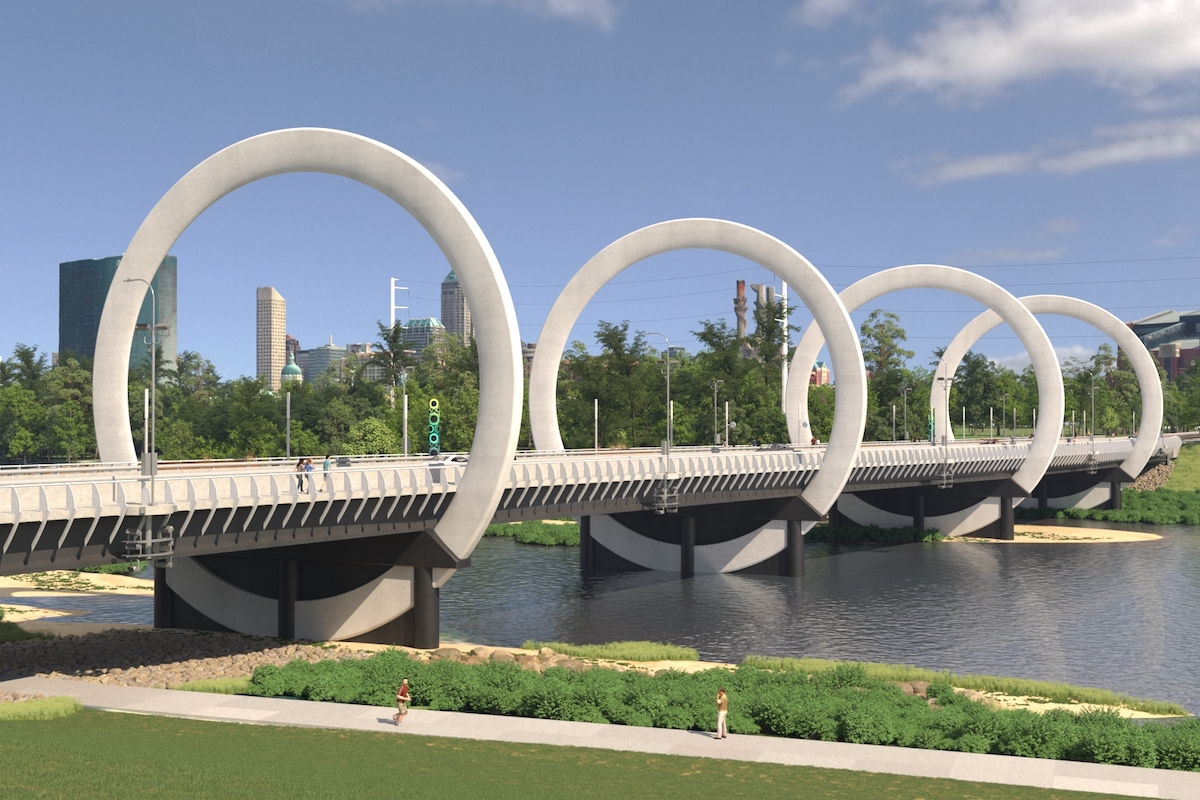
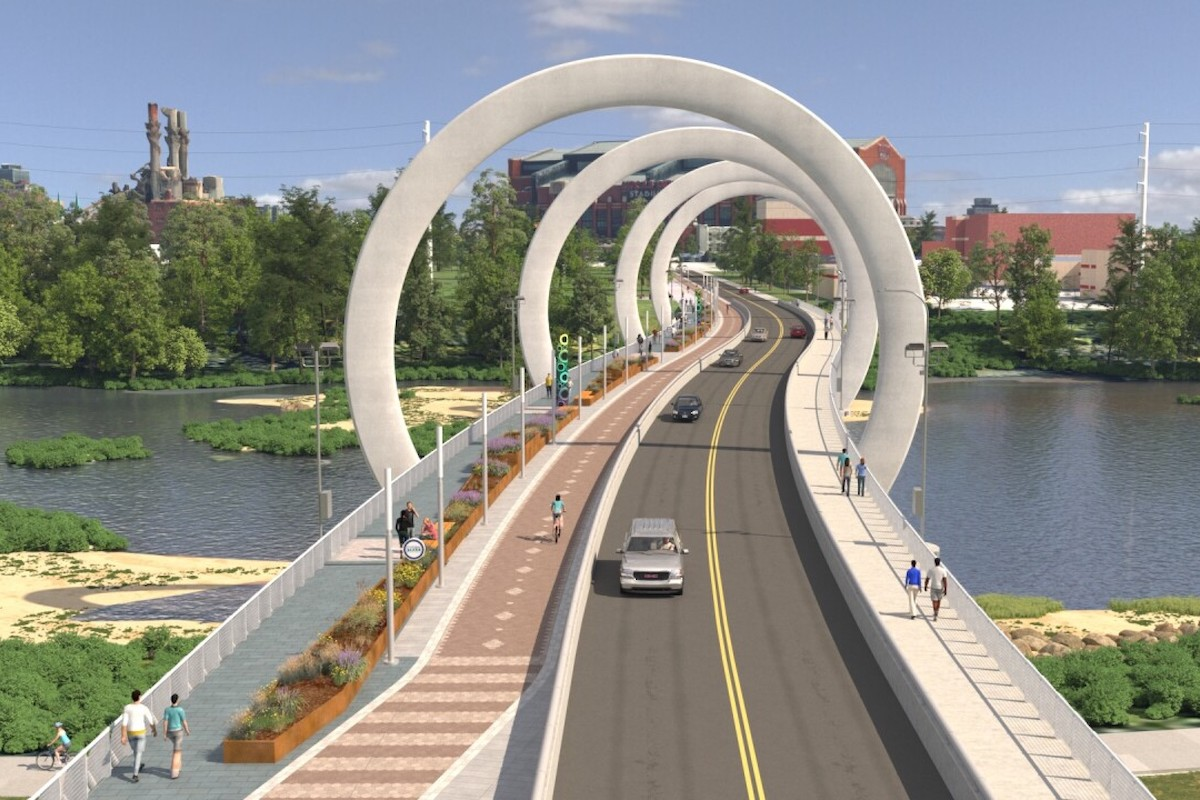
Indianapolis’ new Henry Street Bridge will be an avant-garde entry point where trail users will cross the White River into the Innovation District, connecting the older west side of the city to the redevelopment of the riverfront’s downtown core.
“The Henry Street Bridge will not only serve as a transportation link; it will become a civic landmark,” said Ryan DeLong, Senior Project Manager, F.A. Wilhelm.
“By integrating mobility, design, and community connectivity, the project will play a major role in shaping the west side’s growth for decades,” he said.

| Your local Superior dealer |
|---|
| Westate Machinery Co |
Designed to span the White River between Washington Street and Oliver Street, the new Henry Street Bridge is expected to ease roadway congestion, expand mobility options, and directly support economic development within the Innovation District.
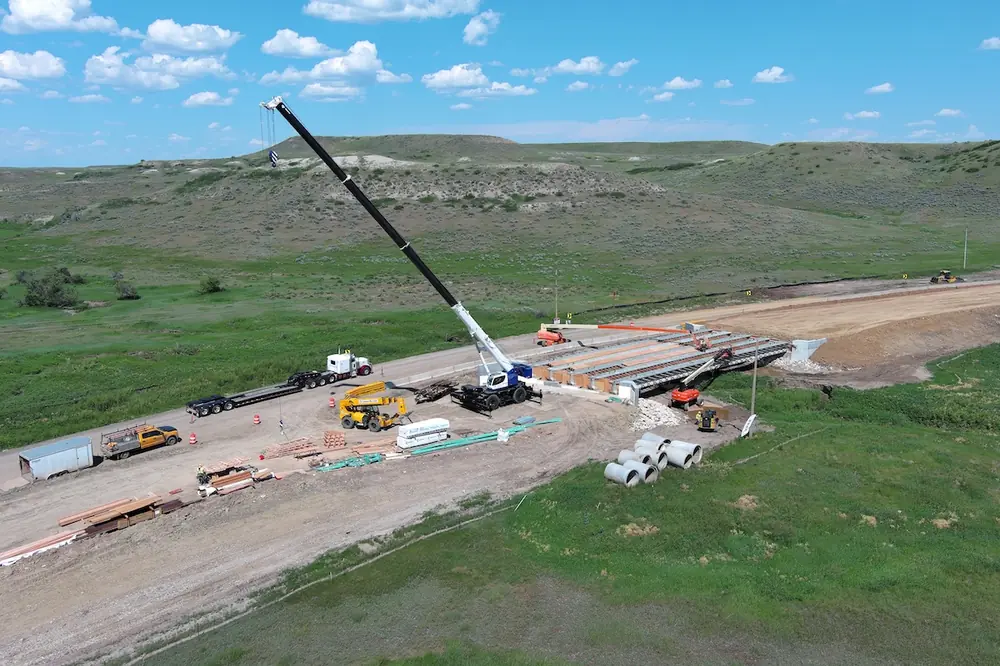
A $44 million project funded and delivered by a Garmong-led Build-Operate-Transfer (BOT) partnership with the City of Indianapolis, the two-lane vehicular bridge is designed to create a new multi-modal connection between Indianapolis’ west side and downtown. Construction began in early 2024.
“The Henry Street Bridge is a key component of a larger vision to redevelop the White River Innovation District,” DeLong said.
“It will enhance access to the district, support the development of the Elanco Global Headquarters, and strengthen west-to-downtown connectivity for residents, businesses, and visitors,” he added.

| Your local Metso Minerals Industries Inc dealer |
|---|
| PacWest Machinery |
| Westate Machinery Co |
F.A. Wilhelm Construction, one of the largest contractors in Indiana, has built a variety of Indianapolis structures, including the Indiana State Museum, the headquarters of NCAA, as well as many hospitals, academic, and cultural buildings.
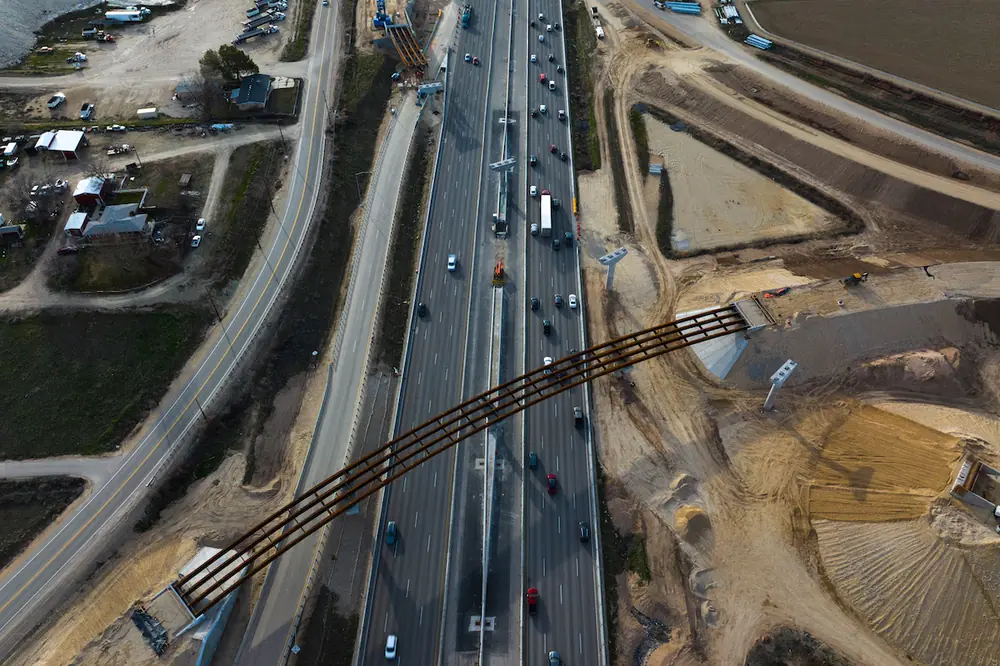
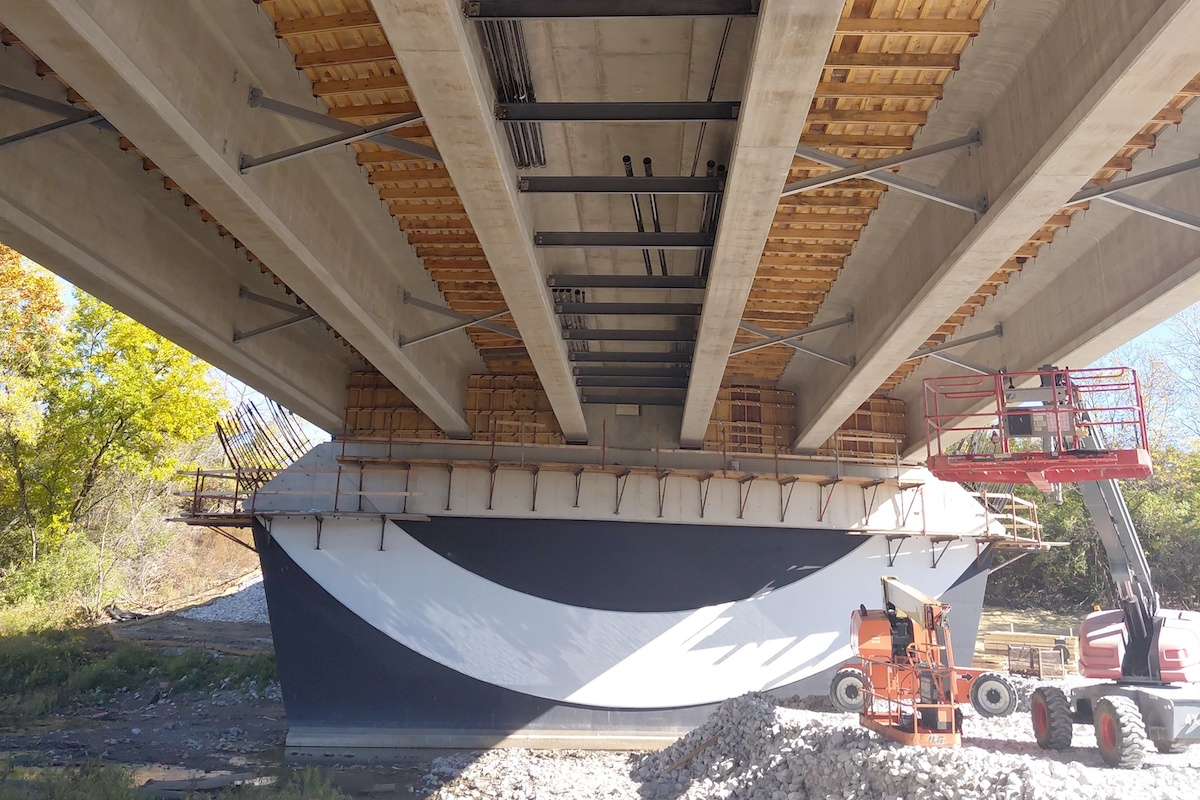
The contractor is responsible for constructing the four architecturally distinctive concrete rings that will define the visual identity of the bridge.
Designed by WSP USA, with the rings designed by Meticulous, the new bridge blends functional transportation needs with striking architectural elements.
“Notably, the four concrete rings create an iconic gateway into the White River Innovation District,” DeLong said. “The design team prioritized multi-modal connectivity, aesthetic impact, and alignment with the Cultural Trail experience.”

| Your local Gomaco dealer |
|---|
| Gomaco -Contact For a Dealer Near You |
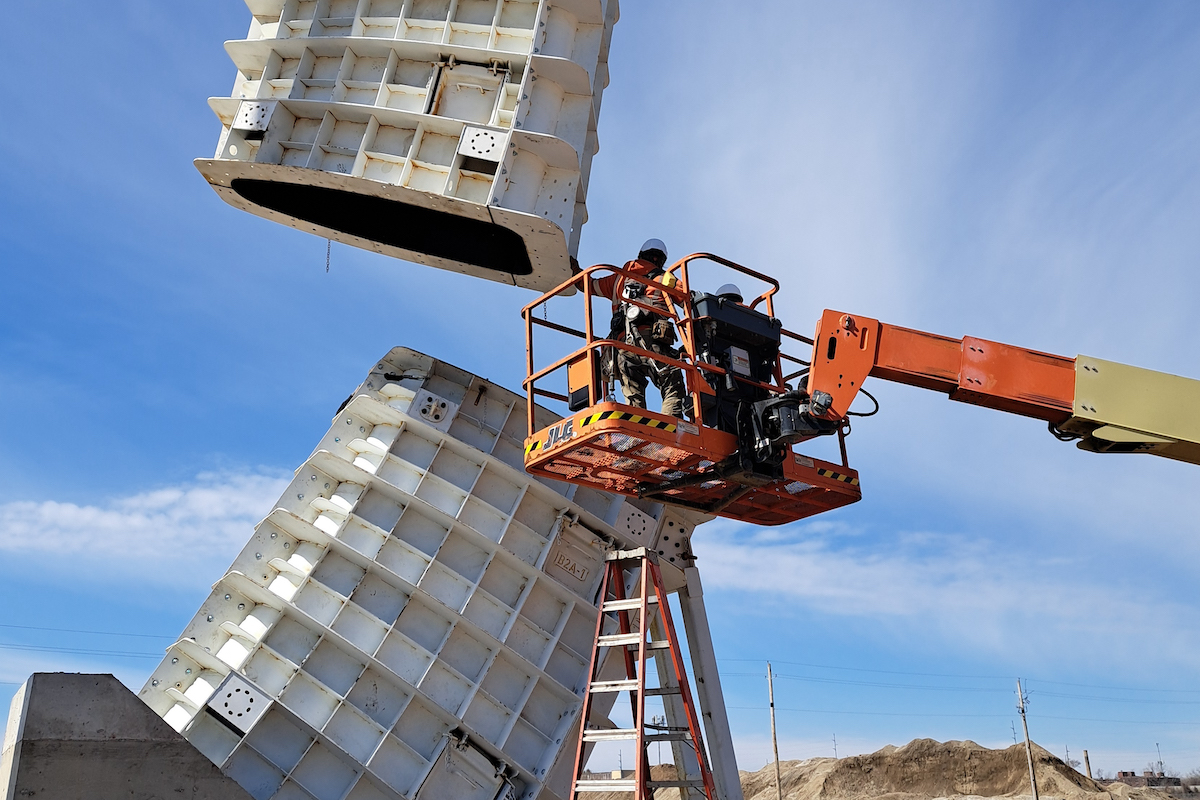
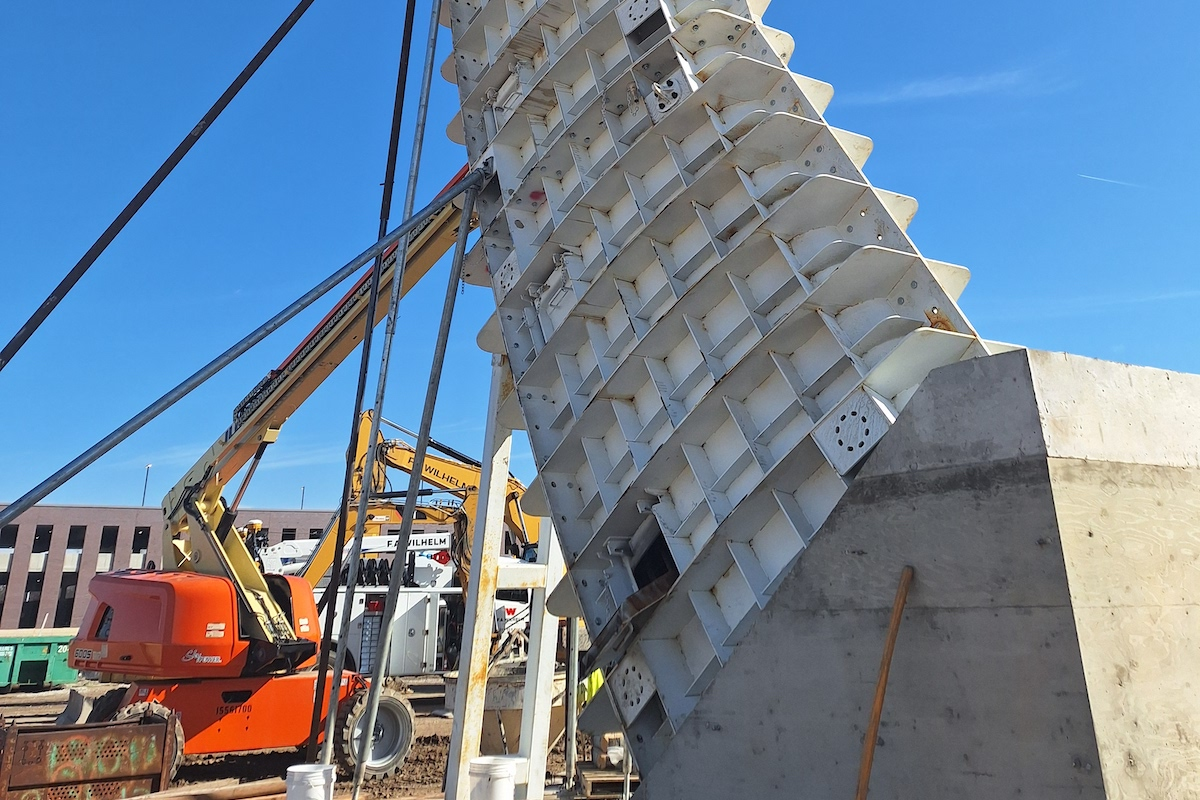
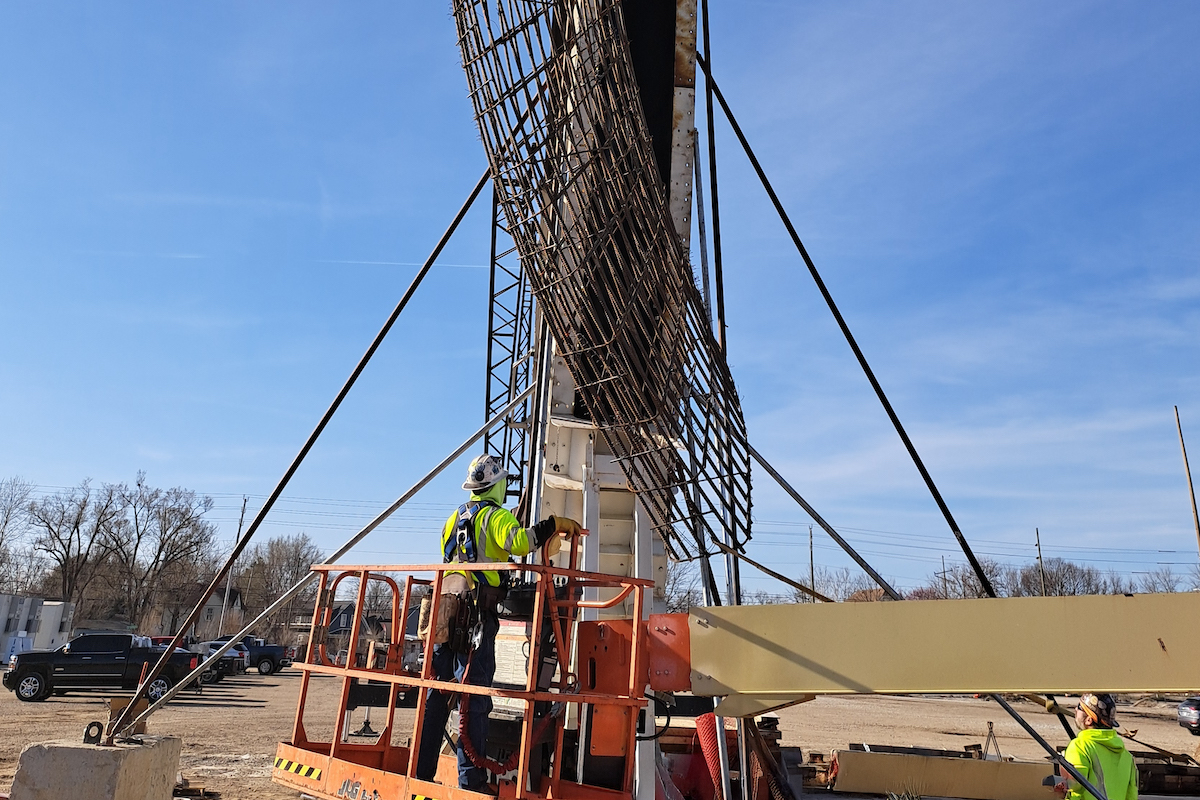
“The most challenging portion to date has been the concrete ring construction itself — particularly the handling, forming, and precise placement of the large custom-fabricated steel forms,” DeLong said.
The steel formwork was custom fabricated in Canada specifically for the bridge’s signature concrete rings.
Each ring measures 98 feet wide by 75 feet tall and is composed of 17 custom steel-formed pieces weighing 9,200 pounds each.
“These forms are essential to achieving the precise geometry and architectural consistency of the rings, which are among the project’s most distinctive elements,” DeLong said.

| Your local Trimble Construction Division dealer |
|---|
| SITECH Northwest |
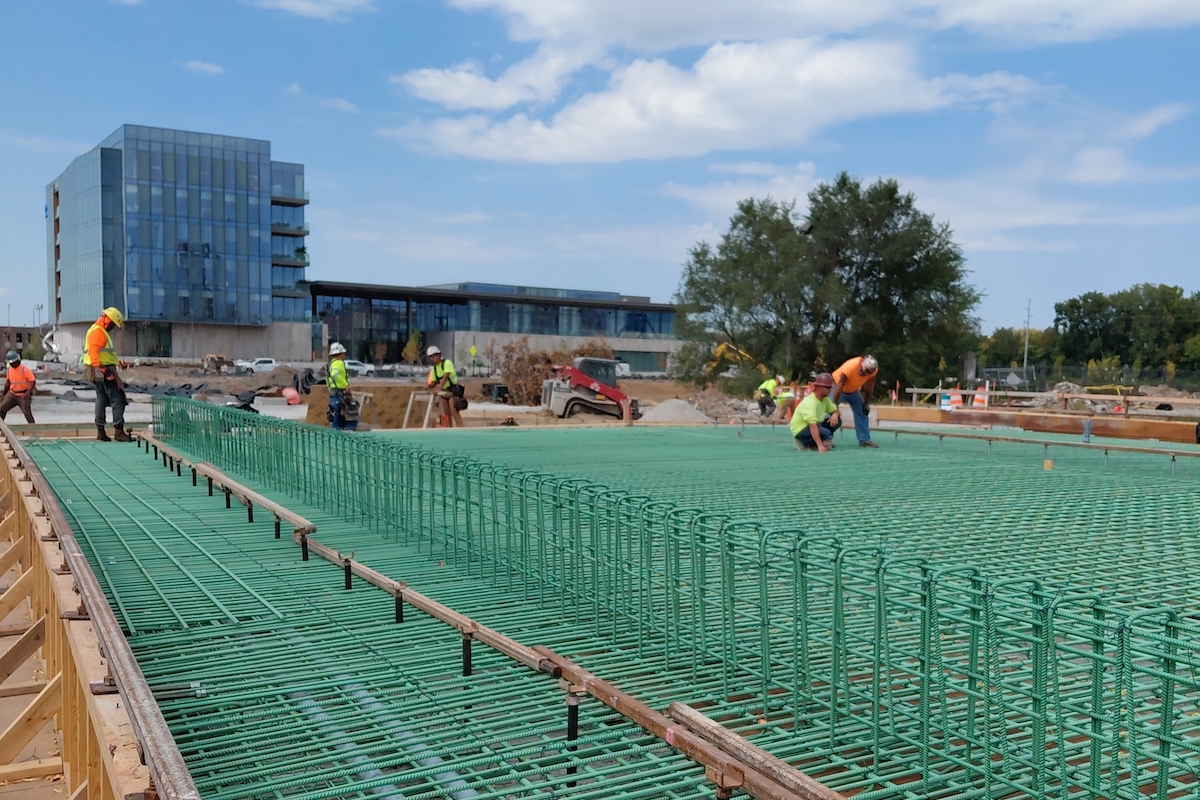
F.A. Wilhelm is also overseeing coordination with several subcontractors, including Beaty Construction for the substructure and superstructure; Midwest Landscape for planters, irrigation, and benches; Harmon Steel for guardrails, handrails, and reinforcing steel; Industrial Electric for site lighting and the power duct bank; TC Electric for Cultural Trail signage; the Decorative Paving Company for trail pavers; and New Group for bridge deck waterproofing.
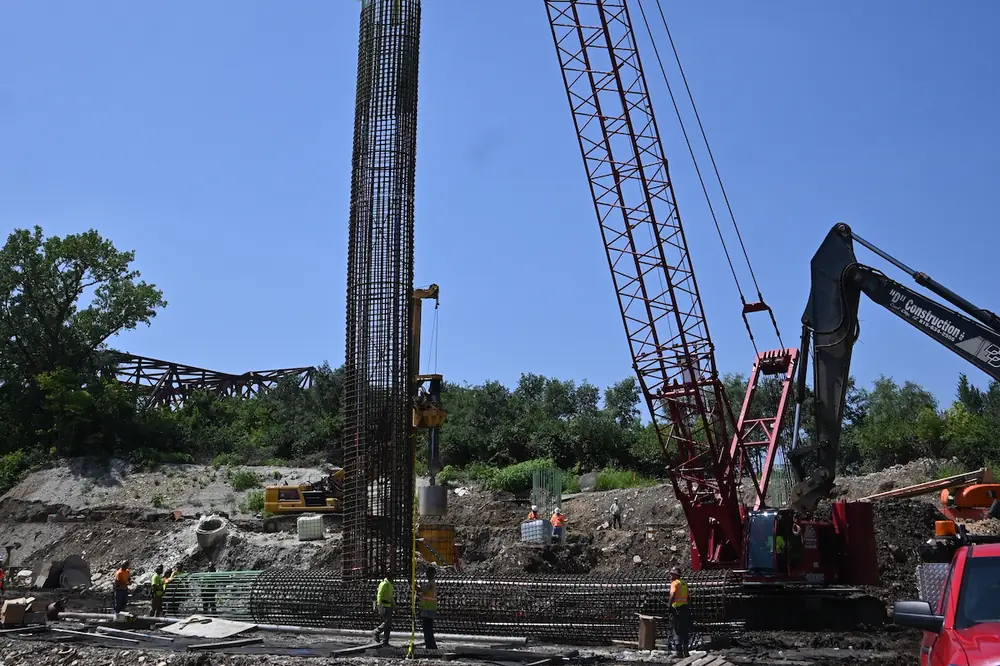
“Much of the most challenging work is hidden below the surface: drilled shafts, piers, subsurface utilities, environmental protections, and archaeological coordination,” DeLong said. “These foundational elements require meticulous planning, engineering, and collaboration — but once complete, the public never sees them.”
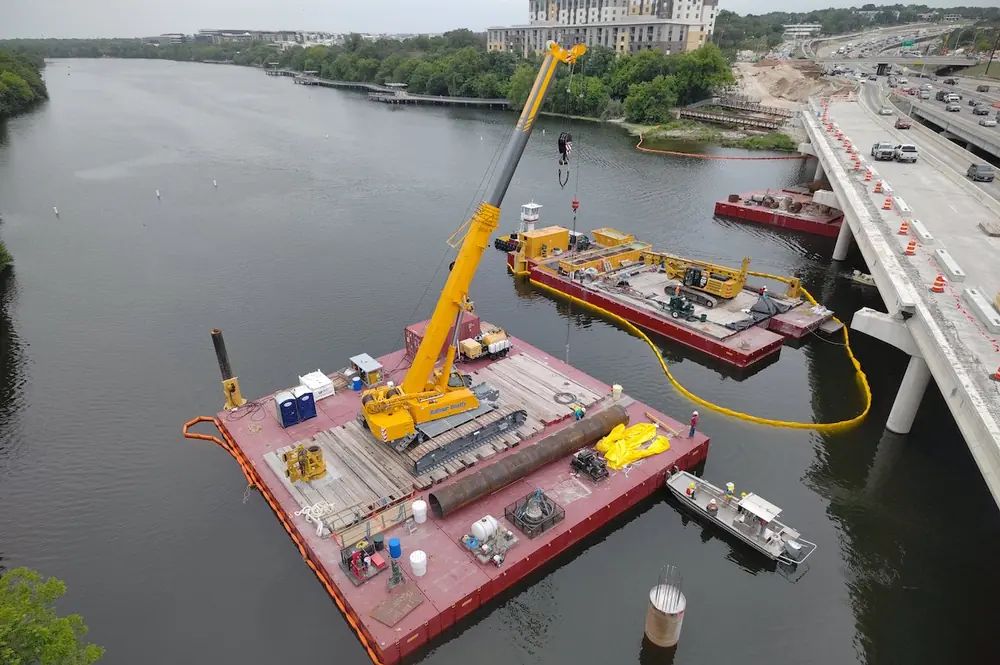
According to DeLong, the project team navigated unpredictable springtime river conditions, which regularly impacted access points, work zones, and scheduling.
“This reinforced the importance of flexible planning, real-time river-level monitoring, and resilient work sequencing for projects adjacent to waterways,” he said.
| Your local Superior dealer |
|---|
| Westate Machinery Co |
During earlier construction activities, crews encountered remains associated with the historic Greenlawn Cemetery, located within the project right of way.
The discovery required close coordination with city officials, archaeologists, and environmental experts.
Over 1,700 grave shafts — most of which had human remains along with burial artifacts — were removed by professionals from Stantec, a large international design and engineering firm, from what was four cemeteries collectively referred to as Greenlawn Cemetery.
“Extensive archaeological excavation and documentation efforts are underway to ensure respectful handling and proper preservation of historical materials before construction progresses,” DeLong said. “Coordination with archaeologists due to the cemetery also highlighted the value of early historical due diligence and adaptive workflows.”
| Your local Superior dealer |
|---|
| Westate Machinery Co |
Greenlawn Cemetery, which once held some of Indianapolis’ earliest settlers and included documented Civil War-era burials, was later largely relocated to Crown Hill. Although the known military burials were moved decades ago, archaeologists are still determining the identities of the newly discovered remains.
According to state historical records and Civil War service reports, Indiana provided approximately 15 percent of its 1860 population, more than 200,000 soldiers, to the Union Army. The city served as a major Union Army depot and supply base providing access to railroads and the White River.
The Greenlawn site has a complex history of past disturbances and will require time for the archaeologists and historians to properly document, analyze, and interpret each discovery, according to the Indianapolis Department of Public Works (Indianapolis DPW).
Some of the cemetery’s remains were relocated after 1890 due to flooding, grave robbing, overcrowding, and industrialization.
| Your local Superior dealer |
|---|
| Westate Machinery Co |
The lab work and analysis of each individual’s skeletal remains is roughly 40 percent complete, according to Jeremy Wilson, Ph.D., Professor of the Department of Sociology & Anthropology at Indiana University Indianapolis.
“Each individual goes through three stages of processing, inventorying, and analysis. The first stage is where we clean their remains and begin to lay them out in anatomical position. My graduate and undergraduate students find this cathartic, as it affords them an opportunity to engage with the deceased and forgotten,” he said. “From there, we then inventory the skeletonized remains of the individual. ... The ultimate goal is to develop a profile and osteobiography for each former resident of Indianapolis.”
The location and methods of re-burying the remains, also known as reinterment, will be determined after analyses are completed.
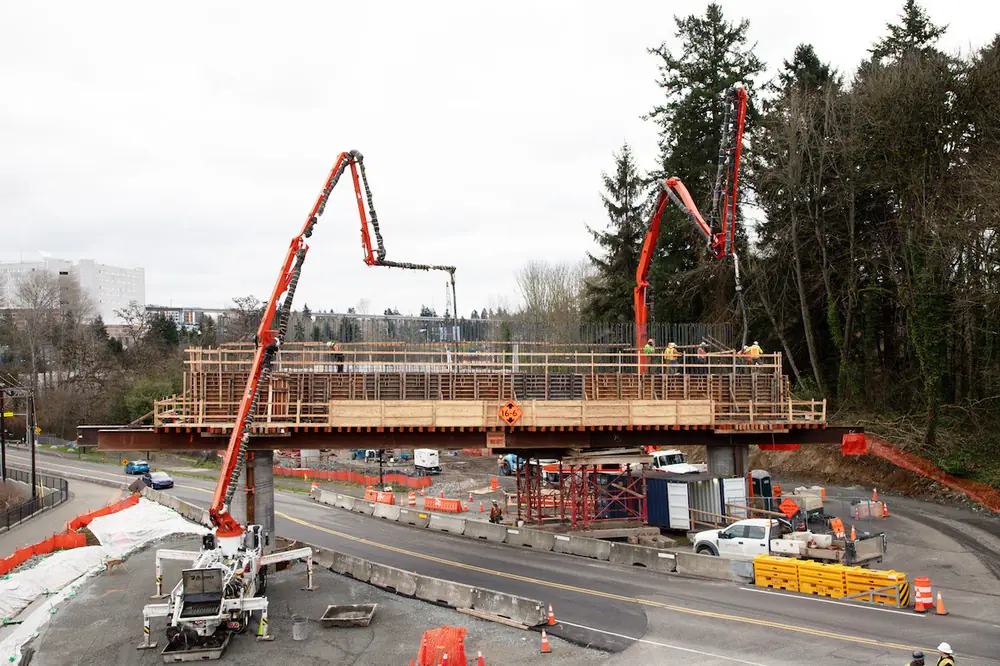
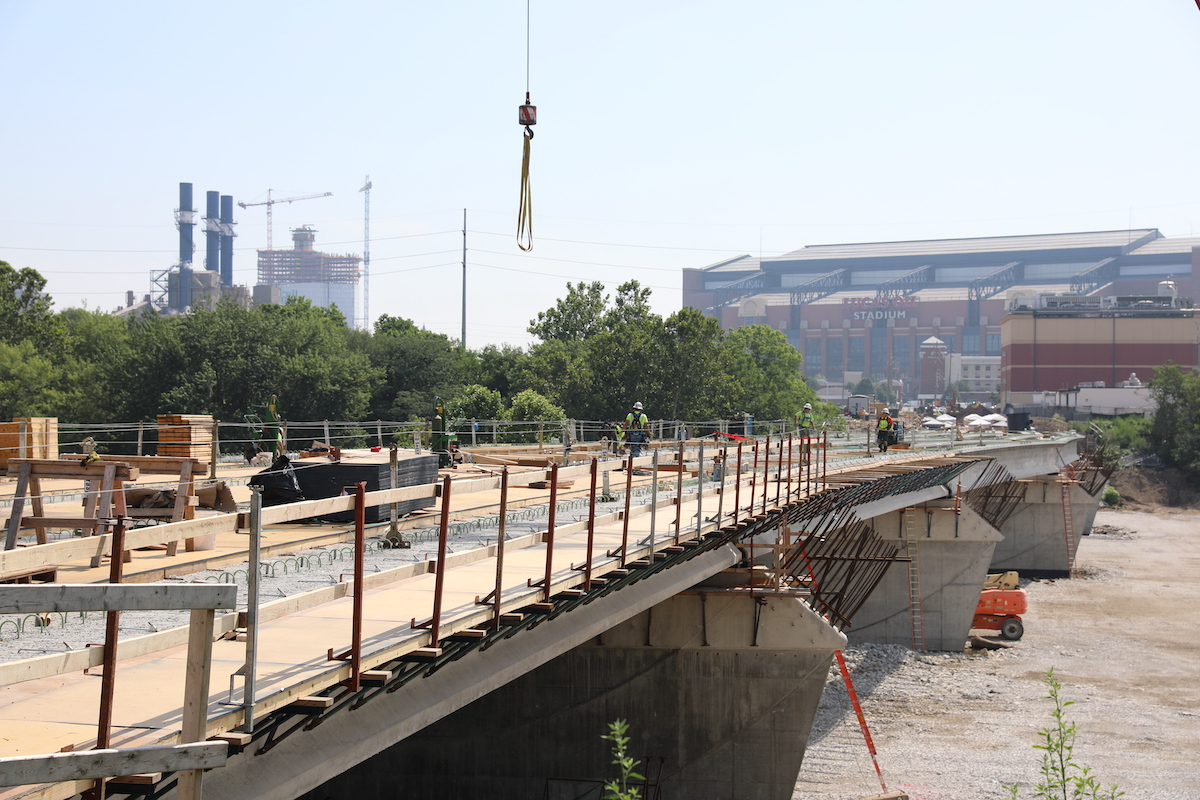
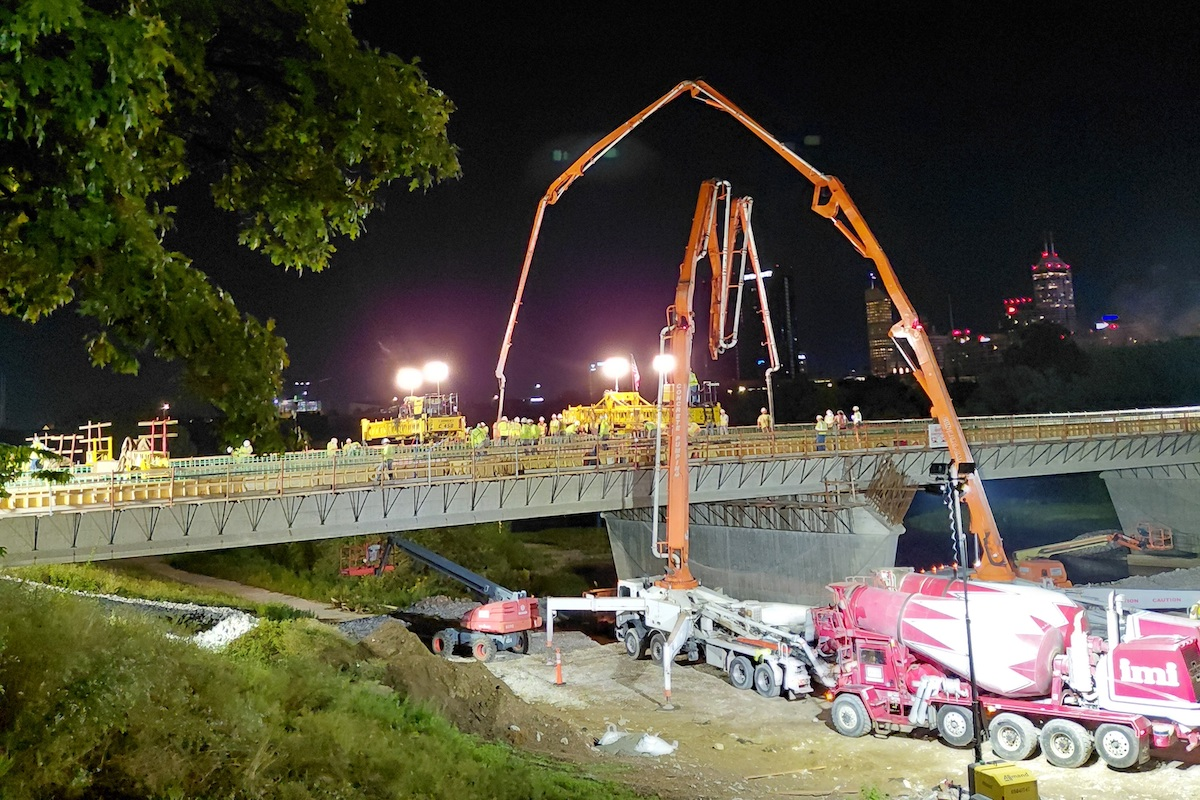
The project reached a major milestone in November 2025 with the placement of the concrete bridge deck, allowing crews to begin erecting the formwork for the concrete rings.
| Your local Superior dealer |
|---|
| Westate Machinery Co |
“Progress on superstructure elements has advanced substantially, and preparations for architectural features are now underway,” DeLong said.
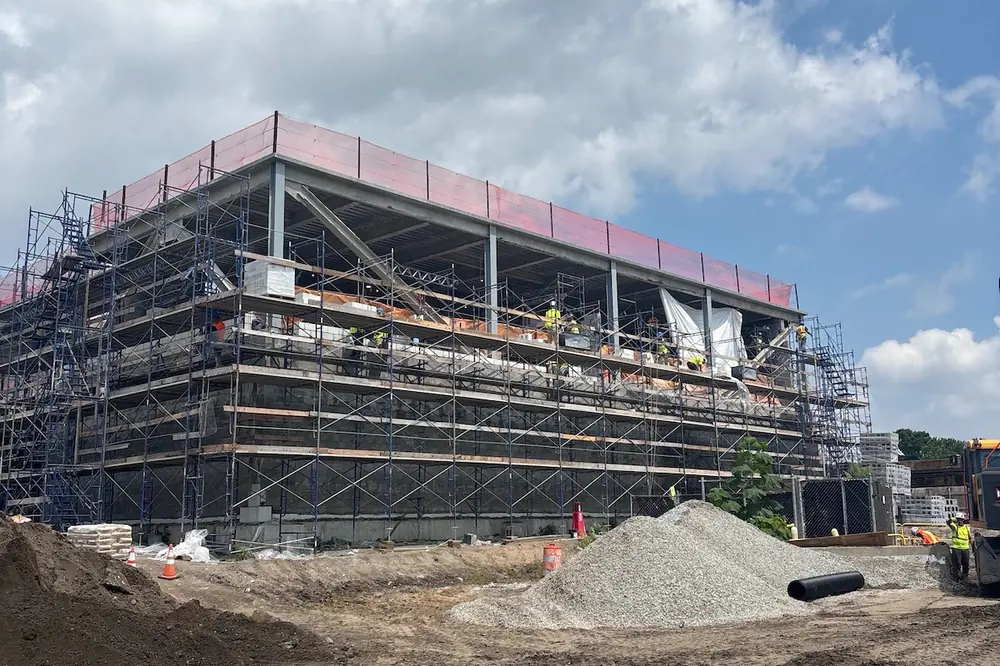
Crews are currently installing traffic barriers on the bridge and advancing the structural and formwork elements needed for ring construction, transitioning the project toward its architectural and multi-modal components.
In 2026, the project will move into its final phases of architectural work, landscaping, and trail integration. Major construction milestones include completion of the concrete rings and bridge railings during the summer, followed by installation of the planters and irrigation systems in the autumn.
The bridge is scheduled for completion on December 29, 2026.
| Your local Superior dealer |
|---|
| Westate Machinery Co |
- Owner: Indianapolis Department of Public Works
- General Contractor: F.A. Wilhelm Construction, Indianapolis, Indiana (BOT partner with Garmong)
- Designer: Context Design, Indianapolis, Indiana
- Engineer: WSP USA Inc., New York, New York
- Other Contractors: Beaty Construction, Midwest Landscape, Harmon Steel, Industrial Electric, TC Electric, Decorative Paving Company, New Group, Everest Equipment, Shelby Materials Photos courtesy of F.A. Wilhelm Construction Co., Inc.