
Alaska’s Denali, also known by its federal designation Mount McKinley, is the highest mountain peak in North America at 20,310 feet. The third-most isolated peak on Earth, it is located in the Alaska Range and is the centerpiece of Denali National Park and Preserve.
There is one road that runs through Denali Park, the historic and scenic 92-mile Denali Park Road, connecting the Richardson and the Parks highways.
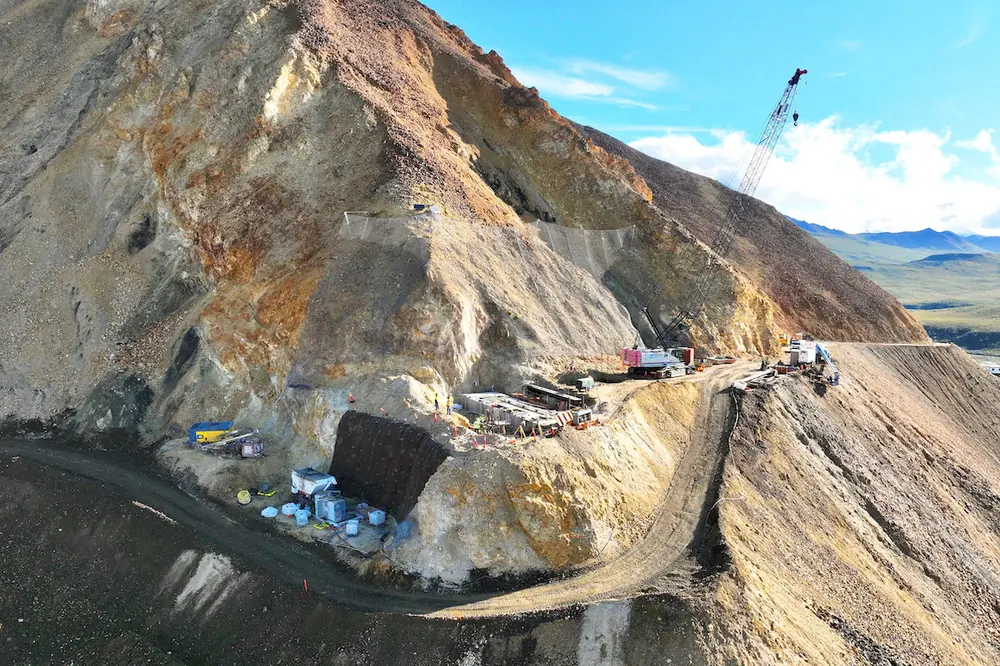
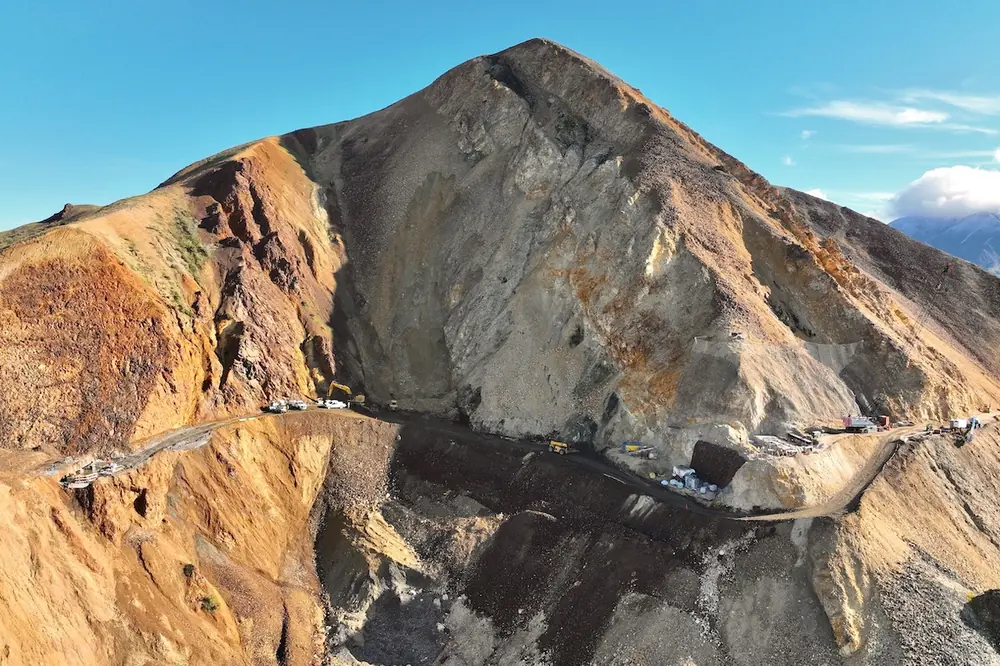
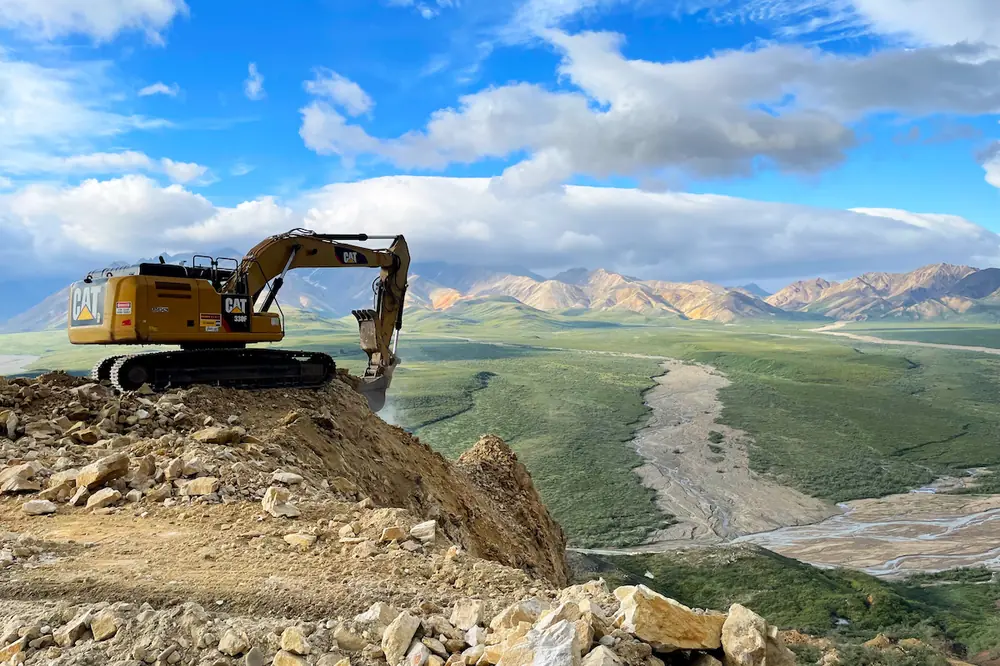
According to the National Park Service (NPS) website, the Pretty Rocks Landslide located at mile 45.4 has been slowly displacing a portion of Denali Park Road near Polychrome Mountain, a geologically complex, multicolored rock layered zone exposed on the mountainsides. Reds, purples, greens, and yellows — created by different mineral compositions and oxidation states in the rock — compose the polychromatic view.
Although the moving ice-rich, rock glacier-type landslide has reportedly been active since the 1960s, and most likely well before the Denali Park Road was built in 1930, the landslide only required some maintenance every two to three years.
In 2014, road maintenance crews noticed a substantial pick up in the slide movement. By 2016, the road slumped. The movement rate, which was just inches per year prior to 2014, turned into inches per month in 2017, inches per week in 2018, inches per day in 2019, and up to 0.65 inches per hour in 2021.

| Your local Yanmar dealer |
|---|
| WPI |
| CLM Equipment Co |
Safe passage became impossible, forcing the immediate closure of the road and cutting off vehicle access.
The Federal Highway Administration (FHWA) called for a bridge almost 500 feet in length to span the active Pretty Rocks Landslide. The new bridge would also need realignment of the Denali Park Road, requiring a significant amount of excavation at either end of the bridge.
The project was backed by more than $200 million in funding through the Bipartisan Infrastructure Law, the Federal Lands Transportation Fund, and the 2023 Disaster Relief Supplement.
In early 2023, Watsonville, California-based Granite Construction Company was selected under a construction manager/general contractor delivery model. Their work began in the summer with pioneering access through the washed-out roadway.

| Your local Hitachi dealer |
|---|
| Bane Machinery |
Early designs of the Polychrome Area Improvement Project envisioned a progressive balanced cantilever erection from each abutment using a highline system. However, upon awarding the preconstruction contract, Granite — along with construction engineering firm KWH Constructors and Somerset Engineers — discovered an issue with the approach.
“When additional geotech information was provided, it revealed that the western abutment was not suitable for stay or tieback foundations,” said Patrick Murphy, Project Manager, Granite Construction Company. “This slide was continuing to move inches a day at that point, every single day.”
The plan was revised to include a 475-foot, single-span steel Warren truss bridge to cross the active landslide, a one-sided approach from the east abutment. Roughly 80,000 cubic yards of roadway excavation also needed to be relocated.
The western side of the slide is not only rock, but also made up of colluvium, a loose, broken soil and rock composition that accumulated over time. Additionally, ice-rich permafrost holds the ground together, but it is melting.

| Your local Gradall Industries dealer |
|---|
| Kirby-Smith Machinery |
| WPI |
According to the NPS, the acceleration of the Pretty Rocks Landslide is a consequence of climate change-driven permafrost thaw. As average annual temperatures increase to 32 degrees Fahrenheit, the ice-rich permafrost soils subside, collapse, and thaw into an unstable slurry.
“Part of that west cut hillside is basalt. The other half is ice-rich colluvium,” Murphy said. “There wasn't very good geology to anchor into.”
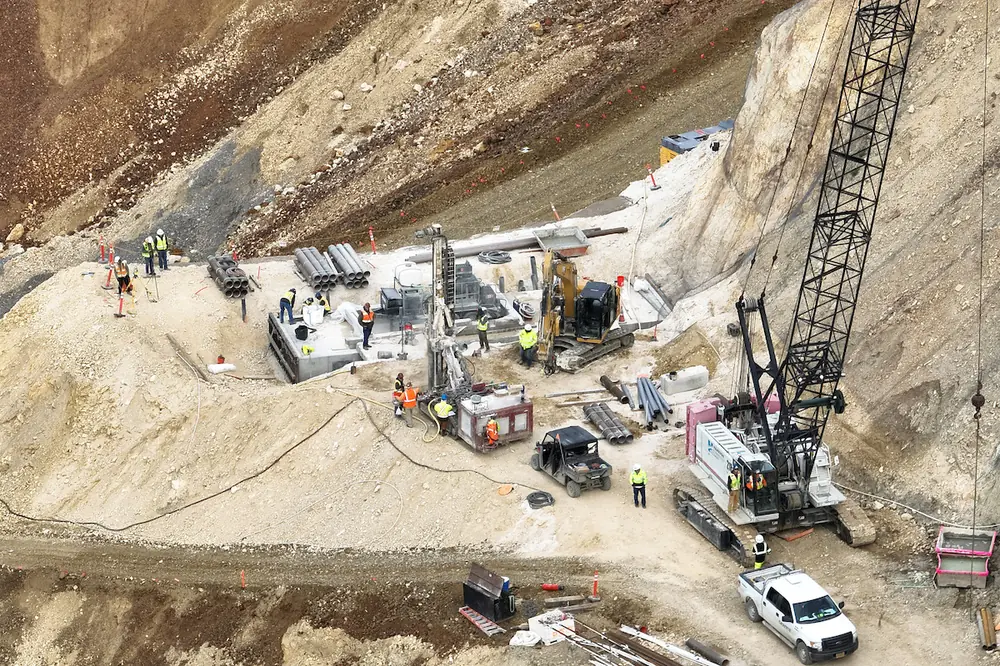
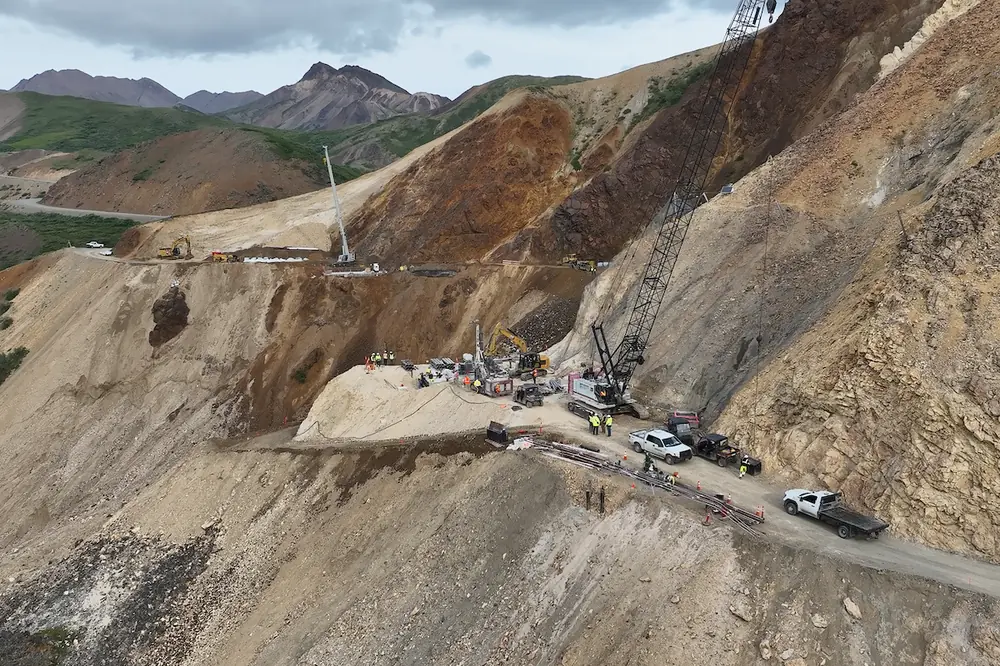
The team began to pioneer access, creating the first safe way into the hazardous work zone. They conducted extensive site excavation, including slope cuts and mucking on the unstable west side terrain, as well as drilling and blasting by Advanced Blasting Services (ABS), an Alaska-based drilling and blasting subcontractor.
“We pioneered access by going over there with a Cat 336 Excavator, picking down a hillside, getting to the belly of the slide, and then crawling back up the other side,” Murphy said.

| Your local Link Belt dealer |
|---|
| Nueces Power Equipment |
| Central Texas Equipment |
“It started off as a goat path by foot, and then Neil Stafford, the excavator operator, worked his way down the east mountainside into the belly of the slide and then worked his way back up to the old park road on the west side of the slide,” he added. “From there, he cut in an access path up the west ridge to allow access for the drill rig.”
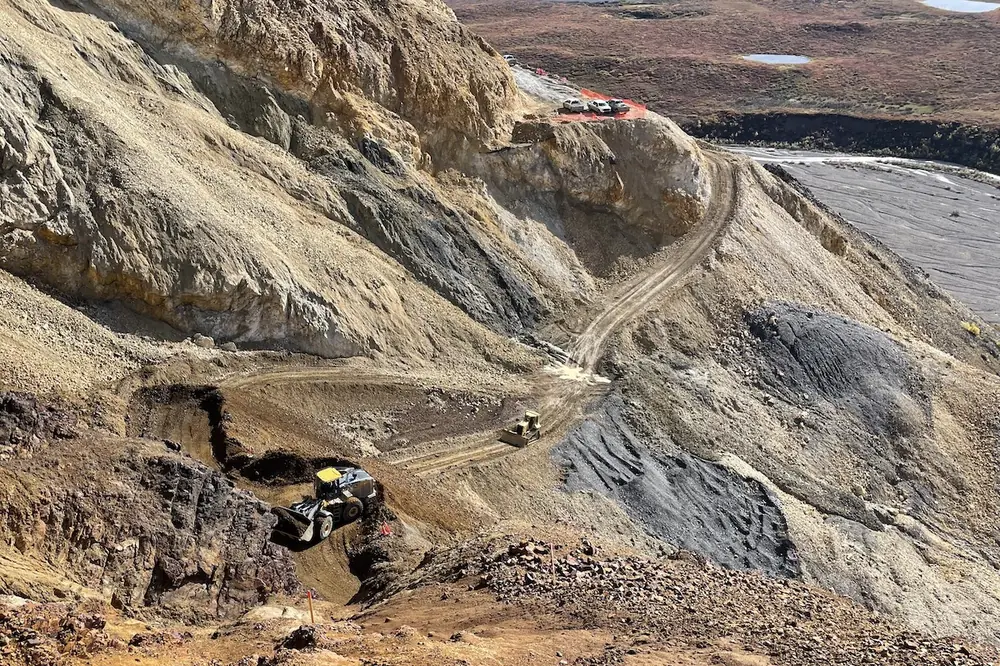
After ABS blasted the west rock, Granite transported the material down the mountainside in haul trucks and used it to build the access road.
“We built the access road up pretty good, and it got fairly wide,” Murphy said. “Then the other half of the west cut was that ice-rich colluvium. It was frozen at the surface, and as we excavated the material, we exposed it to the heat, and it started to melt off on a daily basis. It got pretty sloppy, mucky, and messy up there, but it did help with shaping the west face.”
To break up and excavate the frozen colluvium, the team used a Caterpillar 349 Excavator equipped with a ripper attachment, as well as a Caterpillar 336, Caterpillar D6, and Caterpillar D8.

| Your local Bobcat dealer |
|---|
| Central Texas Equipment |
| Nueces Power Equipment |
The ice and geological hurdles created a variety of challenges for the team. With the project located 45 miles inside of the park, getting materials, equipment, and the crew to the remote site was difficult.
In this part of Denali, hillsides can contain enormous ice bodies that remain from early glacial periods. Over time, those snowfields were buried by debris. While from the surface it may appear as a typical hillside, underneath it can be almost solid ice or ice-rich permafrost.
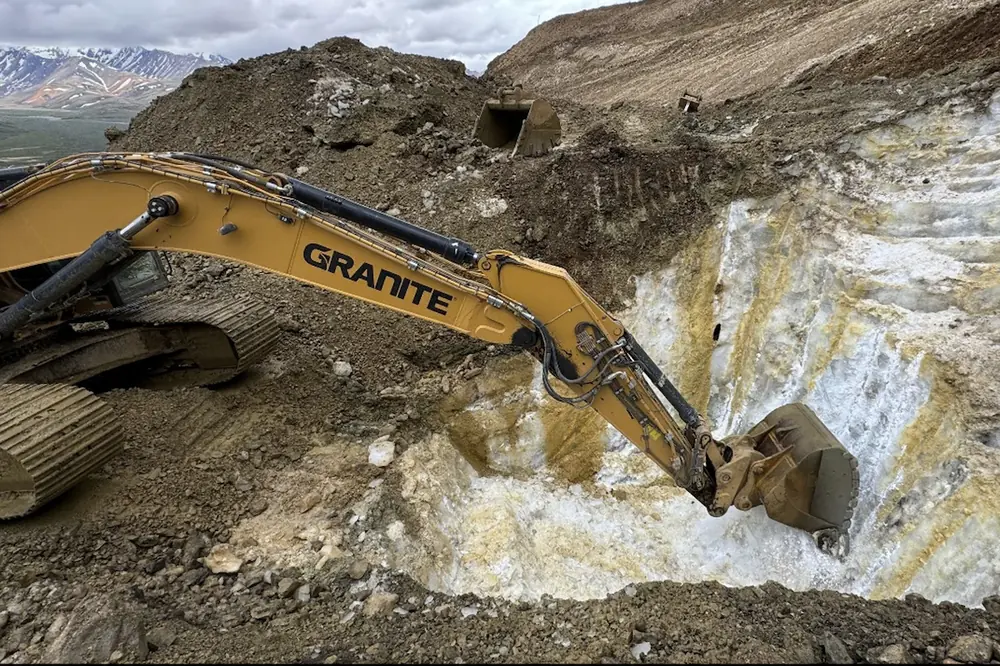
“The team came across a big ice field,” Murphy said. “We knew there was ice in the hillside, but not to that magnitude. It was solid glacial ice, essentially.”
Advanced Blasting used a drill rig to bore small-diameter holes into the hillside, probing to map the boundaries of the buried ice the team had unexpectedly encountered.

| Your local Wirtgen America dealer |
|---|
| Nueces Power Equipment |
| Kirby-Smith Machinery |
Once the dimensions of the ice field were discovered, FHWA’s geotechnical engineer, BGC Engineering, helped to develop a mitigation plan.
“We dug out as much as we could, about 20 feet deep,” Murphy said. “We didn't want to undermine that hillside either, so we just dug out as much of that ice as we could and then backfilled it with native rock to help insulate the ice so it doesn't melt off any further.”
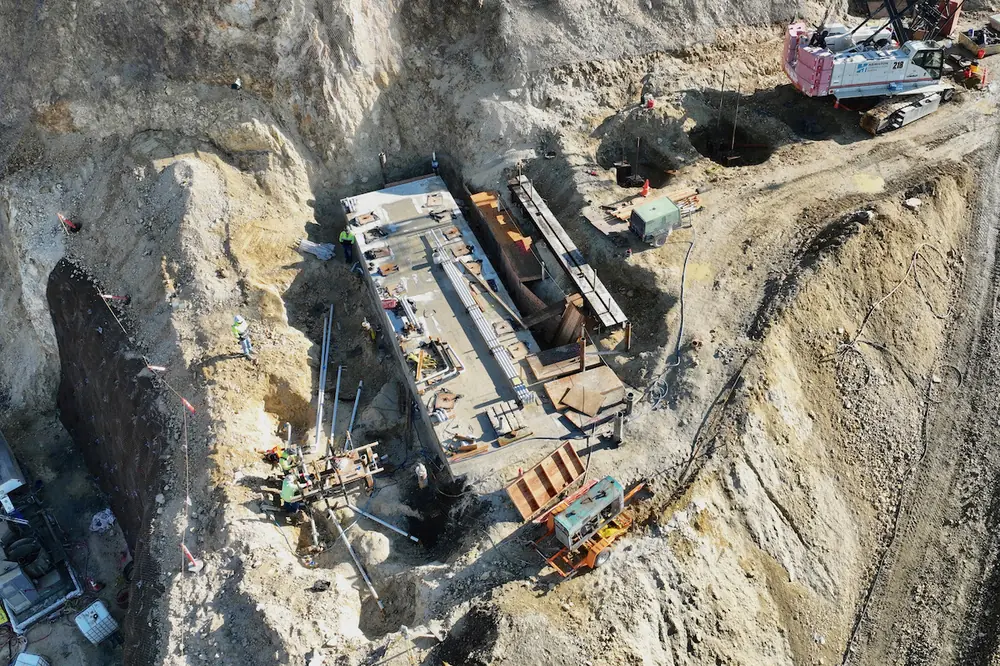
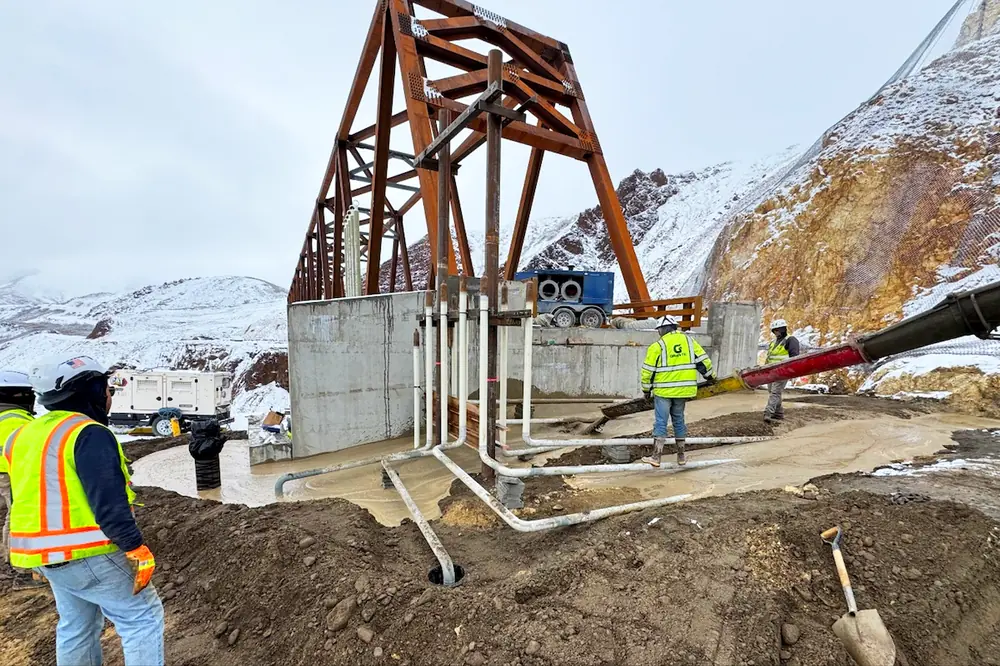
While the east abutment is competent to support the loads of the bridge launch, it still has layers of ice within the soil also known as “ice seams.” These thin to thick bands of ice form in permafrost soils and are problematic near structures. The abutment relies on the soil for support. If that ice later thaws, it could potentially move.
“The concerning ice layers on the east abutment are about 100 feet down, and that's what the thermosiphons are there to keep frozen,” Murphy said.

| Your local Magni dealer |
|---|
| Kirby-Smith Machinery |
Thermosiphons are cooling devices that pull heat from the ground in the winter to keep the deep permafrost frozen all year round.
“But more closer to the surface, we came across a couple of ice layers in the soil, which when they’re that close to your abutment, that’s concerning,” Murphy said.
The team’s solution to this was the installation of additional soil nails. The soil nail wall features 25-foot embedded primary soil nails and 15-foot embedded additional soil nails.
“Part of our contract has allowances for additional quantities for issues like this that would come up because it's a pretty unknown nature, and it's always melting and moving on us,” Murphy said. “We don't know what's going to get thrown at us from one day to the next.”

| Your local Wirtgen America dealer |
|---|
| Kirby-Smith Machinery |
| Nueces Power Equipment |
The new steel truss bridge was fabricated in Portland, Oregon, roughly 2,500 miles away from Polychrome Pass.
The steel bridge components were trailered from Portland to Seattle, Washington, where they were then loaded onto a transport ship headed to Whittier, Alaska. Then they were offloaded onto the Alaskan Railway and transferred up to Fairbanks, Alaska. From Fairbanks, the steel was loaded onto tractor trailers and transferred to the offsite yard just south of the park entrance. The steel was then offloaded and downsized to fit the job site loads.
“Remote access was a very challenging part of the job. It takes a lot of upfront planning,” Murphy said. “You can't just call for a steel beam and have it up there in 10 minutes. It's got to come from far away.”
Due to the park access road, all loads needed to be hauled at night.

| Your local NPK Construction Equipment Inc dealer |
|---|
| WPI |
“We have a day shift crew setting up loads outside of the park, loading up the trailers, and then our night shift guys would pick them up, and haul them into the site,” Murphy said. “They'd only get about two loads a night per driver if they were lucky. It was a pretty long haul.”
“We're essentially building this thing on a postage stamp, but when we had access to the west from the east, we were able to spread out a bit more,” he added. “Advanced blasting was working on the west side, and DBM and Hamilton were working on the east side. We were able to get some good headway going.”
During the west cut excavation, the team was able to maintain and build up the project access road by placing competent blast rock into the slide area toward the end of the 2024 season.
“The west cut was complete, and there wasn't any more material that we could place on the existing roadway,” Murphy said. “We built it up as much as we could knowing it was going to slide down.”

| Your local Bobcat dealer |
|---|
| Bobcat of North Texas |
| Compact Construction Equipment, Inc |
According to Murphy, they monitored the access road movement daily. What started off as an inch per day of slide changed to multiple feet per day by the end of the 2024 season.
“There came a point in August of 2024 where we were not able to maintain the road in a safe manner to allow construction traffic anymore,” he said. “We had to cut it off and pull everything out that we could.”
“Once access to the east side was lost and the slide took out the roadway, the project became dead-ended at the east abutment,” Murphy said.
With the western road cut off, the east abutment was the farthest reachable point. Everything beyond it was inaccessible by road. Like a cul-de-sac, all work now had to be planned using one-sided access only. There were no shortcuts and no recovery routes. Every move had to work.

| Your local Hyundai Construction Equipment USA dealer |
|---|
| Nueces Power Equipment |
- Owner: Federal Highway Administration/National Park Service
- General Contractor: Granite Construction Inc., Watsonville, California
- Engineer: Jacobs Engineering, Dallas, Texas; BGC, Vancouver, British Columbia
- Other Contractors: KWH Constructors (bridge erector and temporary works engineering); Advanced Blasting Services (blasting, rock anchors and rock dowels, and rock fall mitigation in 2023 and 2024); DBM (micropiles, soil nail wall, ground anchors, and launch frame piles in 2024); Hamilton (concrete precast abutments in 2024 and precast walls in 2025 and 2026); Arctic Foundations (thermosiphons and condensers in 2024 and 2025) Editor’s Note: Read more about the launch of the truss bridge at Polychrome Pass in part two of this story, running in the April issue.