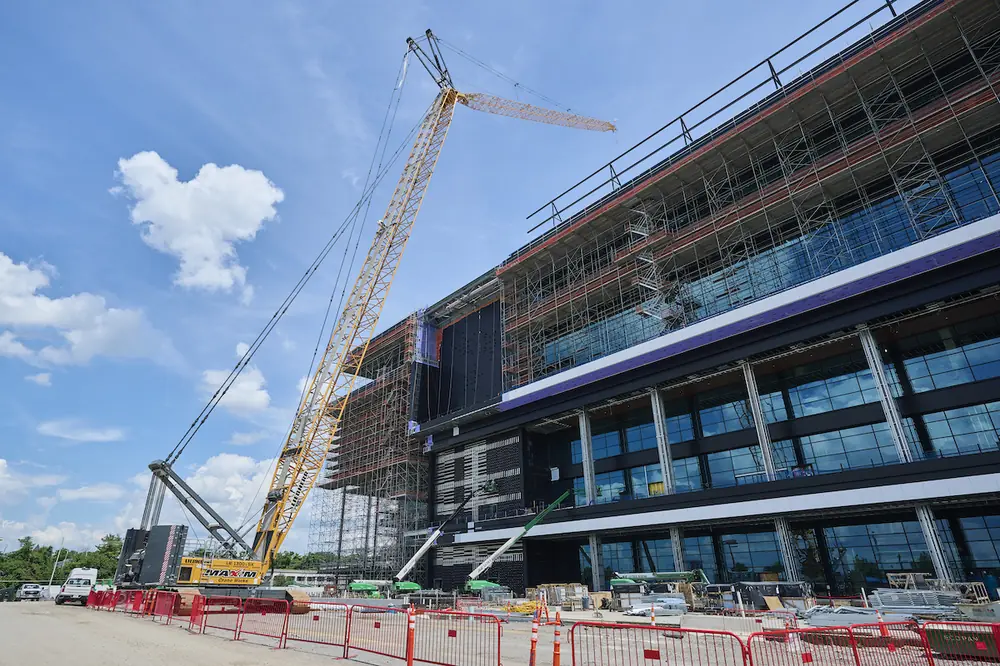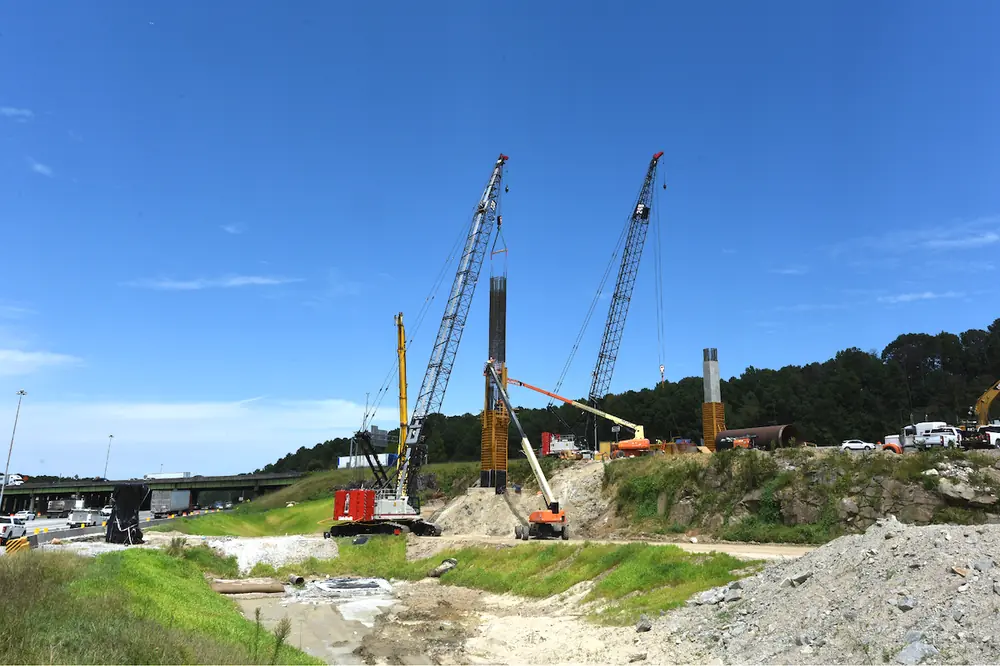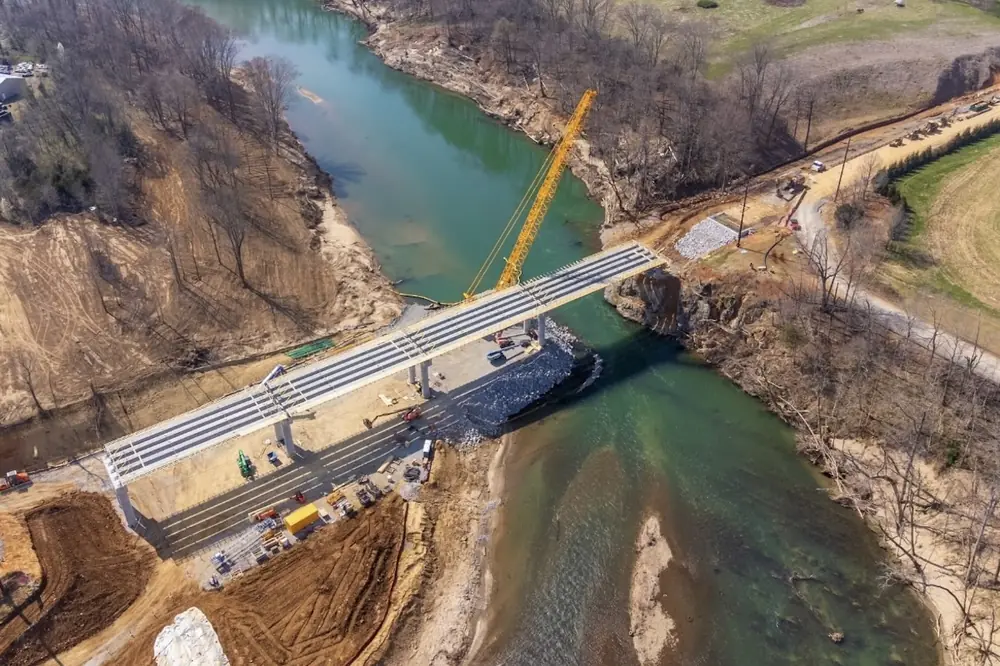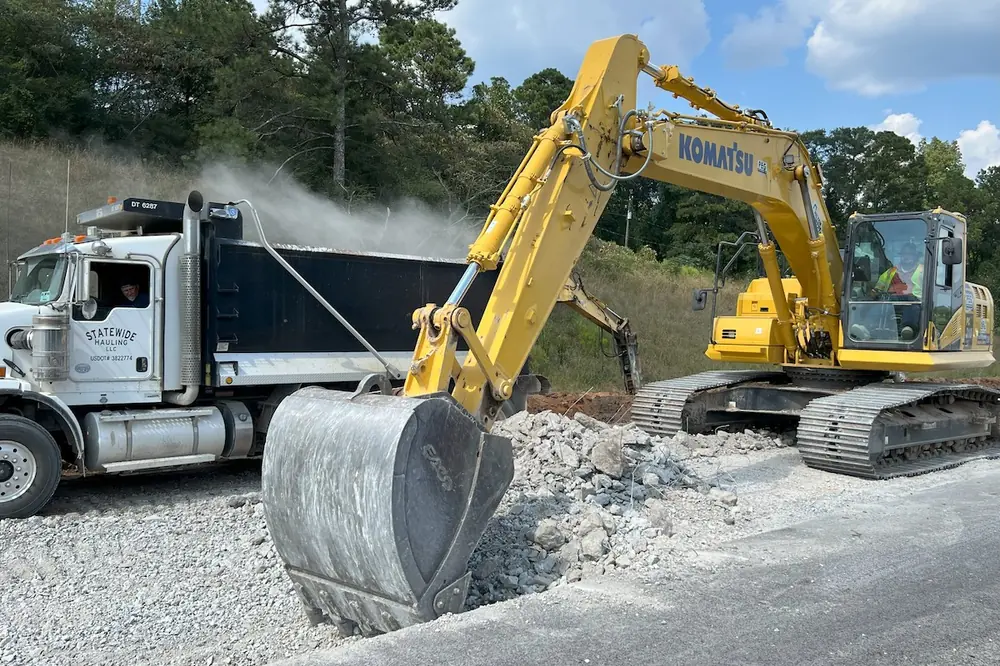
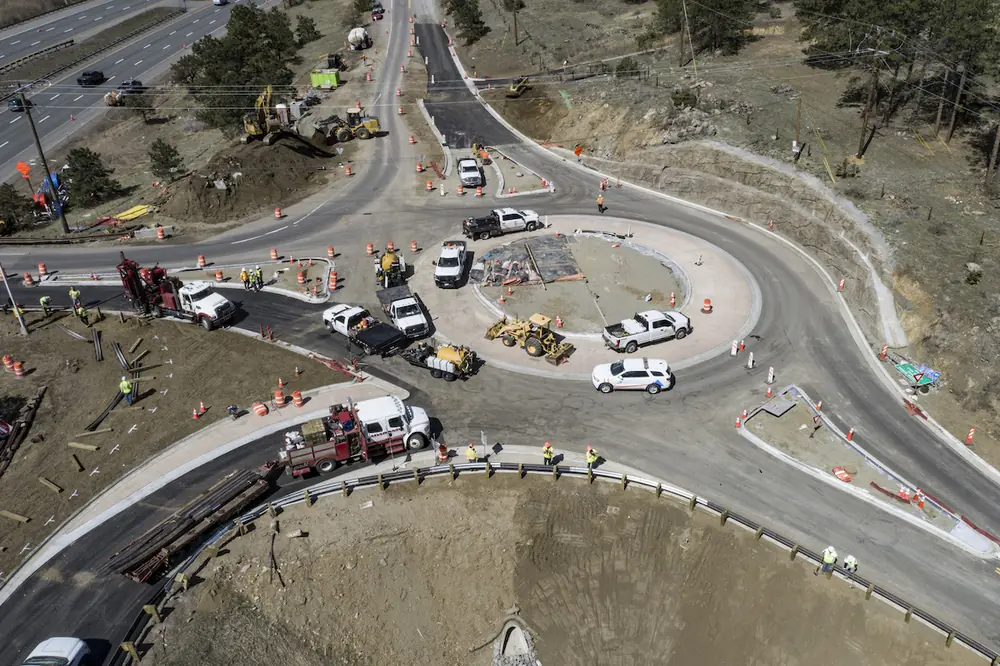

Traffic congestion on Interstate 70 west of Denver has long been a challenge for travelers heading into Colorado’s mountains, particularly during peak travel periods. The Colorado Department of Transportation (CDOT) and Kraemer North America are working to change that through the I-70 Floyd Hill Project, a large-scale initiative designed to ensure continuous traffic flow along the corridor between western Evergreen and eastern Idaho Springs.
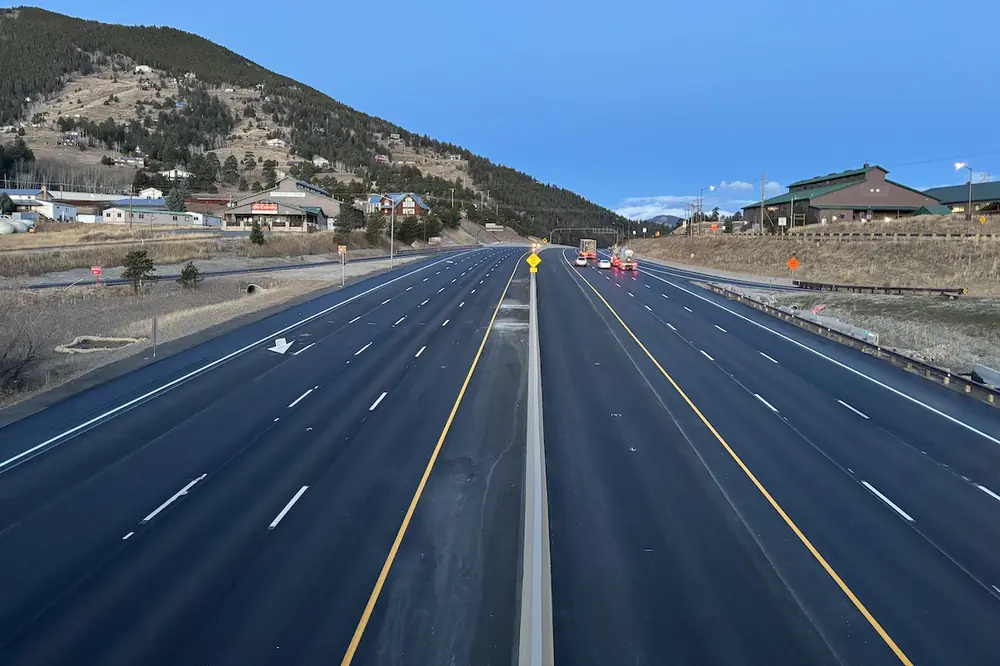
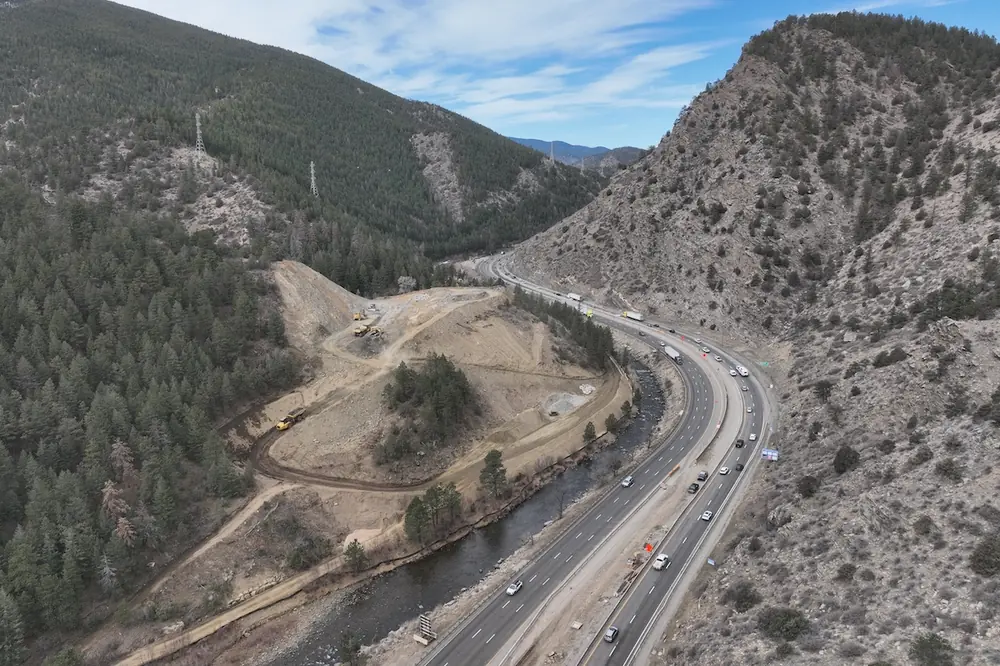
The 8-mile section of Interstate 70, known as the Mountain Corridor, is just 20 minutes outside of Denver. It is a major east-west route, and bottlenecks regularly occur where it narrows from three to two lanes. The average daily traffic on mainline I-70 is projected to reach 62,790 in 2045.
According to the I-70 Floyd Hill Project page on CDOT’s website, the project area “acts as an economic gateway for the state of Colorado and the nation. ... This section of I-70 is in desperate need of improvements.”
The team is taking multiple steps to increase capacity, including:
- Adding a third westbound lane. The lane will be a full-time tolled express lane with a buffer. The lane will run for 6 miles and connect to another section of I-70 that has a third lane on an as-needed basis.
- Adding a 2-mile-long frontage road that will increase resiliency. This will be particularly helpful for trucks, which can use the road as needed rather than traveling on the local roads.

| Your local Trimble Construction Division dealer |
|---|
| SITECH Mid-South |
| SITECH Tri-Rivers |
Another major focus of the project is to improve safety. Currently, there are curves that limit a driver’s line of sight. A 2018 safety assessment identified a total of 345 crashes between January 1, 2014, and December 31, 2016, for this stretch of I-70. The most common types of crashes were fixed objects (35 percent) and rear-end collisions (33.2 percent).
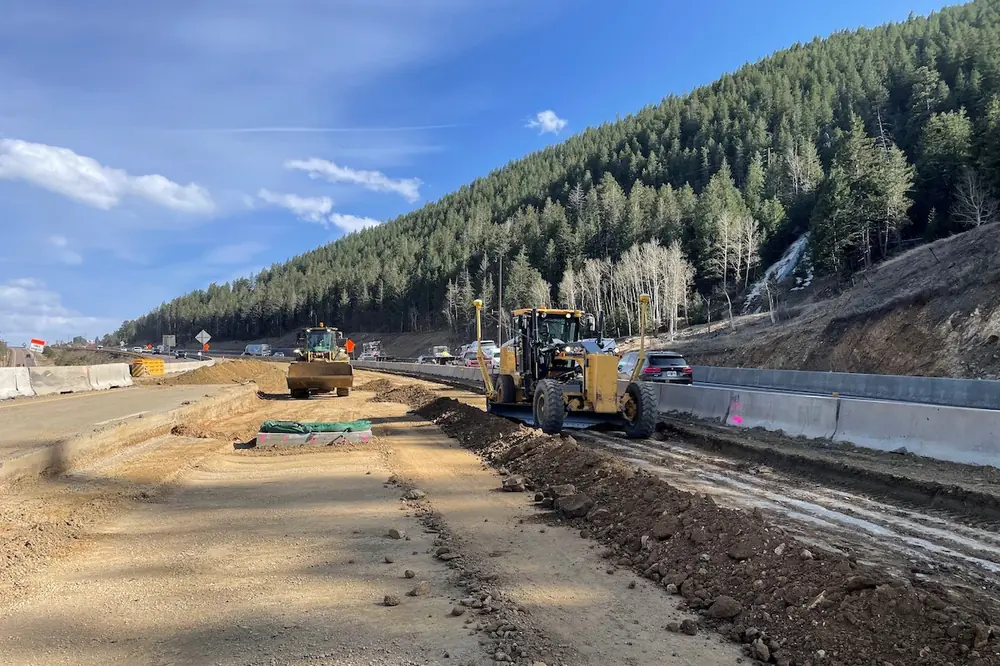
“We’re flattening curves throughout this corridor and are bringing it up to 55 mph design curve,” said CDOT Project Director Kurt Kionka, who is responsible for delivering the project from final design to completion. Before construction, several curves in the stretch only met a 45 mph design speed.
The CDOT website says that the project’s safety-focused elements include:
- Changing the alignment of I-70 from the middle of Floyd Hill to the Veterans Memorial Tunnels to straighten roadway curves, which will improve safety and sight distance
- Moving the current left-merge U.S. 6 on-ramp to westbound I-70 to the Hidden Valley/Central City Parkway (Exit 243) interchange to improve safety and operations

| Your local Gomaco dealer |
|---|
| Ring Power Corporation |
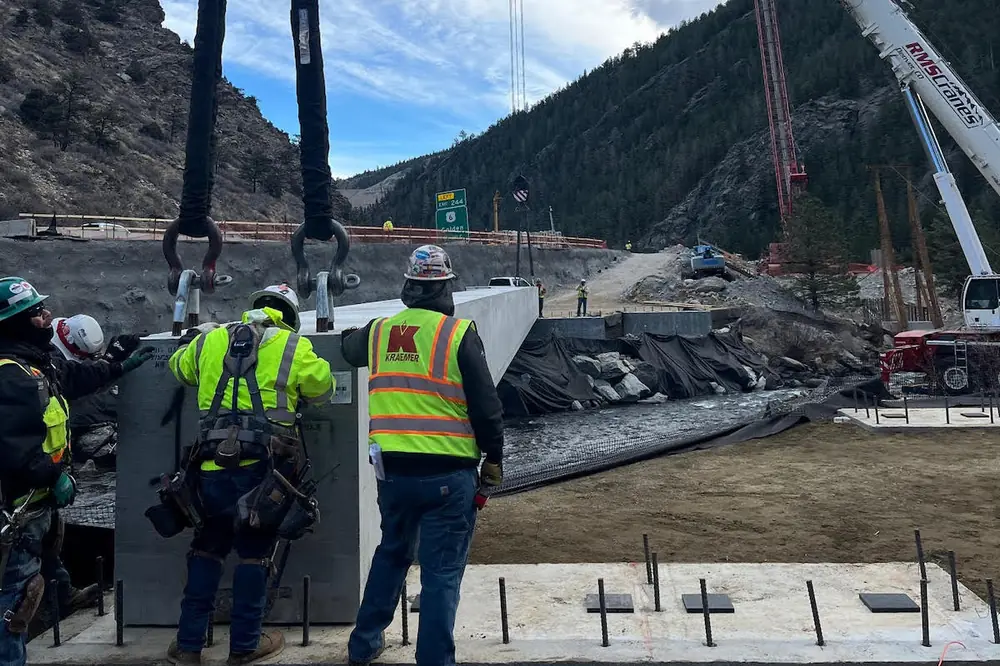
Another project element involves bridgework. Five bridges are being reconstructed, as they have reached the end of their useful life. The team is also constructing five new bridges.
Additionally, the team is restoring the Clear Creek trail along I-70. The 3-mile-long trail will be made ADA-compliant.
There were multiple earlier projects completed prior to beginning the main project. They involved creating a wildlife crossing, developing two roundabouts, and installing a shuttle stop at the El Rancho exit.
The stop includes 40 parking spots for carpooling or jumping on CDOT's Pegasus shuttle that provides service from Denver to towns along the I-70 corridor. The shuttle operates between Denver and Avon, Colorado, with multiple stops along the way.

| Your local Bobcat dealer |
|---|
| Pinnacle Central Co Inc |
The work zone includes multiple constraints, including the surrounding mountains and Clear Creek, which is beneath I-70 for most of the project area. Another constraint is the active landslide in the area.
“We’re well aware of the slide and are monitoring it closely,” Kionka said.
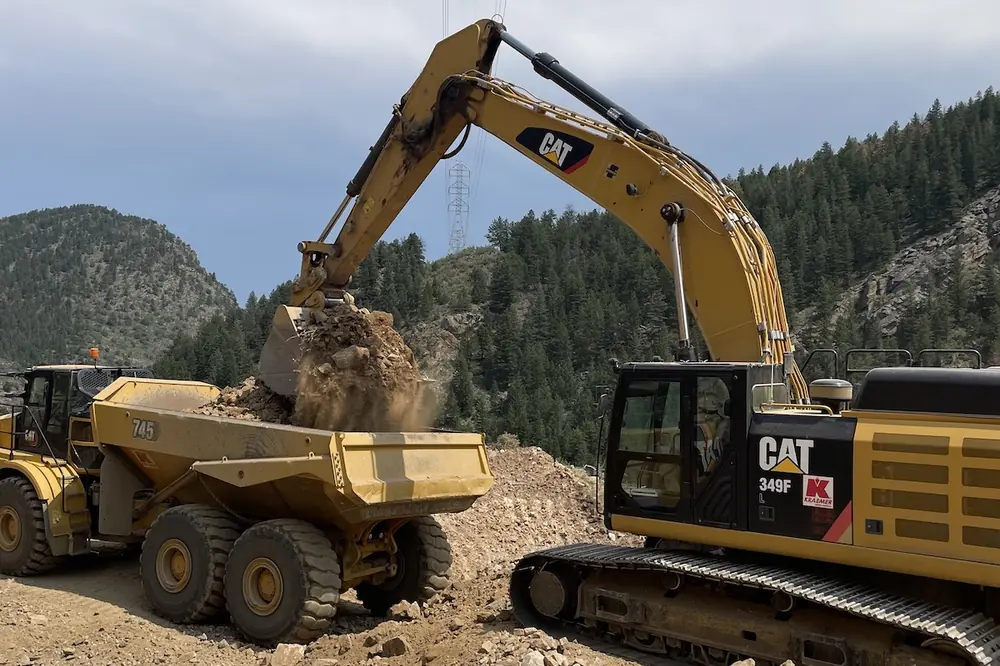
The monitoring is especially important, since the team is performing blasting in the area as part of their efforts to smooth out the curve. By the end of 2025, they had completed over 150 blasts and removed 500,000 cubic yards of rock. Their goal is to stay as far away from the landslide as possible.
While the team is required to keep the road open, they are allowed to hold traffic for up to 20 minutes while blasting during weekdays. They also have someone in the water to ensure rafters and other users of Clear Creek are not in harm’s way. Crews perform blasting during off-peak hours.

| Your local Topcon Positioning Systems Inc dealer |
|---|
| Linder Industrial Machinery |
The team is building a 1-mile-long superstructure, but they have run into some challenges during its design and construction.
The first challenge was figuring out how to fit the bridge in with the canyon wall around the road and the creek below. The team resolved this with the height of the superstructure, which varies but will be just over 100 feet up in the air at its highest point. It will carry westbound traffic and cross over eastbound traffic (from 20 feet above) at the bottom of the hill.
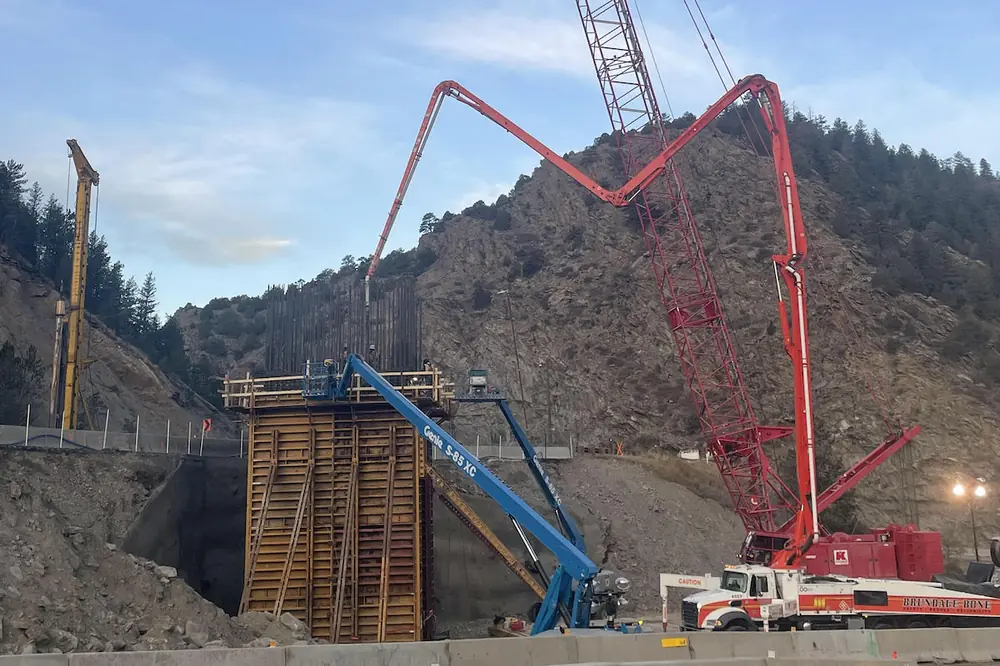
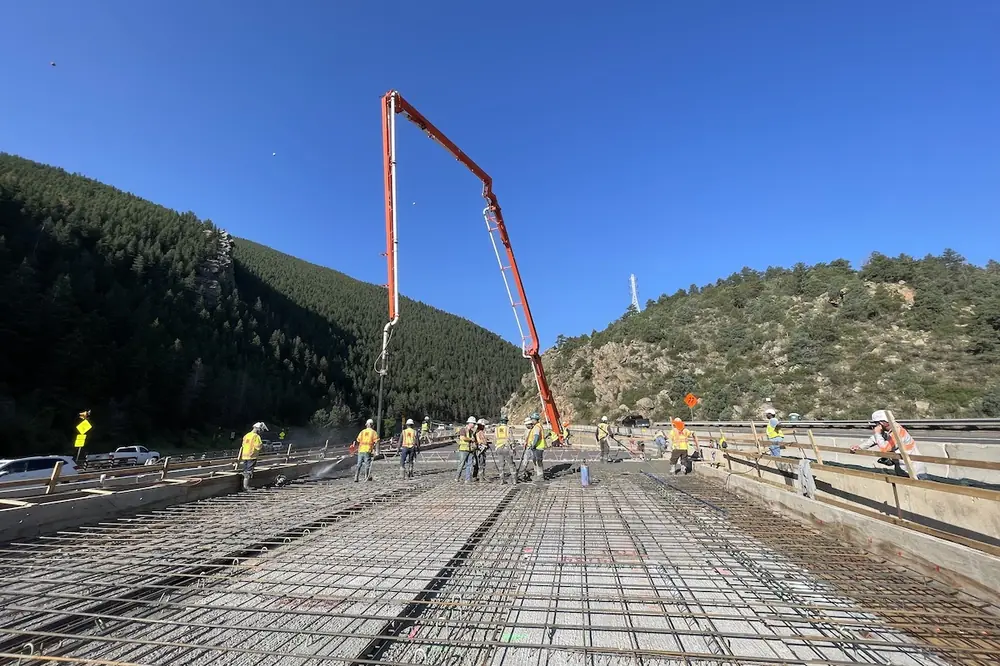
The team is building the structure in 15-foot sections and working on each end simultaneously. Ultimately, they will meet in the middle. This was the only way to continue construction while keeping I-70 open. Four spans of the structure will be constructed in this manner due to the long, 350-foot span lengths. The spans are cast in place due to space constraints.
Another challenge lies below the ground. “In this part of the mountains, some rock is very hard, while a few feet away rock is much different,” Kionka said.

| Your local Komatsu America Corp dealer |
|---|
| Linder Industrial Machinery |
Typically, geotech engineers can analyze a core sample and know the type of rock in a 30- to 50-foot radius. It is cost and time prohibitive to get geotech samples from every spot.
“In several locations, we’re putting caissons spaced 60 feet apart from each other,” Kionka said, “but we couldn’t check each area during design, though we did get a good representation.”
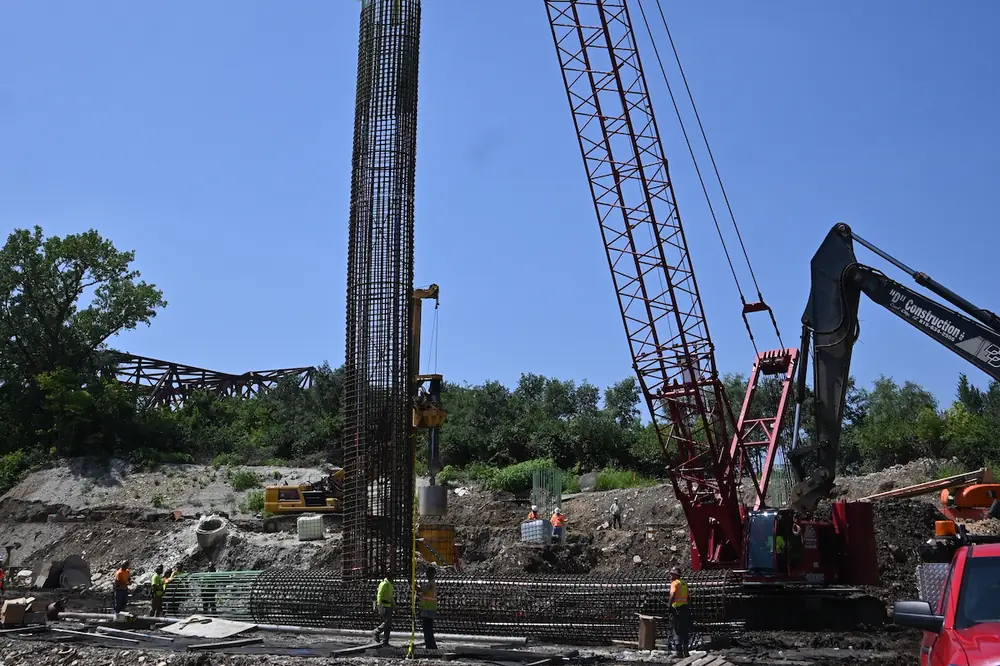
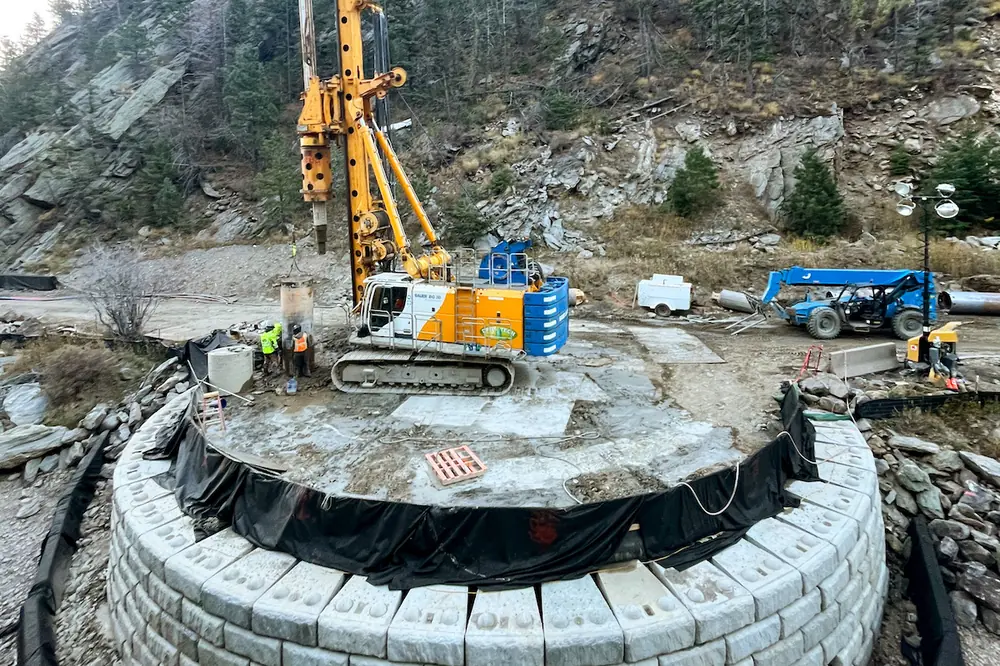
The project is constructing over 200 caissons. There have been no major issues so far other than some caissons needing to be lengthened or shortened depending on where the team found bedrock.
Both the stakeholders and the public have made it clear that they are very concerned about preserving the environment in and around the area.

| Your local Wirtgen America dealer |
|---|
| Dobbs Equipment (DXC) |
This concern has spurred the team to take extra precautions while working next to the creek and to incorporate some design elements. Additional monitoring equipment has been installed in the creek to monitor its health, and water quality ponds are being built as part of the project. The project has perimeter control devices to contain runoff.
Project designers also paid close attention to aesthetics. For example, the initial plan was to put up panels in the areas where rock was removed. Instead, the team is utilizing sculpted concrete to match the surrounding rock.
“The work had an added benefit, as it's more cost effective than putting up panels,” Kionka said.
Kionka called the I-70 Floyd Hill Project the largest of his more than 20-year career. The scale of the work is reflected in the following numbers:

| Your local Iowa Mold Tooling Co Inc dealer |
|---|
| Nichols Fleet Equipment |
- 600,000 tons of material removed
- 28,000 tons of asphalt placed
- 7,000 linear feet of pipe installed
Kraemer North America has been part of the project since the design team reached 20 percent conceptual state. The project is being delivered via the construction manager/general contractor delivery method. Kraemer was selected as the construction manager.
“Kraemer sat with us at the table during design, offered great innovations that can save us money. They submitted a proposal for the general contractor role and were selected,” Kionka said. “Because of the delivery method, they got the first chance to negotiate with CDOT and won based on price.”
He added that they have been great to work with, and it has been a good partnership.

| Your local Bomag Americas dealer |
|---|
| Linder Industrial Machinery |
The project budget was originally anticipated to be $705 million in 2020. However, estimators anticipated 2.5 percent inflation, and it has been significantly higher than that. The new anticipated final price tag is $905 million.
“The vast amount of the uptick in the budget is due to inflation, cost pressures, and the great unknowns, such as where bedrock is and what is below ground,” Kionka said.
Funding for the project comes from a few outlets, such as the Colorado Tolling Investment Office, the Bridge and Tunnel Enterprise, and federal funds. The federal funds include a $100 million INFRA grant, the largest ever awarded to a CDOT project.
Construction on the main project began in the summer of 2023. The project is on schedule, with completion expected at the end of 2029. The project calls for a phased completion. The westbound lanes are expected to open at the end of 2027, and eastbound traffic is expected to open in 2028.

| Your local Wirtgen America dealer |
|---|
| Beard Equipment Co - AL |
| Tractor & Equipment |
“From the I-70 perspective, the whole project will look complete by end of 2028,” Kionka said.
When the project is complete, backups and bottlenecks on busy days in the Floyd Hill section of the I-70 corridor will be minimized. Drivers will also experience a safer route and up-to-date bridges.
- Owner/Director: Colorado Department of Transportation
- General Contractor: Kraemer North America, Plain, Wisconsin
- Designer: AtkinsRealis, Montreal, Canada
- Engineer: RockSol, Thornton, Colorado
- Other Contractors: Stanton Constructability Services, Sandy, Utah