

Contractors and civil engineering firms have built some of the most disciplined risk management cultures in any industry. The consequences of a safety breach are too severe, too visible, and too final. But the same standards rarely extend to the mission-critical information technology (IT) systems on which their operations rely. For an industry that tolerates no risk on the job site, that mismatch is getting harder to justify.
On a modern construction site, technology is moving information as fast as machines move dirt. IoT captures live telemetry about equipment, materials, workers, and site conditions, enabling fast, data-driven decision-making. Data points such as location, structural loads, and maintenance alerts flow in real time between sensors, field teams, and the office.
The problem is that digital activity is running on outdated IT foundations that were never built to support today’s smart construction site technologies.
The construction sector is increasingly targeted by cybercriminals who recognize the value of disrupting major infrastructure projects. Architecture, engineering, and construction (AEC) organizations are prime targets because they depend on legacy systems, operate complicated hybrid IT infrastructures, and manage complex supply chains.
When an incident hits, the consequences aren't contained to the IT department; projects stall, deadlines slip, and client relationships take a hit. And the clock is running from the moment operations go down. Industry data consistently puts the cost of unplanned downtime in the hundreds of thousands of dollars per hour.

| Your local Trimble Construction Division dealer |
|---|
| SITECH Allegheny |
| SITECH Northeast |
Risk exposure isn't limited to external attacks. Hardware failures, accidental data deletion, software issues, and even a flood affecting on-premises systems can bring operations to a halt.
Business continuity planning used to mean keeping a tape backup in a fireproof drawer. That era is long gone.
Nobody on a construction site treats fall protection as a one-time project. You don't install a guardrail and simply check the box. You build a strong safety culture, test the systems, train the people, and review what went wrong when something slips.
IT resilience requires the same approach.
| Your local Trimble Construction Division dealer |
|---|
| SITECH Allegheny |
| SITECH Northeast |
That starts with robust backup processes across your full IT estate — but it doesn't end there. A backup is a copy of your data, not a recovery plan. A real disaster recovery program defines how quickly operations can be restored, what gets prioritized first, how data loss is minimized, and how often the plan is tested under real-world conditions. Without tested recovery procedures, firms often discover critical gaps at exactly the wrong moment.
Patch management is another area that frequently slips. Keeping systems patched and current isn't glamorous work, but unpatched vulnerabilities remain one of the most common entry points for attackers.
Continuous monitoring — having visibility across the entire IT environment around the clock — is what allows anomalies to be caught and contained before they escalate. Investing in cybersecurity tools such as firewalls, antivirus software, and multi-factor authentication are not sufficient protection on their own. What matters is whether the right people have visibility across the environment, can respond rapidly when something goes wrong, and are learning from what they see.
Businesses risk serious consequences if breaches go undetected or unaddressed. Yet too many construction firms rely on overstretched IT departments with little capacity for proactive security measures.
| Your local Trimble Construction Division dealer |
|---|
| SITECH Allegheny |
| SITECH Northeast |
In the AEC industry, where complex collaborative project environments are the norm, IT security measures must be supported by strong governance and a culture of awareness to maintain operational resilience.
True governance means setting clear policies about how systems are accessed, who is responsible for each piece of the IT environment, how incidents get escalated, and what employees are expected to do when something looks wrong. It requires regular training — not just for IT staff, but for project managers, estimators, and field supervisors who interact with connected systems every day.
Many attack tactics don't target technology weaknesses — they target people. A credential request disguised as a subcontractor communication or a familiar client portal notification can get through even a well-maintained technical environment if employees aren't conditioned to recognize it.
Multi-factor authentication, access controls, and consistent patch cycles address the technical layer. Building a culture of awareness addresses the human factor.
| Your local Trimble Construction Division dealer |
|---|
| SITECH Allegheny |
| SITECH Northeast |
For contractors pursuing government work, contract requirements around cybersecurity are tightening. Cybersecurity Maturity Model Certification (CMMC) 2.0 is the federal cybersecurity certification framework required for Department of Defense contractors. It sets a high bar for documented, verifiable security measures across a firm's IT environment, and pending legislation may expand similar requirements to other federally funded construction projects.
The CIS Controls— developed by the Center for Internet Security, a government-backed organization — provide a practical companion guide that federal evaluators and prime contractors are increasingly referencing alongside CMMC.
In January 2026, the General Services Administration also introduced a new data protection framework mandating one-hour incident reporting and requiring extensive flow-down across subcontractors. Design files, BIM models, site telemetry, drone imagery, CAD datasets, and geospatial information all may be classified as Controlled Unclassified Information (CUI) under the expanded rules.
Together, these standards are making it harder for firms to treat cybersecurity and recovery planning as informal or undocumented processes. Firms that already have clear governance and documented reporting and recovery procedures will be in a much stronger position than those scrambling to formalize those disciplines under growing scrutiny.
| Your local Trimble Construction Division dealer |
|---|
| SITECH Allegheny |
| SITECH Northeast |
Managed IT providers with AEC industry expertise and experience in supporting cybersecurity compliance can help contractors build programs that meet that bar and demonstrate it when the time comes.
Contractors have spent decades building rigorous systems around operational risk. That same discipline — the culture, the accountability, the testing, and the training — is exactly what IT risk management now demands.
A mature business resilience program is not just a firewall and a backup. It means continuous monitoring, tested recovery procedures, current documented controls, trained employees, and incident response protocols that have been exercised before they are needed.
AEC firms outsource specialized work as a matter of course. Geotechnical, environmental, surveying, and inspection, for example, all require expertise that most firms do not try to build entirely in-house. IT risk management deserves the same straightforward evaluation: What does the program actually require? Does the organization have the skills and resources to deliver it consistently? What value would an IT partner bring?
| Your local Trimble Construction Division dealer |
|---|
| SITECH Allegheny |
| SITECH Northeast |
IT risk is real, and it is growing. For firms running increasingly connected digital operations, IT resilience is no longer a back-office issue. It is part of enterprise-wide operational risk management.
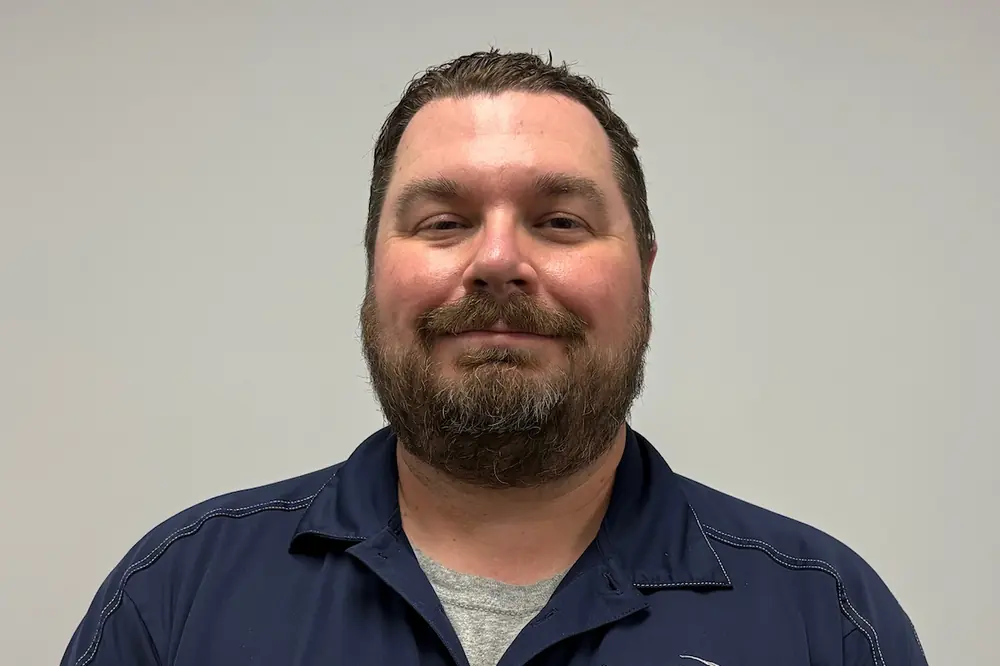
Greg Bishop is Director of Digital Transformation at Creative ITC, a global managed IT services provider with U.S. headquarters in Houston, Texas.