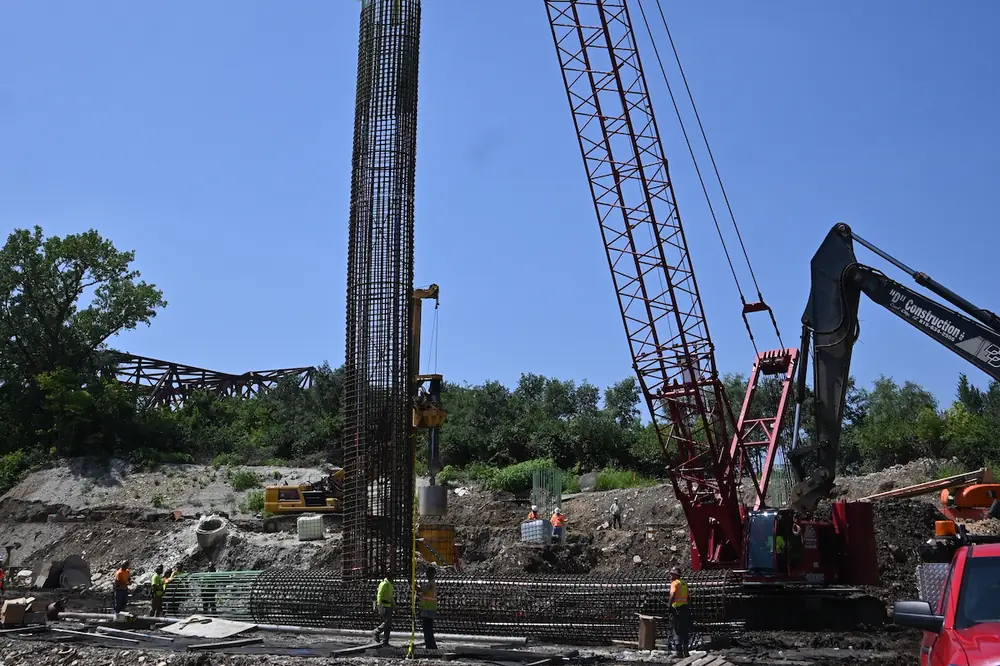
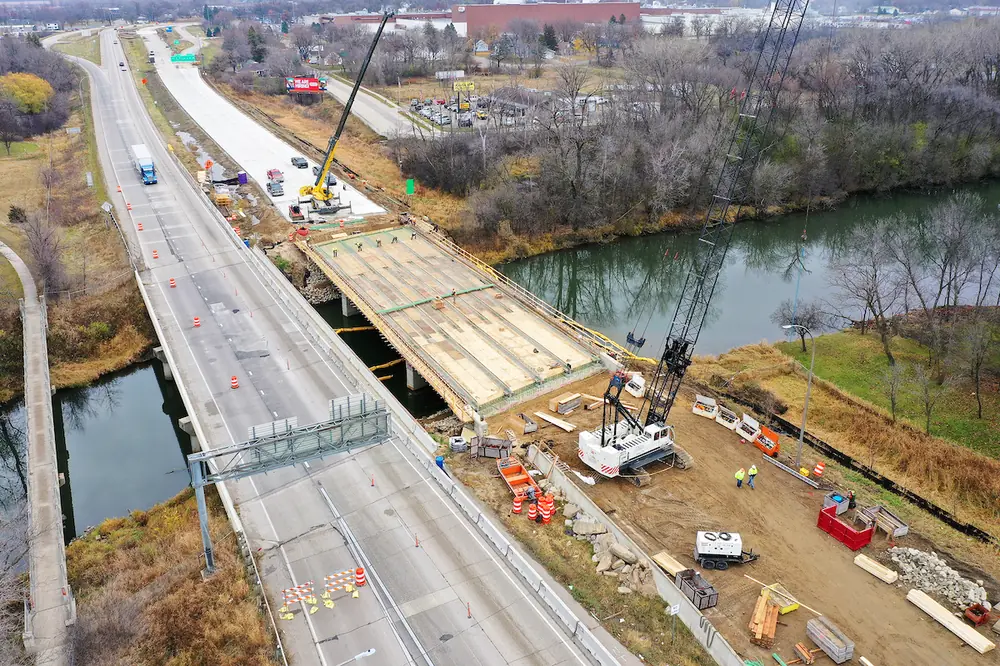
Even when construction projects take place on dry land, the presence of adjacent bodies of water can create deadly hazards – both in terms of the potential for drowning and the possibility of electrocution. Water is all around us, and it’s important for workers to treat it with respect. Whether the project is construction of a bridge over a body of water, erecting a building next to a stream, or working in close proximity to a stormwater detention pond, safety supervisors must prepare for potential hazards.
While it’s easy to assume that water must be deep to create real hazards, even very shallow bodies of water — such as small creeks and ditches — can threaten lives. For example, if a worker falls face down into a stream and loses consciousness, drowning may occur. That’s why the presence of any body of water warrants prudent safety planning.
Consider Hypothermia
Drowning and electrocution aren’t the only risks. In colder climates or coastal areas, hypothermia can be a significant hazard. When we’re immersed in cold water, our reflexes automatically make us gasp for air. If our head is completely underwater when that gasp happens, we’ll inhale water. In very cold water, we’ll begin to hyperventilate, in which our breathing speeds up to as much as 10 times its normal rate. Numbness will start to begin in anywhere between 10 and 30 minutes, and we’ll discover it has become difficult to control our limbs and fingers. When a co-worker tosses a rope right next to us, we can’t quite get our fingers around it. At some point during the next hour, we’ll slip into unconsciousness.
Plan Methodically
Any water rescue must be speedy, and that demands preparation, both in terms of a formal emergency preparedness plan and training for its execution. Safety professionals have a well-earned reputation for attention to detail, and the presence of water on a worksite generates a long list of unknowns that need to be pinned down. Considerations like whether the placement of our equipment might undercut the banks or making sure someone doesn’t accidentally discover the deep spot in the creek or pond. Knowing how a given day’s currents might affect risks and rescues.
That’s why a thorough emergency preparedness plan explores an unusually long list of factors:
Site
Everything starts here. If I have to get an ambulance to this part of the site, how close can it get? If I need a boat in a hurry, can I find one?
Water
Water is strikingly different wherever we encounter it. It’s all water, but it adapts to its environment. A plan for work over a pond may have little in common with the same work over a stream. For example, how cold is the water?
Work
Consider how the tasks being performed will interact with the water features on the site. If we need to put equipment in a stream, how will it change the current?
Provisions
Where will the workers perform their tasks? Do they need platforms and restraints?
Numbers
How many people will be working on the jobsite, and how much safety supervision will be needed?
Transport
If you’re at a remote location, consider the safety of workers as they travel to and from the jobsite, whether that’s in your van, their pickup, or a boat.
Environment
What’s the lighting like at different times of day and night – if it’s a 24-hour project? And what happens if it starts to rain or the temperature drops 30 degrees?
Response
For each type of emergency you identify, identify the procedure that should be used and explain how workers will learn or practice it.OSHA has Rules, Too
Keep in mind that rulebooks are the result of bad things that happened to someone else. Check the regulations, and you will find OSHA has a long list of very specific requirements such as everyone must wear life jackets and inspect them before and after each use, have ring buoys with sufficient line ready at the waterside and a skiff equipped for water rescues, and the use of fall restraint rather than fall arrests if anyone is working 6 feet or more over water. Make sure you know those expectations before creating your plan.
Steps for Reducing Risk
As with all safety assessments, identifying potential hazards is the first step in eliminating or mitigating them. Among the additional areas requiring attention when working near water are these:
Inhibit Slipping
Take steps to prevent falls or slipping into the water. Keep work surfaces and walking areas dry and clear of debris. Work platforms should include guardrails and toe-boards as needed. Non-stick deck compounds may help.
Secure Ramps
Any ramps or gangways must be kept clean and secured when being used.
Verify Integrity
Inspect decks or platforms for loose boards, protruding nails, or other trip hazards. Make sure floats are properly secured and in good condition.
Protect Equipment
Open sides of platforms and ramps over the water may need curbs or rails to keep equipment from sliding off.
Mark Hazards
Edges of the dock and trip hazards should be painted yellow.
Stow Items
Tools, materials, and other gear must be stored safely away from the work area when not being used.
Buoy Lines
If you’re working in an area with a strong current, a line of buoys that’s securely anchored should cross the water downstream.Better Work Practices
Workers should select water-resistant footwear with slip-resistant soles. Walking near or in water may involve unexpected slippery surfaces, such as moss-covered rocks, so they should step slowly and carefully. Because conditions around water can change quickly, workers must remain attentive to their surroundings and change work practices as conditions change. Currents pose risks, as do areas where the depth is unclear. Using the buddy system allows each worker to look out for the other and obtain help more quickly if needed.
The Role of Training
As with other types of worksite procedures, knowledge of the worker’s role in proper safety practices is critical. Assuming workers have the skills to carry out a rescue is dangerous. Skills should be tested. For example, if a site requires access to skiff in case someone falls into the water, time how quickly workers can access and deploy the skiff. Practicing drills can call attention to where plans should be refined. Particularly on remote jobsites, it’s critical that all workers have current first aid and CPR certifications.
Rehearsing safety procedures may seem to be a time-consuming distraction, but offer the best way to know workers will be ready to step up and save a co-worker’s life. When a real emergency occurs and his handled safely and efficiently, nobody second-guesses the value of training.