

Heavy civil construction operates on a massive and often unforgiving scale. Whether tunneling through solid rock, retrofitting an operational dam, or managing miles of active highway paving, the logistics are complex. Schedules for these projects are dense, highly technical, and frequently carry thousands of individual line items. Historically, understanding, analyzing, and manipulating these schedules has been the exclusive domain of highly trained specialists in the back office.
But keeping schedule analysis locked away from the field is a costly operational mistake.
The project schedule should act as the heartbeat of a job — a living, breathing rhythm that guides daily execution. When a schedule is treated merely as an episodic reporting requirement, isolated from the superintendents and trades actually putting the work in place, projects suffer from what we’ve termed "decision latency."
Without accessible schedule data, field leaders are forced to make rapid, instinct-based decisions when unexpected changes occur. If a subcontractor arrives with a smaller crew than expected, a superintendent will adjust on the fly to keep people moving. However, without a clear view of the underlying critical path method (CPM) physics, they cannot see the downstream compounding impacts of that choice.
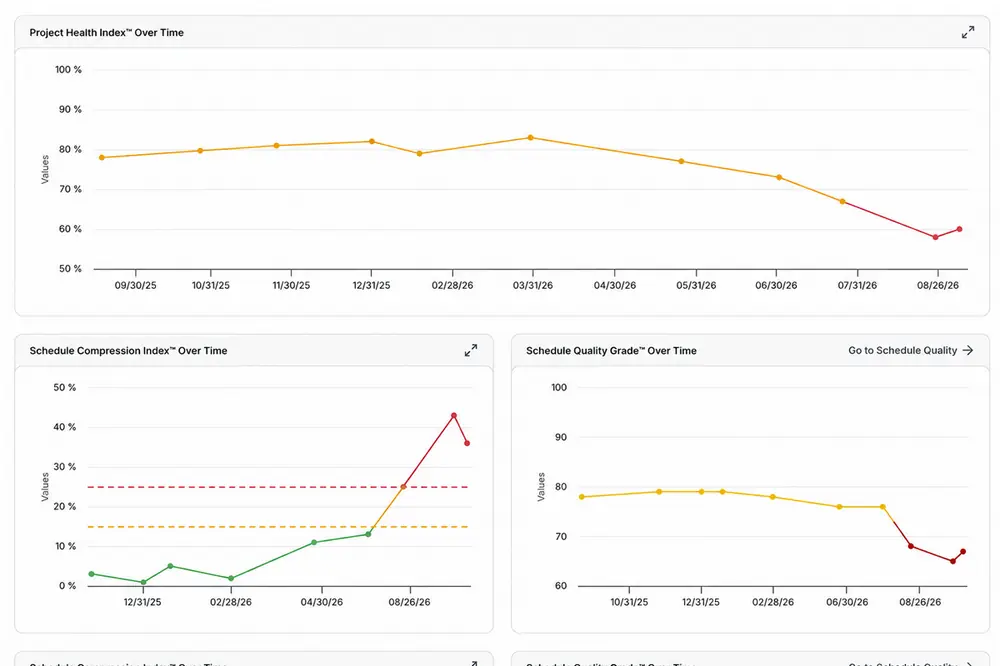
These gut-based field decisions act as a series of operational paper cuts. Over time, they compound, resulting in hidden schedule compression that typically rears its head in the final 90 days of a project. To recover, contractors are forced into expensive overtime, stacked trades, and heightened safety risks.

| Your local Wirtgen America dealer |
|---|
| Kirby-Smith Machinery |
| Nueces Power Equipment |
To cut out this decision latency, contractors must open up schedule analysis to everyone. Making project timelines accessible and understandable across the entire team requires more than just buying new software; it requires fundamental shifts in project culture, planning workflows, and field engagement.
The first step to accessible scheduling has nothing to do with technology and everything to do with culture. In many organizations, scheduling is treated as an administrative burden — a box to check to satisfy owner requirements. To make scheduling accessible, leadership must reframe it as the primary strategic tool for project execution.
This begins during the preconstruction and baseline phases. Far too often, a baseline schedule is built in a vacuum by an estimator or a third-party scheduler using repurposed templates. When the operations team eventually receives it, they lack faith in its constructability and immediately resort to building their own parallel plans in disconnected spreadsheets.
Contractors must mandate cross-functional participation early in the project lifecycle. Superintendents and project managers should be deeply involved in reviewing the logic, sequences, and durations of the baseline plan before ground is broken. When the field has a hand in building the timeline, they take ownership of it. The schedule transitions from being "the office’s problem" to a shared operational roadmap.

| Your local Yanmar dealer |
|---|
| WPI |
| CLM Equipment Co |
Many projects include severe constraints, such as tight environmental or weather windows, or strict facility shutdown periods. Translating these constraints into a massive, text-heavy Gantt chart often causes team members' eyes to glaze over during coordination meetings.
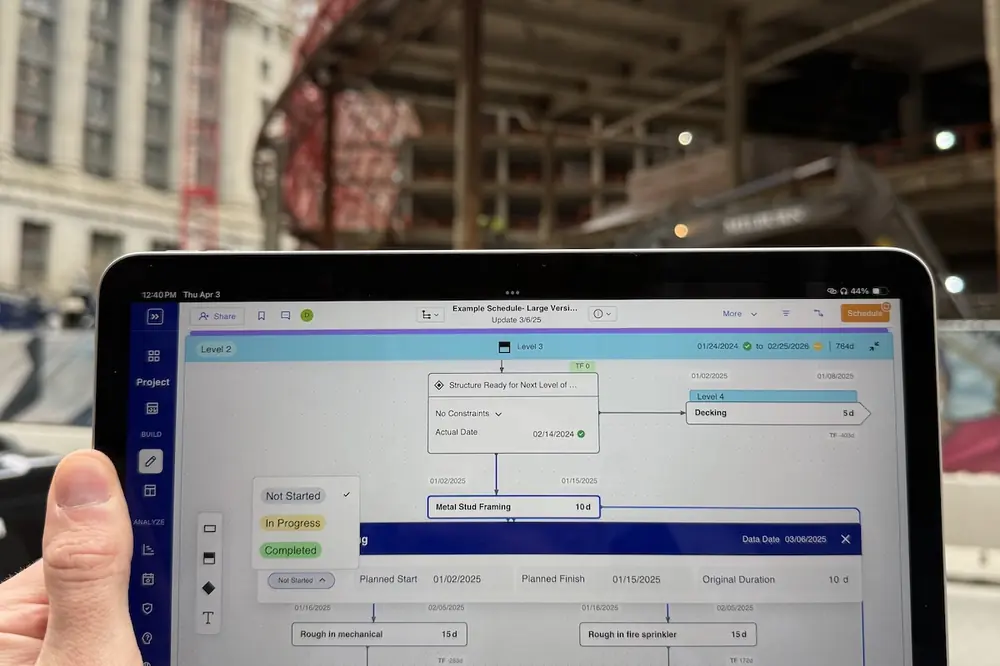
Construction professionals are visual thinkers, and presenting data in a highly technical format creates an immediate barrier to entry. To counter this, contractors are increasingly shifting toward visual planning environments.
For instance, California Engineering Contractors, Inc., a prominent West Coast heavy civil firm, faced significant challenges on a highly complex, $150 million retrofit of the Folsom Dam near Sacramento, California. The project required retrofitting massive gates and hoisting machinery while navigating strict seasonal constraints regarding when gates could be taken out of service.
Rather than reviewing static, cluttered charts, the project team utilized digital, whiteboard-style planning environments. By translating complex CPM logic into visual, interactive blocks, the entire team could see and understand the plan simultaneously. This move broke down the barrier to schedule analysis. Stakeholders with different backgrounds and expertise were able to sit in a room together and collaboratively build a sequence that made sense to everyone.

| Your local NPK Construction Equipment Inc dealer |
|---|
| WPI |
When project logic is visual, you do not need decades of technical software training to spot a missing predecessor or recognize an unrealistic duration.
Perhaps the biggest disconnect in scheduling occurs between the master timeline and the field's short-term execution plans. Because traditional master schedules are often inaccessible to the field, superintendents manage their three-week lookaheads in isolated spreadsheets or on physical whiteboards.
This separation means that the master schedule is never truly up to date with field realities, and the field is never perfectly aligned with the master milestones. Accessible scheduling requires merging these two worlds.
Contractors like Castle Rock Construction Company, a heavy highway contractor based in Colorado, successfully bridged this gap by decentralizing their lookaheads. They recognized that managing crew assignments manually via spreadsheets risked double-booking resources across concurrent projects.

| Your local Bomag Americas dealer |
|---|
| WPI |
By transitioning to accessible, cloud-based scheduling workflows, their project managers and field staff can now interact with the master timeline directly. Superintendents can pull their specific weekly work plans straight from the centralized schedule, and any adjustments made in the field pipe directly back into the master plan. This level of transparency ensures that resource forecasting for heavy equipment and specialized crews is accurate months in advance, completely eliminating the siloed approach.
General contractors are not the only ones who suffer when a schedule is inaccessible. Subcontractors bear a significant burden when they are handed static timelines and expected to conform without having input on the sequence.
Firms like Balfour Beatty have recognized that the key to avoiding project bottlenecks is bringing trade partners directly into the scheduling ecosystem. In their special projects group, which handles fast-paced, highly collaborative builds, they focus on using accessible platforms that are easy to train new team members on. By moving away from a single-screen, single-license approach where only one person controls the data, they are able to integrate subcontractors directly into the planning process.
When subcontractors have the ability to view the live schedule, analyze the float, and participate in coordination meetings with an interactive tool, they can provide high-fidelity feedback regarding their own resource limitations. Giving trade partners a seat at the scheduling table builds trust, increases accountability, and ensures that the sequences being planned are executable in the real world.

| Your local Liebherr Construction Eq dealer |
|---|
| Nueces Power Equipment |
The construction industry is facing a widespread personnel challenge, and finding specialized schedulers with decades of legacy software experience is increasingly difficult. Relying on an elite few to interpret project data is no longer a viable long-term strategy.
By prioritizing accessibility, contractors can empower the hands that build the work.
When schedule analysis becomes a shared team skill rather than a siloed administrative task, firms eliminate decision latency, protect their project margins, and build a resilient foundation for future growth.
Nitin Bhandari is the Co-founder and CEO of Planera, a construction tech startup focused on visual, critical path method-based scheduling and planning software.