

Tennessee State Route 35 (SR 35), a north-south state highway in east Tennessee, serves as a major transportation corridor connecting Maryville in Blount County to Greeneville in Greene County. The route largely overlaps with U.S. Route 411 through its southern and central sections and with U.S. Route 321 in its northern portion, traversing small towns and rural areas in the foothills of the Great Smoky Mountains.
SR 35 passes through Blount, Sevier, Jefferson, Cocke, and Greene counties, and supports local commerce, tourism, and regional connectivity. In Cocke County, the SR 35/U.S. 321 corridor runs through downtown Newport, the county seat, frequently causing traffic backups.
However, a road project currently under construction and nearing completion is poised to move that through traffic away from the downtown area, dramatically changing the corridor and providing a safer, more efficient route for both local and transit traffic. The Tennessee Department of Transportation’s (TDOT) Newport Bypass Project — designed to bypass downtown traffic and stoplights — features five-lane configurations (two lanes in each direction with a center turn lane), bridges over rivers and railroads, and provisions for future expansion. These improvements will address congestion, flooding risks, and urban navigation challenges along the route.
“This project will alleviate congestion in the middle of downtown Newport,” TDOT Project Manager Jessie Joyner said. “Currently U.S. 321/SR 35 meanders through downtown and through a residential area of town. The Newport Bypass will be a quicker, safer route through Newport for travelers. The project consists of approximately 4.5 miles of new roadway alignment [from SR 9 to Saint Tide Hollow Road], four concrete bulb-tee bridges, signals, and paving. Additionally, five box culverts have been constructed, and many other drainage structures have been installed.”
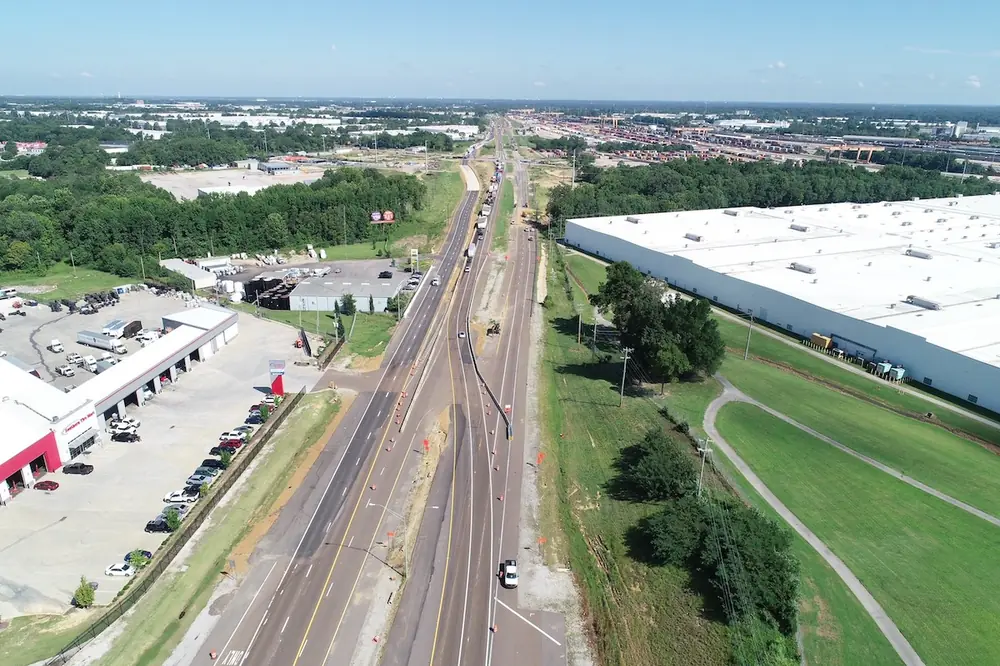
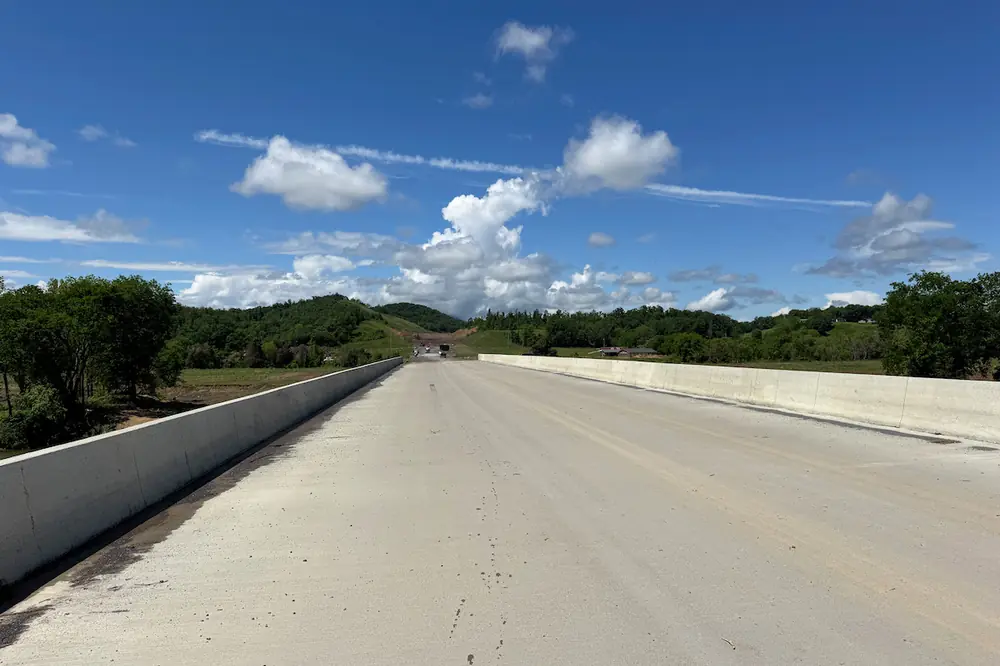
The first section of the new alignment, from State Route 9 (U.S. 70) to Rankin Road — approximately 2.4 miles — consists of four 12-foot travel lanes, two in each direction, with a 12-foot center turn lane and 12-foot shoulders (10 feet paved). The second section, from Rankin Road to the project terminus just south of Saint Tide Hollow Road — approximately 2.3 miles — includes two 12-foot travel lanes, one in each direction, with 12-foot shoulders (10 feet paved). If traffic demand increases for this section, TDOT has purchased enough right of way to be able to construct additional lanes in the future when traffic warrants.

| Your local Hyundai dealer |
|---|
| Equipment East |
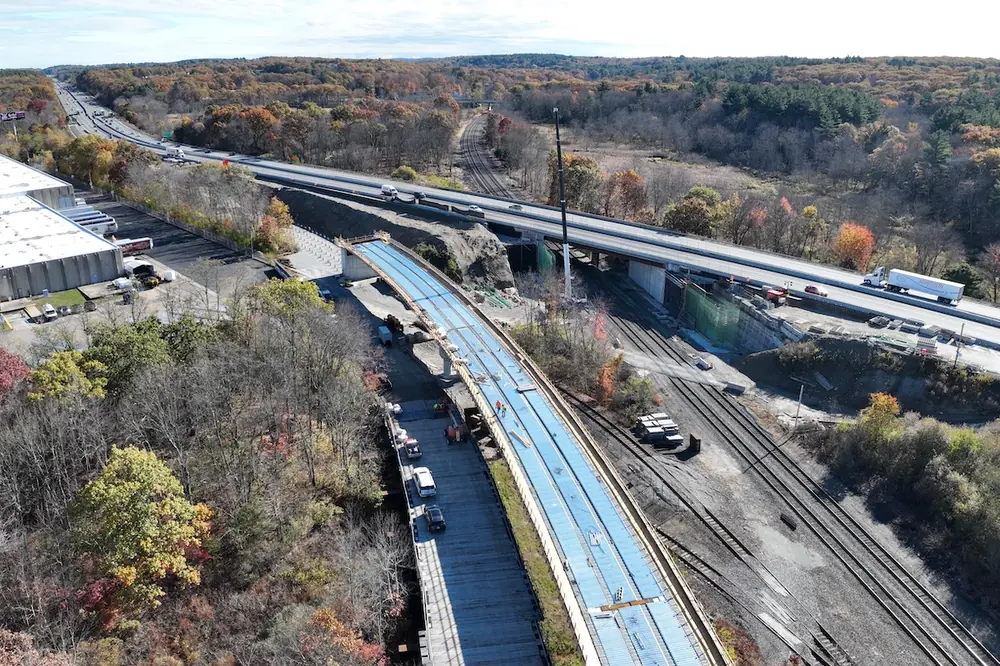
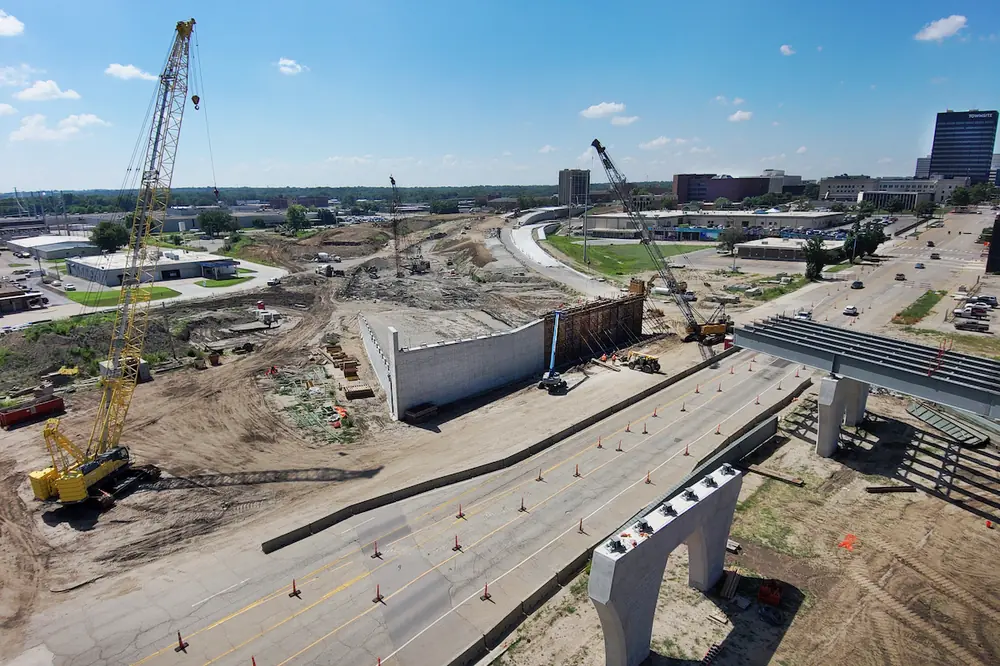
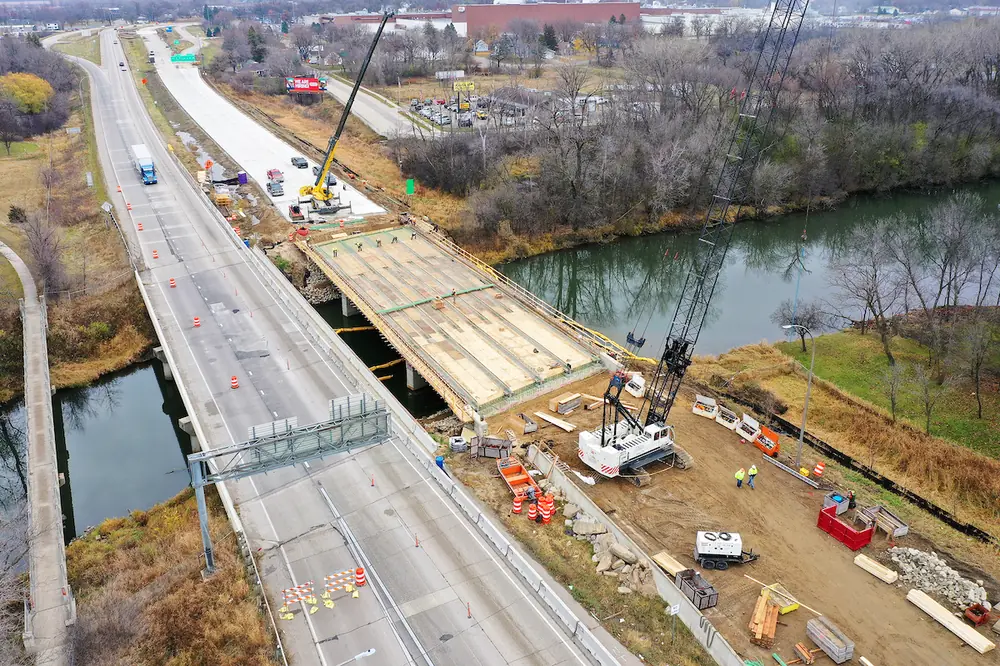
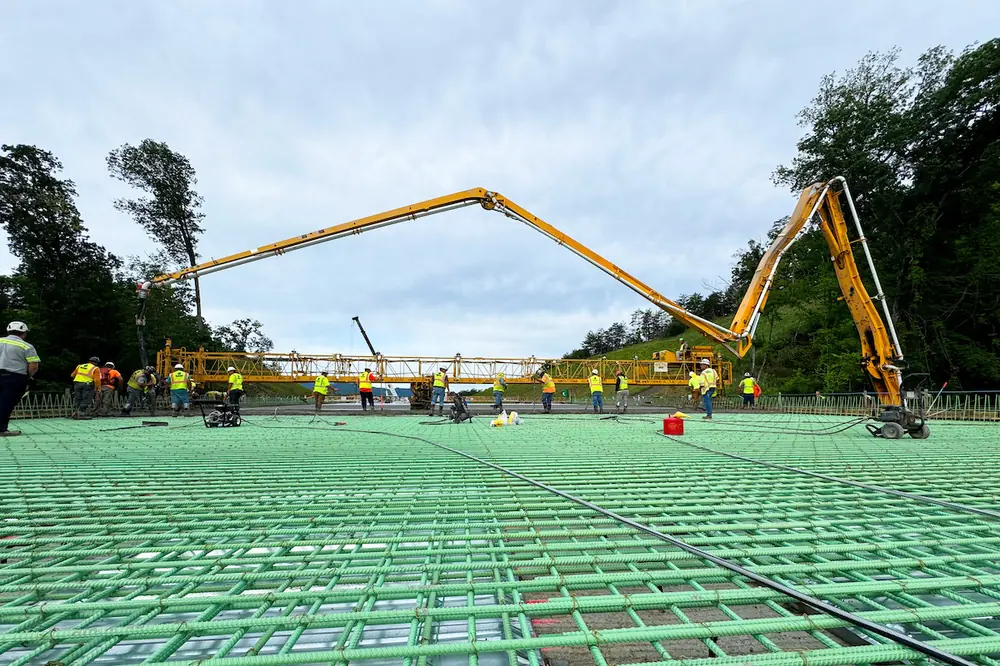
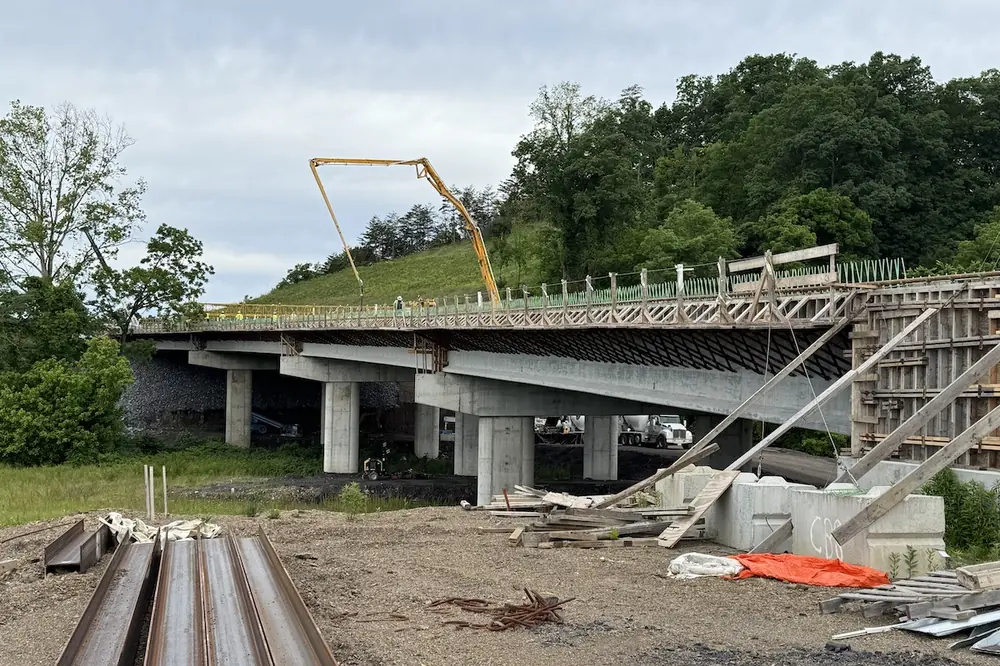
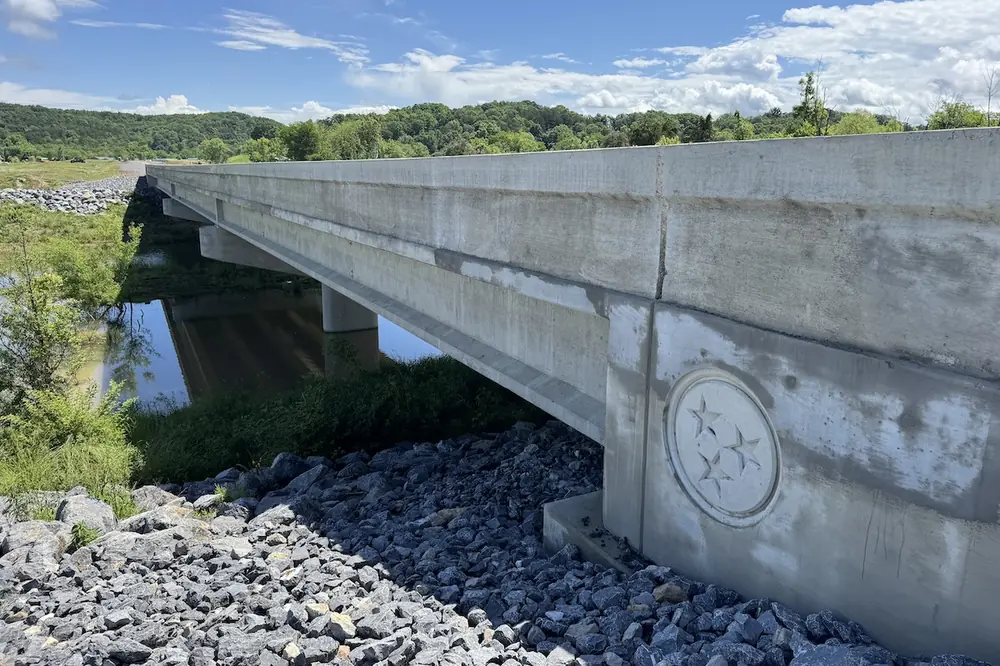
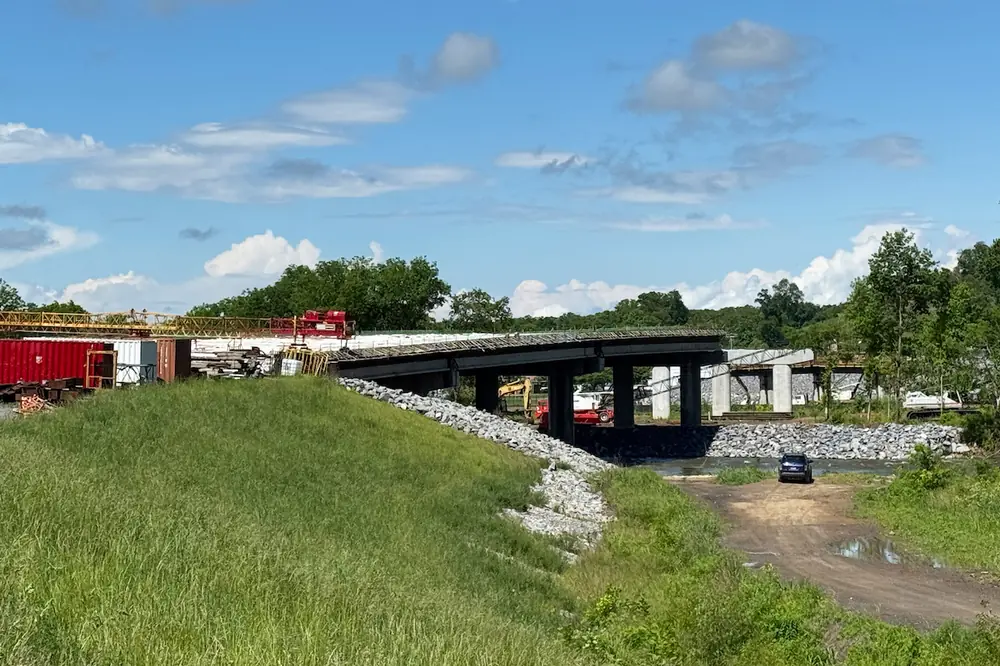
Of the four bulb-tee bridges constructed for the project, two bridges are located along the five-lane section of improvement. The first bridge crosses Stinking Creek, and the second bridge crosses Lisega Boulevard, Norfolk Southern Railroad, and the Pigeon River. The other two bridges are located along the interim two-lane section, one crossing the French Broad River Flood Channel and the other crossing the French Broad River. (A bulb-tee bridge uses large, precast concrete beams with wide, integrated top flanges that act as the bridge deck, eliminating or reducing the need for cast-in-place deck concrete. The use of bulb-tee girders can speed up superstructure design and construction.)
New traffic signals are also being installed at the intersections of SR 35 with SR 9 (U.S. 70) and SR 32 (U.S. 25E).
Work on the approximately $70 million project began in December 2021 and is expected to be completed in the summer of 2026. Charles Blalock & Sons Inc. of Sevierville, Tennessee, is the primary contractor. Multiple subcontractors — for project components ranging from landscaping to bridge building — are also a part of the project. One of the major subcontractors, Summers Taylor Construction of Johnson City, Tennessee, constructed Bridge 2 over Lisega Boulevard, the Norfolk Southern Railroad, and the Pigeon River.
Roadway and bridge funding is 80 percent federal and 20 percent state.

| Your local Trimble Construction Division dealer |
|---|
| SITECH Northeast |
Initial work on the Newport Bypass included clearing and grubbing operations and the installation of erosion prevention and sediment control measures throughout the project. In the spring of 2022, box culvert construction began. By the beginning of 2023, Summers Taylor had begun construction of Bridge 2, and Blalock was at work on Bridges 3 and 4. Utility installation was also underway.
From mid-summer 2023 until the spring of 2024, traffic was detoured around the construction work onto the Old Greeneville Highway, joining the existing two-lane road at the bridge over the French Broad River.
Bridges 3 and 4 were nearly complete by the spring of 2024, and work was ongoing on Bridge 1. Earthwork at the beginning and end of the project continued through the summer. In September 2024, Lisega Boulevard was closed to through traffic to allow for bridge construction. This closure was in place until the summer of 2025.
In early 2025, Bridge 2 decking and substructure was under construction, along with the Bridge 1 superstructure and the new alignment for SR 160. By late summer, grading and sub-grading was being finalized throughout the project. As of early 2026, three of the four bridges have been completed and 99 percent of the grade work has been completed. Construction is now concentrated on the final bridge over the French Broad River.

| Your local Esco Corporation dealer |
|---|
| Genalco |
“This project has 1.35 million cubic yards of excavation,” Joyner said. “Much of this dirt is embanked on site to construct the proposed roadway, but nearly 400,000 cubic yards were waste, much of which was embanked off site at the contractor’s permitted waste sites. Additionally, 1,915 linear feet of bridges are being constructed, and they require around 9,000 cubic yards of concrete and over 2.2 million pounds of reinforcing steel.”
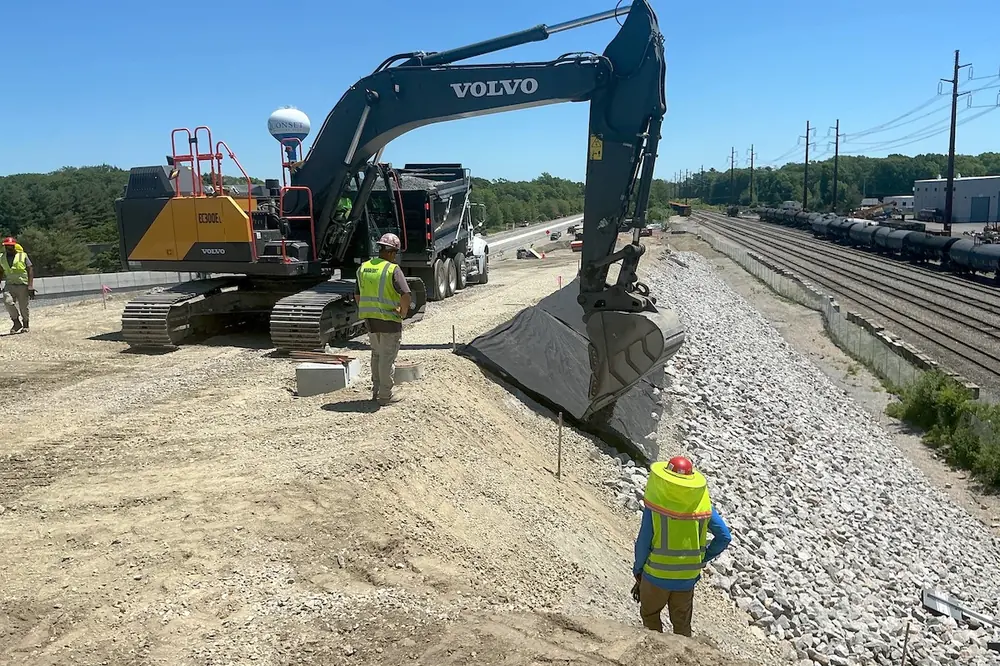
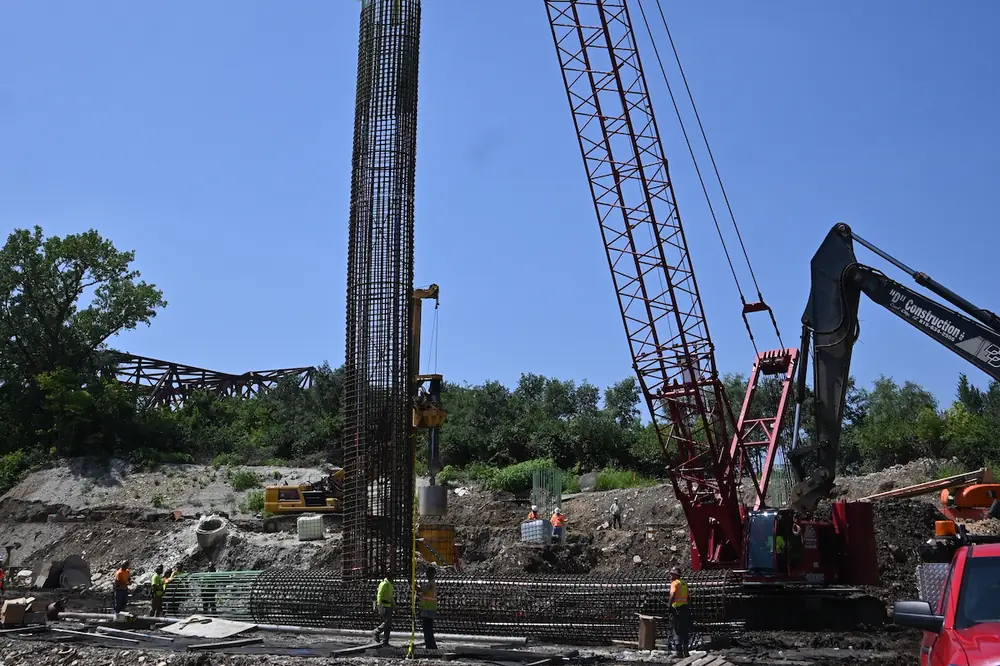
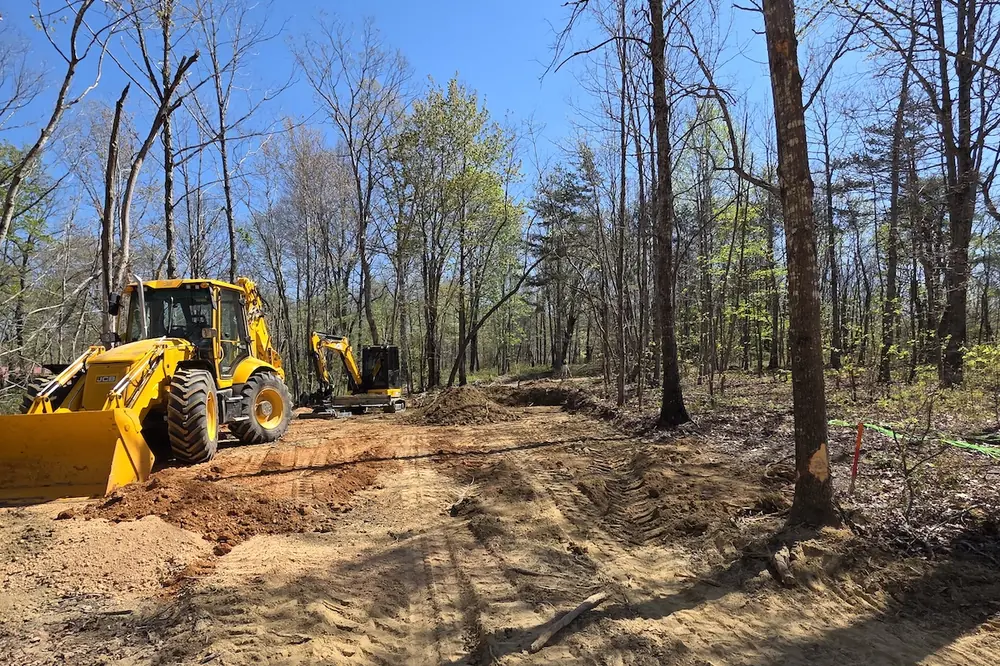
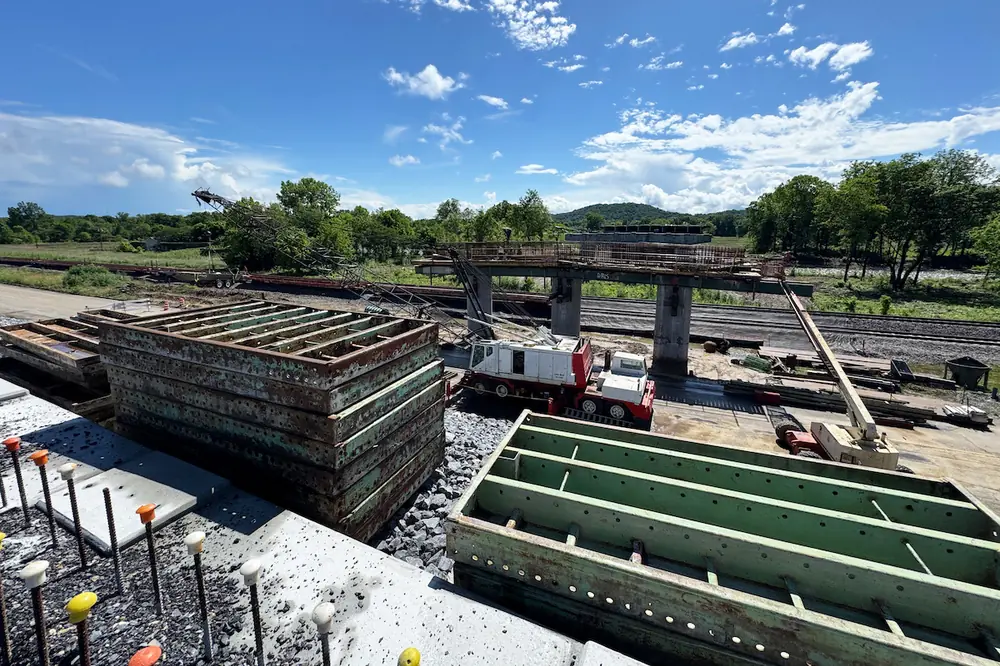
This large-scale project has required the use of a wide array of construction equipment, including dozers, backhoes, graders, rollers, and dump trucks. Several large cranes have also been utilized in the construction of the bridges.
Joyner pointed out that since the Newport Bypass is a new alignment, traffic is typically only impacted at intersections with the new road.
“At these intersections, flagging operations and temporary runarounds were utilized to keep traffic flowing,” Joyner said. “We did have a singular situation where the contractor was tying the proposed alignment into the existing alignment at one end of project. A six-month detour was enacted that directed traffic through a local route as agreed upon by the local government.

| Your local Case Construction Equipment Inc dealer |
|---|
| Beauregard Equipment |
| Monroe Tractor |
“Hurricane Helene flooding affected this project. There was damage to three out of the four bridges that were under construction — mostly undermining of abutments. Additionally, the crews that were working on this project were pulled to assist with the emergency repairs to I-40, 20 miles away. This slowed production, but we are grateful that I-40 in Cocke County is currently operational, and TDOT is still working at repairing it to its former condition.”
Other challenges cited include silt-laden soil conditions in multiple low-lying areas, along with shale and rock on parts of the project. Additionally, construction of the four bulb-tee bridges proved to be a time-consuming process, encompassing the building of foundation, substructure, and abutments, along with the setting of beams and pouring of decks.
- Owner: Tennessee Department of Transportation
- General Contractor: Charles Blalock & Sons, Sevierville, Tennessee
- Designer: Robert Campbell and Associates, Knoxville, Tennessee
- Major Subcontractors: Summers Taylor Inc., Johnson City, Tennessee; Adams and Sons Inc., Knoxville, Tennessee; Broadway Electric Service Corp., Knoxville, Tennessee; G&G Rebar, Knoxville, Tennessee