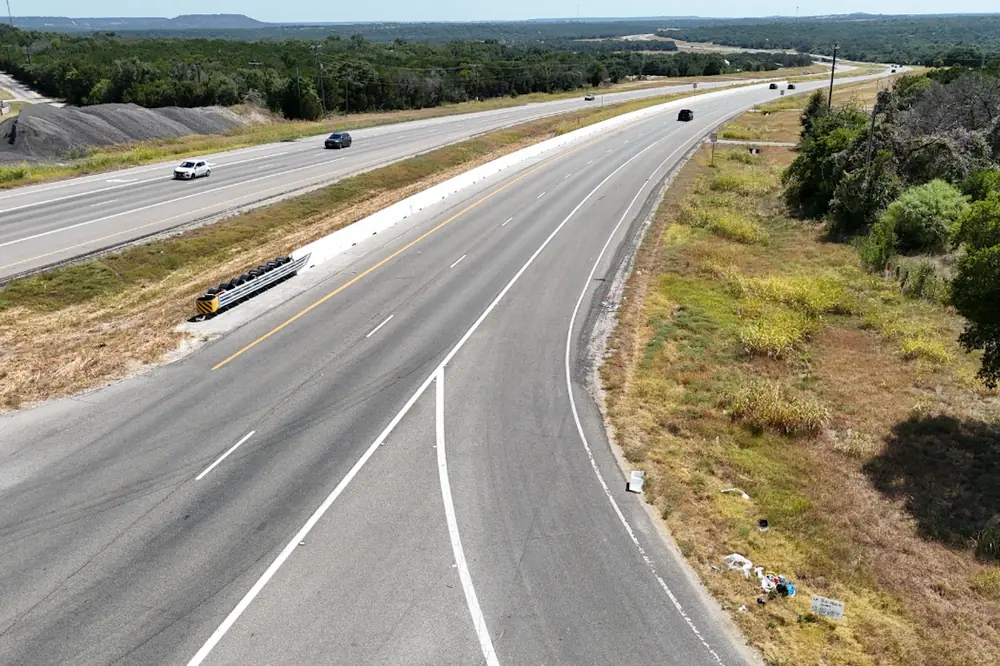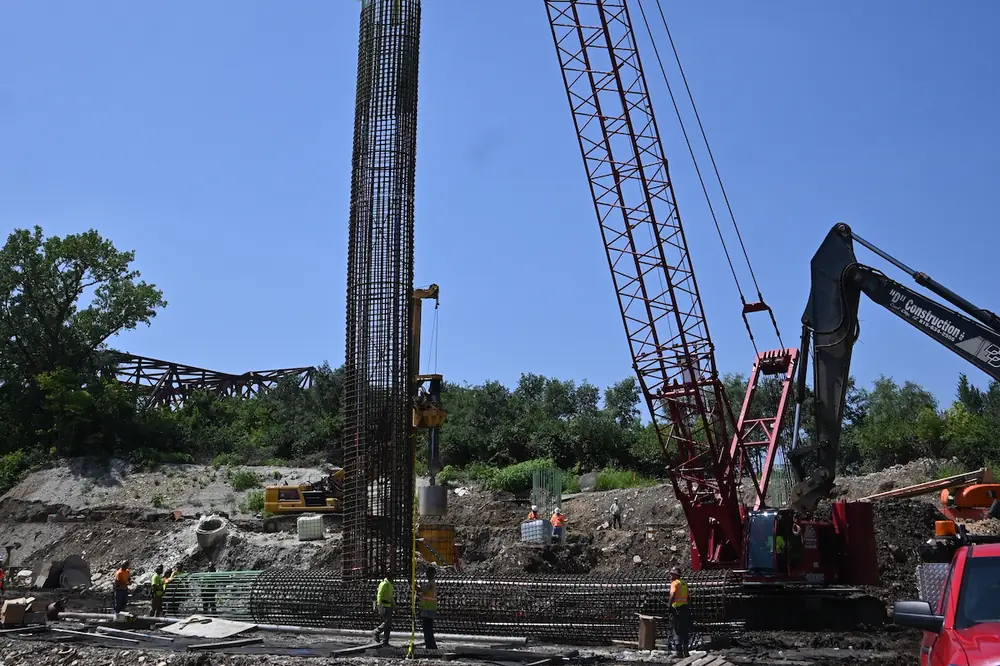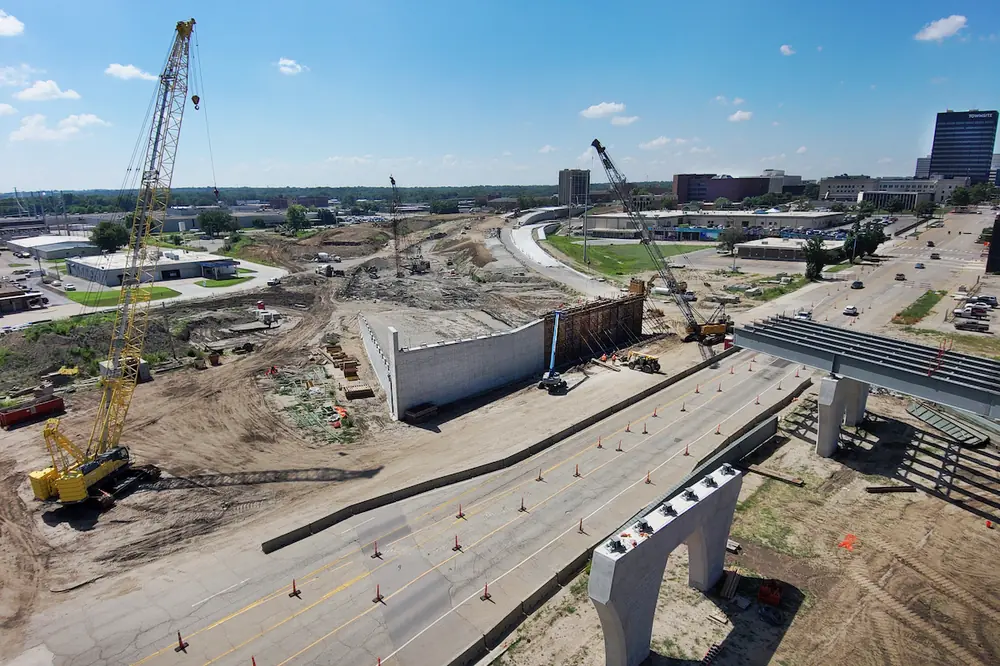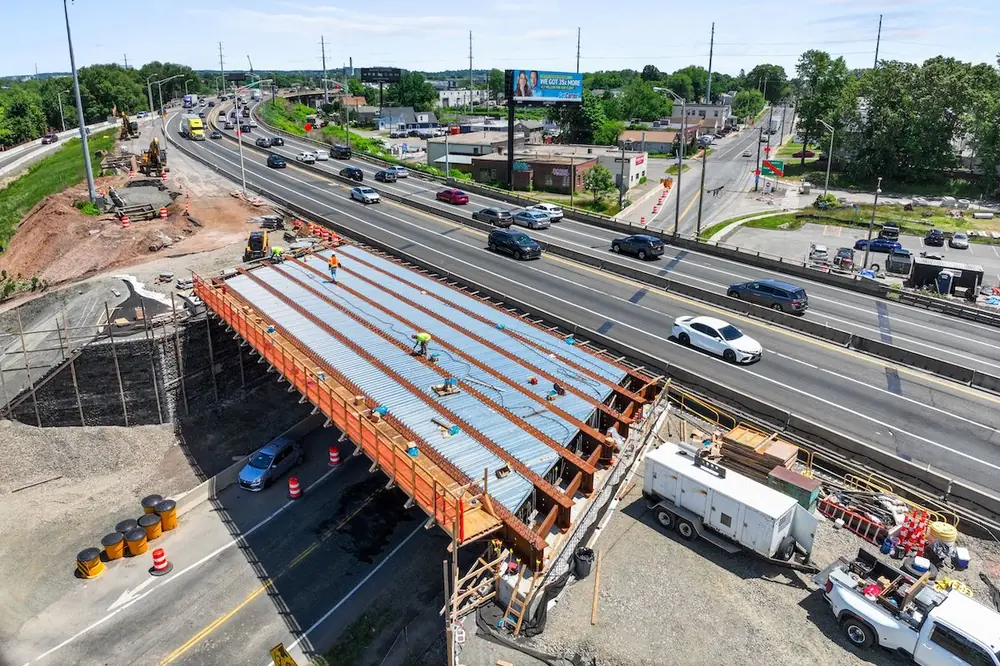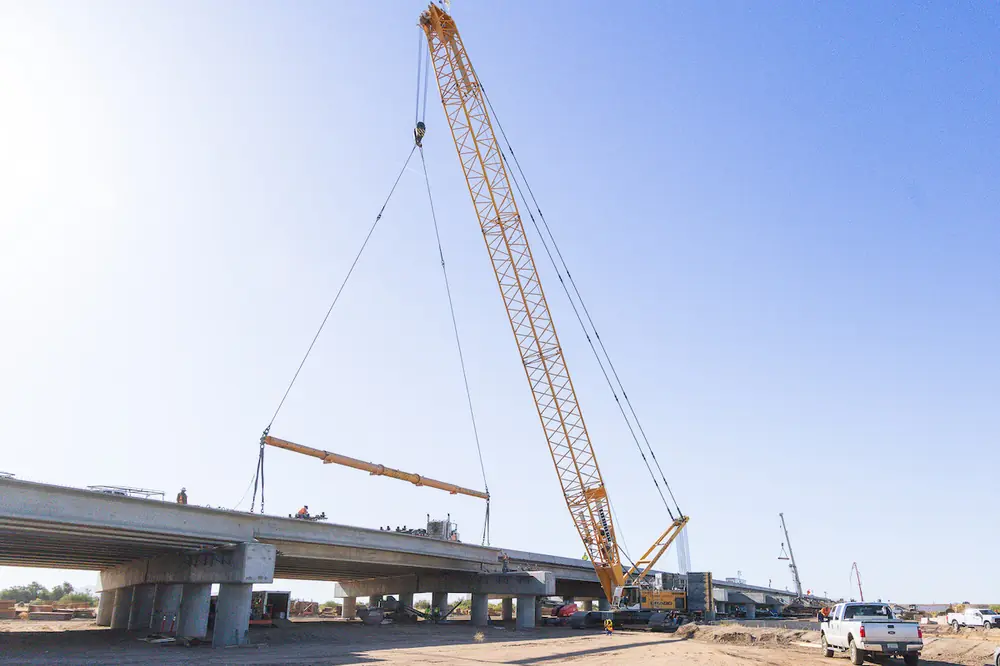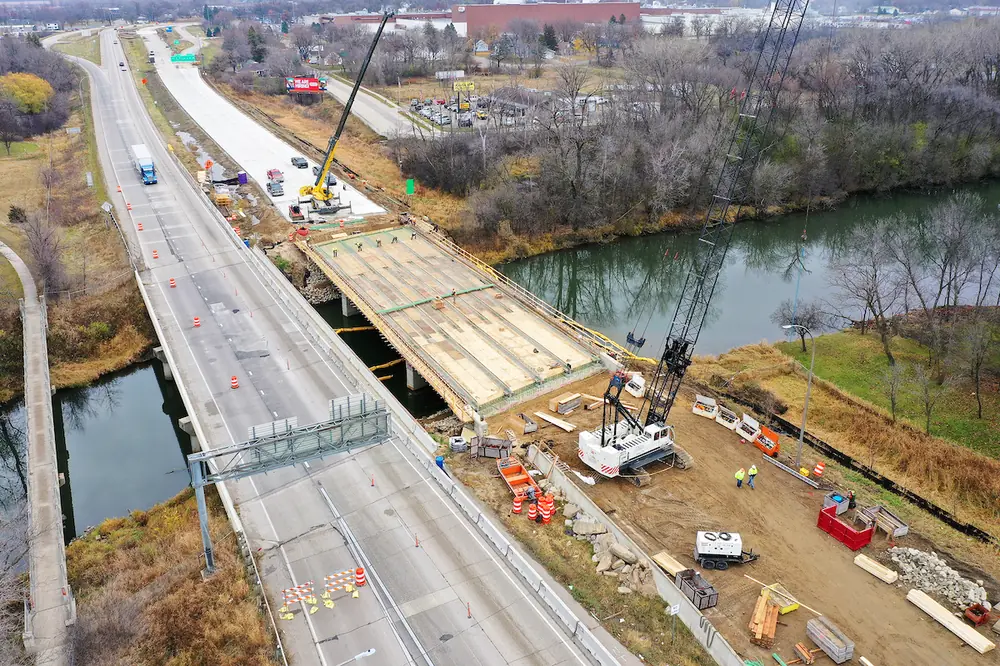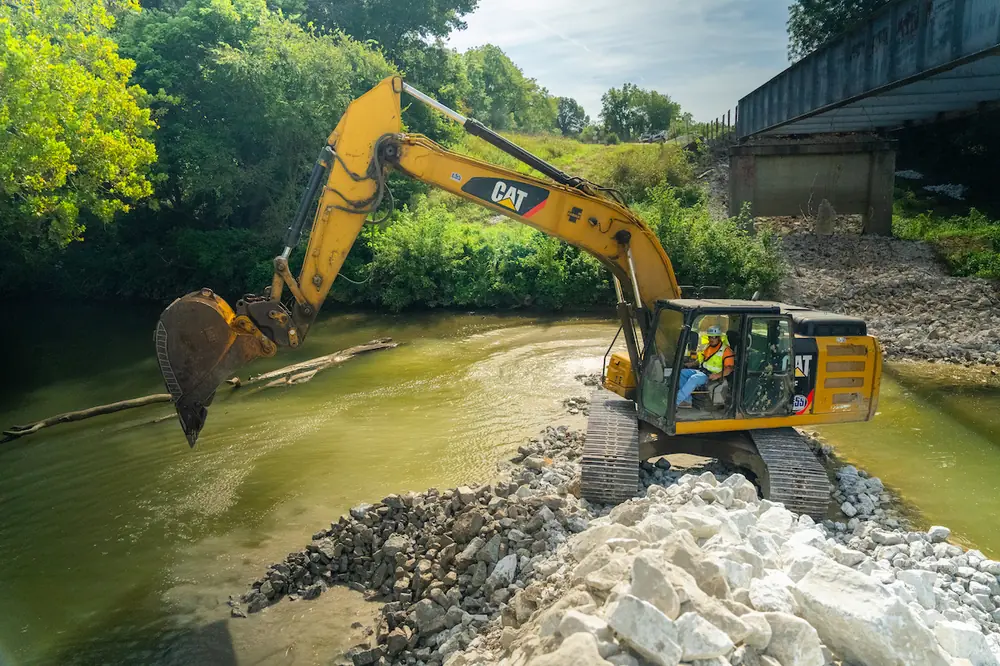
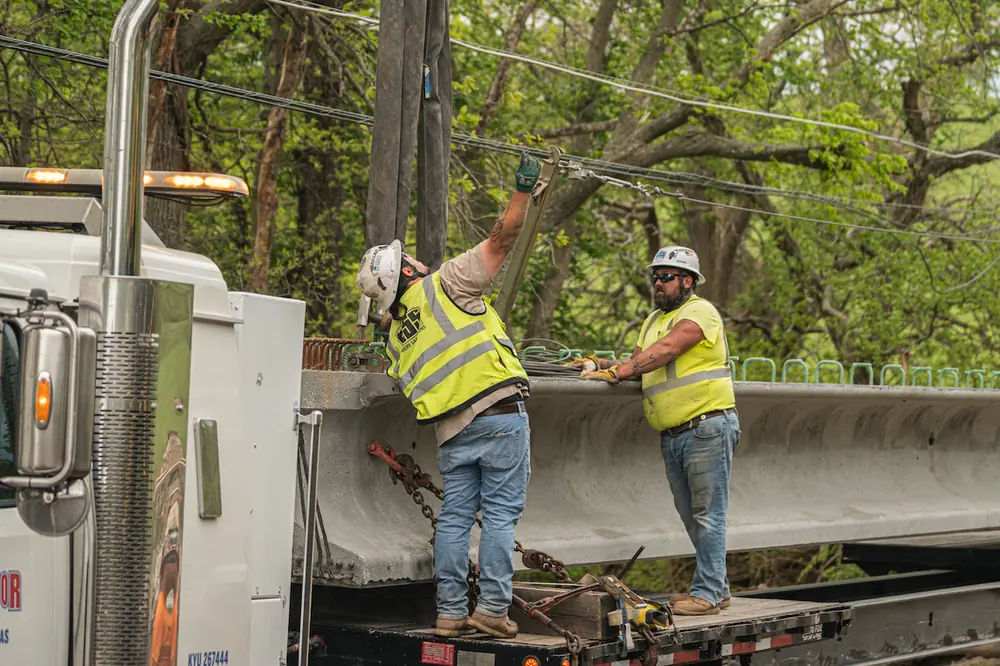
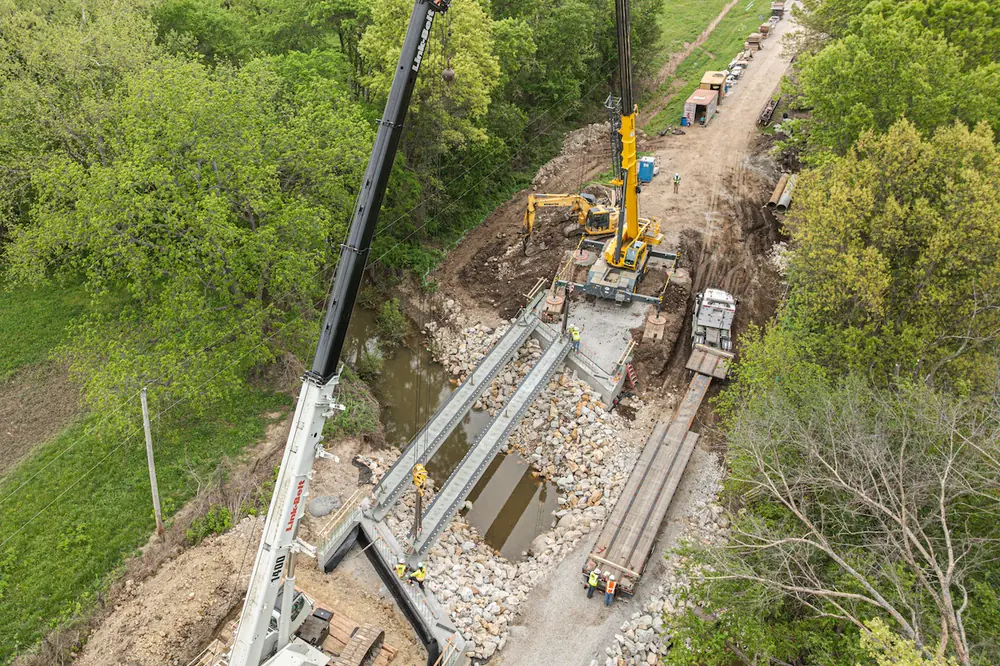
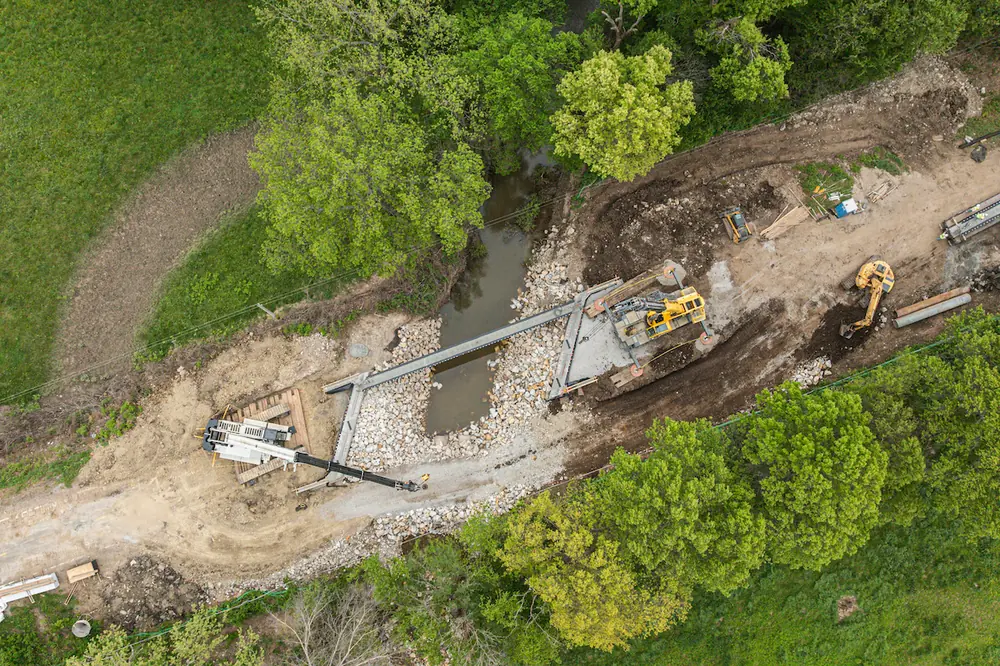
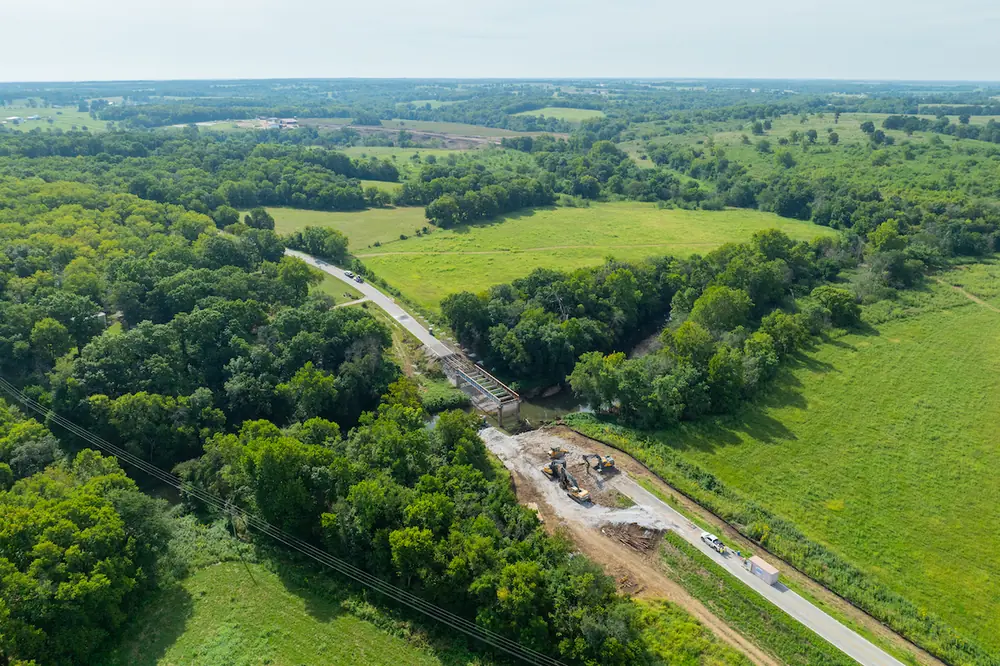
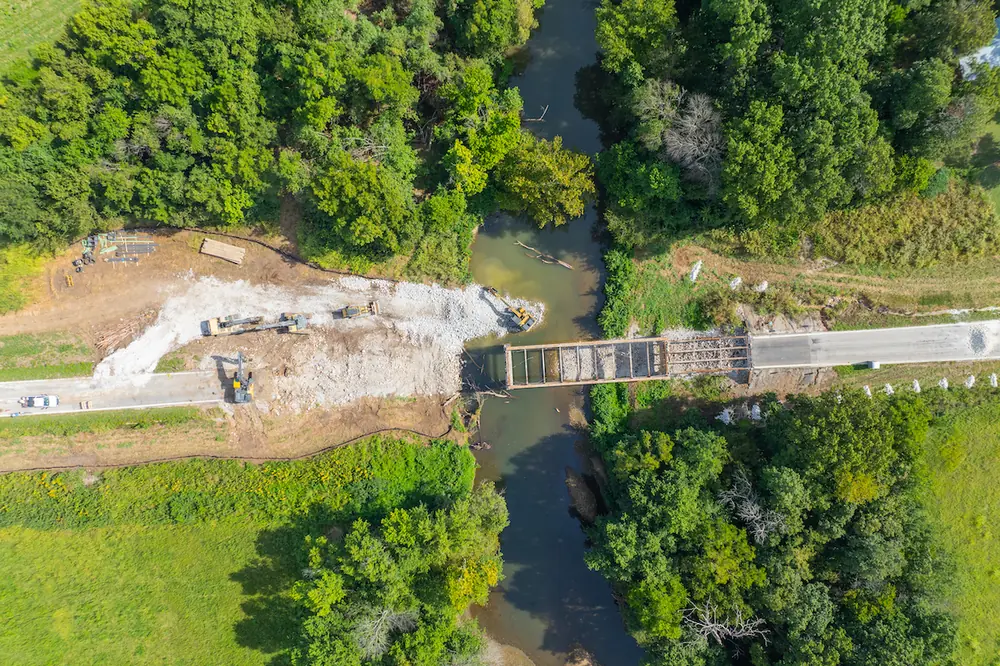
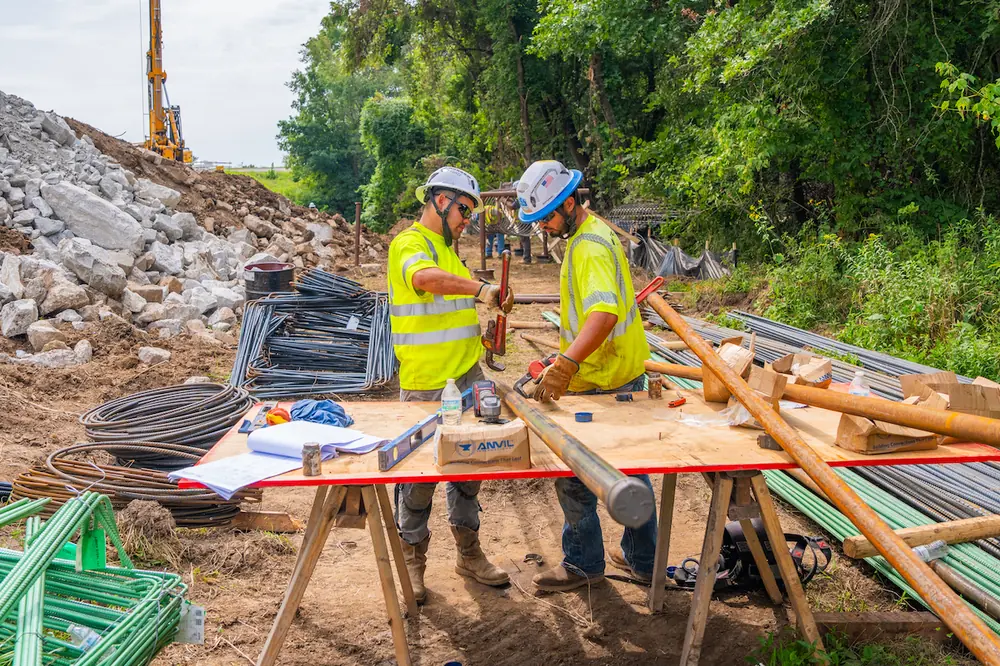
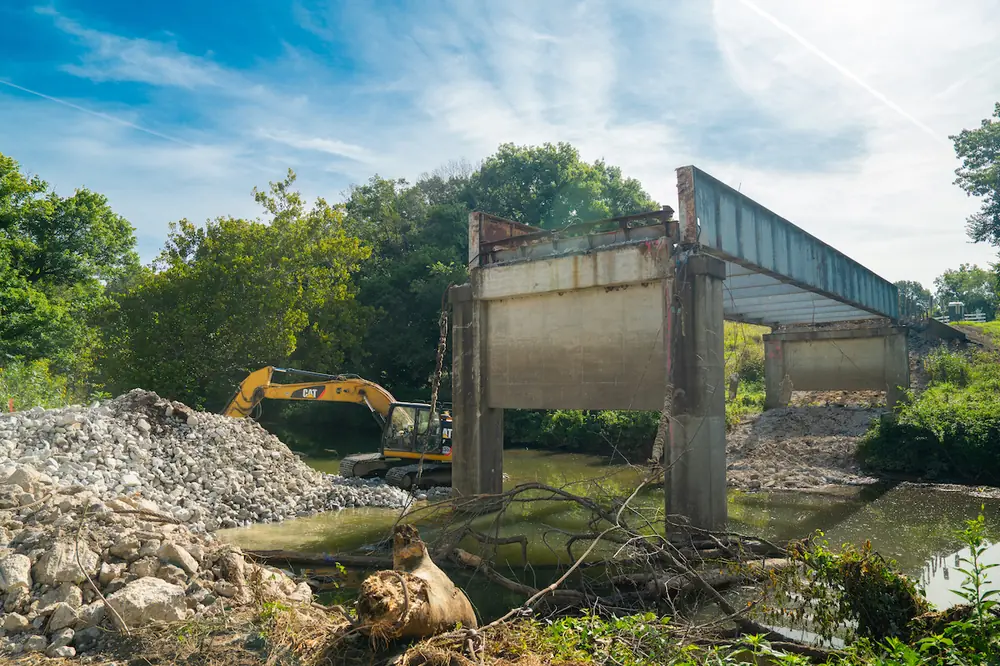

Twenty aging bridges spread across seven rural counties in west central Missouri are being upgraded as part of a bundled effort designed to stretch limited transportation dollars further. Through the Kaysinger Basin Bridge Bundle, the Missouri Department of Transportation (MoDOT) and Emery Sapp & Sons (ESS) are replacing, rehabilitating, and modernizing critical crossings that support local travel and agricultural freight movement.
While traffic volumes on many of the bridges are modest — with most carrying average daily traffic (ADT) counts of 1,500 vehicles or fewer and some below 100 — many of the structures have reached the end of their intended service lives.
According to the ESS website, the Kaysinger Basin Bridge Bundle project “targets a collection of rural, two-lane bridges that have served the state for an average of 70 years, with one even reaching the 100-year mark in 2021. ESS crews will replace and repair more than 100,000 square feet of existing bridge deck to deliver 12 complete bridge replacements, four deck replacements, and two superstructure replacements. ... Two bridges will be eliminated from the MoDOT system. Crews will transform one into a box culvert and replace the other with twin 48-inch culvert pipes.”
The seven counties where the project is taking place are home to roughly 80 bridges that are rated in poor condition. While none of the bridges in the project are closed, they are not up to code. A couple of the bridges are striped for one-lane traffic, and two are located on a four-lane divided highway. At most locations, the team is replacing or rehabilitating both the northbound and southbound structures. However, on one bridge, the team is only addressing the northbound structure.
The request for proposal included 24 bridges. MoDOT put the project out to bid and noted that the budget would be $28 million. As part of the bid for the design-build project, teams had to determine how many bridges they could repair with the allotted funds.

| Your local Trimble Construction Division dealer |
|---|
| SITECH SE Texas |
| SITECH Tejas |
“Our bid was for 20 locations, while our nearest competitor had 18 locations, so this helped us win the project,” ESS Project Manager Troy Pinkerton said.
The project scope afforded ESS a degree of independence. The freedom had both positives and negatives for the firm’s bottom line.
“The owner gave us a significant amount of info about the existing bridge conditions, as well as their wish list,” Pinkerton said. “The scope of work was different at each location, and we had to try to recognize the problems we’d face when we got on site. Once we started to develop the scopes further, we finalized design details and set our budget.”
At that point, however, the team was locked into their commitment, so costs could have been much more than anticipated.

| Your local LeeBoy dealer |
|---|
| Closner Equipment Co Inc |
| Romco Equipment Co |
The firm’s designers also faced a challenge and had to innovate. MoDOT’s primary concern was spreading out the money as far as possible, so they were content with good design work and did not need the gold standard.
“This set us up for a challenge because when it comes to design standards, everything has to be great,” Pinkerton said.
Another challenge the team faced concerned the remote areas where the bridges are located. There are only a few suppliers in the area.
“Those suppliers may not keep certain products in inventory because those products may not be in demand by the communities they serve,” Pinkerton said.

| Your local Sennebogen LLC dealer |
|---|
| WPI |
Pinkerton provided an example of this, based on the area.
“There are quite a few chicken barns being constructed,” he said. “The owners building these barns are not required to use aggregate and concrete that meet the quality standards for building a bridge. Therefore, even though we have quotes from local suppliers, if they aren’t producing the products we need, then we must look elsewhere for those items.”
The search requires time and effort. If the sourced materials are shipped from farther away, it adds time to the process and drives up costs.
The team has also run into unforeseen geotechnical conditions. Geotechnical information is key to the design of bridge foundations.

| Your local Stewart-Amos dealer |
|---|
| Closner Equipment Co Inc |
“The topography in this area is consistent. However, we have had some deviations in what we anticipated, say in the location of solid rock,” Pinkerton said. “This typically leads to additional foundation scope. In most cases, we simply have an obligation to overcome that without claiming additional cost or time.”
Another challenge is that the small creeks and rivers that the bridges cross are often volatile.
“We do our best to mitigate those risks in planning to work to minimize our exposure,” Pinkerton said. “For example, we can focus on bridge rehab versus a full replacement during the times of year that we might expect more rain events. Or we might make sure our schedule doesn’t lead us into working in the creek during those rainy periods.”
Juggling multiple project elements simultaneously is standard operating procedure in construction projects.
| Your local Hitachi dealer |
|---|
| Bane Machinery |
In the Kaysinger Basin Bridge Bundle project, however, the challenge was greater since the bridges are spread out over multiple square miles. In 2025, the team completed two bridges simultaneously, which increased to four in the first half of 2026. The team expects to complete five additional locations by early September 2026. The early locations employed three bridge crews, but the team plans to increase to four crews in the fall.
The team strives to complete rehabilitations in 60 to 75 calendar days, and full replacements in 90 calendar days. ESS has several crews working simultaneously on each project.
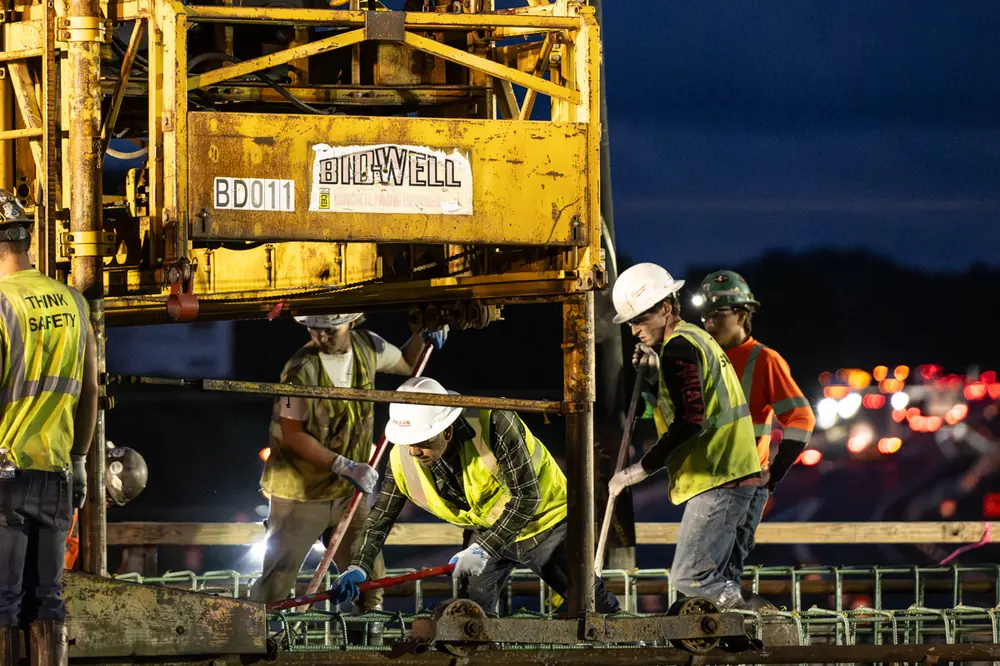
Another step ESS is taking to maintain the pace is the use of a robotic rebar-tying machine on one of the larger rehabilitation projects.
The order in which ESS is constructing the bridges has evolved over time.
| Your local Hitachi dealer |
|---|
| ASCO Equipment |
“The order was drafted during our proposal phase, and we have modified it based on design capabilities and the location of resources,” Pinkerton said. “The initial schedule was a bit of a shot from the hip. We told the owner what we elected to do in ‘25, ‘26, and ‘27.”
The team began construction in the summer of 2025 and is scheduled to conclude in November 2027. The project is currently running ahead of schedule. Pinkerton said that the current schedule shows them completing construction a few months earlier than November 2027.
“In 2025, we did the preliminary work — dealing with agencies, fine-tuning designs, etc. — and handled some low-hanging fruit, and opened more locations in the winter,” Pinkerton said.
At that point, ESS was still developing the schedule.

| Your local Case Construction Equipment Inc dealer |
|---|
| Nueces Power Equipment |
| ASCO Equipment |
“By 2026, we were pretty detailed and knew when each project would start and stop, and which crews would be assigned to each location,” Pinkerton said. “The biggest risk to the schedule at this point is the upcoming winter. If it’s reasonable like winter 2025-26, we could deliver the project a couple of months early.”
The project has a $38 million price tag, including $28.1 million for the design-build contract, MoDOT administrative costs, right of way (ROW) costs, utility reimbursements, and stipend payments. At this point, the project is on budget.
“There haven’t been any significant contract change orders or additional ROW or utility costs, which has helped us to keep the project on budget,” Pinkerton said.
Another reason the project is on budget, according to Pinkerton, is the partnership between MoDOT and ESS.

| Your local NPK Construction Equipment Inc dealer |
|---|
| WPI |
“They have been fantastic to work with, and they help us deliver a successful project for them,” he said.
The design-build method has also helped keep costs under control.
“Establishing a fixed cost and allowing industry to be innovative results in replacing and rehabbing more locations than if the owner were to prescribe an application and go out for bids at individual locations,” Pinkerton said.
When complete, the improvements are expected to provide safer and more reliable travel across rural west central Missouri. Bridges that previously carried load restrictions or lacked full two-lane operation will better accommodate daily traffic and agricultural freight movement.

| Your local Hyundai Construction Equipment USA dealer |
|---|
| Nueces Power Equipment |
- Owner: Missouri Department of Transportation
- General Contractor: Emery Sapp & Sons, Columbia, Missouri
- Designer/Engineer: Bartlett & West, Topeka, Kansas
- Other Contractors: ARSI Inc., Jefferson, Missouri; Greg Bair Track Hoe Services, Overland, Kansas; Collins & Hermann, St. Louis, Missouri; Gerdan Slipforming Inc., Cape Girardeau, Missouri; Hayes Drilling Inc., Olathe, Kansas; Road Runner Safety Services, Cape Girardeau, Missouri; Schrimpf Landscaping Inc., Jefferson City, Missouri; Thomas Industrial Coatings, Pevely, Missouri; DeLong’s Inc., Jefferson City, Missouri; Coreslab Structures Inc., Kansas City, Kansas