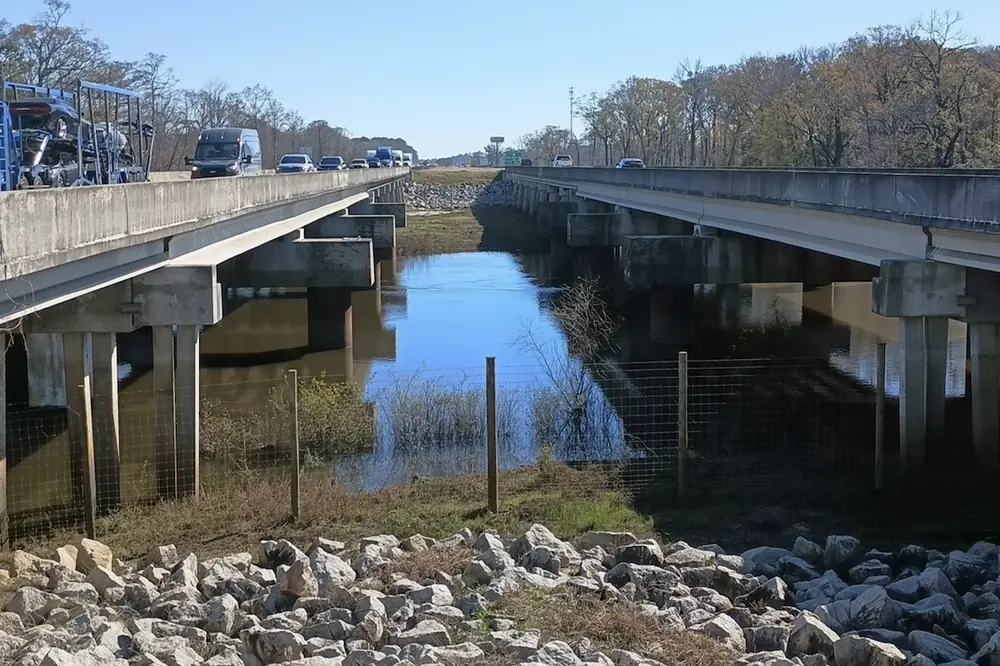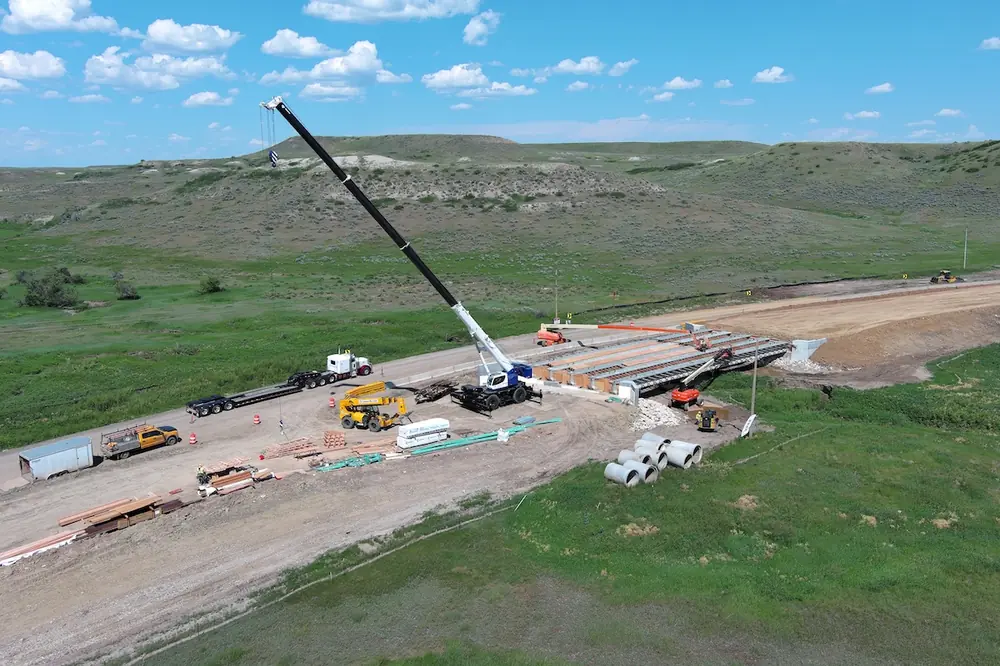
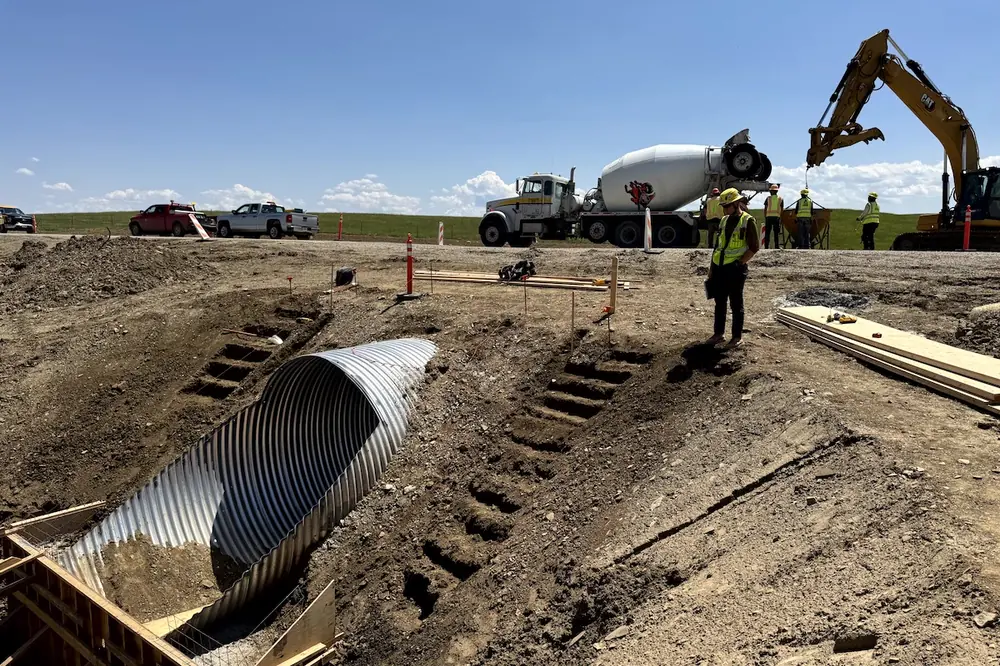
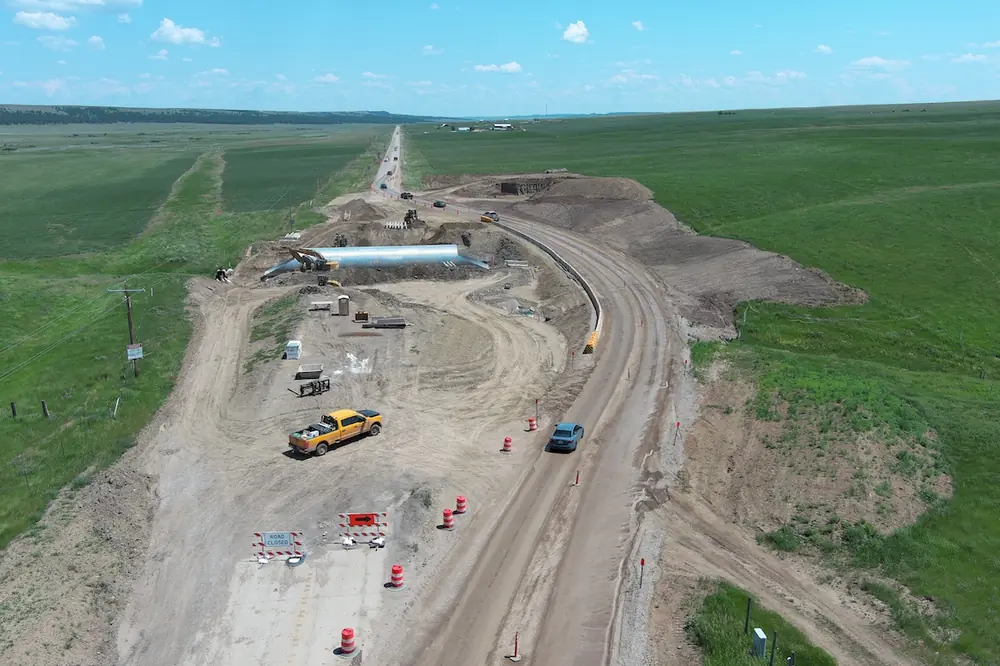
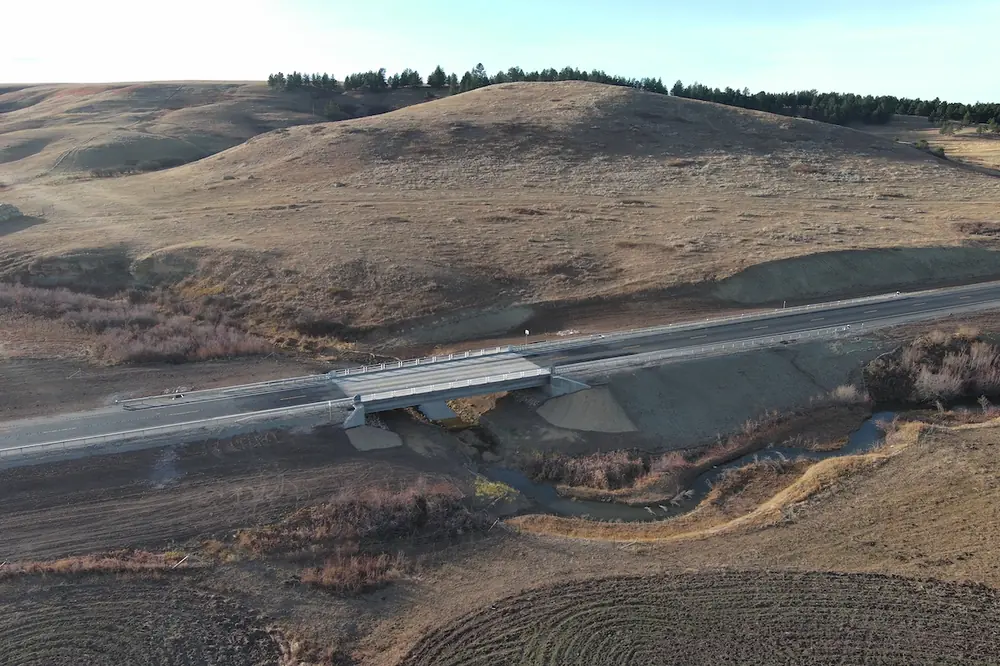
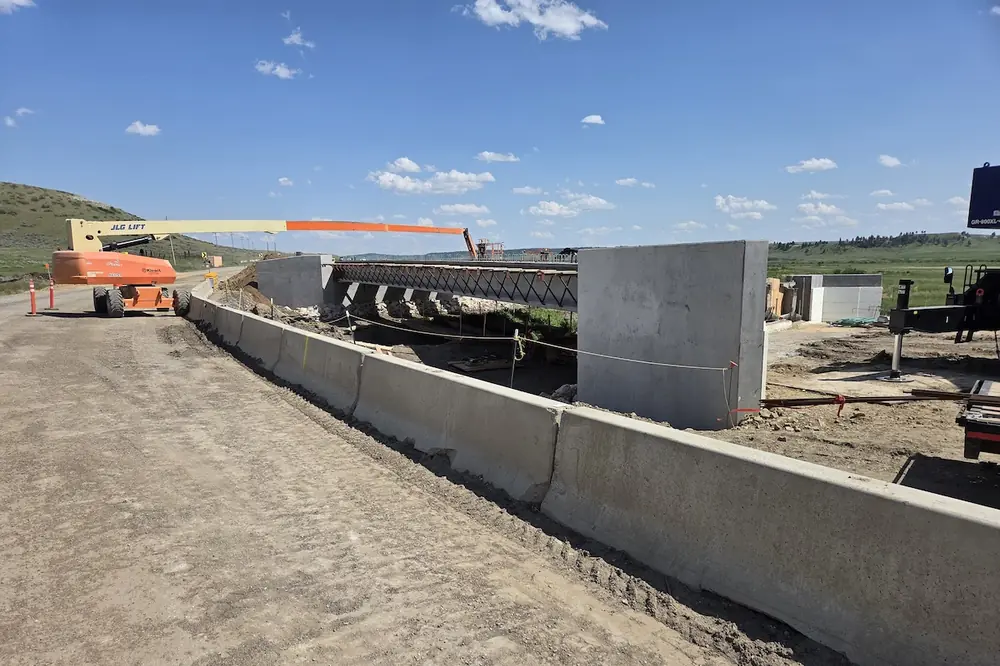

A stretch of U.S. 87/MT 200 east of Lewistown has long served as a vital route across central Montana, supporting everything from regional travel to agricultural operations and oversized freight. However, beneath the pavement, much of the infrastructure dates back nearly a century, causing growing concern.
In fact, many of the corridor’s timber bridge structures were built prior to 1940. While they had continued to function, the bridges were becoming increasingly difficult to maintain and, in some cases, they were unsafe.
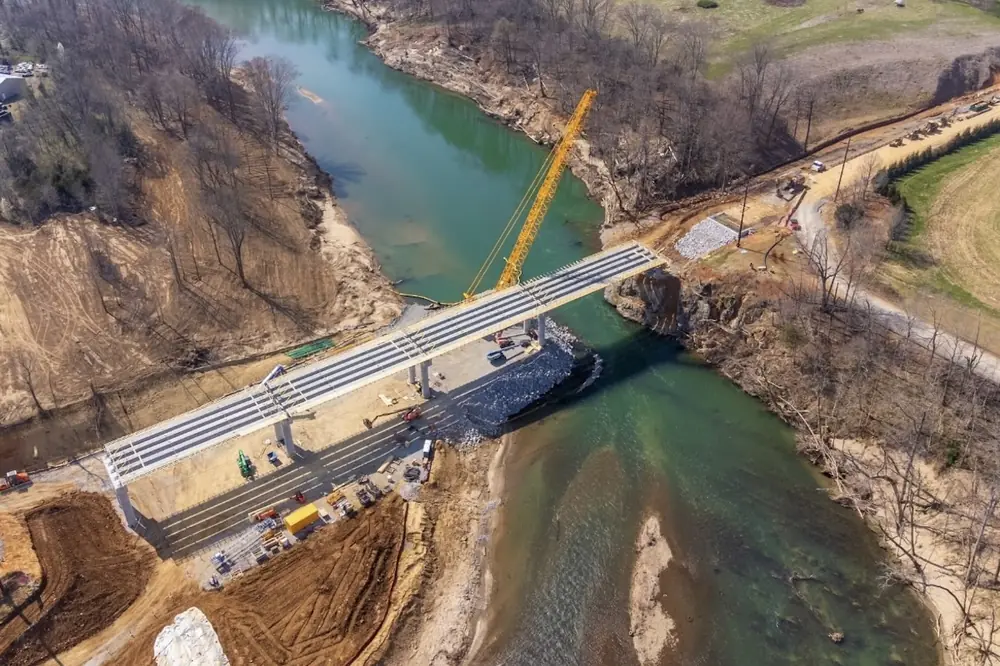
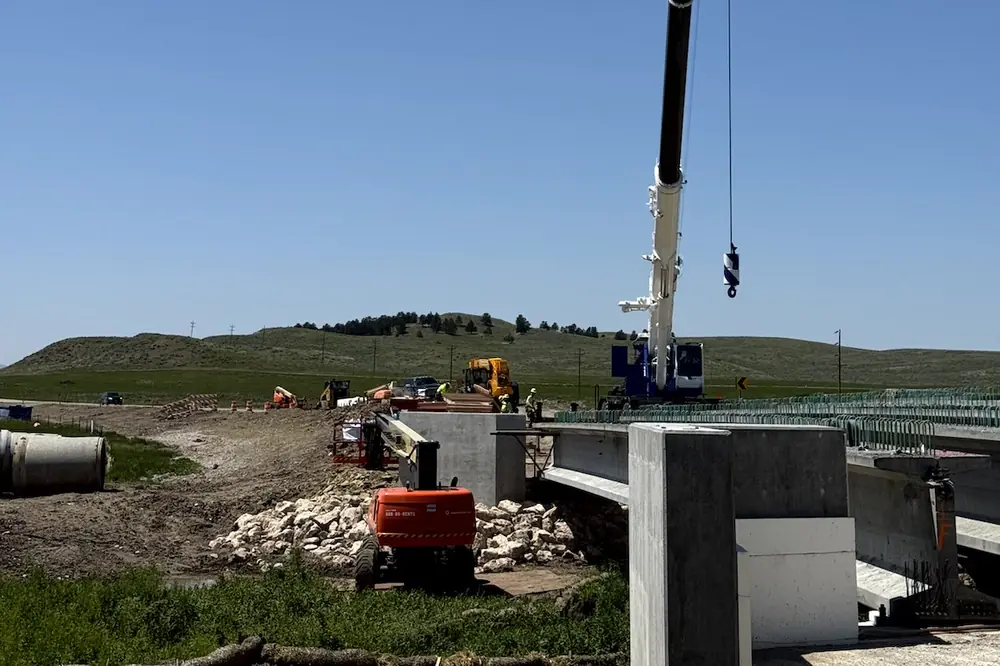
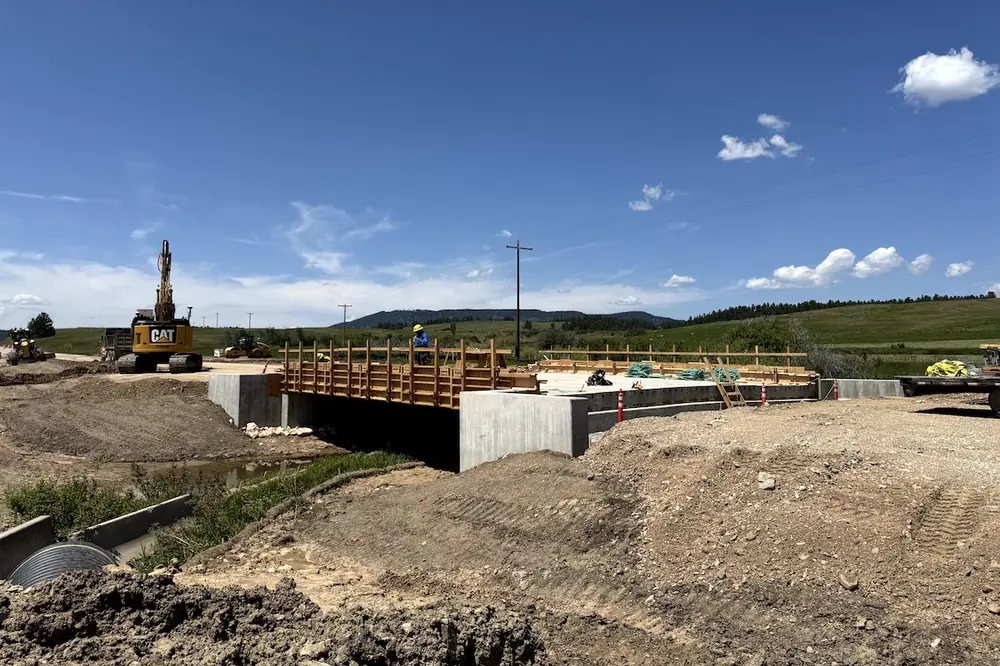
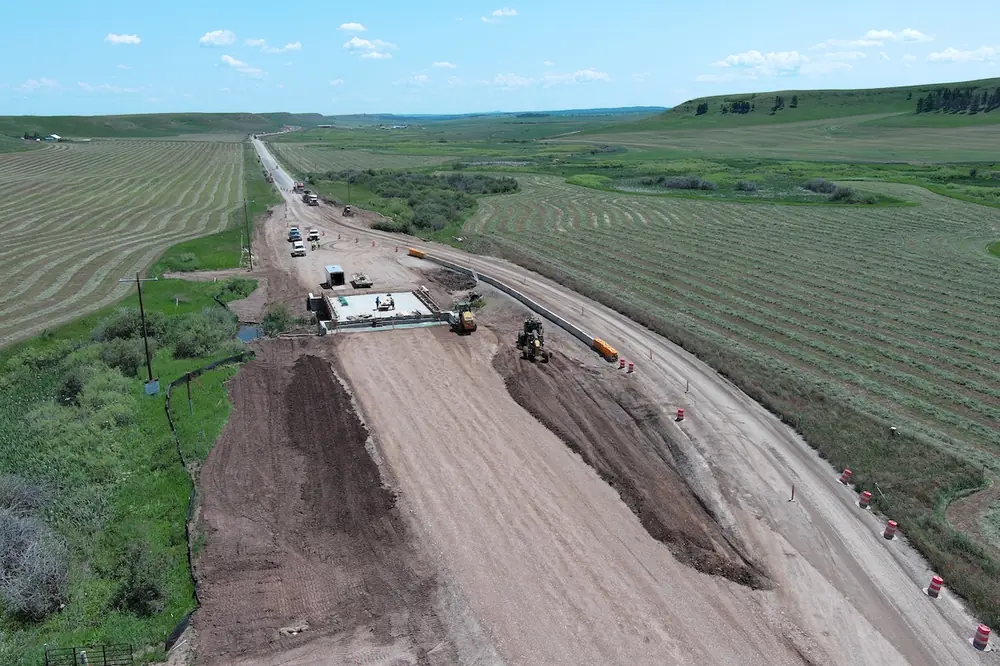
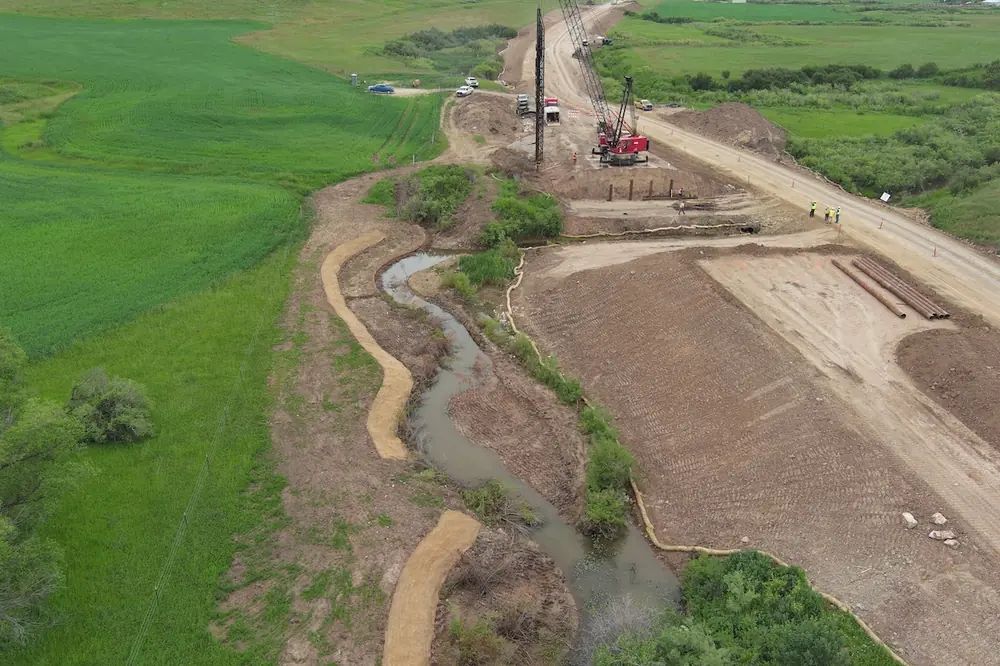
To address those concerns, the Montana Department of Transportation (MDT) launched the MT 200 Bridges Lewistown Area project, bundling 10 bridge replacements into a single effort designed to improve safety, reliability, and long-term performance.
“We had several primary objectives, as we had a lot of aging timber structures that we needed to replace on this corridor. They’d reached the end of their service life,” said Kyle Dubbs, Senior Engineering Project Manager for MDT.
According to Dubbs, one of the main objectives of the project was to deliver durable, long-term infrastructure while minimizing impacts to traffic during construction.

| Your local Gomaco dealer |
|---|
| Ring Power Corporation |
The project plan included replacing the aging structures with a mix of new bridges and culverts, along with roadway improvements such as wider shoulders, rumble strips, and upgraded safety features.
“This was the right fix and the right time,” Dubbs said.
The need for replacement was driven by both age and material limitations, so MDT knew there would be challenges.
“Being timber, you can’t get a lot of those parts and pieces if you have structural failures with them now,” Dubbs said. “You have to salvage from other structures similar to that. And our stockpile of those is kind of dwindling.”

| Your local Iowa Mold Tooling Co Inc dealer |
|---|
| Nichols Fleet Equipment |
That vulnerability became evident during the design phase when one of the bridges sustained significant damage.
“We actually had a bridge while we were in design that was hit and had pretty significant failure on one of the outside girders,” Dubbs said. “It basically made that bridge one lane for a period of time until we could get in there and build a detour for it.”
Rather than continue patching aging structures, MDT opted for full replacement, grouping the bridges into a single contract to improve efficiency and delivery.
The project was delivered using the construction manager/general contractor (CMGC) method, bringing Kiewit into the process early to collaborate with MDT and DOWL during design.

| Your local Komatsu America Corp dealer |
|---|
| Linder Industrial Machinery |
“This has been an ongoing need in central Montana,” said Cody Salo, Design Engineer with DOWL. “MDT ... had around 500-ish structures that are these timber bridge structures, 90 to 100 years old.”
DOWL began work in 2020, with active design efforts starting in 2021 and continuing through environmental review, landowner coordination, and engineering development.
“We did accelerate the project design,” Salo said. “We actually skipped an intermediate milestone to expedite some of that design effort.”
That early contractor involvement proved critical, allowing Kiewit to provide input on constructability, sequencing, and cost while designs were still evolving.

| Your local Bobcat dealer |
|---|
| Pinnacle Central Co Inc |
Mike George, Project Manager for Kiewit, said the CMGC model was a major factor in the project’s success.
“The way they do it is, you get selected and then you get to be really involved with the design process,” George said. “If we have questions, comments, concerns, constructability review, all those things, we’ve got a seat at the table to try to improve the design, which makes the construction more efficient.”
While replacing bridges might seem straightforward, each location along the corridor presented unique challenges for the project team.
“There was actually a lot of factors in play,” Salo said. “This is all agricultural use for the most part. But there’s also quite a bit of wildlife.”

| Your local Wirtgen America dealer |
|---|
| Beard Equipment Co - AL |
| Tractor & Equipment |
With that in mind, the design team had to balance hydraulic performance, wildlife movement, and agricultural needs when selecting structure types.
For instance, some crossings required aquatic organism passage, while others needed to accommodate large mammals, such as elk.
“That actually includes wildlife benches that are of enough depth and dimension to actually allow elk to pass underneath it,” Salo said.
In some cases, wildlife and agricultural considerations drove design decisions beyond standard hydraulic requirements.

| Your local Wirtgen America dealer |
|---|
| Dobbs Equipment (DXC) |
“When wildlife crossings ... popped up, that kind of trumped the hydraulics, so it just got bigger,” said Greg Gabel, Senior Water Resource Engineer with DOWL.
One location included both a drainage culvert and a 20-foot structural steel-plated pipe to accommodate wildlife and livestock movement.
Agricultural use added another layer of complexity.
“That’s the livelihood of these adjacent farmers,” Gabel said. “Getting that planned and getting that into the construction plan so that it was maintained had a lot of impact on Kiewit’s phasing.”

| Your local Trimble Construction Division dealer |
|---|
| SITECH Mid-South |
| SITECH Tri-Rivers |
At several sites, the team also performed channel relocation and restoration work to improve drainage and reduce erosion risks.
From a construction standpoint, one of the biggest challenges was managing work across 10 separate bridge locations simultaneously. That required careful coordination of labor, equipment, and materials — especially in a rural region far from major supply centers.
“You’re relatively rural,” George said. “Billings is a big city for Montana, but it’s still two hours away. Great Falls is another two hours away.”
To accommodate the logistics, Kiewit brought in approximately 70 workers during peak construction and had to secure housing across the region.

| Your local Bomag Americas dealer |
|---|
| Linder Industrial Machinery |
“I think we filled up every Airbnb or every sort of hotel in the middle of the summer there,” George said.
According to George, material management was equally complex.
“Taking earthwork from one site to the other was a pretty intricate flow,” he said, noting that minimizing imported material helped control costs.
Accelerating the Schedule

| Your local Topcon Positioning Systems Inc dealer |
|---|
| Linder Industrial Machinery |
Originally planned as a two-season project, the team ultimately completed the majority of the work in a single construction season last year.
“We got out there a little bit earlier, about a month earlier than what we had thought,” George said.
Favorable weather conditions and strong early production allowed the team to accelerate.
“It was May or June [2025] where we said, ‘Hey, we think we’re going to make this happen,’” George said. “By increasing staffing and equipment and maintaining flexibility across multiple sites, crews were able to keep working even when delays occurred at individual locations. If we got slowed down on one site, we’d go switch crews and move over to one of the other sites.”
| Your local Gomaco dealer |
|---|
| Ring Power Corporation |
That approach helped the project move well ahead of its original timeline.
Maintaining traffic along the corridor was a critical requirement throughout construction. For most locations, Kiewit constructed shoo-fly detours to route traffic around active work zones.
“We could take the bridge out, push traffic along to the outside of the right of way, and keep traffic going the whole time,” George said.
Those detours were necessary not only for public travel but also for military convoy traffic and local agricultural operations.
| Your local Gomaco dealer |
|---|
| Ring Power Corporation |
In some cases, traffic was reduced to one lane with pilot cars, but the goal was always to keep the corridor functional. The detours also improved worker safety.
“When we’re working on a bridge site, we’ve got traffic completely detoured around us,” George said. “It really pulls all that traffic away so our guys can focus on building the bridges.”
Once complete, the corridor will provide significant safety improvements. Dubbs noted the project eliminated the guardrail at six locations by reducing the number of bridge structures, removing roadside hazards in the process.
“We widened out to 40-foot top at a lot of these locations,” he said. “There was about a 1-foot shoulder on a lot of this roadway before.”
| Your local Gomaco dealer |
|---|
| Ring Power Corporation |
Additional improvements include rumble strips, better drainage, improved sight distance, and adjustments to vertical and horizontal curves.
“We had one landowner that said, ‘Well, I pull out of here when I can’t hear any traffic coming,’” Dubbs said. “We were like, that’s probably not a good thing.”
Approaches were relocated where necessary to improve visibility and safety.
One of the defining aspects of the project was its level of coordination with local landowners.
| Your local Gomaco dealer |
|---|
| Ring Power Corporation |
“There was a lot of communication involved in that,” said Lisa Olmsted, Project Communications Manager with DOWL. “Outreach included public meetings, direct communication with landowners, and coordination with stakeholders such as mail routes, bus routes, and oversized load operators.”
George said that early engagement made a major difference during construction.
“We were invited over to a number of the ranchers’ houses,” he said. “They let us use their land for lay down. They let us stay on their property.”
That level of cooperation allowed the team to work more efficiently and minimize disruptions.
| Your local Gomaco dealer |
|---|
| Ring Power Corporation |
Salo added that understanding landowner needs was critical.
“Understanding how many head of livestock are passing through each stock pass each day informed design and also resulted in the relationships with the landowners and the trust that we established with them,” he said.
As of spring 2026, the project is nearing completion, with only minor work remaining.
“There’s a couple of things — final signing and striping and that type of thing,” George said. “But for the most part it’s wrapped up.”
| Your local Gomaco dealer |
|---|
| Ring Power Corporation |
Final completion is expected later this year.
For MDT, the project represents a significant step forward in modernizing rural infrastructure while balancing environmental, agricultural, and community needs.
“We had a lot of open communication from the get-go,” Dubbs said. “We all kind of worked towards a common goal of what’s going to be best for the project.”
- Owner: Montana Department of Transportation
- Contractor: Kiewit Infrastructure, Omaha, Nebraska
- Designer: DOWL, Bellevue, Washington
- Independent Cost Estimator: Armeni Consulting Services LLC, Suwanee, Georgia; Krebs Corporation, Park City, Utah
- Subcontractor: Poteet Construction, Missoula, Montana